Keeping Movement Alive – The Legacy Project

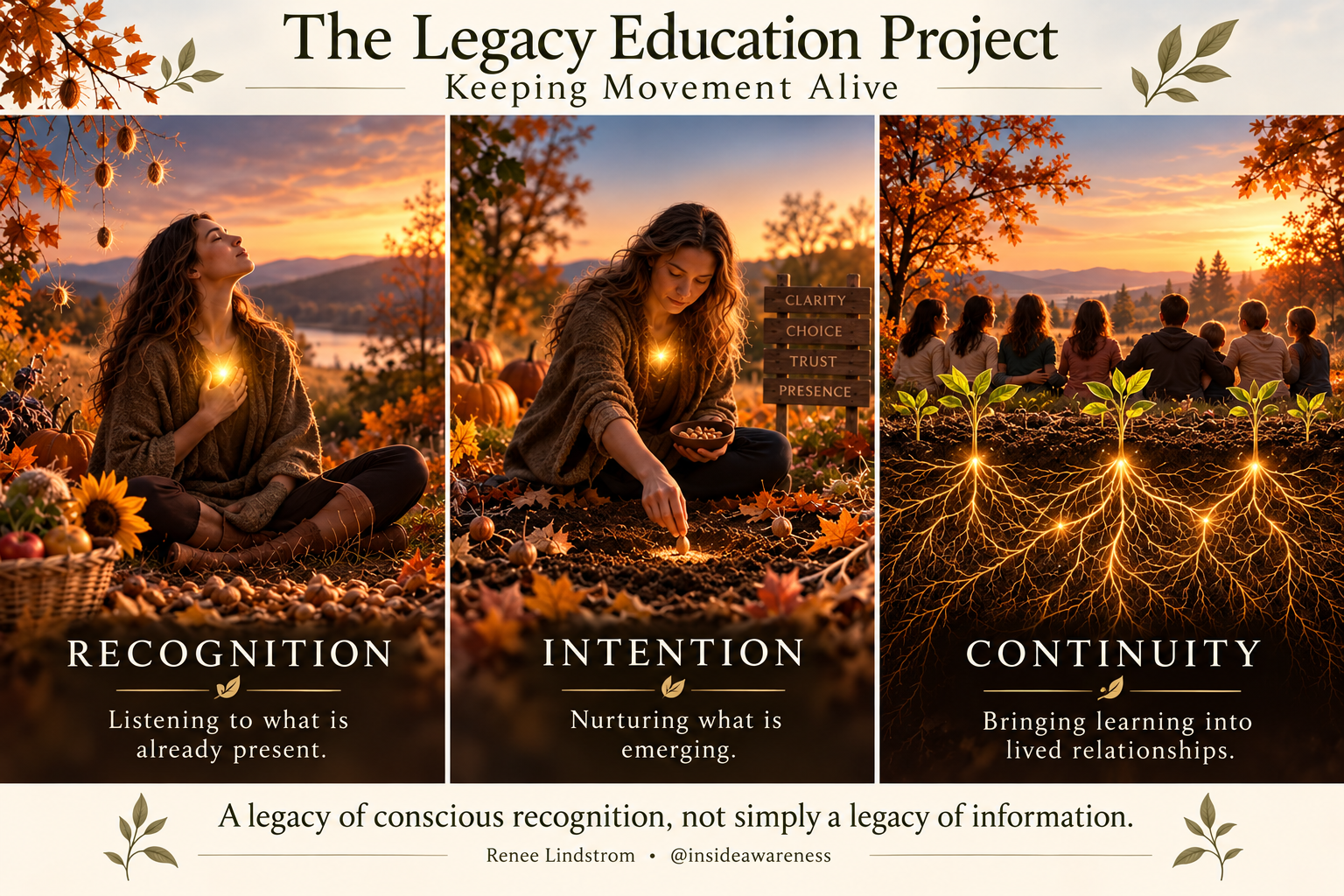
The Legacy Education Project — Keeping Movement Alive

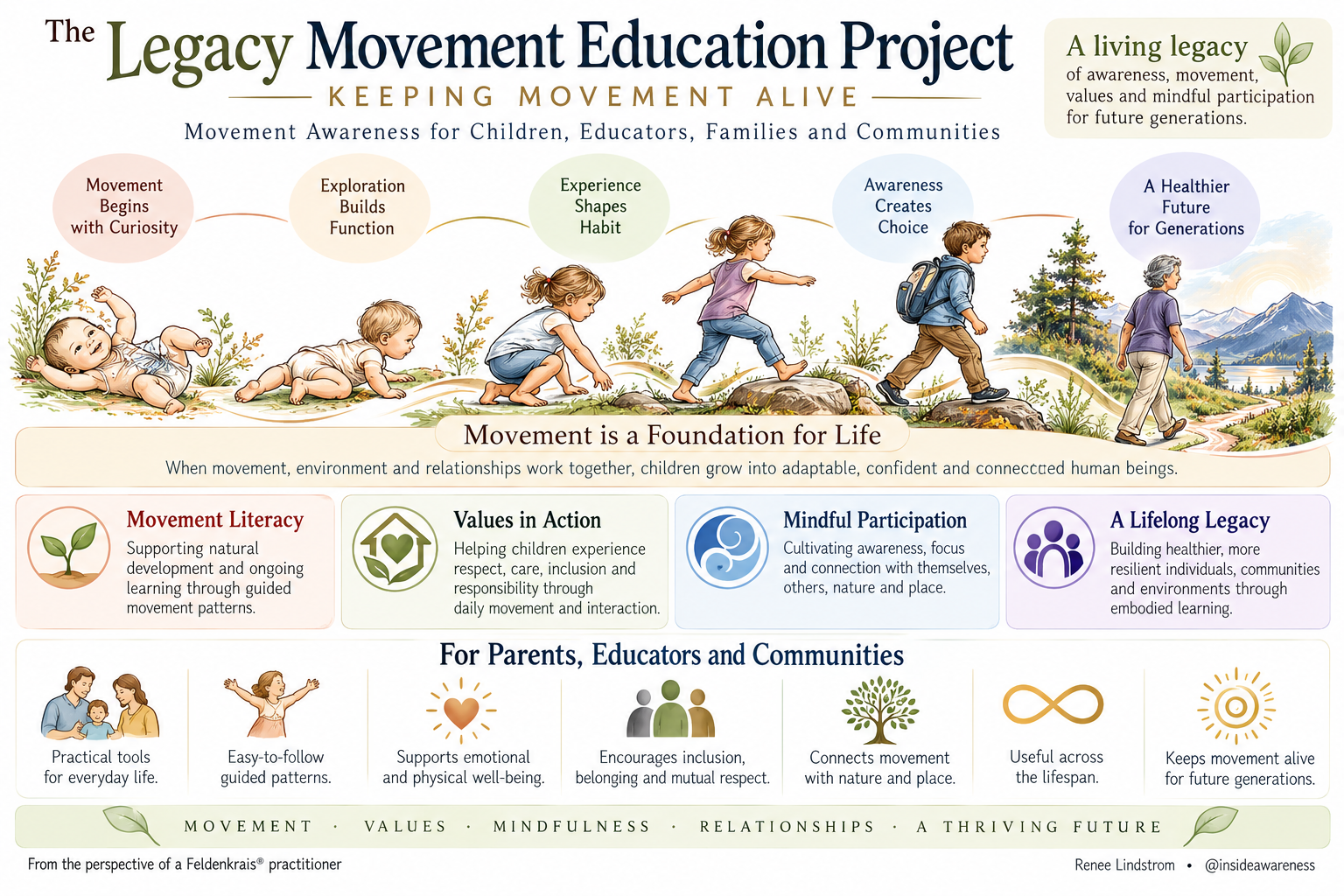
In January 2026, we announced our intention to develop a Legacy Education Project. The seeds of this initiative were planted in the autumn of 2025 and given time to rest and take shape through the early winter months. Spring and summer became a period of reflection, exploration, and planning. Now, as the project begins to take form, some of this work is reflected in the illustrated workshop materials for parents and educators shared below.

These materials introduce relationships between the natural movement patterns of early childhood development and the guided movement explorations offered throughout adulthood and aging.

Children develop through movement, sensory experience, and growing awareness, often long before they can articulate what they are learning. As we age, guided opportunities to explore these familiar relationships can help transform awareness into conscious recognition, expanding possibilities for movement, balance, and everyday function.

Our intention is to nurture continuity in this relationship with movement and learning throughout life.

We invite you to explore the program information and share these materials with parents, early childhood educators, teachers, and others who support children’s development.

We also welcome inquiries about bringing this educational perspective into your community through workshops, mentoring, consulting, or individual coaching. If you feel inspired to contribute in other ways—through collaboration, sharing resources, offering feedback, or supporting the project’s development—we would be delighted to hear from you.

A legacy of conscious recognition, not simply a legacy of information.

Renee Lindstrom · @insideawareness

Learn more through the Keeping Movement Alive Program picture descriptions below


Supporting the Continuity of Movement Awareness from Childhood Through Life

A legacy of awareness, not simply a legacy of information. 🌿

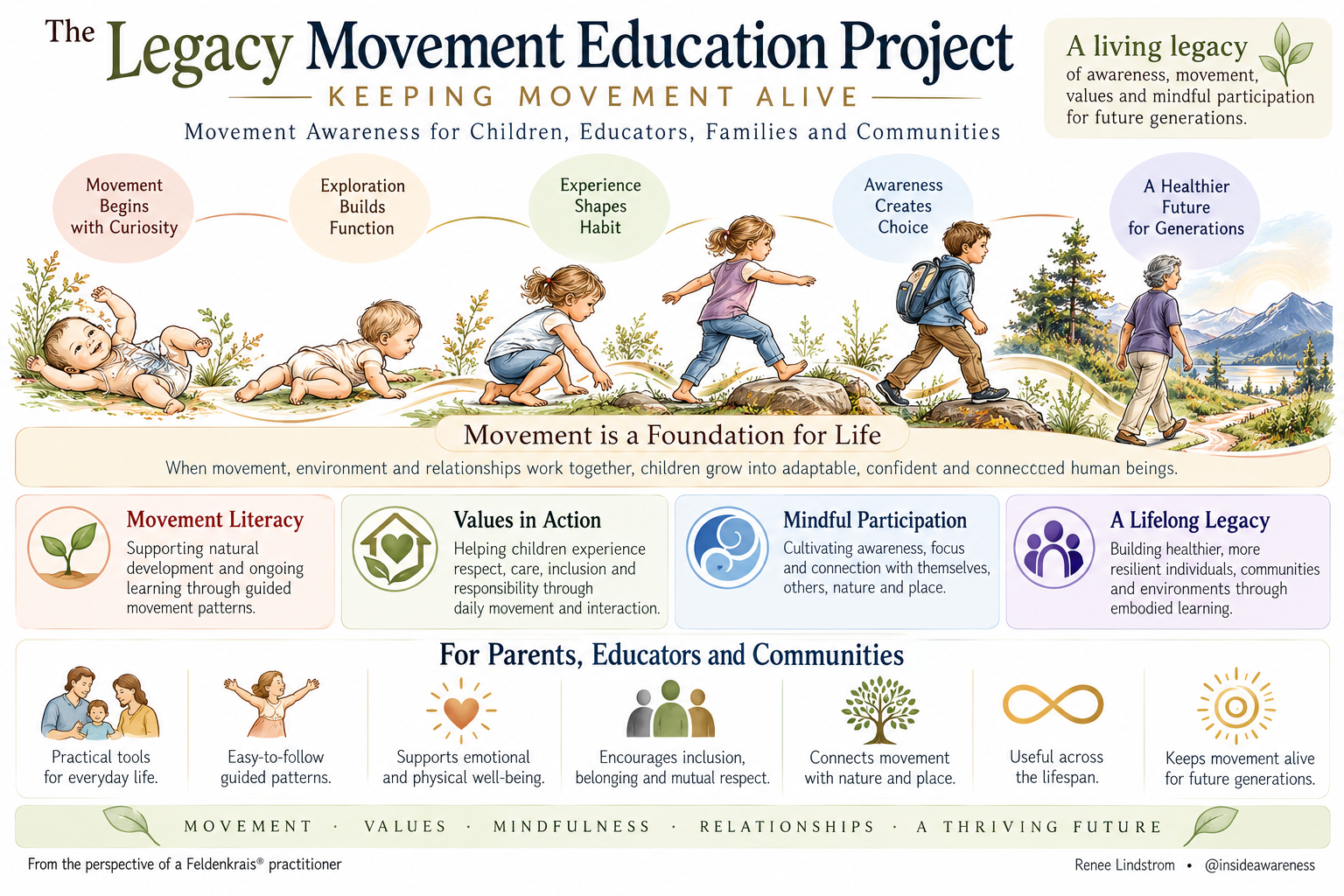
“Children are already learning through movement. Our opportunity is to help that awareness remain alive.” The Legacy Education Project is not about introducing children to something they lack. It is about recognizing and nurturing something they already possess. Legacy is reference to the intention to preserve a relationship with movement that children are already developing, so it can remain available as their learning environments change.

An Educational Resource for Parents and Educators created by Renee Lindstrom, a Feldenkrais® practitioner since 2007, whose approach is informed by Nonviolent Communication, Tibetan Buddhist meditation practices, and Buddhist-inspired Feng Shui philosophy emphasizing our relationship with nature.

Learning exploration patterns for integration becomes continuity through living

1. Integration through Movement (guided patterns)

  • Attention shifts toward felt experience.

The learner explores movement, recognizes differences, and discovers possibilities without needing to arrive at one predetermined response.

2. Integration through Communication and Relationships (recognition and exploring new patterns)

  • The same quality of attention becomes available in interaction.

The learner listens, notices responses, recognizes habitual interpretations, and explores possibilities without immediately imposing conclusions.

3. Continuity WITHIN LIVED FUNCTION @insideawareness

  • LegacyLived Function

The pattern of learning is no longer confined to the lesson. It becomes a way of participating in everyday experience.


Continuity of Awareness

Continuity of awareness is the capacity to remain connected to one’s sensory experience, curiosity, and capacity for learning while moving between different activities, relationships, and environments. continuity does not require uninterrupted awareness. Losing connection, recognizing it, and returning to inquiry can also be part of the learning.

The learning quality remains available as the context changes. Shown in the following life relationship experiences:

Environmental Experience

  • Noticing how stimulus influences sensation and response.

Movement Exploration

  • Recognizing changing relationships through felt experience.

Communication

  • Listening to words, responses, meanings, and differences.

Relationships

  • Maintaining curiosity while participating with another person

Group Learning

  • Allowing the learning environment itself to remain open to discovery.

Movement Awareness Literacy for Children, Educators and Families

Keeping Movement Alive 🌿

An educational perspective concerned with preserving the child’s natural capacity to learn through movement, while helping adults recognize and support that capacity.

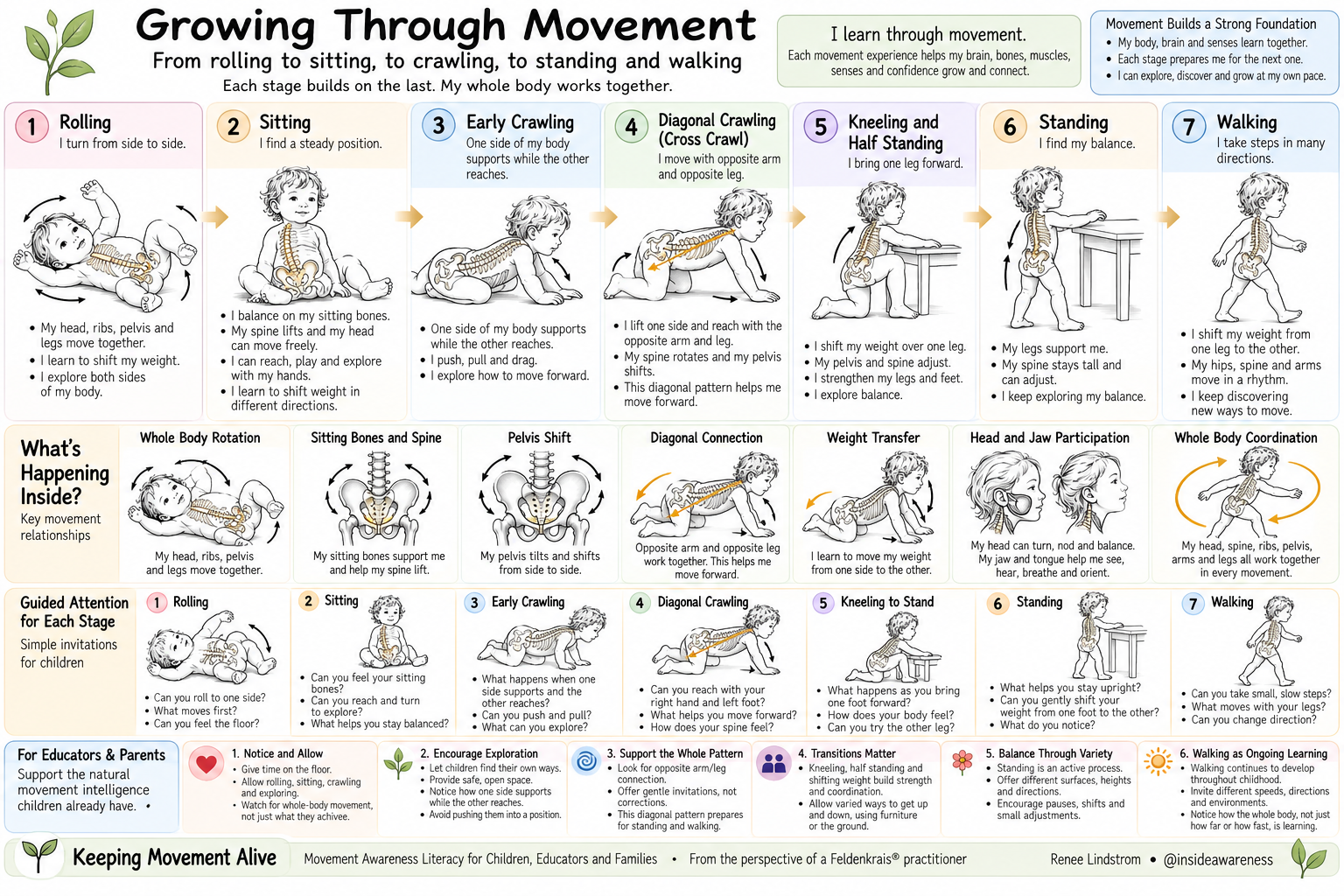
Movement possibilities of self learning are demonstrated in this poster

This illustration brings together the transition from rolling to crawling, diagonal coordination, standing, and walking, with guided attention for children and companion observations for adults.

Keep in mind that children discover mobility in different ways, and the intention is to preserve curiosity rather than introduce another standard of achievement.
For Parents and Educators – From the perspective of Renee Lindstrom, Feldenkrais® practitioner (2007), integrating insights from Nonviolent Communication, Tibetan Buddhist meditation, and nature-centered Feng Shui philosophy. @insideawareness


Listening to the Skeleton

  • The environment participates in movement learning.

Chairs, desks, instructions, expectations, and daily routines influence the movement strategies children develop. When these strategies are repeated without opportunities for exploration, some may become habitual.

Movement awareness literacy invites children and adults to recognize how the body receives support, changes position, and adapts to its surroundings.

The intention is not to prescribe ideal posture, but to preserve the ability to discover different ways of organizing movement throughout life.

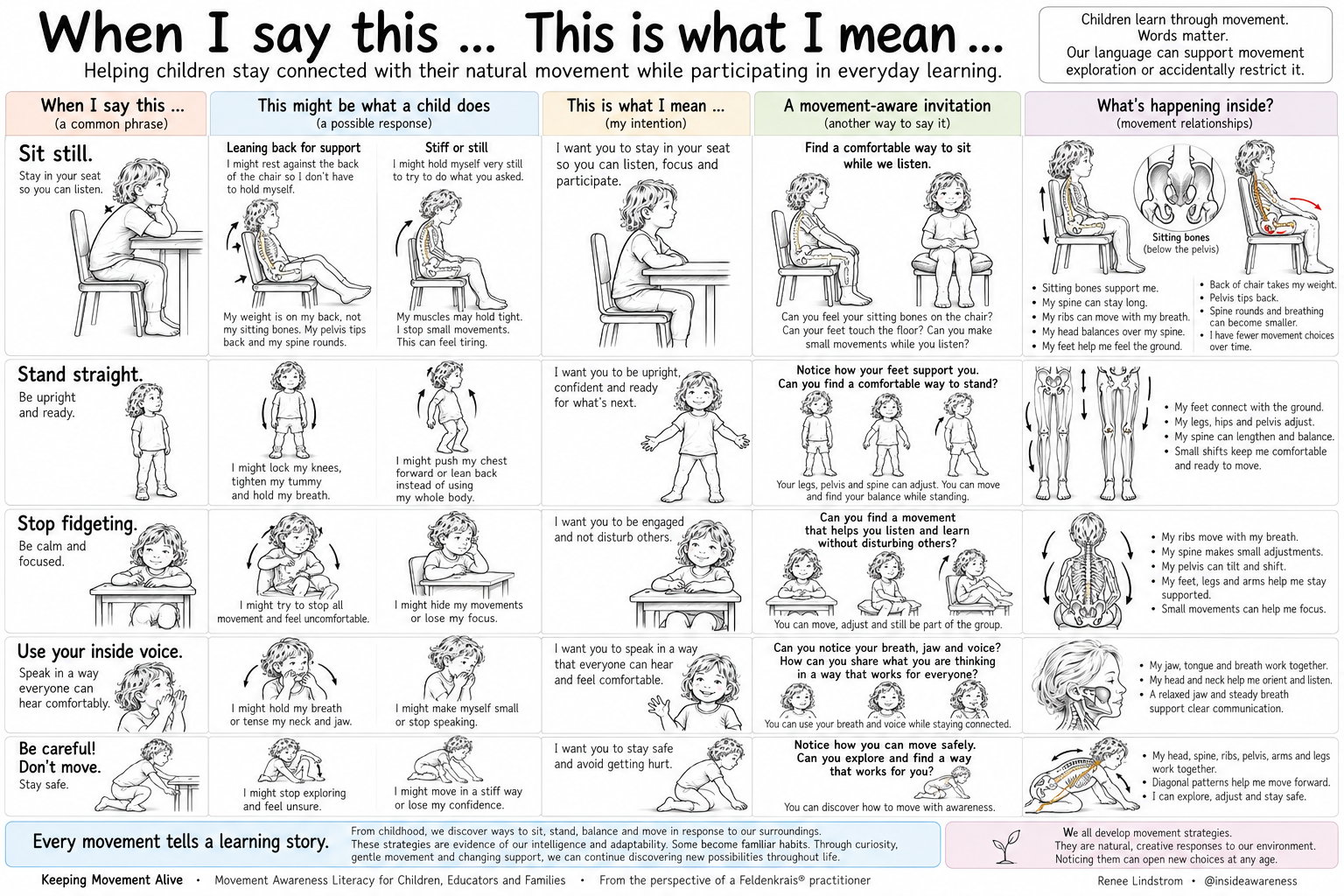
  • Every movement tells a learning story.

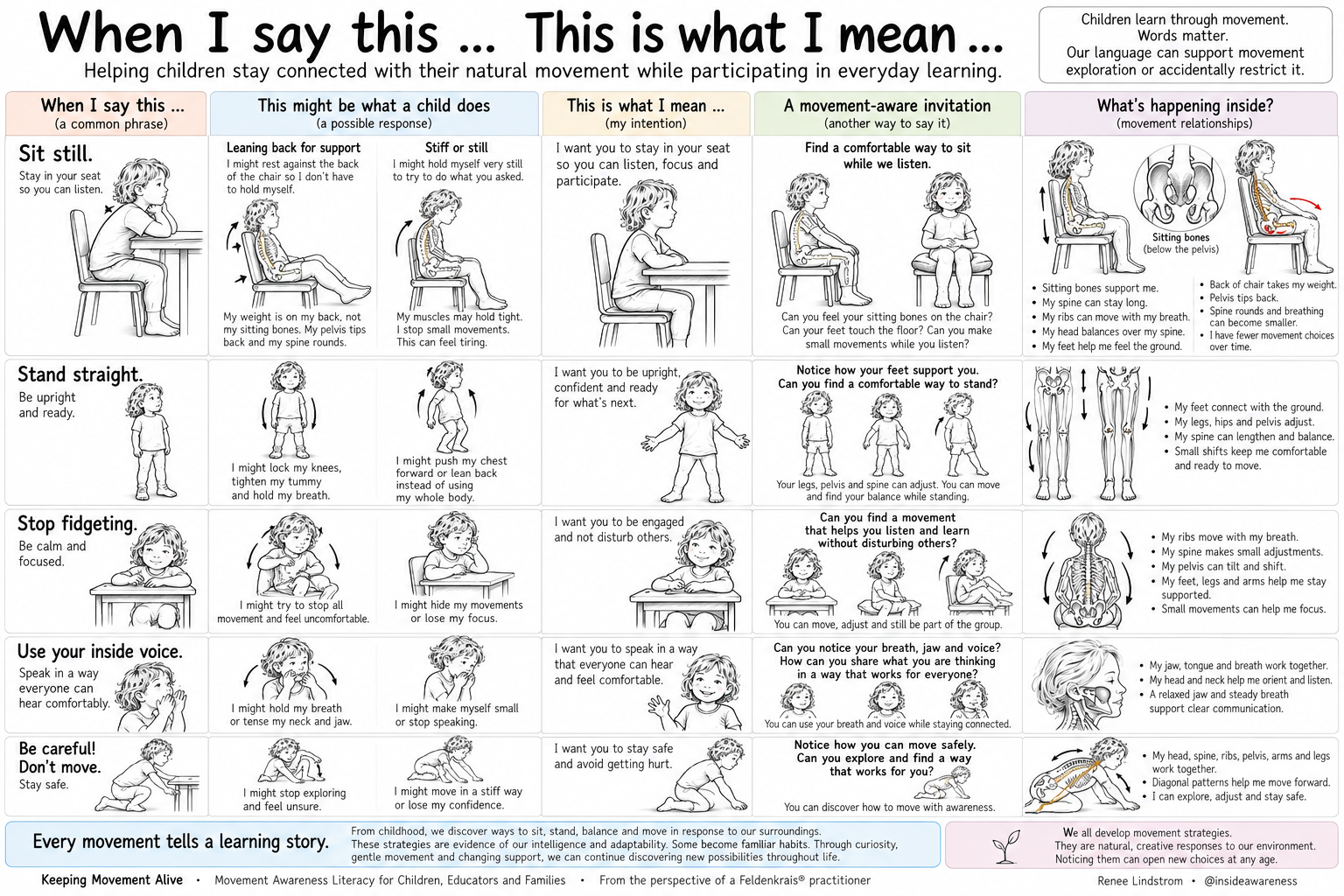
The poster introduces the relationship between the words adults use, the movement strategies children develop in response, and the habits that may emerge through repetition

From childhood, we discover ways to sit, stand, balance, and move in response to our surroundings. Some strategies become familiar habits. Through curiosity, gentle movement, and changing support, we can continue discovering possibilities throughout life. The intention of exploring what we say…. This is what I mean…. is to help adults recognize that the words they use can influence the movement strategies children develop, while offering language that preserves exploration, choice, and sensory awareness.
For Parents and Educators – From the perspective of Renee Lindstrom, Feldenkrais® practitioner (2007), integrating insights from Nonviolent Communication, Tibetan Buddhist meditation, and nature-centered Feng Shui philosophy. @insideawareness


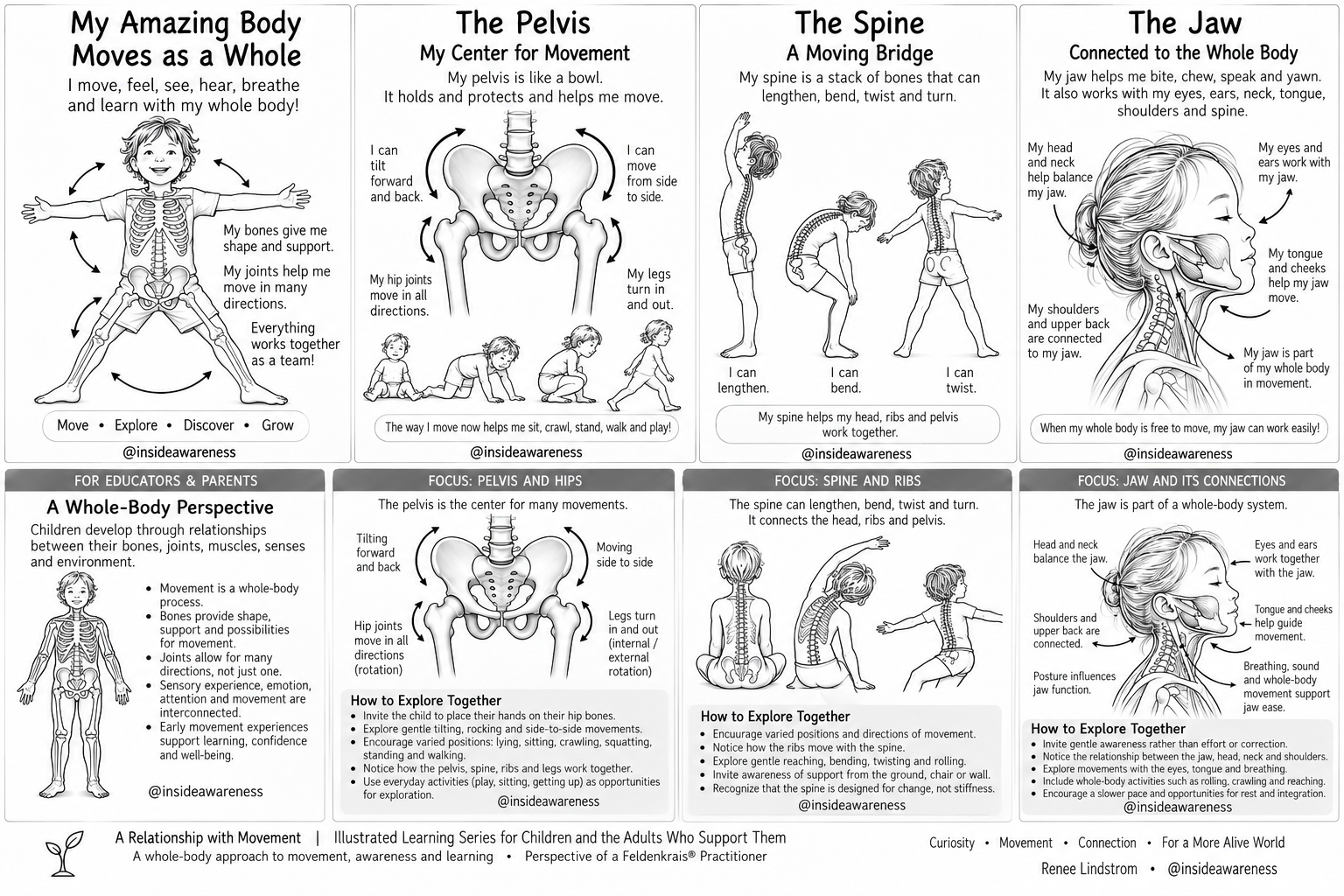
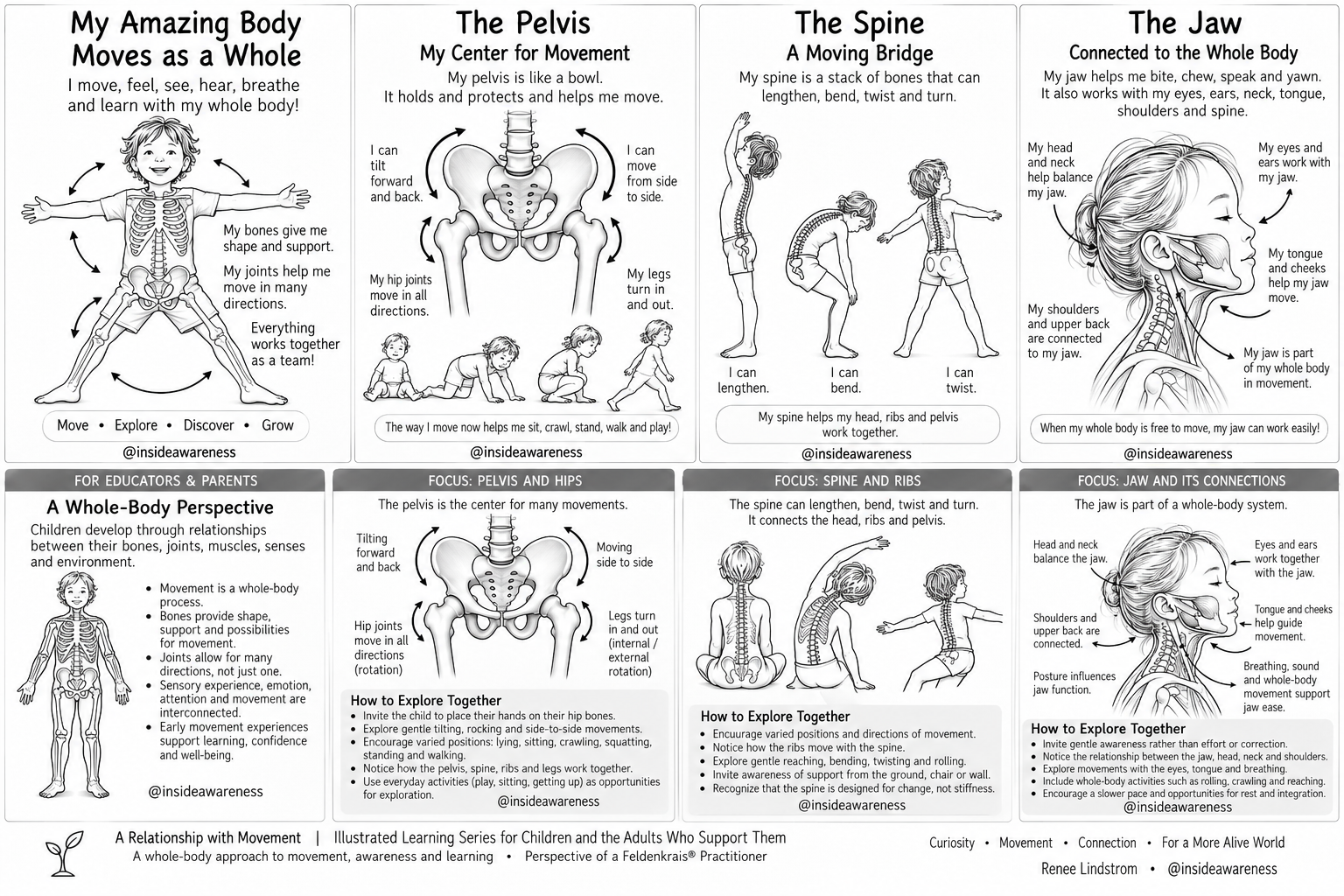
A Relationship with Movement – Illustrated Learning Series for Children and the Adults Who Support Them

A whole body approach to movement, awareness and learning
For Parents and Educators – From the perspective of Renee Lindstrom, Feldenkrais® practitioner (2007), integrating insights from Nonviolent Communication, Tibetan Buddhist meditation, and nature-centrred Feng Shui philosophy. @insideawareness


“We Learn to Move Through Experience — and We Can Keep Discovering New Ways.”

”Movement Awareness Supports Learning at Every Stage of Life

Legacy Learning is a beautiful thread through the lived experiences of all ages. The connection between intention, skeletal support, and finding a new direction is woven through the series.

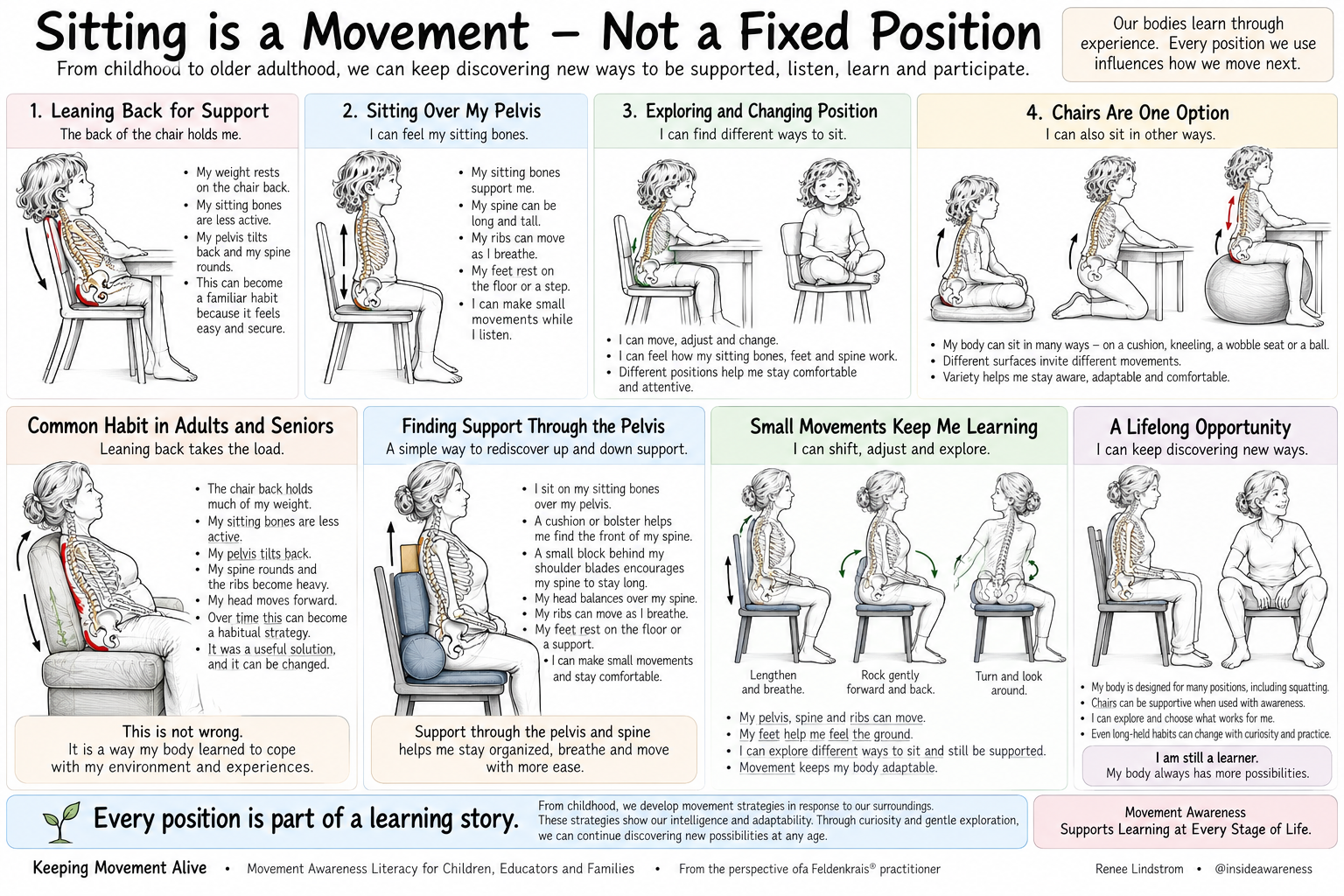
The relationship between furniture, adult expectations, and how a child learns to organize skeletal support. An eample:

The chair is not simply an object in the learning environment. It becomes part of the child’s movement experience.

What happens when one way of sitting becomes the dominant, unquestioned habit, particularly when a child is repeatedly asked to remain still. A child may learn to associate sitting with fixing the body in position, rather than discovering the many ways the skeleton can organize support.

The difference between sitting and being supported

When a child leans against the back of a chair, some of their trunk weight is transferred through the backrest rather than being managed entirely through the pelvis, sitting bones, feet, and active postural adjustments.

That is not inherently harmful. Backrests can provide useful support, and resting against one is a normal sitting option.

What happens when one way of sitting becomes the dominant, unquestioned habit, particularly when a child is repeatedly asked to remain still.

A child may learn to associate sitting with fixing the body in position, rather than discovering the many ways the skeleton can organize support.

The distinction is not between correct and incorrect sitting. It is between having movement choices and relying on one habitual organization without recognizing alternatives.
Every movement tells a learning story.

From childhood, we discover ways to sit, stand, balance, and move in response to our surroundings. Some strategies become familiar habits. Through curiosity, gentle movement, and changing support, we can continue discovering possibilities throughout life.

A habitual movement strategy in aging adults is evidence of earlier learning, not a failure to learn. What was useful or familiar in one circumstance may be worth exploring again as circumstances change. For example:

As one ages there may be a need to experience a different relationship between the shoulder girdle, spine, and pelvis that is relevant for support to discover something that may no longer recognize easily. The intention is not simply to sit straighter. It is to explore how one’s trunk can be organized over the pelvis, how support can pass through the sitting bones, and how small movements remain available.

For Parents and Educators – From the perspective of Renee Lindstrom, Feldenkrais® practitioner (2007), integrating insights from Nonviolent Communication, Tibetan Buddhist meditation, and nature-centred Feng Shui philosophy. @insideawareness


From Awareness to Recognition

Awareness invites us to notice how we are supported. Recognition grows as we explore these relationships through movement, discovering new possibilities for balance, choice, and everyday function.

“When we notice how we are supported, movement becomes an opportunity for discovery. Through exploration, awareness grows into recognition, opening possibilities for balance and everyday movement.”
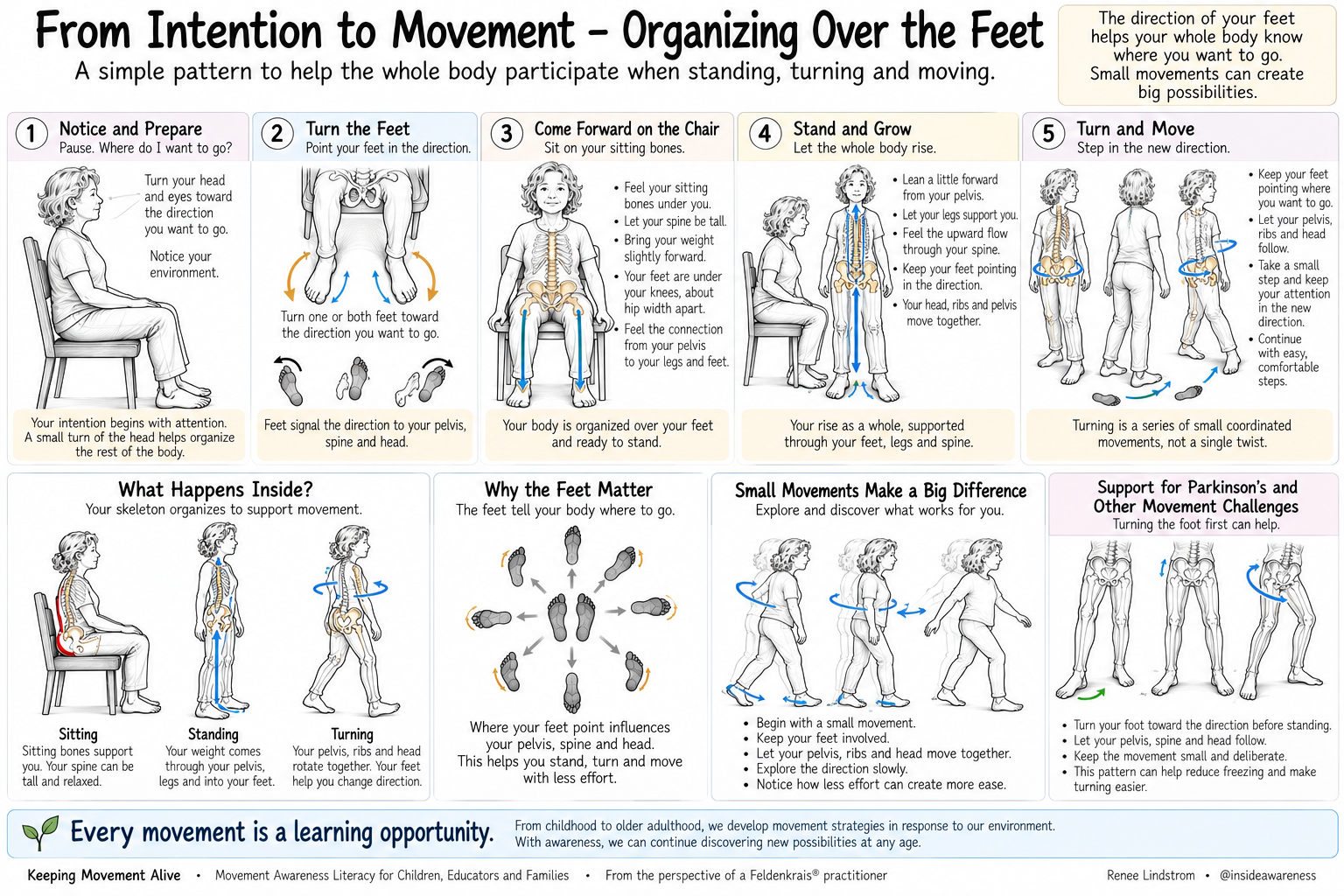
Awareness: I notice where my weight rests.

Exploration: I discover how my pelvis, legs, and feet participate as I shift.

Recognition: I begin to understand and feel how these relationships support my movement, and recognize that I have choices.

Expanding capacity: I can explore and use these possibilities in standing, turning, and walking.

For Parents and Educators – From the perspective of Renee Lindstrom, Feldenkrais® practitioner (2007), integrating insights from Nonviolent Communication, Tibetan Buddhist meditation, and nature-centered Feng Shui philosophy. @insideawareness


Follow socials:
Copyright 2014 – 2026 Renee Lindstrom, GCFP

Rise with Inner Peace lived integration – Guided patterns for active transition from sitting to standing

by Renee Lindstrom, Founder of Inside Awareness Center for Integrative Somatic Learning

Learning field of expanding awareness for clarity and understanding through lived experiences with practical guided patterns for living.

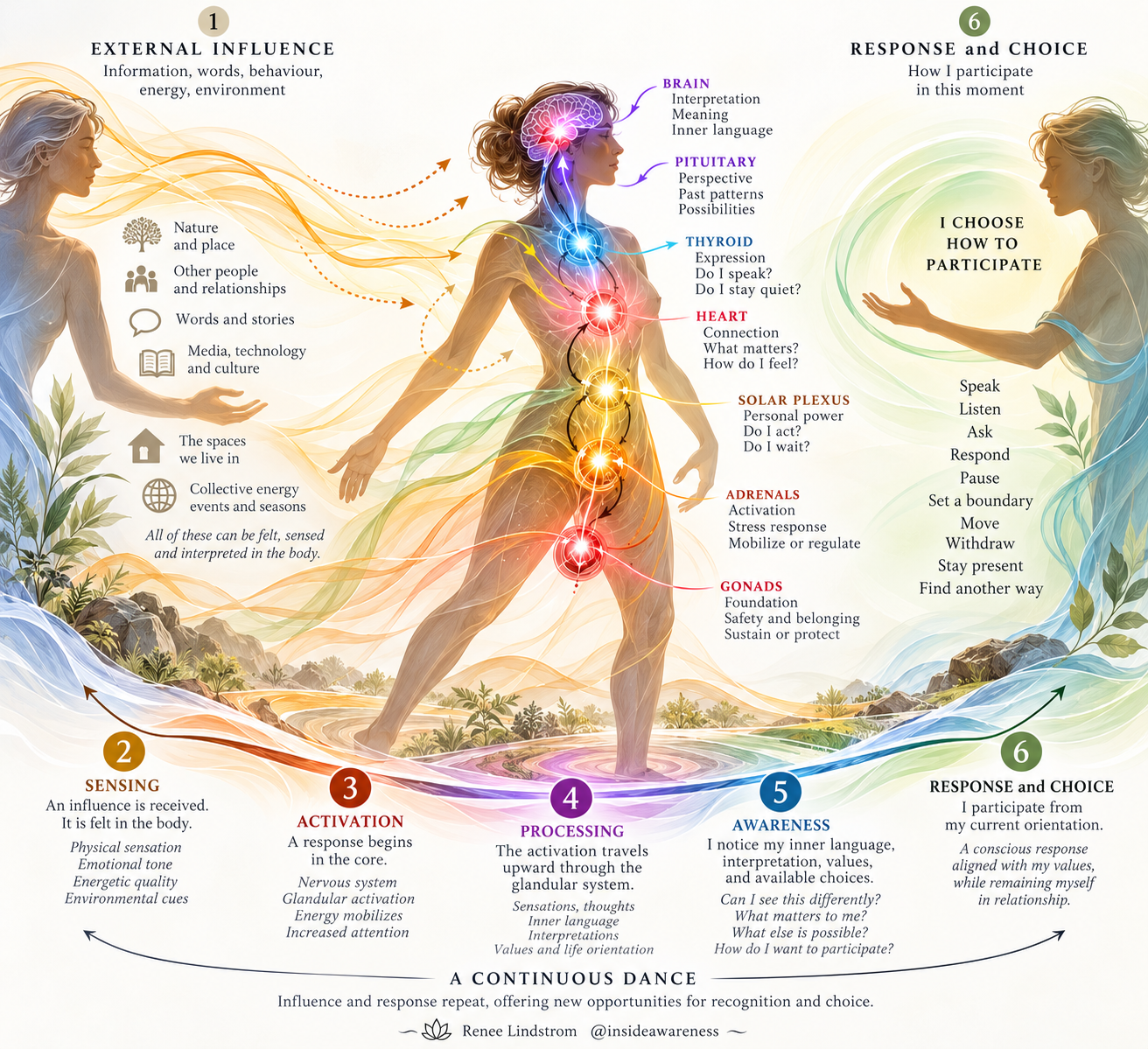
Inside Awareness patterns through which you can notice your own experience, process it, and discover what becomes available. Shifting focus inward to balance interactive connectedness.

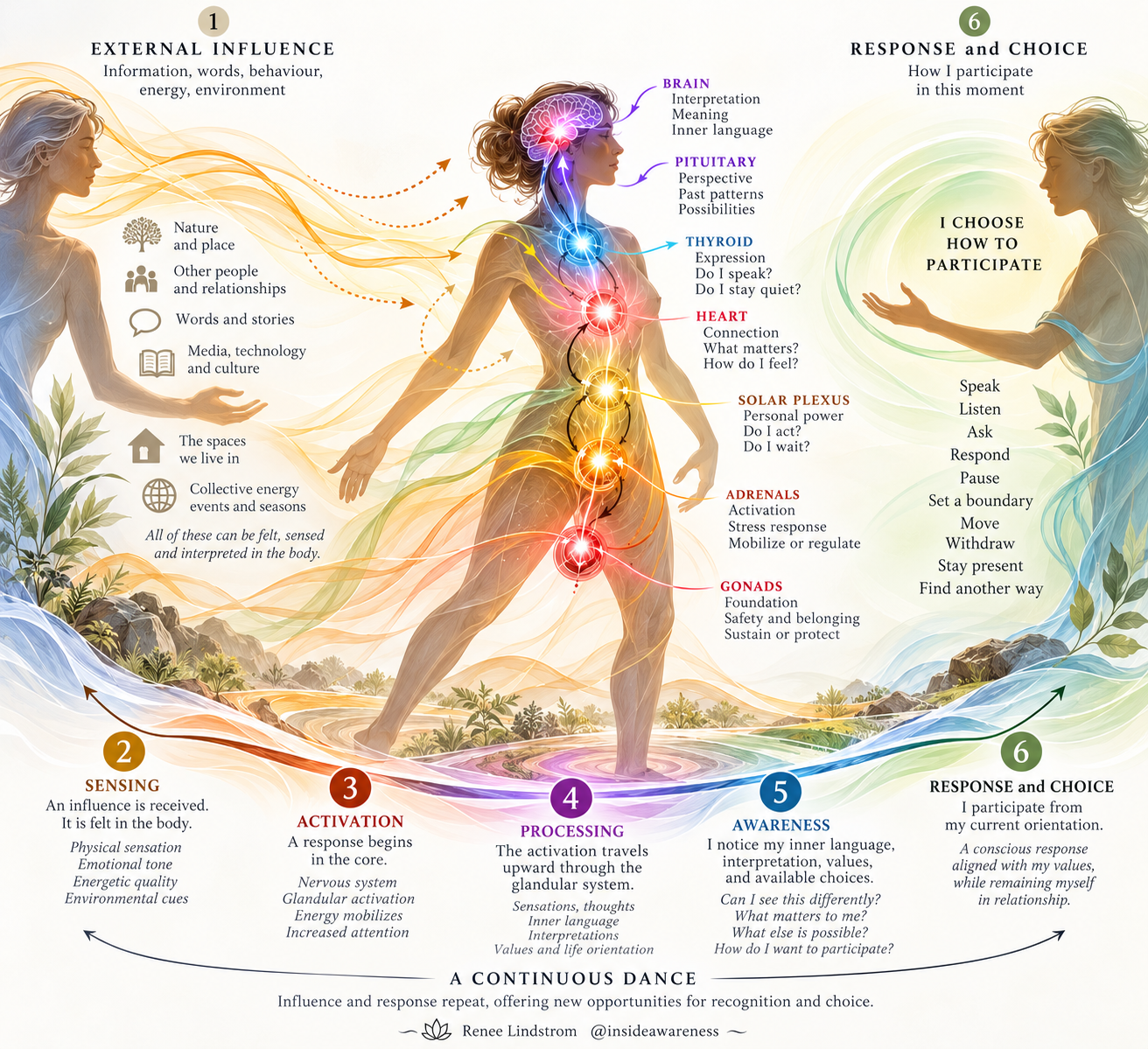
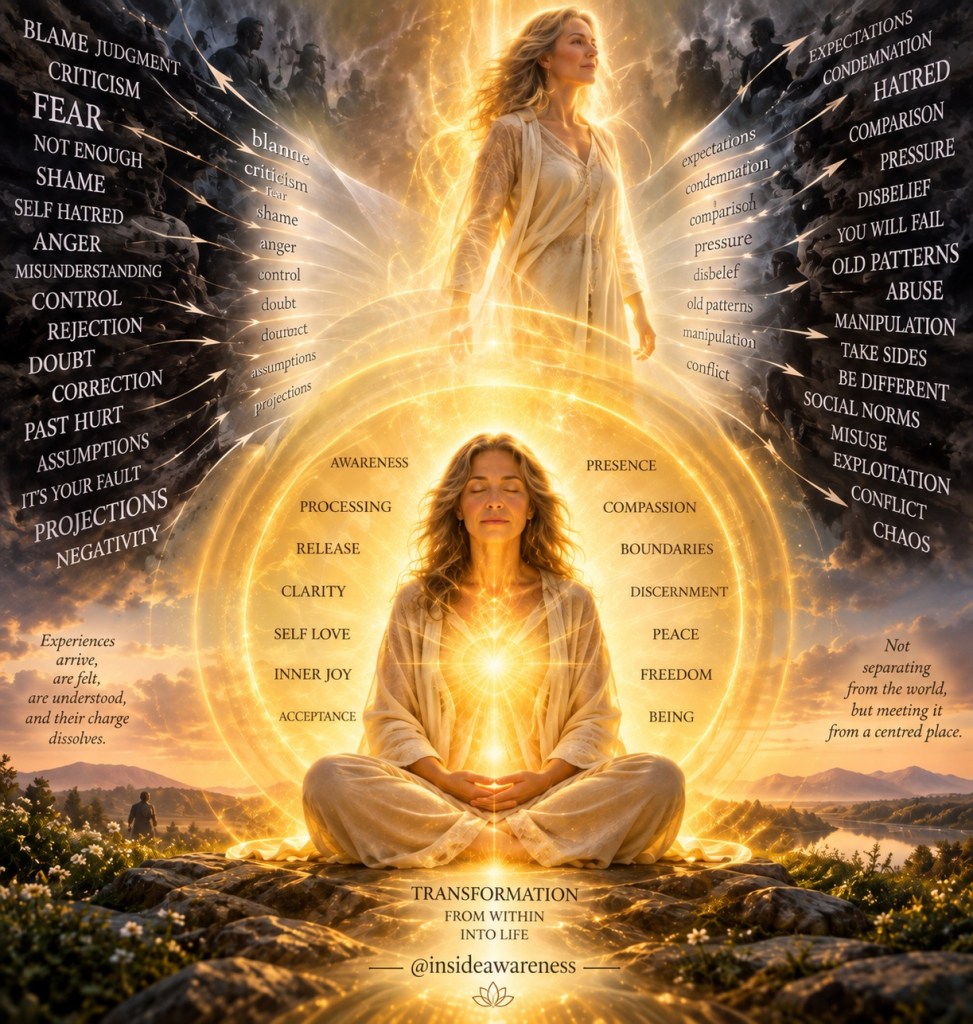
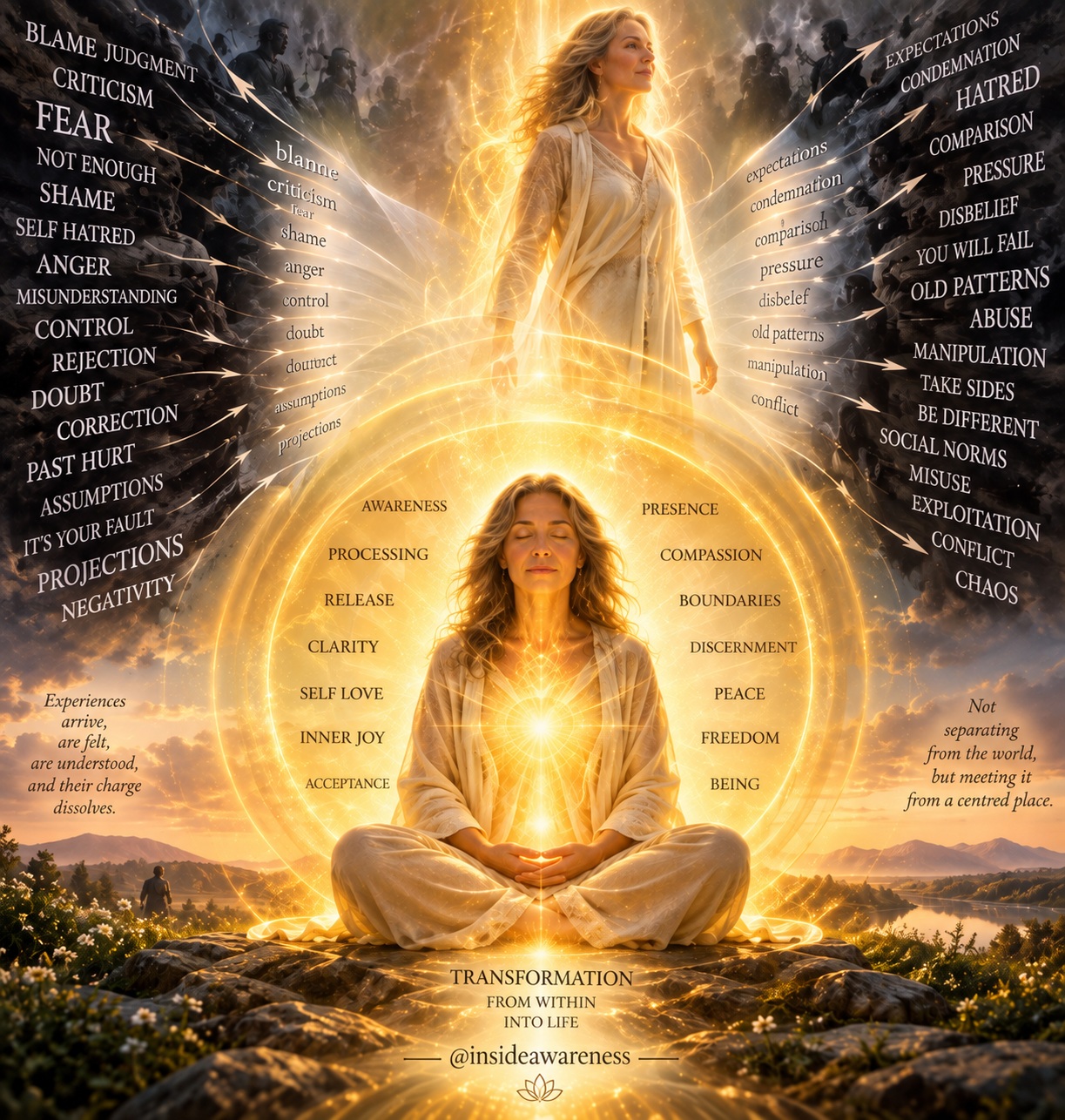
This is a Visual Image of a literacy system for recognizing the relationship between sensation, awareness, interpretation and everyday functional behaviour. The central figure isn’t successfully defending herself against everything coming toward her. She no longer has to organize herself around opposition to it.

The center describes Receptive Observation patterns and the outer describes Interpretative Evaluative Expressions. Guided patterns for lived integration for practical lifestyle integration.

Copyright 2026 Renee Lindstrom, GCFP

With respect and gratitude, this work acknowledges the ground provided by the teachings and practices of Moshe Feldenkrais, Marshall Rosenberg, Chögyam Trungpa Rinpoche, and Dyan Grant Francis. Their contributions are honoured as part of the learning from which Inside Awareness continues to grow.

#yyj in person Awareness through Movement® lessons in Oak Bay

Fall ’26

group lessons

Micro-movements using the Feldenkrais® Method of Somatic Education

Felt sense through Body

New Fall Sessions:

Sept, Mondays, Sept 14 – Oct 26, ’26
– 6 Sessions

Nov, Mondays, Nov 2 – Dec 7, ’26 – 6 Sessions


Oct 31st ’26

Breath Easier Workshop

1442 Monterey Avenue, Oak Bay, B.C.

1O am – noon

Group ATM Workshop @ Monterey Center in Oak Bay

Online @ Oak Bay Parks, Recreation

Learn more about the TMJ Joints


Dec 5 ’26

Jaw Release Workshop

1442 Monterey Avenue, Oak Bay, B.C.

10 am – noon

Group ATM Workshop @ Monterey Center in Oak Bay

Online @ Oak Bay Parks, Recreation

Breath Easier Workshop Description


Feldenkrais® is a system for learning new actions through movement to increase function and quality of life. There is no dogma or self-image attached to this system of independent self-learning. This means it introduces a focus upon what you can do, not what you can’t. It reduces limiting beliefs by increasing focus of attention in the present moment. As an empath, I can trust the Feldenkrais® experience as it deepens my inner understanding, clarity and skeletal support through perception. It taps into the same dynamic of inner support I trusted as a baby to stand up and begin taking my first step.

I recommend it to everyone longing to be free of the past and to shift the fear of the unknown future. I especially recommend it for those who have been given labels and now identify with them. The only way to transformation is through a new action.

Dedicated Feldenkrais Focus, influenced by Somatic Dialogue & Awareness of Environment Stimulation to function

(Read more)

Renee is a Certified Feldenkrais Practitioner – since 2007

Location: Monterey Recreation Center – Oak Bay

Register by phone @ 250-370-7300 or

online @ Oak Bay Recreation website

Read more on Awareness through Feldenkrais – topic website for updated topic information, news and tips for somatic movement programs


Feldenkrais® Practitioner since 2007, Communication & Empathy Coach since 2004, Art of Placement since 2001

The Dance of Inner and Outer Communication

Guided Patterns of Learning for Lived Function

Renee Lindstrom · @insideawareness

Guided Patterns of Learning for Lived Function — A New Area of Exploration

How am I participating in the process of my own experience, and can I discover another way?

For many years, my attention has been drawn to the processes through which people organize their lived experiences.

Not simply what we think, say, feel, or do, but how we arrive at those thoughts, interpretations, responses, and actions.

This focus has been familiar to me throughout my life, although I have often found that the language available to describe it has not reflected what I was recognizing.

Through years of teaching functional movement, exploring communication, and listening to the experiences of others, I have continued to observe how early-learned patterns can become automatic ways of participating in life.

These patterns are not limited to physical movement. They are also expressed through inner language, listening, relationships, values, and the choices we recognize as available.

In movement education, I invite learners to notice how they shift their weight, how they organize themselves, and whether another movement possibility can be discovered.

I am now bringing that same educational attention more consciously into communication and inner language.

It is not only what we do. It is how we do it, what we notice while doing it, and whether another possibility becomes available.

One simple inquiry I would like to introduce in early childhood learning is:

“When I say this … this is what I mean …”

Imagine children having regular opportunities to recognize and express their own meaning, while adults learn to listen without immediately interpreting their experience for them.

Imagine learning environments where curiosity about a child’s process accompanies attention to their behaviour.

My hope is to develop guided patterns that nurture recognition, autonomy, inclusion, fairness, kindness, and reciprocal participation.

The early childhood material will become part of my Legacy Movement Educational Project, while related adult learning patterns will develop alongside it through Inside Awareness.

These are not intended as prescribed ways to think, feel, or communicate. They are invitations to explore how we participate in our own experience and discover a greater range of possibilities.

As autumn arrives, I am recognizing how several areas of my life’s work are beginning to come together within a familiar foundation.

A foundation that has been present all along.

Guided Patterns of Learning for Lived Function

Follow socials:

Copyright 2014 – 2026 Renee Lindstrom, GCFP

Transitional Movement Patterns

Transitional Movement Patterns

Guided Patterns of Learning for Lived Function

Sensing myself. Sensing another. Discovering how to participate together.

For nearly twenty years, my exploration of balance has developed through teaching, observing, and listening to the unique ways individuals organize themselves in movement.

Throughout these years, I have become increasingly interested in the transitions between movements rather than the completion of individual exercises or postures.

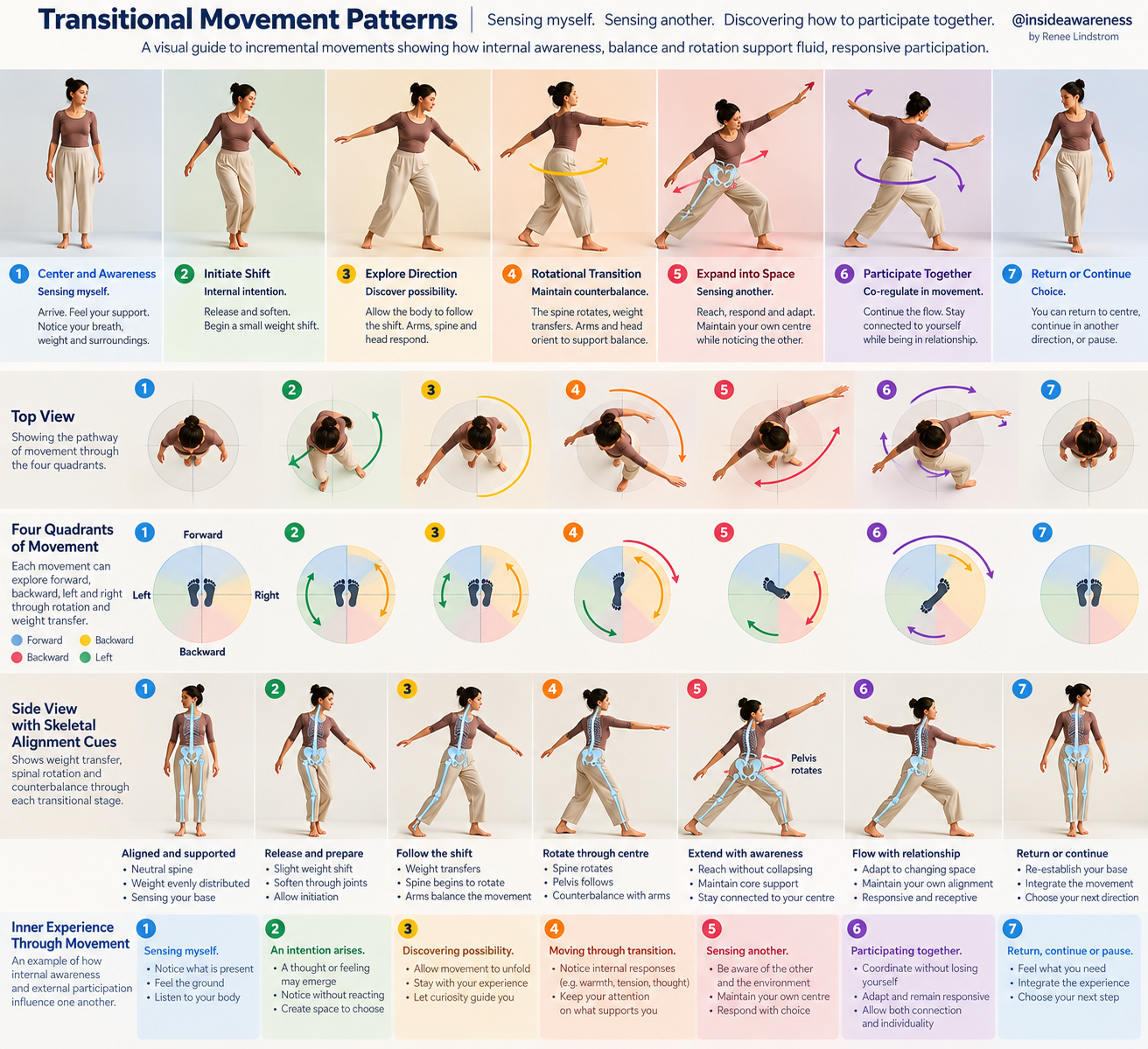
How does the skeleton organize itself to transfer weight? What happens as we change direction, rotate, reach, or shift from one supporting leg to another? How can an awareness of gravity, skeletal support, and counterbalance offer new possibilities for movement with less unnecessary muscular effort?

These questions have gradually influenced the development of Guided Patterns of Learning for Lived Function.

More recently, I have begun recognizing something unexpected within my own spontaneous movement. As the relationships between skeletal support, rotation, and counterbalance become increasingly familiar, movement can begin to flow creatively, almost like a dance.

This expression is not intended to reproduce an established dance form, yoga posture, or tai chi sequence. Rather, recognizable shapes may emerge naturally through the exploration of functional movement relationships.

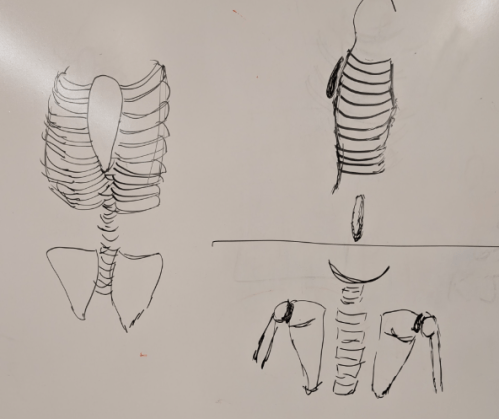
The accompanying diagram, Transitional Movement Patterns, introduces some of these possibilities through incremental illustrations of movement, including side-view skeletal relationships.

For participants in my Balance classes, these images may offer an alternative to remembering a list of exercises. They can become visual invitations to recognize how the body organizes itself through movement, allowing each person to explore within their own abilities and circumstances.

An additional direction is emerging through this work: the relationship between internal sensory awareness, the surrounding environment, and participation with others.

What happens to our spontaneous movement when another person enters our experience? How do our internal interpretations influence the way we move, respond, or choose to act?

These questions are beginning to connect the movement patterns with my developing explorations of inner language, listening, and conscious recognition.

I am also considering how these foundational movement relationships might be introduced in early childhood education, supporting opportunities to develop sensory awareness, movement choice, and participation in relationships from an early age.

This is an evolving exploration rather than a completed system.

My intention is to create accessible learning experiences that invite curiosity, encourage individual discovery, and support the integration of awareness into ordinary lived function.

The focus is not on achieving a particular movement. It is on discovering the relationships that make movement possible.

Renee Lindstrom
@insideawareness

Read more on:

Follow socials:

Copyright 2014 – 2026

Feldenkrais®, Feldenkrais Method®, Awareness Through Movement®, and Functional Integration®, are registered service marks of North America. Feldenkrais Method®

Thanksgiving’s News — A Harvest of Conscious Recognition

“Before planting new seeds, take time to recognize what has already grown.”

Gratitude begins with recognizing what is already present.

As we become conscious of the intentions woven through our lived experiences, we discover the relationships, choices, and actions that have shaped our lives.

In recognition, we find appreciation.

In appreciation, we nurture awareness.

Through awareness, new possibilities for conscious participation emerge.

Embodying Intention · Oct 10/11, ’26


The Legacy Education Project — Keeping Movement Alive

The Legacy Education Project — Keeping Movement Alive

I would like to share an update on the Legacy Education Project, which I began writing about on my personal page earlier this year.

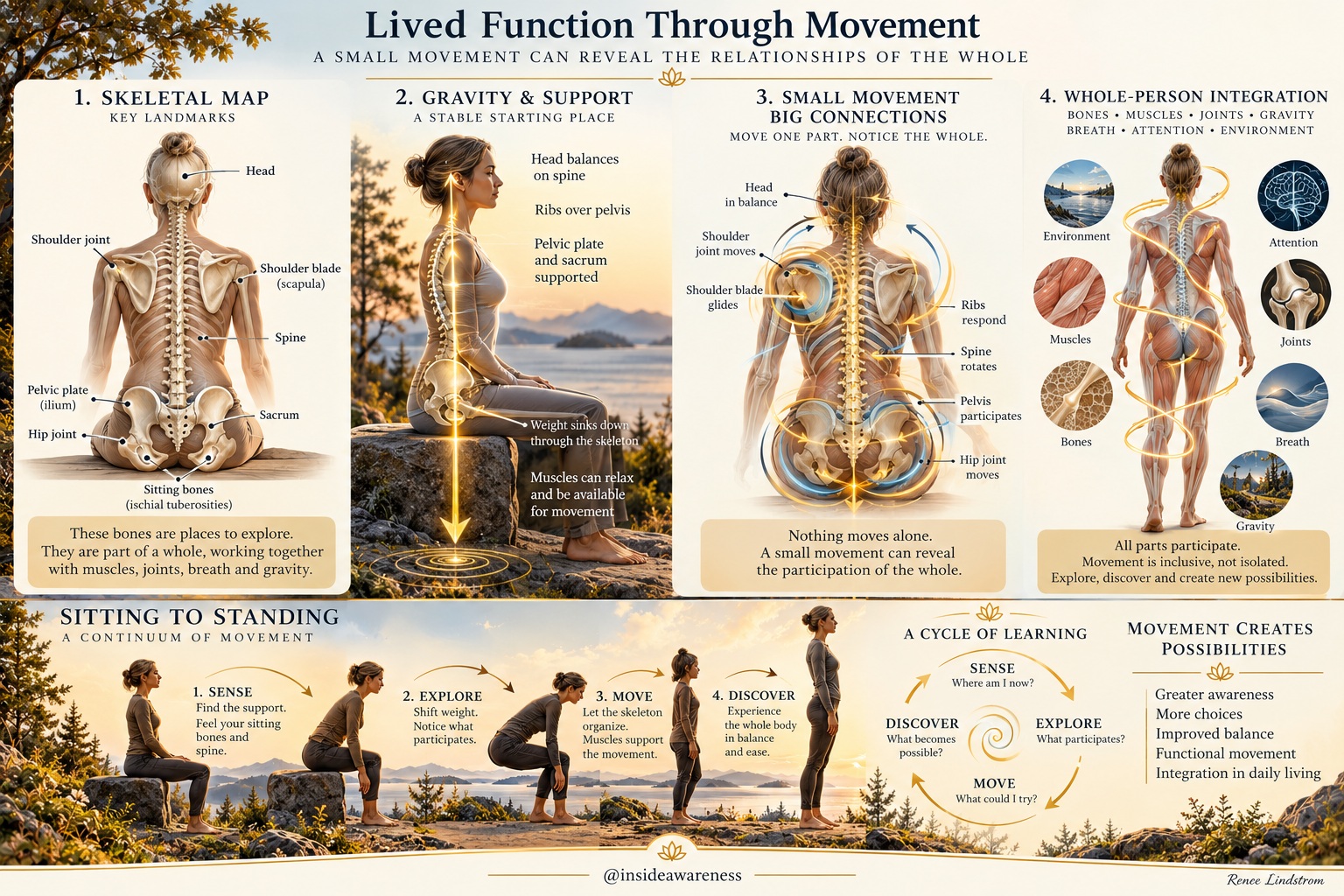
The accompanying article introduces the developing project and includes illustrated diagrams exploring skeletal relationships and the transitions that take place within everyday movement.

The seeds of this project were planted somewhere along the way during my years of teaching *Balance*, a guided functional movement workshop I began offering around 2007. For nearly two decades, these classes have continued for approximately 40 weeks each year. That represents hundreds of weeks—perhaps close to 800—of listening, observing, exploring, and learning alongside adults ranging in age from their mid-forties to over ninety.

Throughout these years, I have encountered remarkably individual patterns of movement and mobility. I have listened to how people understand their bodies, observed the strategies they have developed, and explored the relationships between skeletal support, movement, and everyday function.

At some point, an intention began to emerge.

I wondered whether some of the movement relationships I was helping adults rediscover could be consciously recognized and nurtured much earlier in life, particularly during the transition from a child’s natural movement exploration into organized education.

What if children could retain a conscious relationship with the movement intelligence they are already developing?

This is not an exercise or fitness program. Those approaches have their own value in developing physical capacity and maintaining health.

The focus here is different. It is an invitation to recognize how weight shifts through the skeleton, how one part of the body participates with another, and how these relationships support our everyday movements.

I hope the diagrams accompanying the article begin to communicate this intention.

One of my favourites is titled “When I Say This… This Is What I Mean…”

This illustration brings attention to something that has connected so many of my observations over the years: the relationship between the words adults use and the movement strategies children may develop in response.

As children, we hear instructions such as “sit still,” “stand straight,” or “stop fidgeting.” We may not be shown what those words mean in terms of skeletal support or movement. Instead, we draw upon our developing experiences to find ways of responding.

Over time, some of these strategies can become familiar, habitual ways of organizing ourselves.

I have spent many years observing these patterns in adults—not as mistakes, but as expressions of learning and adaptation. My interest is in helping people recognize these relationships and discover that other movement possibilities may still be available.

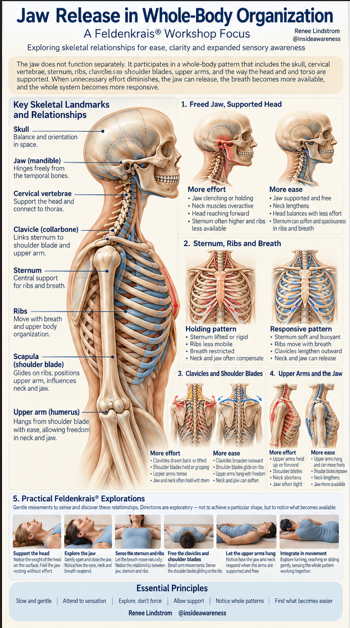
Yesterday, partway through preparing this article, I paused to offer a small, boutique TMJ Jaw Release workshop to a group of women.

Once again, I encountered familiar patterns of restricted movement and witnessed moments when deeply held muscular effort began to soften, allowing different movement relationships to emerge.

Later in the day, as I reflected on the workshop and the many years of experiences that have contributed to this educational project, I felt an unexpected depth of gratitude.

Gratitude for the choices I have made to follow this inquiry. For the people who have participated in the learning with me. And for the opportunity to slow down, listen, and become familiar with aspects of human movement that can so easily go unrecognized.

Then I remembered. It was Thanksgiving.

Perhaps there could not have been a more fitting moment to recognize what has been growing all these years.

A legacy of conscious recognition, not simply a legacy of information.

I invite you to explore the article and its diagrams, and to share them with parents, educators, childcare providers, or others who may be interested in supporting children’s natural movement learning.

I also welcome conversations about workshops, mentoring, consulting, coaching, collaboration, and other ways of supporting the Legacy Education Project as it continues to develop.

Slideshow of illustrated workshop materials for parents and educators

I invite you to explore the program information and share these materials with parents, early childhood educators, teachers, and others who support children’s development.

Read more:

Read more:

Follow socials:

Copyright 2014 – 2026 Renee

Motivation for the Legacy Movement Project

When the Learning Pattern Extends Beyond the Lesson

About the Motivation for this Legacy Project, by Renee Lindstrom

My Feldenkrais® training introduced me to a profound pattern of learning through movement. Guided explorations invited a shift in attention away from habitual interpretation and toward the sensory experience of movement, support, and changing relationships within the body.

Over time, I began to recognize that the learning pattern itself extended far beyond the movement lesson. The same qualities of listening, curiosity, differentiation, and discovery could be brought into communication, relationships, and ordinary life.

What was missing for me was not the opportunity for discovery within the lessons, but the integration of that same learning approach into the communication surrounding them. While the movement lessons invited open exploration, the language and interactions outside them did not always reflect the same openness to different ways of perceiving and learning.

As a predominantly somatic learner, I needed to develop a language that connected what I was experiencing through movement with how I understood and participated in the world.

This became an important direction in my own teaching. Rather than limiting awareness to a guided movement experience, I began exploring how the underlying learning pattern could become accessible through visual orientation, touch, language, movement, and reciprocal communication.

The intention is not to replace the Feldenkrais® learning process, but to extend its principles into the living relationships through which learning continues.

The Literacy Project will focus on the integrative influences in learning in Early childhood Education.

Renee Lindstrom · @insideawareness


Follow socials:

Copyright 2014 – 2026 Renee Lindstrom, GCFP

Temporomandibular joint syndrome: Jaw Release in whole body organization

by Renee Lindstrom, GCFP, founder of Inside Awareness Center for Integrative Somatic Learning

Read more @ Awareness through Feldenkrais:

Read more:

The only way to change is through action

Follow the journey on Twitter, Instagram or Facebook

by Renee Lindstrom, GCFP @ Inside Awareness

Feldenkrais®, Feldenkrais Method®, Awareness Through Movement®, and Functional Integration®, are registered service marks of North America. Feldenkrais Method®

October Embodied Lifestyle Articles & News

by Renee Lindstrom, Founder – Inside Awareness Center for Integrative Somatic Learning

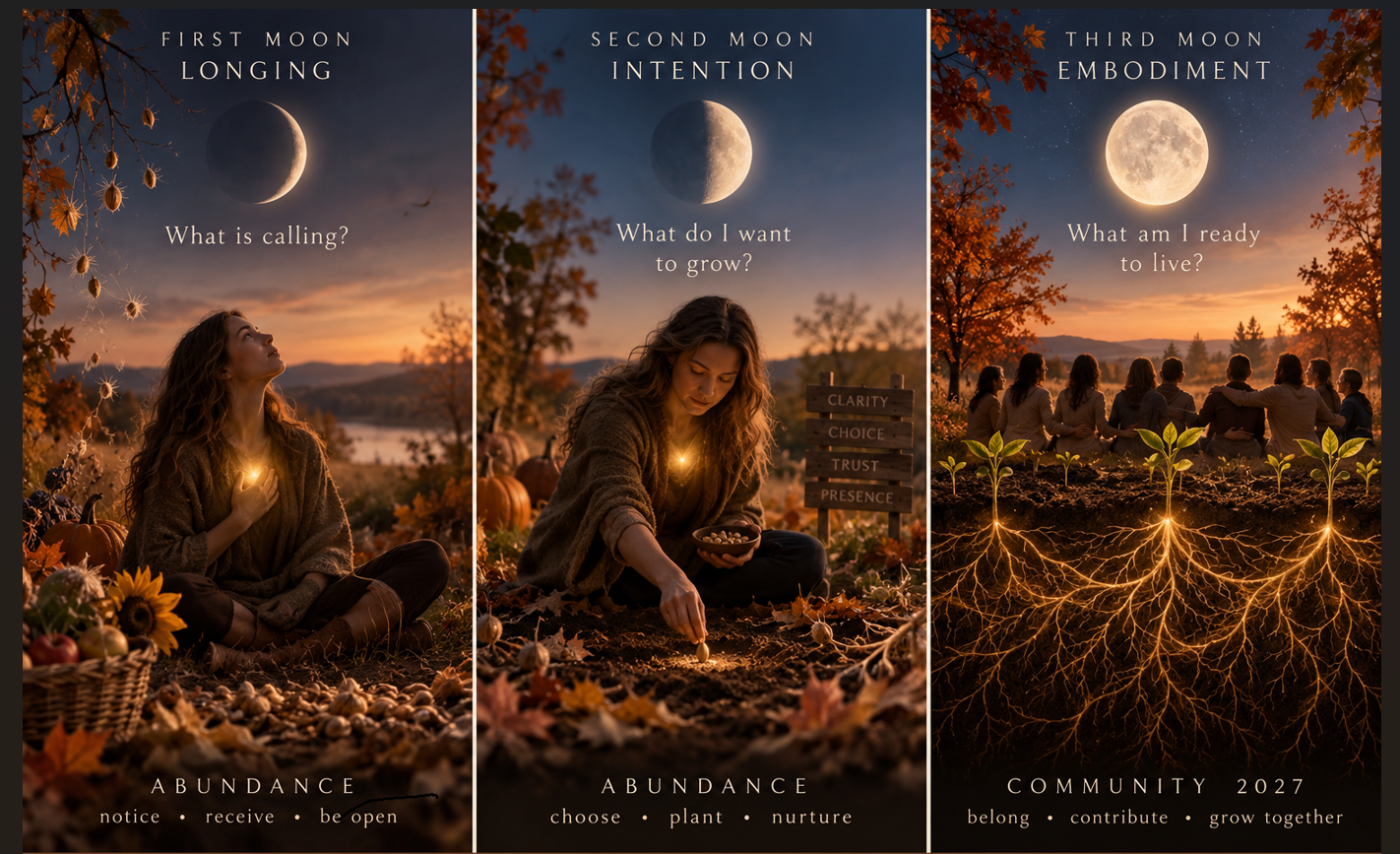
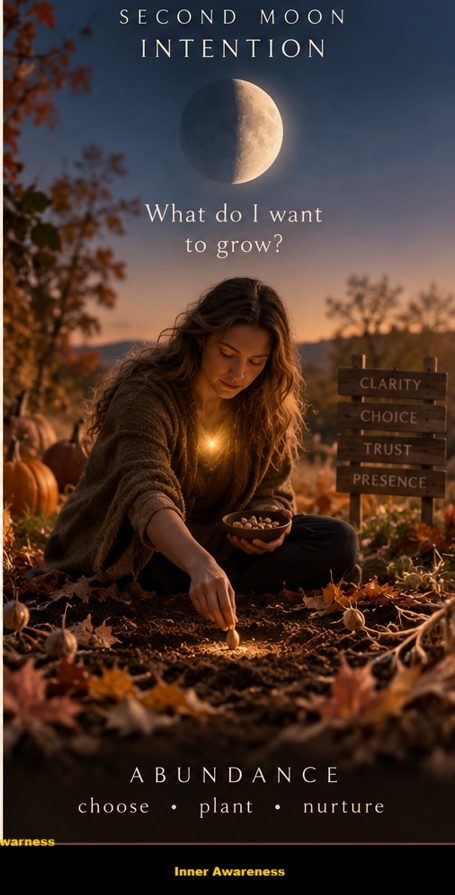
Autumn New Moon Inquiries

Septembers New Moon Was the Inquiry: What is calling me? Now In October the inquiry is:

What do i want to grow?

Current position of the moon phases – September 25th, ’26


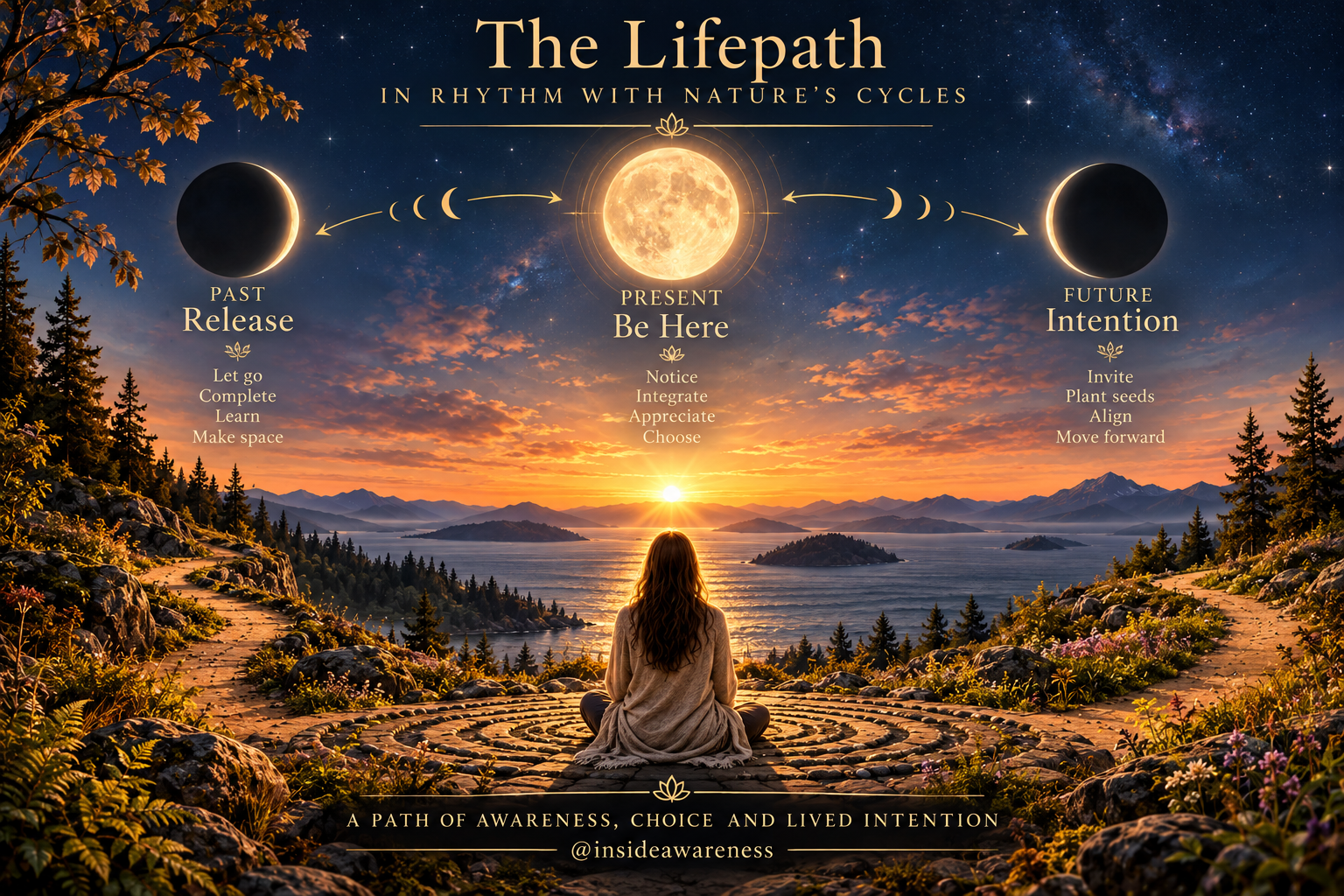
An Invitation to Walk with Awareness

No two life paths unfold in exactly the same way.

People may arrive at the same age having developed remarkably different ways of moving, relating, responding, choosing, caring for themselves, and participating in life. These differences do not appear all at once. A life path develops through an accumulation of experiences—circumstances encountered, responses learned, choices made, opportunities available, and patterns repeated over time.

Many of these influences become part of everyday living without being consciously noticed. What is repeated becomes familiar. What is familiar can become a lifestyle. And the lifestyle itself begins to influence how the continuing path is experienced.

This raises a different possibility:

What might change when awareness becomes part of how the path is walked?

Awareness does not tell us what our life path should be, nor does it guarantee where the path will lead. It can, however, help us recognize what is happening while we are living it.

A habitual response can become something we notice.

A reaction can become something we feel before acting upon it.

A familiar strategy can become something we question.

A choice can become more conscious.

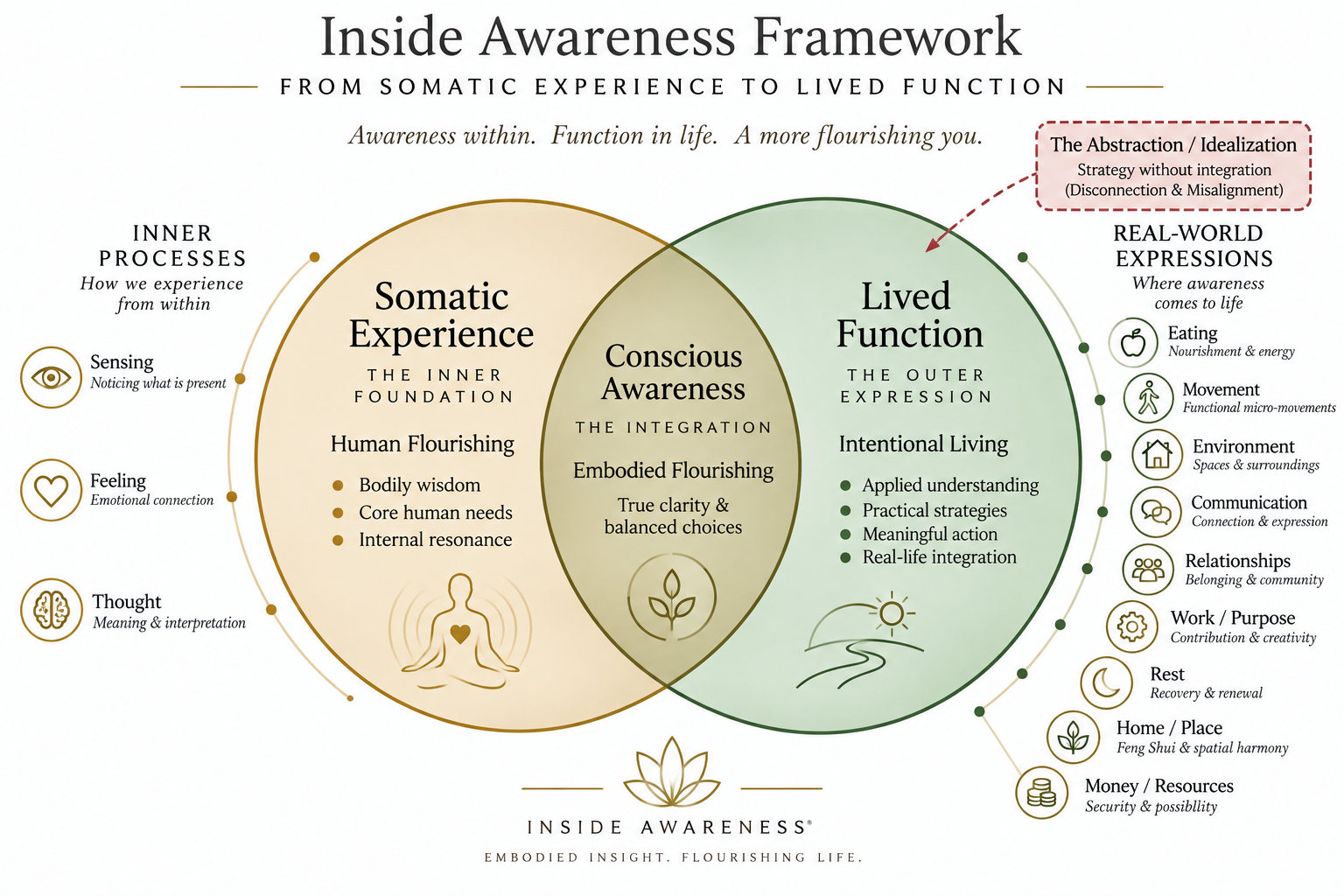
The guided patterns offered through Inside Awareness are invitations to explore this possibility through lived experience. They bring attention to ordinary areas of living—movement, sensing, feeling, thinking, eating, communicating, relationships, home and environment—not as separate subjects, but as experiences through which awareness can be learned and integrated.

The intention is not to interpret your life path for you or prescribe how it should be walked.

It is to offer guided experiences that may help you become increasingly aware of how you are walking it.

Your life path continues to unfold.

The invitation is to be present for more of it.

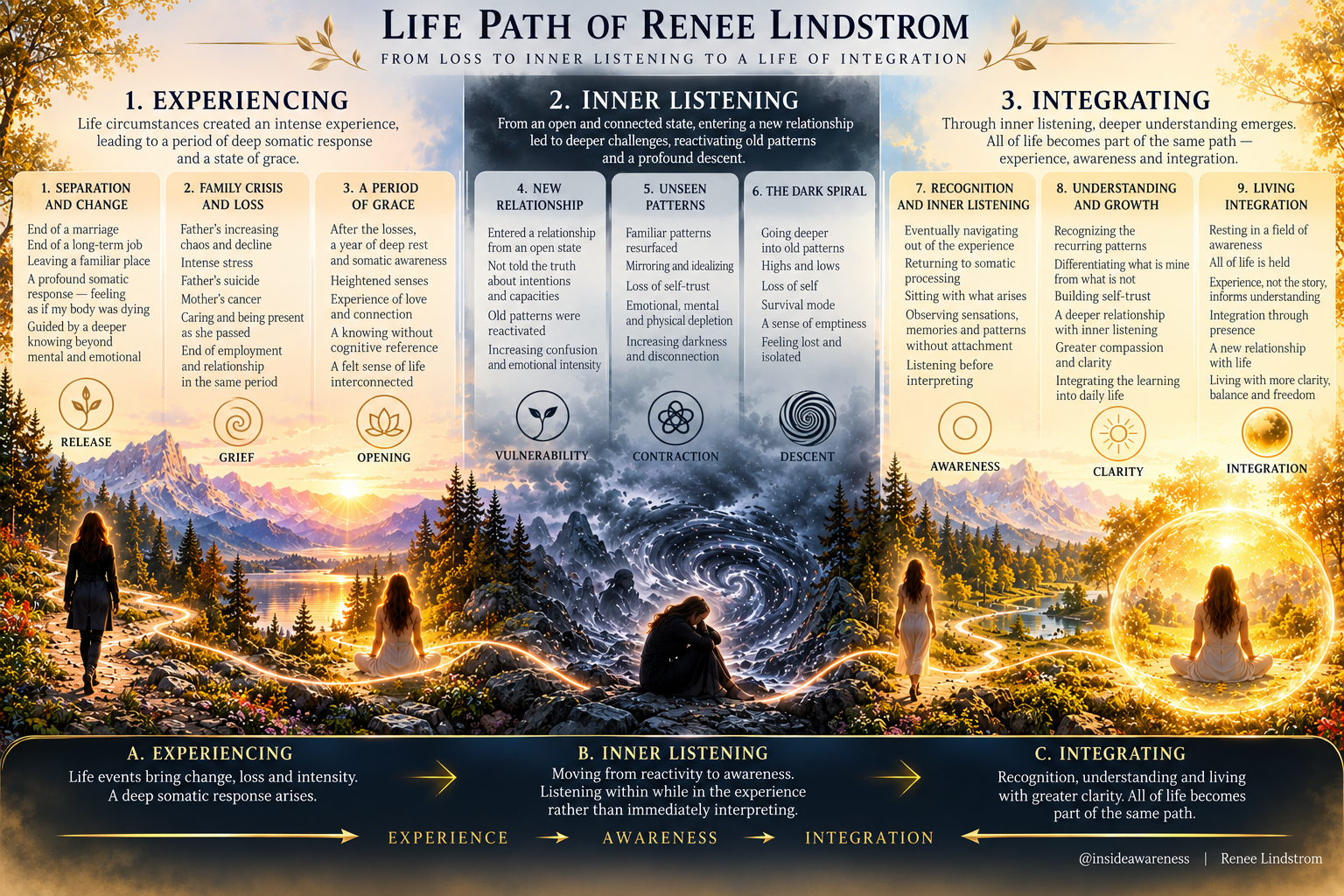
A pattern of inner listening to the experience has emerged through my own life path that has shaped the awareness integration sessions and classes for a number of years. The organic connections that emerged have been put into guided patterns that will be available through boutique group learning in early 2027.

An infographic titled 'Life Path of Renee Lindstrom' illustrating a journey from loss to inner listening and integration. It consists of three main sections: 'Experiencing,' 'Inner Listening,' and 'Integrating,' detailing phases such as grief, vulnerability, awareness, and clarity. Each section includes descriptions of emotional experiences and personal growth, accompanied by scenic imagery symbolizing transformation and connection.

Inner Listening Pathway

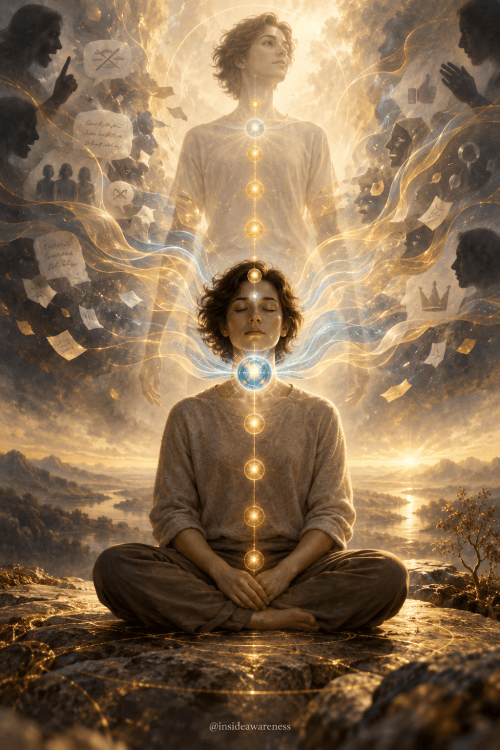
This image below reflects an experiential pattern that spontaneously emerged through a shift in the orientation of interpretation. The pattern is one of inner listening that can actively transition from sitting into standing and walking. The pattern of inner listening creates balance and clarity without reacting or attaching to the stories, emotions and thoughts of others in ones relationships. The space becomes the gentle boundary between what others experience and how they responded for remaining centered and grounded creating choice. A choice to engage and how to respond sensibly.

Lifestyle Opportunities for Lifepath Integration of Esperance's

Read more on Life Path Origins or if you are interested in exploring boutique group learning opportunities sign up for updates or like and subscribe for future news as it is posted

A woman meditating with a glowing aura, surrounded by words related to emotional challenges and transformation. The image contrasts 'fear' and 'negativity' with 'awareness' and 'compassion', symbolizing inner growth and healing.

Lifestyle Opportunities for Lifepath Integration of Experiences

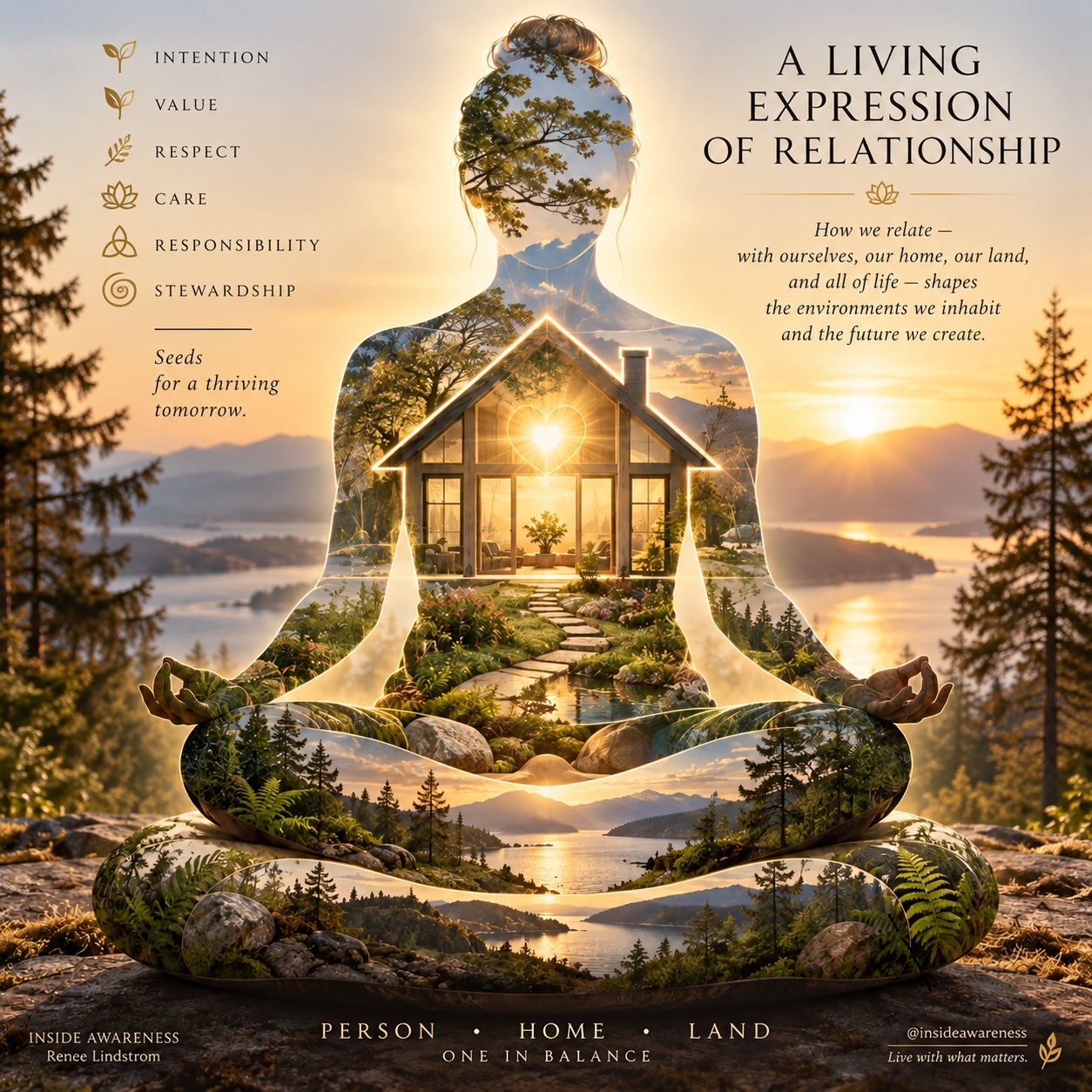
Embodying Relationship with Lived Experience in the Home

Foundation – Where living takes root

Home • Environment • Life Path

An artistic representation of a meditative figure with a landscape scene inside, featuring a house at the heart surrounded by trees and water, symbolizing harmony between person, home, and land.

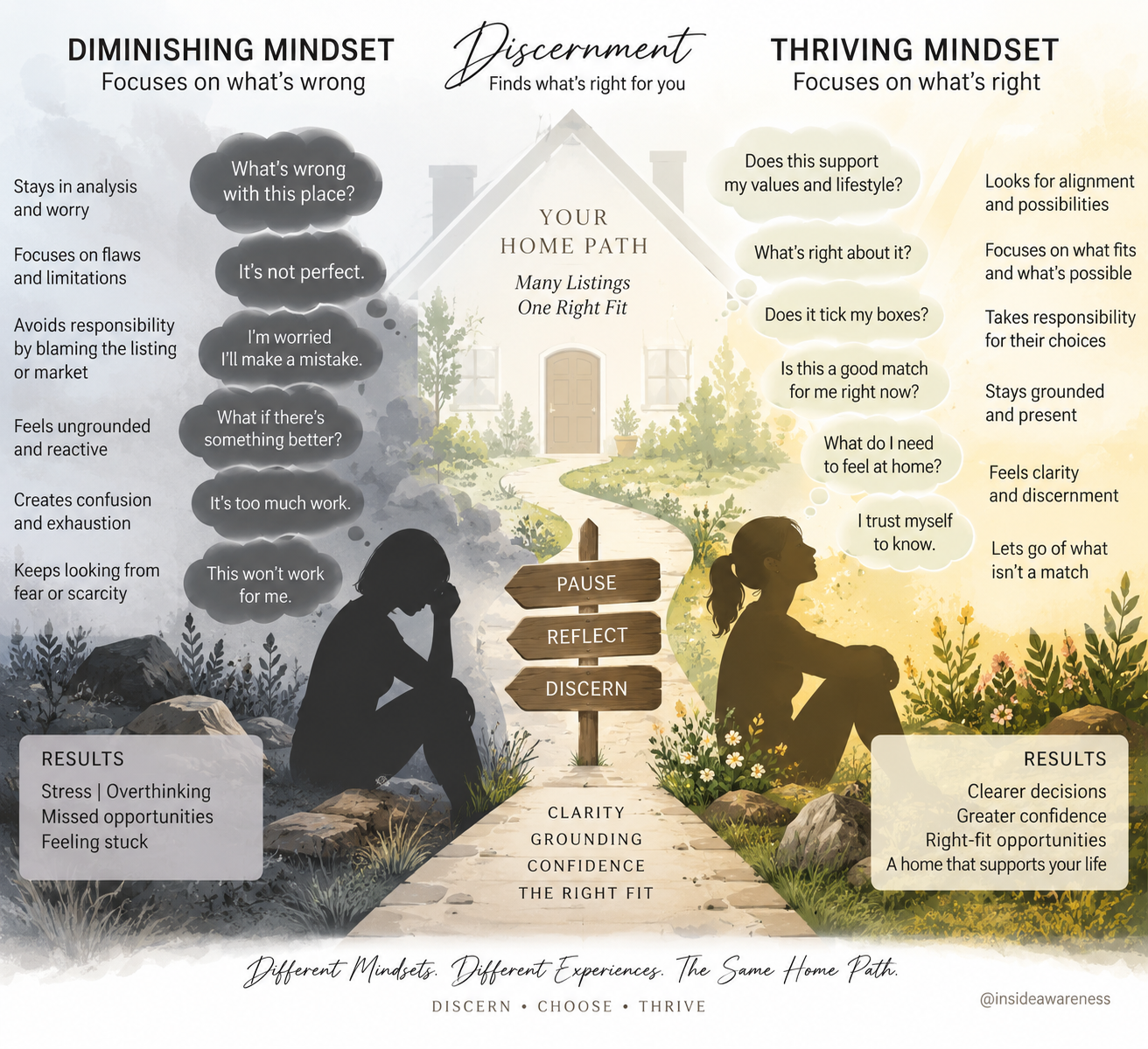
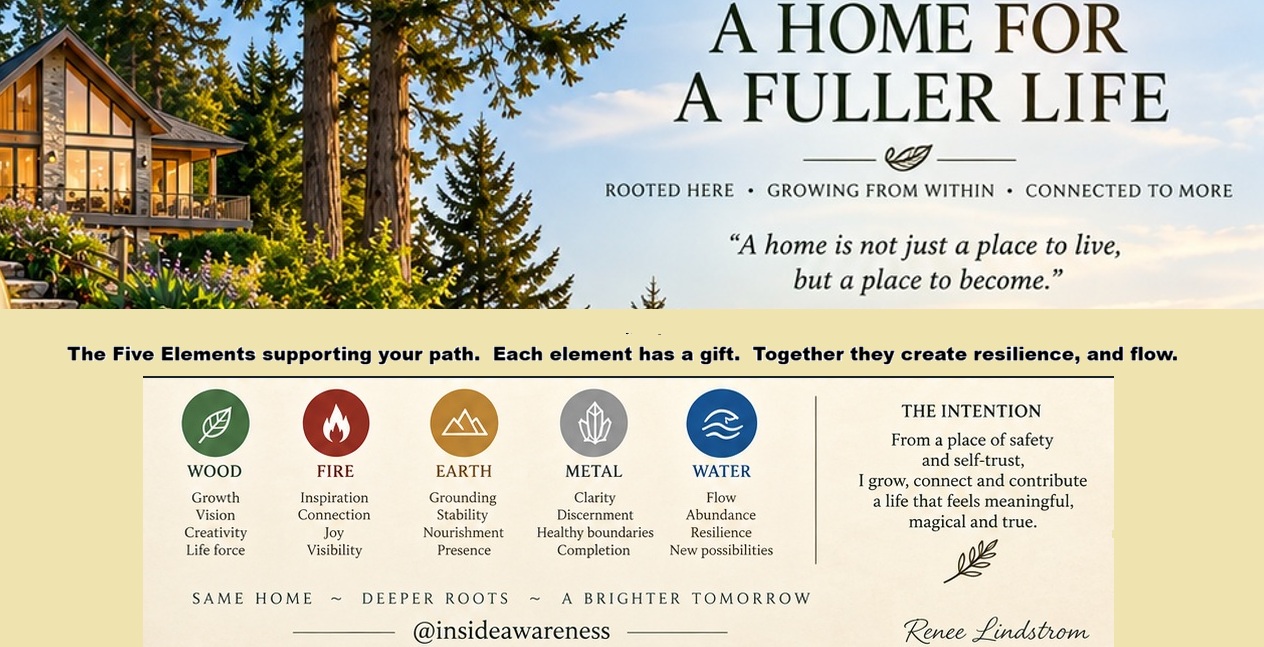
The home becomes a life path for the time one lives in it. This clarity has value as it brings awareness to how it stimulates your thoughts, emotions and actions. Most are considering colour design trends and locking into a long term experience, bypassing the listening stages for maximizing the potential influences in becoming a supporting and flourishing home. One that reflects the homeowners intentions and expectations.

An infographic contrasting diminishing and thriving mindsets in decision-making, with a focus on discernment. It illustrates a pathway with a house, highlighting thought processes such as focusing on flaws versus possibilities, and the resulting emotional states like stress versus clarity.

The patterns of listening at Inside Awareness use natural patterns for balancing the interrelationships between the home and householders living within it. The intention is for a fuller life that is supported by a foundation that compliments ones hopes, dreams and intentions on their lifepath.

A beautiful wooden house surrounded by trees under a clear sky, with a text overlay promoting a holistic lifestyle.

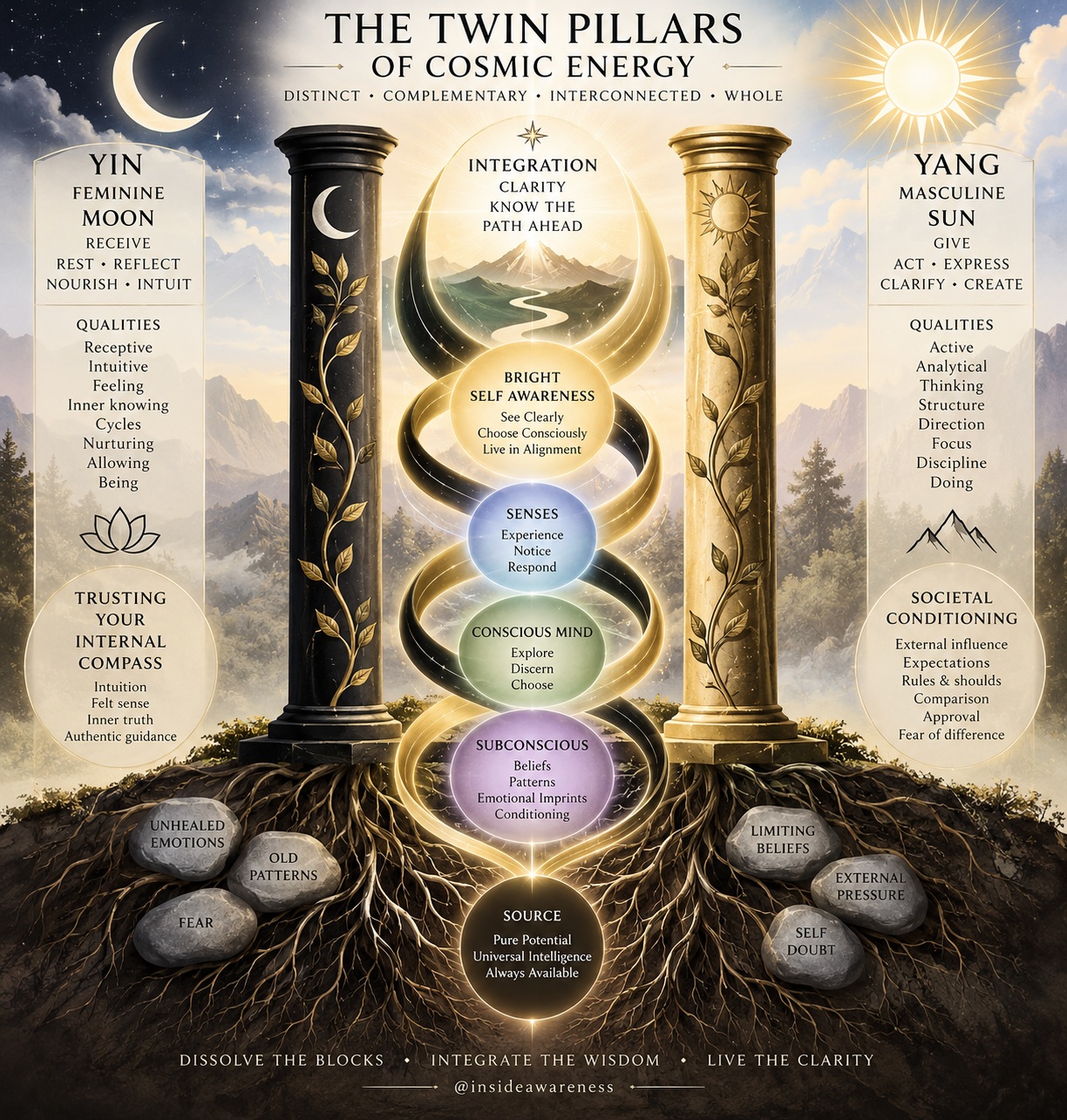
Listening to Universal Interconnected Qualities

These qualities of Yin and Yang are a focus in Traditional Feng Shui. Together in balance they reflect balance.

These same qualities are consideration that are reflected in in the Life Path & Living Expressions through relationships learning and coaching opportunities.

An infographic illustrating the 'Twin Pillars of Cosmic Energy' concept, featuring two columns labeled Yin and Yang. The Yin pillar is associated with feminine energy, intuition, and nurturing qualities, while the Yang pillar represents masculine energy, action, and clarity. The center emphasizes integration and self-awareness, with sections detailing the conscious and subconscious mind, societal conditioning, and the need to trust one's internal compass.

Embodied Function Integration Opportunities

A woman lying on a yoga mat in a well-lit room, practicing body mindfulness, with a plant visible in the background and the text 'Body Mindfulness' and contact information overlaying the image.

Harmonizing Movement

Learned by the Body, not explained

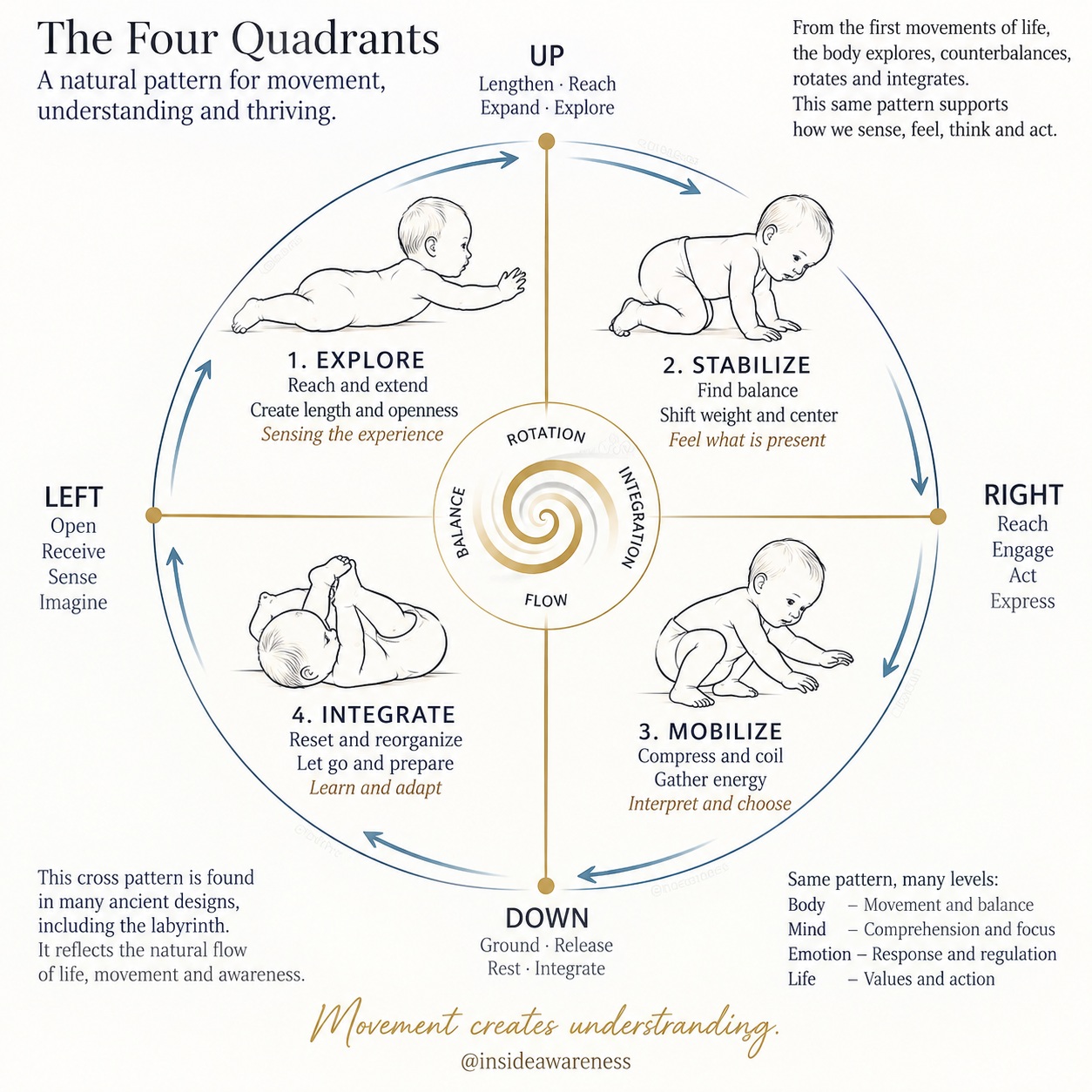
An infographic titled 'The Four Quadrants' illustrating a natural pattern for movement, understanding, and thriving. It features four sections labeled: 1. Explore, 2. Stabilize, 3. Mobilize, and 4. Integrate, each with corresponding actions and meanings. Centered is a spiral, symbolizing balance and flow, with arrows indicating movement directions. The bottom includes a note on the significance of this pattern in ancient designs.

Recognize the seed pattern? Ancient gravitational rotational pattern. Explore Feldenkrais @ Monterey Center in #yyj’s Oak Bay or create your own boutique workshop or group lessons at home, work or organization. Living Functional topics could include, TMJ and Jaw Bone Function, Breathing through the Flexible Bone function, Walking through Flexible Bone Function, Sleeping with Bone Functional Awareness, Rolling into and out of Bed through Bone Functional Awareness, and more…..

New Fall Movement Classes

Signing up for #yyj Balance and A Fear of Falling still active – Monterey Center – 250-361-7508

October 31st, ’26 – #yyj Workshop – Breathe Easier with Feldenkrais – 250-361-7508

December 5th, ’26 – #yyj Workshop – TMJ – 250-361-7508


Harmonizing with Food

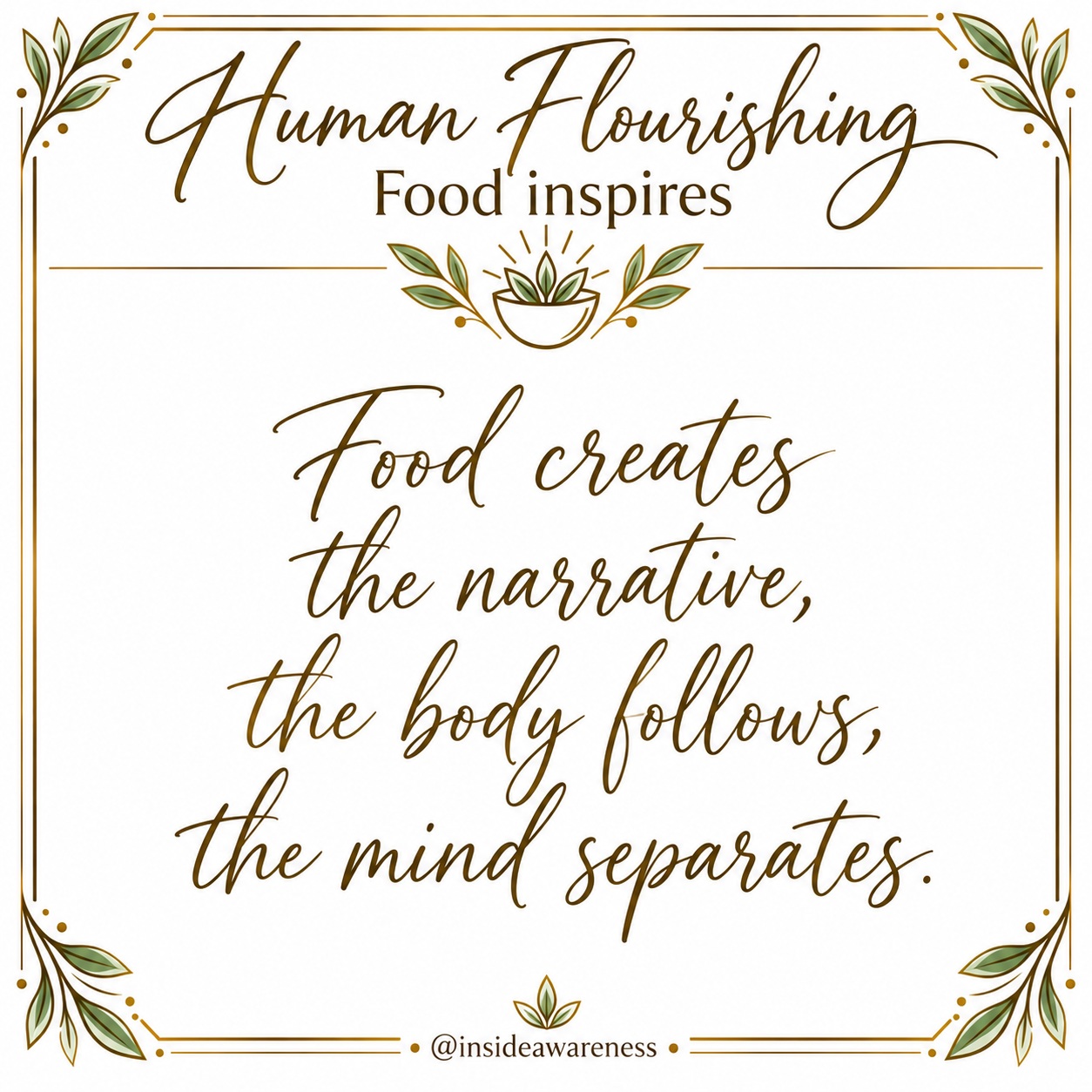
A decorative quote image that reads: 'Food creates the narrative, the body follows, the mind separates.' The text is styled with elegant lettering and surrounded by green leaves and a floral motif.
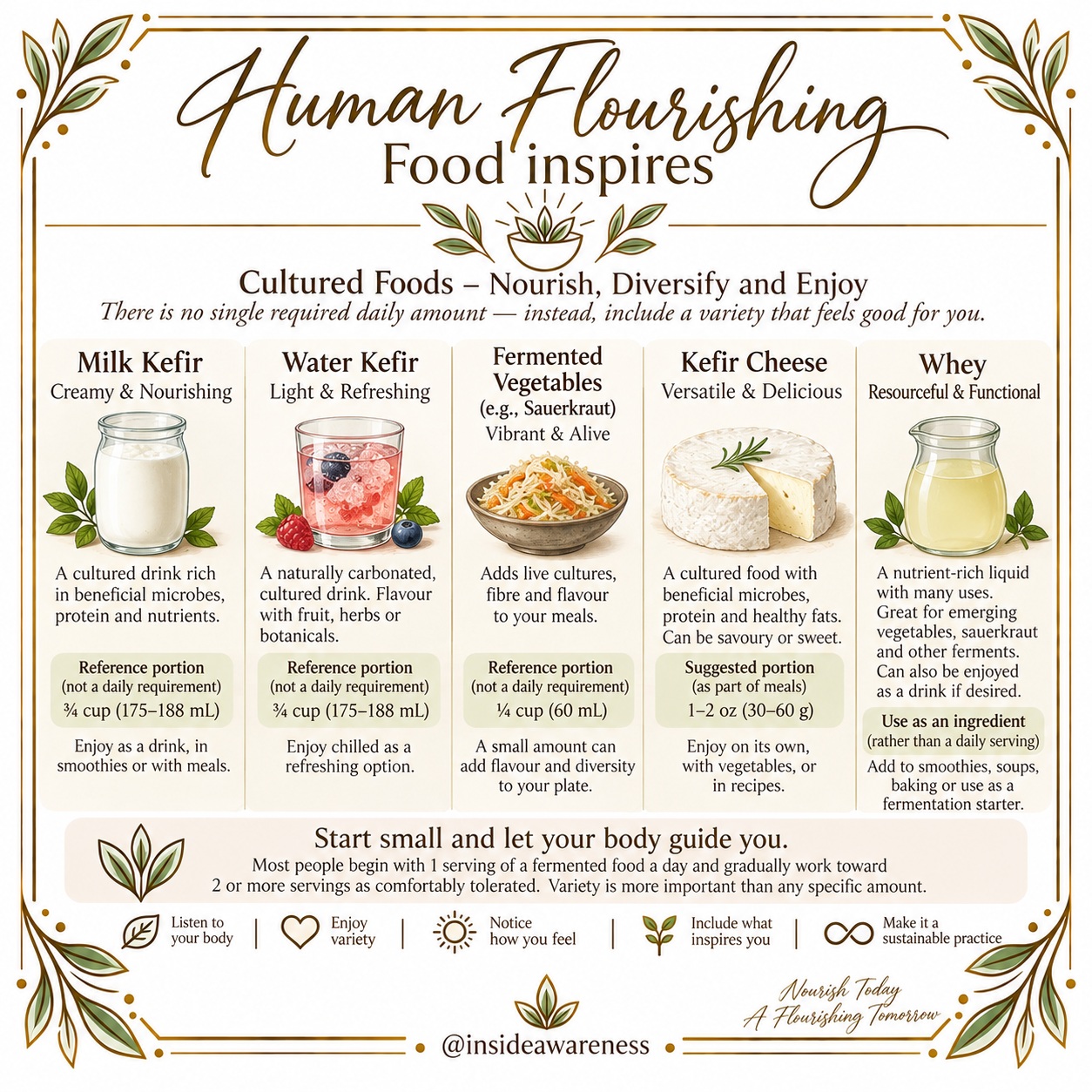
Infographic titled 'Human Flourishing' illustrating various cultured foods: Milk Kefir, Water Kefir, Fermented Vegetables, Kefir Cheese, and Whey, highlighting their benefits, reference portions, and suggestions for use.

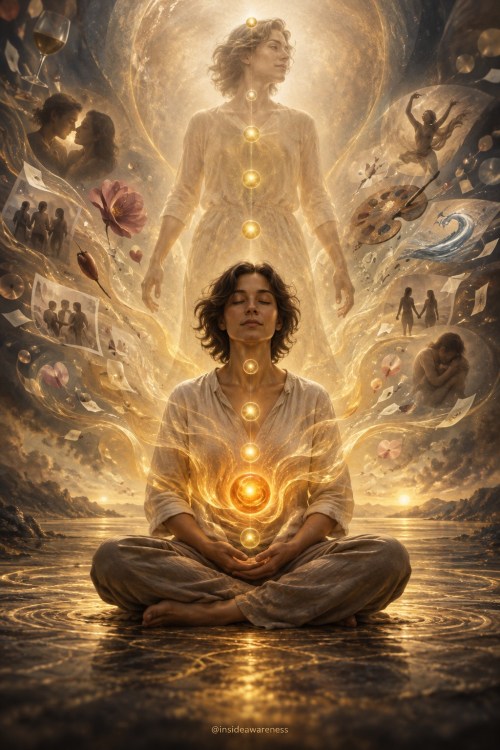
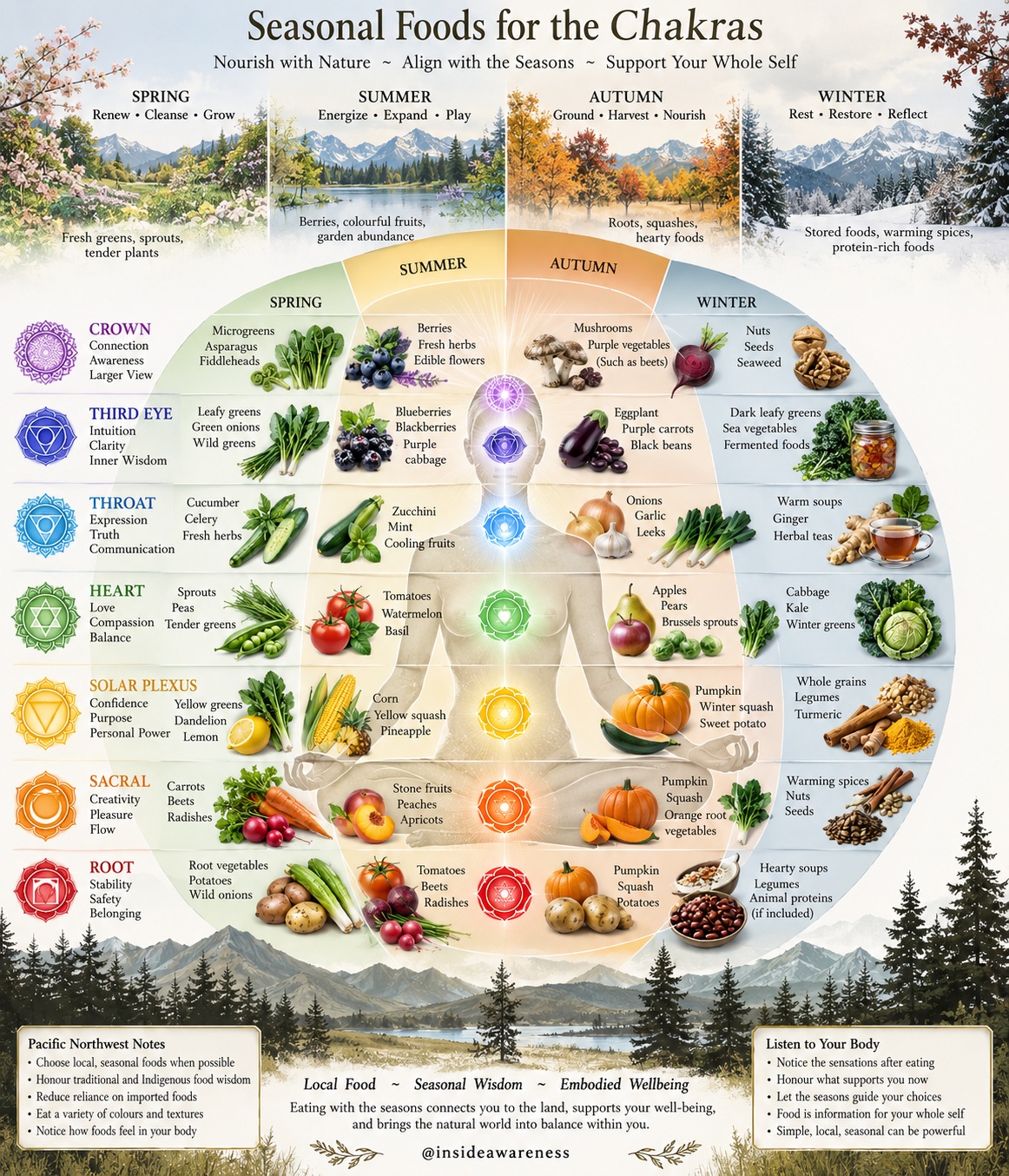
A focus of Harmonizing with food is to inspire lived relationships with eating plans that support inner and outer relationships with nature. These lived relationships are demonstrated in the diagram. Eating plans with a focus on the seven energy center colours was an plan to inspire the connection with food choices. The seven chakras life areas influenced by the chakras are shown in a gallery under it.

If you are interested in starting your Cultured Food Journey:

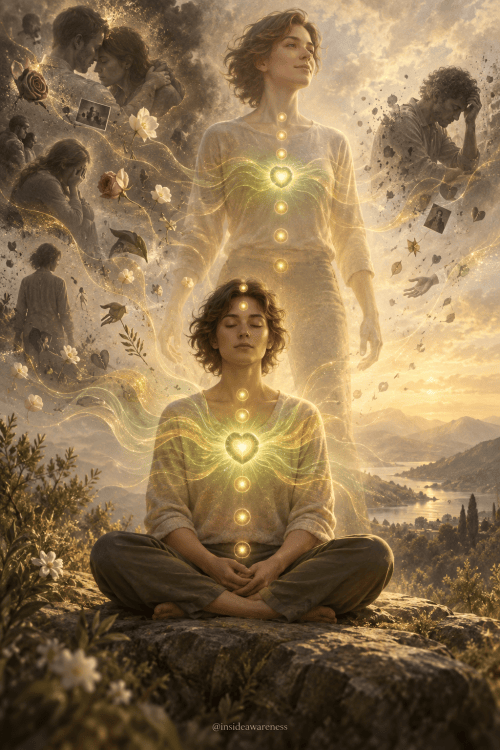
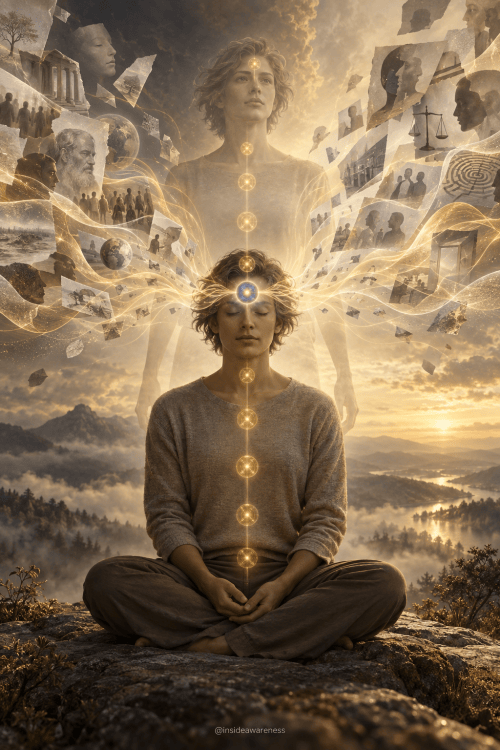
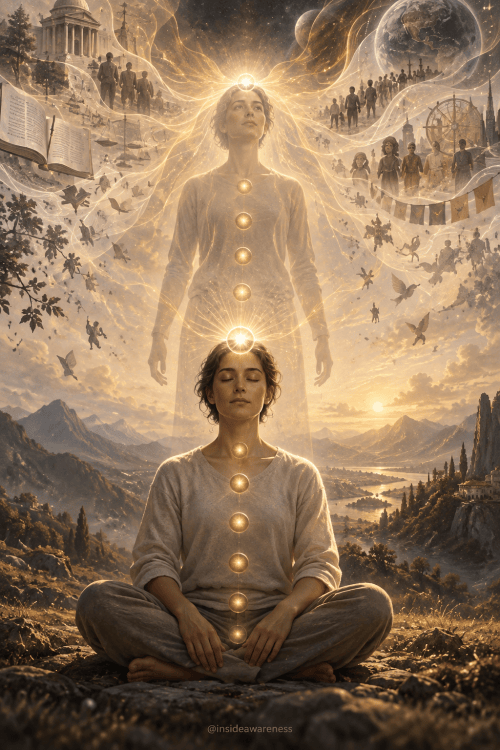
This slideshow demonstrates the body’s seven energy centers in alignment with their corresponding life area influences. Each picture shows a person transferring this into lived action by the figure coming into standing for a lived experience.


Harmonizing Interactions

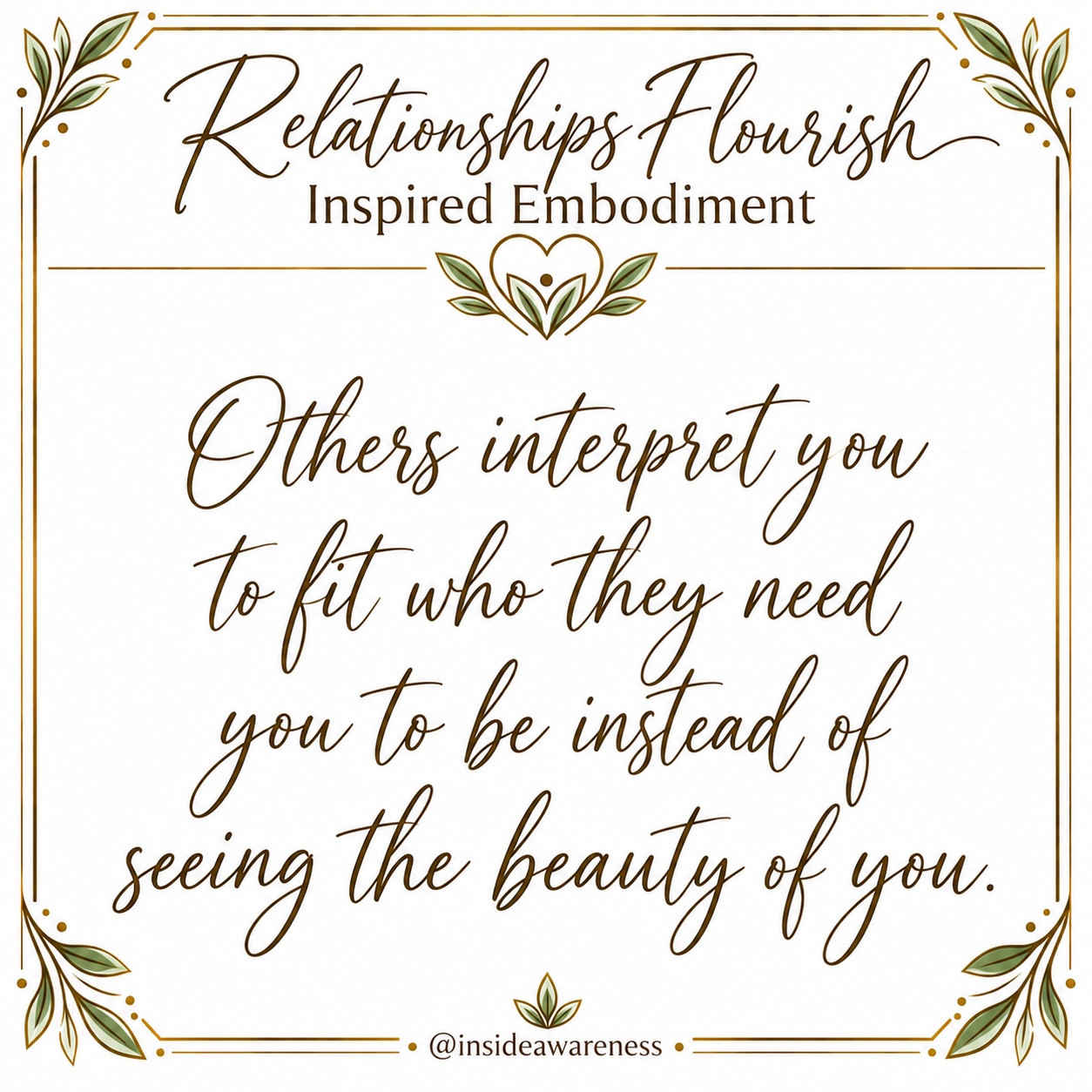
A motivational quote framed with decorative leaves, reading, 'Others interpret you to fit who they need you to be instead of seeing the beauty of you.' The text is titled 'Relationships Flourish' and includes the source '@insideawareness'.

September Fall News – First Full Moon

Embodied Discovery – What becomes possible through exploration

Learning → Practicing → Integrating → Embodying → Recognizing


Embodiment before strategy is a learning pattern integrated into the program topics at Inside Awareness. Learn more about the lifestyle program topics.

Follow Socials:
Facebook, LinkedIn, Instagram, TikTok, X or Pinterest


Copyright 2026 Renee Lindstrom, GCFP

With respect and gratitude, this work acknowledges the ground provided by the teachings and practices of Moshe Feldenkrais, Marshall Rosenberg, Chögyam Trungpa Rinpoche, and Dyan Grant Francis. Their contributions are honoured as part of the learning from which Inside Awareness continues to grow.

Feldenkrais®, Feldenkrais Method®, Awareness Through Movement®, and Functional Integration®, are registered service marks of the Feldenkrais Guild® of North