Tag Archives: Fitness

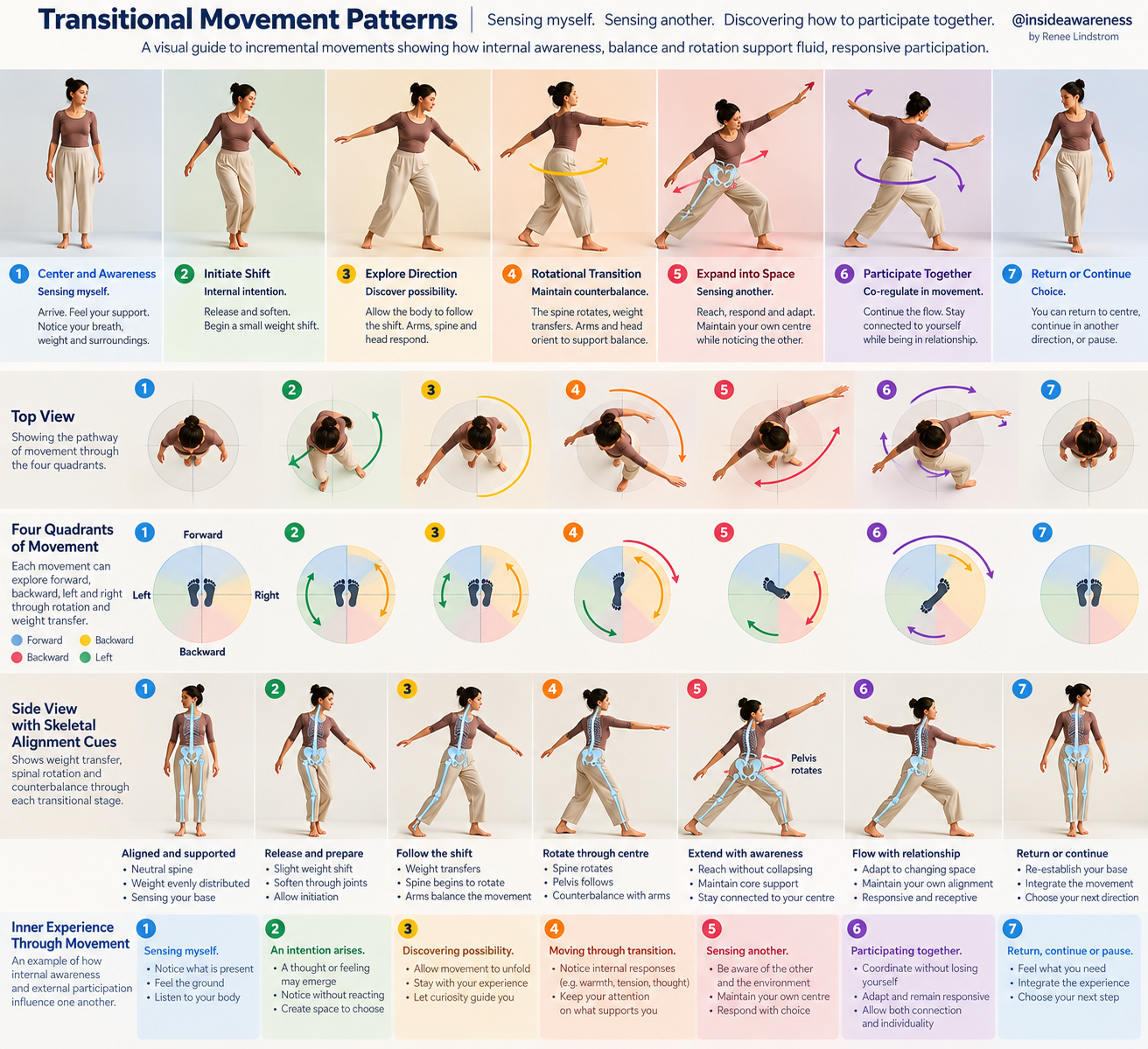
Balancing Somatic Awareness & Cognitive Intellectualization while observing 3 Posture Transitions through the felt senses

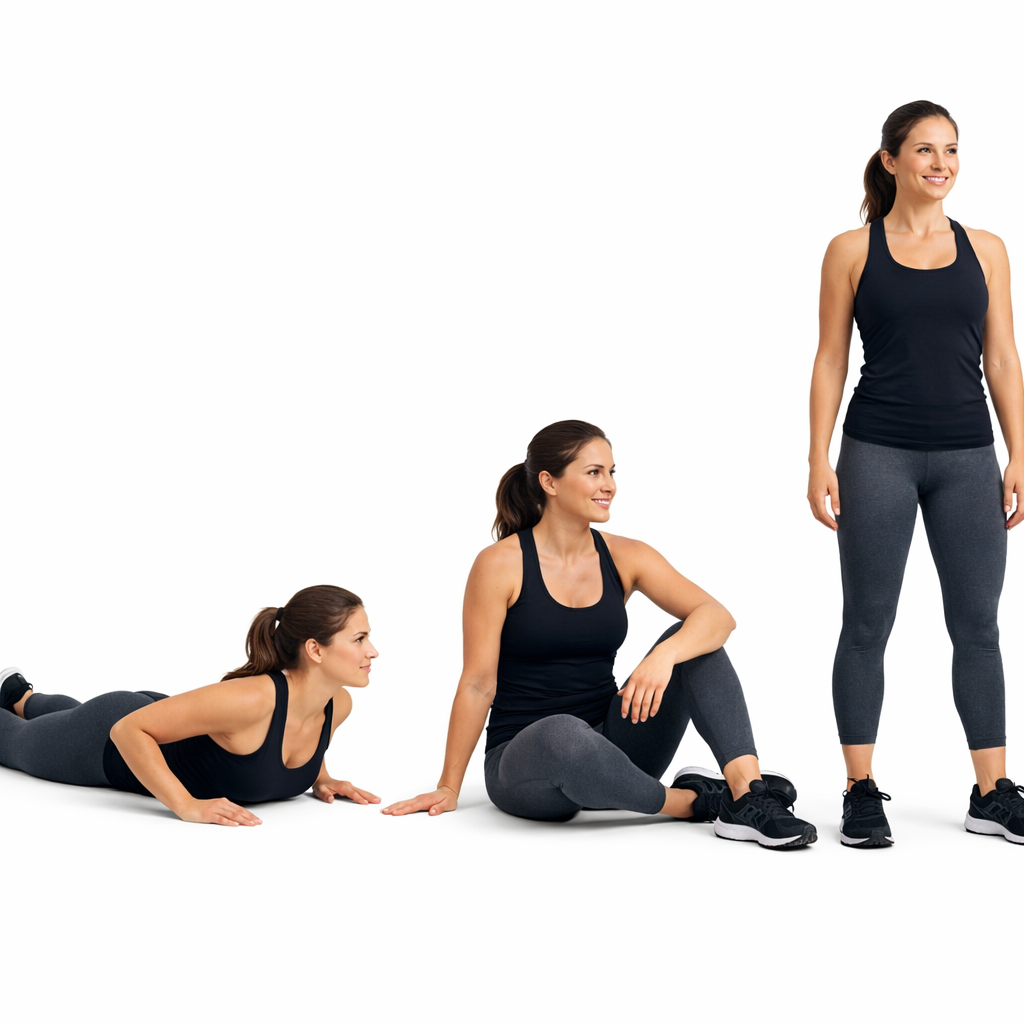
Woman in black tank top and gray leggings moving from lying on stomach to seated to standing position
A woman demonstrates a sequence of recovery poses from lying down to standing up during a workout.

1. Standing

2. Sitting

3. Prone

Here are some reflections of this Feldenkrais Practitioner prior to a Breath Workshop held in April, ’26 to center and ground prior to leading a group through a specific guided patterns of movement. .

The focus of attention in the verbal guided patterns to go beyond the busy mind of thinking into an expanded awareness of the somatic experience

The process of observing the guided pattern suggestions is another focus of attention for balancing the somatic experience with cognitive conceptual function. This focus in this pattern leads with somatic experiences to redirect cognitive functional focus of attention. In the process of this focused pattern, the mind can enter a state not unlike a mindfulness meditation. In this mindfulness like state the cognition can expand beyond beliefs, opinions, evaluative thinking and social conditioning into a field that cultivates deeper awareness.

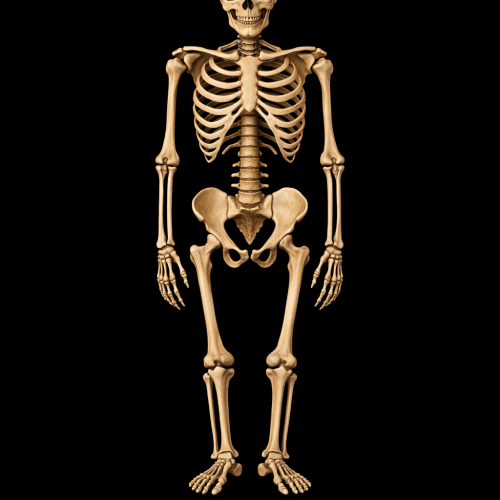
The guided micromovements focus on the body’s structural design for potential movement beginning with the core – the skeleton.

Why? The natural design of the bodies ability to transition through postural shifts is through the bone pressure using the force of gravity. Original movement transitions are not through muscle and soft tissue lifting the bone and bearing the weight of the bone matter. That only creates constraints, pain and limited function. Organizing the skeletal bones to transition through flexibility and expanded range of motion increases ease and effortlessness in functionality.

Micromovements through the perspective of skeletal function is its own separate type of workout from what is currently focused on, and this focus can be far more challenging than the current mainstream focus is aware of

Imagine repeating changing patterns of micromovements toning the muscles through available functional transitions that release the few muscles that have become the primary motivation for controlling movement. New muscle patterns are created as habitual holding is released through the tonification and dormant muscles are activated, while the organization in the brains is expanding through conscious awareness.

These guided patterns go beyond the conceptualization of cognitive intellectualization that has locked movement into patterns that eventually create diminishing capacity through its limited understanding. Beliefs, opinions and evaluative expressions lock down the brains functional capacity. This is expressed through a lack of flexibility in all qualities of function; mentally, emotionally and physically.

This suggests that these guided patterns for integrating movement through a focus that taps into conscious awareness that balances both the somatic experience and cognitive function can give all aspects of functional experiences a workout from perceptions, mobility to brain function. Ihe focus is completely on expansion and identifying limitation whether it is through thinking, emotional and physical patterns.

This fantastic connection in this process is that it is through organic functional movement, the brains focus of attention and mindfulness. Imagine a fitness workout that is actually a pattern for learning and going beyond what we know into a expanded reality that reduces fear, pain, effort and suffering into ease, flexibility, groundedness and agility.

Learning focus here is through the bones and not socially conditioned thinking patterns that come through titles, names, labels, trends and images of right and wrong beliefs. Current examples are the bastardization of the cultural practices of yoga and tai chi where cognitively designed exercises have been turned into chair yoga and chair tai chi. These are exercises packaged as a concept and they lack the somatic awareness component of the source philosophy. It’s the development of a marketing strategy for creating an image that taps into the focus of attention of society’s ego concepts of self image. Are they beneficial for becoming active. Yes, however they are examples of misleading advertising that is associated with the mindfulness and expanded consciousness of the traditional philosophies.


The above is an evolution of deeper understanding of social conditioning and the lack of balance between somatic experiencing and cognitive conceptualization that is developing from the focus of attention and observations of the practitioner of functional integration.

It is an example of reflection for tapping into and grounding thought patterns for organizing a focus on balancing the mind to guide patterns that will open students consciousness and not reflect boxed in cognitive concepts. Pausing to organize thoughts to set them aside to guide others into mindfulness is an important part of this practitioners process. I hope you enjoy the content.


Body Mindfulness – Core Body Functional Breathingย Audio

New Release


Connect for Lifestyle Coaching and Learning Needs

Follow Socials:

Copyright 2014 โ€“ 2026 Renee Lindstrom, GCFP

Feldenkraisยฎ, Feldenkrais Methodยฎ, Awareness Through Movementยฎ, and Functional Integrationยฎ, are registered service marks of the Feldenkrais Guildยฎ of North America

Body Mindfulness Core Body Functional Breathing Audio

by Renee Lindstrom, founder, Inside Awareness Center for Integrative Somatic Learning

Functional Breathing Patterns sensed with somatic awareness

Often when observing the breath patterns of an individuals I will see that there is a lack of skeletal movements in their patterns of expansion and contraction in the moving parts that could be recruited for fuller body supported whole movement for drawing in air and expelling it.

The body parts I refer to are the bones and joints that create flexibility, balance, expansion and contraction, and counterbalance.

Shown here in this slideshow.

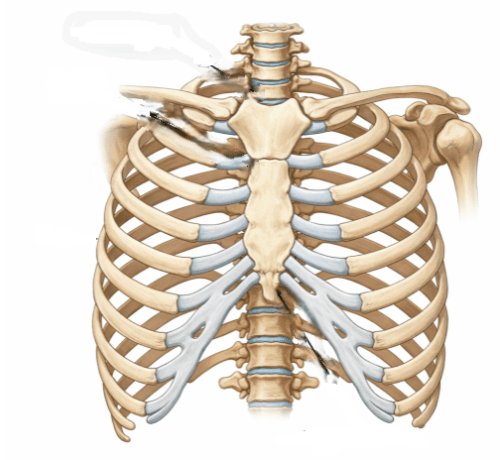
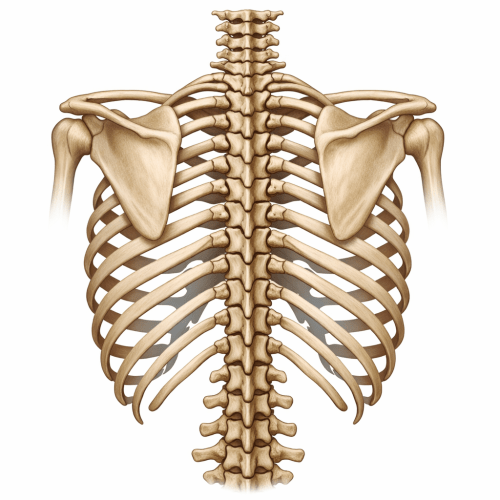
  • Posterior view of thoracic vertebrae with ribs and scapulae
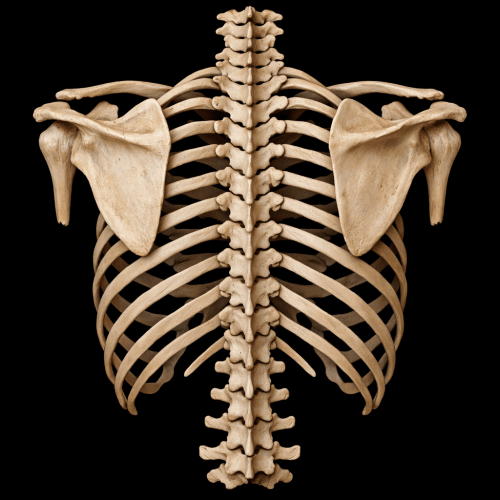
  • Rear view of human rib cage with scapulae and spine bones
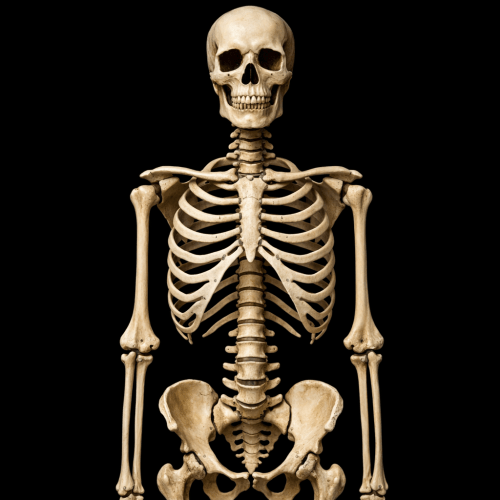
  • Human skeleton front view showing skull, rib cage, spine, arms, and pelvis bones
  • Anterior view of a human skeleton showing skull, rib cage, spine, pelvis, arms, and legs
  • Clearly include and define knee joints

The above slideshow demonstrates the moving parts of the skeleton that supports whole breath through core functional skeletal movement patterns.The focus of attention in these guided patterns is movement where the muscles, ligaments and soft tissue are spontaneously moving in response to the skeletal micromovements. These micromovements with a skeletal focus treats the muscle and soft tissue as partners that follow and hold the bones in alignment. This focus is on core bone strength and the resilience of the muscles that are not resistant to functional movement patterns. Muscle strength is separate from bone strength, yet often in cognitive intellectualization does not include the understanding of the bone movement in functional postural transitions.

The patterns in The Mindfulness Body Breath workshop and Audios focus attention on education of whole function through postural transitions to enhance and improve natural rhythms of breathing. The guided patterns balance the somatic experience with the cognitive conceptualizations for increasing mindfulness through function.

More on Body Mindfulness Audio plus added bonus below: Free Intro to expanding somatic sensing in video embedded down below

These guided patterns are from Feldenkrais workshop that Renee has held since 2007. The feedback after each workshop has been positive with appreciation expressed.

Core Body Functional Breathing Audio

The Audio for Core Body Functional Breathing will guide you through patterns of movement to explore breathing with the focus on micromovements to release bones held in rigid patterns to encourage fuller intake and expulsion of breath and that is a natural function and not forced through concepts. These guided patterns generate a conscious felt sense connection to contraction and expansion through movement. This increase in awareness can support consciously releasing the constraints to blocking the resilience through the patterns of opposites that initiate contraction and expansion through bone movement that is needed for organic fuller breath patterns.

Included in this audio lesson offer is an intro and outro for the intent to learn how to engage the sensory awareness using the five senses in harmony and partnership with cognitive function. It is this practitioners experience that integration and development of new neural pathways do not develop through thinking that is dependant on beliefs, opinions and evaluative thinking. Neural pathways are developed on new actions that engage growth through novelty, exploration and discovery.

Read more on the benefits of Somatic Body Mindfulness and research of Feldenkrais below


How to purchase and enjoy – Core Body Functional Breathing Audio


How can you move a body part through function when you don’t know what it is somatically or the ability to different it from your body mass?

Intro to how to use your senses of sight (visions) and sound to differentiate felt senses of individual body parts.

In this short video Renee introduces the potential of expanding the felt sense of the bones inside through vision and imagination. Using pictures of the bone parts through the sensory perception of sight and sound the listener can focus on integrating this knowledge into their somatic sensory perception that can create a connection to the bone through the sensory ability to feel them independently through *function.

*function – postural transitions such as lying to sitting and then to standing


Read more on the benefits of Somatic Body Mindfulness and research of Feldenkrais below:

Learn More about Body Mindfulness

Some of the conditions that SBM guided patterns that Renee has observed improve are:

  • Anxiety and Depression
  • Artheritis
  • Back and Neck Pain
  • Loss of Balance
  • Bell’s Palsy
  • High Blood Pressure
  • Shallow Breathing
  • Chronic Pain
  • Eating Disorders
  • Fibromyalgia
  • Lack of Flexibility
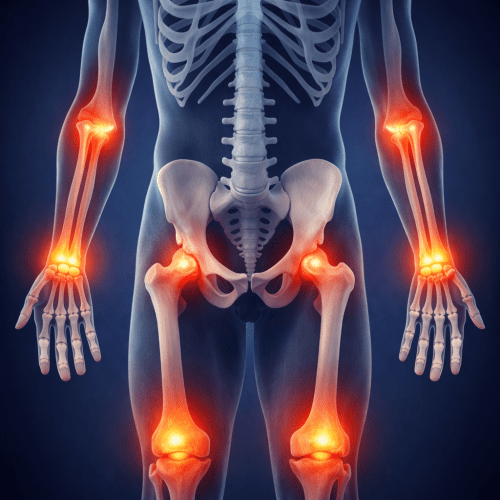
  • Hip, Knee and Ankle Joint Pain
  • Injuries
  • Insomnia
  • Pulled Muscles
  • Multiple Sclerosis
  • Parkinsons
  • Locked Shoulders
  • Stroke
  • TMJ

Some of the Benefits that Research has shown are:

  • Improved:
    • proprioception
    • coordination and ease of movement
    • posture and stability
    • well-being
    • feeling of confidence
    • breathing
  • Decreased
    • pain
    • spasm

Research Evidence:

  • Improves:
    • body awareness: ย Multiple sclerosis, pain, stroke, able-bodied ย 
    • ย mobility
    • ย stability
    • ย coordination
    • ย ease of movement
    • ย posture
    • ย balance confidence
    • ย mood
    • ย breathing
    • ย well-being and quality of life
    • ย sleep
    • ย self efficacy and health locus of control
    • ย self image
    • ย greater recruitment of the affected part of the motor cortex ย (stroke)
  • Reduces, decreases:
    • decreased pain
    • fatigue
    • anxiety and stress
    • medical costs

To learn more about this Research on the Benefits of Feldenkrais, go to the link in the description box and tap the link

Introduction: Grounding thru Body Mindfulness

Benefits:

  • reduce and reverse aging
  • increasing flexibility and resilience
  • develop body awareness
  • reduce body tension, pain, anxiety and effort
  • increase relaxation and windows of emotional tolerance and self-connection
  • improve sleep and sleep sounder
  • increase body functions, cognition and emotional responses of calm, mindfulness and joy

Exploring the body anatomy through the felt senses increases inner awareness โ€‹ and trust. This โ€‹body exploration is a different type of strength training. The difference โ€‹is theโ€‹ focus of attention on the body, mind and felt senses through guided patterns designed to expand conscious awareness of the body function. The strength of feeling oneโ€‹’s body through moving joints and bones deepens awareness of physical connections โ€‹as โ€‹postures change, like in the shifting transitions from sitting to standing and back to sitting. Movement is a series of shifting postures. The functioning healthy body is not stationary, nor poses. It is designed for a continuous flow of integrative movement patterns.


Feedback On Body Mindfulness Introduction

“I am excited!!! This is great! It is like you are there with me step by step. It’s what all of us are looking for, real Feldenkrais support” S
That was great, Renee! You have such a calm and lovely voice. I’m happy to add this to my calming strategies. Thank you.ย H
I really like this sort of thing and would welcome further โ€œinstallmentsโ€ in the series and/or a revised version of this one. I liked the pace at which you spoke, not too rushed and left enough time to do the exploration of the particular area of the body to which you were drawing attention.
I liked that you offered options re leg position (straight out or with bolster under knees) but wondered whether one position or the other is preferable. Or is it just that one would notice different things, depending on how the legs are positioned?” ย  K


Connect for Lifestyle Coaching and Learning Needs


Follow Socials:


Copyright 2014 โ€“ 2026 Renee Lindstrom, GCFP

Feldenkraisยฎ, Feldenkrais Methodยฎ, Awareness Through Movementยฎ, and Functional Integrationยฎ,ย are registered service marks of theย Feldenkrais Guildยฎ of North America

Another bonus of rebounding – tighter pelvic floor muscles

by Renee Lindstrom, GCFP

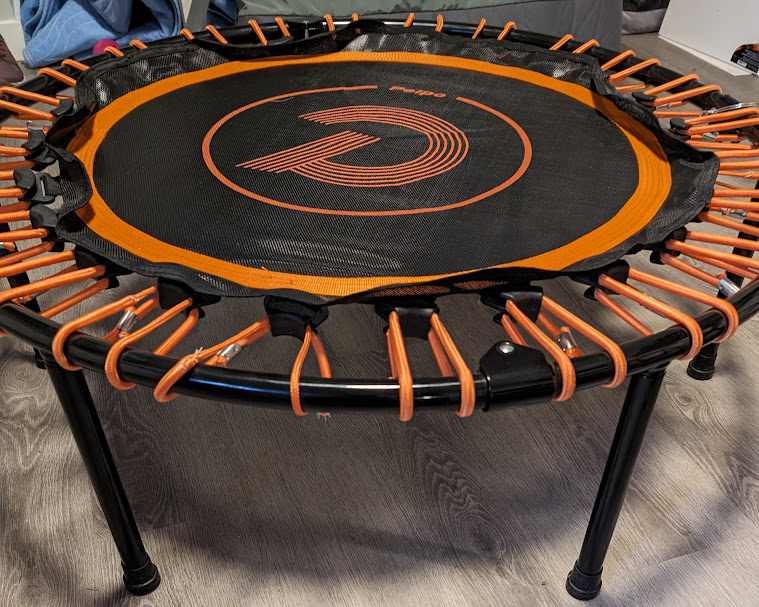
After a long chest ailment when my heart rate was increased my lungs would tighten up and scream with pain. If out walking I would have to put on a mask to regulate my breath and warm the air before passing through to my lungs. I was curious if rebounding would work. Out it came and each day began with jumping. My threshold was low to begin with and slowly it began increasing with the daily workouts. An unexpected bonus was the reduction in the number of times I needed to urinate during the day and the ability to hold my bladder muscles to wait for available washroom facilities. A valued outcome for this author who also starts the day with juicing. This has meant continuous trips to the facilities in the past.

The rebounder surface bounces like a trampoline and requires core balance. Core muscles from the torso down through the pelvis are tightened slightly while at the same time muscles that extend into the thighs are lengthening and contracting. These are the muscles that control the bladder.

As each benefit becomes apparent it’s getting easier to commit to this daily workout. Some of the benefits in my experience have been:

  • increased sense of wellbeing
  • stronger felt sense of lower body; hips, thighs, knees, legs, ankles & feet
  • higher energy, get up and go (feeling aliveness versus drained)
  • sounder sleep
  • improved stamina & lung health
  • decreased inflammation
  • tightening flabby areas and creating shape in legs, thighs & belly

I have used the rebounder in the past to support lymph drainage and improve adrenal function. As I continue to improve my threshold and sense of wellbeing I wonder to myself why I ever stopped using it.

I have experienced movement students who have lost mobility due to their lack of active function by unconscious choice, pain or in some cases, illness. Students who begin focusing their attention on their micro-movements find that discomfort decreases, balance and flexibility improve and their quality of life increases. Others believe they don’t have time to take the daily effort that is needed to improve movement function and range of motion. These are the ones I refer to as making a choice for losing range of motion, although unconsciously.

If you don’t use it, you lose it

It isn’t like riding a bike. If days are spent without alternative choices in movement the brain actually does loose the movement patterning. Movement is dumbed down to reflect the dominant activity of the day. This is usually sitting in a chair or sofa looking at a screen. Sitting does not support any functional movement the body is capable of. There is a new analogy circulating that states, “sitting is the new smoking.”

What are some of the other activities that would improve with less sitting?

  • balance
  • walking
  • standing
  • running
  • bending
  • thrusting (improve sexual activity)
  • squatting
  • rolling
  • climbing
  • sleeping
  • reaching
  • breathing
  • sitting cross legged
  • cutting toenails
  • going up and down stairs

As a Feldenkrais Movement Specialist what I am being mindful of in my personal story is how in the past when working out I would over build my muscles to the point of losing connection to my skeleton and sensing its micro-movements and direct force of gravity. I am motivated to find the balance as my capacity to sense and differentiate inner movement is expanding beyond the skeletal movements. This is a slight shift in lifestyle I wasn’t aware of was coming. It’s an exciting new chapter.

READ MORE:

Article – Falling over is sitting and standing

Article –

LEARN MORE ABOUT:

Awareness through Movement

Upcoming Movement Classes

Renee’s rebounder

Here is an affiliate link to rebounders on Amazon:


The only way to change is action

Conversation is an equal opportunity and  shared experience

by Renee Lindstrom
 1st Phase of Integration โ€“ Getting Started (Introduction & Pattern)
 2nd Phase of Integration โ€“ Getting Intouch (Experiencing & Connection)
 3rd Phase of Integration โ€“ Integration (Embodiment)

Follow the journey on TwitterInstagram or Facebook

by Renee Lindstrom, GCFP @ Inside Awareness

โ€ฆ

Copyright 2014 โ€“ 2024 Renee Lindstrom, GCFP
Feldenkraisยฎ, Feldenkrais Methodยฎ, Awareness Through Movementยฎ, Functional Integrationยฎ, are registered service marks of the Feldenkrais Guildยฎ of North America. Feldenkrais Methodยฎ

Acupressure Mat

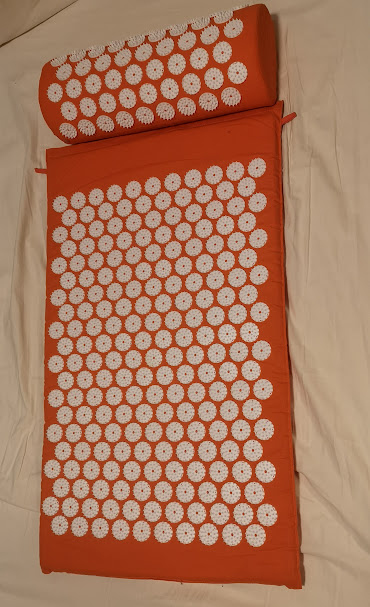
I began lying on an acupressure mat and 1/2 bolster in late Dec ’23, for 20 minutes a day.โ€‚Not for the faint hearted!โ€‚When first laying down the sharp points are surprising and can be temporarily painful.โ€‚However within minutes my back softened and the points no longer caused discomfort.โ€‚The only time the points caused any temporary uncomfortable moments when lying on them was when shifting my weight.โ€‚For example, bending my knees and standing my feet to put more pressure into the small of my back.โ€‚I also raised my lower back and began putting bolster under neath for more pressure into shoulder blades and lower back.โ€‚This mat is long enough to target the length of my spine beginning at the top of my shoulder blades and down to the bottom of my sacrum.โ€‚With the 1/2 bolster I can apply the points to my neck.โ€‚

I began to use this acupressure mat to test it for softening the muscles along my vertebrae from my neck down through my sacrum.โ€‚As a Feldenkraisยฎ Practitioner (since 2007) I am all too well aware of the common restrictions causing limited mobility through contraction of the muscles and soft tissue along the spine, ribs and into the pelvis.โ€‚This restricts flexibility and limberness. that ultimately can cause injury and pain.โ€‚What I wasn’t expecting was the increase in blood circulation when lying down on these points.โ€‚It was immediate and the whole area warmed up.โ€‚I quickly recognized the value in warming the organs up as well in these areas.โ€‚Read more below on the benefits I have noticed in just a few days.

Here is an affiliate link to the same acupressure mat on Amazon:

Acupressure Mat

Noticeable benefits of lying on acupressure mat in a few short days

  • Release of TMJ joints inn lower jaw with angling the 1/2 roller.โ€‚This was unexpected and increased the benefits for me.โ€‚I hold tension in my TMJ joints naturally and I could feel them let go and my jaw drop.โ€‚Due to TMJ stress myself I have taught a workshop since 2007 on how to shift habitual patterns through the facial muscles, neck and shoulder muscles toโ€‚lengthen and tonify them to increase the flexibility of the jaw.โ€‚Feeling this deeper release was tremendously rewarding to experience.โ€‚If for only this benefit I would recommend lying on an acupressure mat!โ€‚Upcoming TMJ workshop in March ’24
  • Increase in vitality the first day after lying on the mat for 20 minutes.โ€‚There was an inner vitality that emerged motivating more activity throughout the day.โ€‚Luckily I have chosen the morning to test it out.
  • I have noticed a deeper quality in my sleep even through I have chosen to lay on the mat in the morning.โ€‚The articles I have read mention an increase in sleep when lying on it at night.โ€‚I am too active right to bed time to lay on it at this time, yet still seem to have the same benefits.โ€‚
  • Each additional day I lay on the mat for twenty minutes I am noticing more benefits not immediately experienced.โ€‚After a few days I began to notice a softening in my arm and leg muscles even though they are not on the mat.โ€‚It seems to be coming from the ribs and vertebrae release.โ€‚My fingers are more flexible and soft.โ€‚The tightness around the bone has dissolved even through I haven’t actively focused upon functional movement patterns with them during this time.โ€‚
  • Today I experienced increased points of energy release along my lower back, beginning in my sacrum.โ€‚At the base of my sacram I sensed a release, a pulsation and warmth that immediately increased sensation in my lower extremities.โ€‚I likened it to a release ofโ€‚a tight muscles or constriction blocking the energy in this region of the spine.โ€‚
  • Generally overall I am experiencing a softening of tension through my whole body with increased sense of relaxation and wellbeing.โ€‚

For all these benefits I am experiencing I would recommend trying an accupressure mat.โ€‚Yes it may be uncomfortable for the first few days, however, that quickly disappears and the benefits outweigh the initial discomfort.โ€‚

Here is an affiliate link to the same acupressure mat on Amazon:

Acupressure Mat

Cultivating Success with Awareness through Goals Programs

 1st Level โ€“ Getting Started (Introduction & Pattern)
 2nd Level โ€“ Getting Intouch (Experiencing & Connection)
 3rd Level โ€“ Integration (Embodiment)

Follow the journey on TwitterInstagram or Facebook


by Renee Lindstrom, GCFP @ Inside Awareness,  
Copyright 2014 โ€“ 2024 Renee Lindstrom, GCFP

Parkinsonโ€™s

Feldenkraisยฎย Method Research

This study demonstrates that the disabilities of Parkinsonโ€™s Disease can be lessened with earlyย Feldenkraisย intervention as gains are made in musculoskeletal flexibility, alignment and functional movement. Early intervention is important and can delay the need for pharmacological intervention, which, because of long-term use, is associated with potentially unwanted and toxic side effects. The study illustrates improvements in balance, gait, and functional movement made by an individual who was not yet receiving medication for Parkinsonโ€™s disease. A second case study illustrates improvements of balance gait and functional movement made by an individual who was already receiving medication for the disease. These case studies illustrate the dramatic improvements thatย Feldenkraisintervention can achieve in the patient with Parkinsonโ€™s disease.

Shenkman, M., Donovan, J., Tsubota, J., Kluss, M., Stebbins, P., Butler, R. Management of Individuals with Parkinsonโ€™s Disease: Rationale and Case Studies. Physical Therapy 69: 944-955, 1989.

Wendell, L. L. Some effects of theย Feldenkrais Methodย on Parkinsonโ€™s symptoms and function. Unpublished case study by L. L. Wendell client and Marilyn Johnson, Feldenkrais Practitioner. June 2000.

_______________________________________________________

Feldenkraisยฎ, Feldenkrais Methodยฎ, Functional Integrationยฎ, and Awareness Through Movementยฎ, are Servicemarks of The Feldenkrais Guildยฎ

Challenging the concept of runners abs in time for running season!

With running season just beginning, check these two great articles out for free!

Author Jae Gruenkeย has written an article called, “The Runners Abs.” ย A concept that would improve the ability, energy and reduce the effort of running. ย Find how to download the article here.

_______________________________________________________

Feldenkraisยฎ, Feldenkrais Methodยฎ, Functional Integrationยฎ, and Awareness Through Movementยฎ, are Servicemarks of The Feldenkrais Guildยฎ