Category Archives: Uncategorized

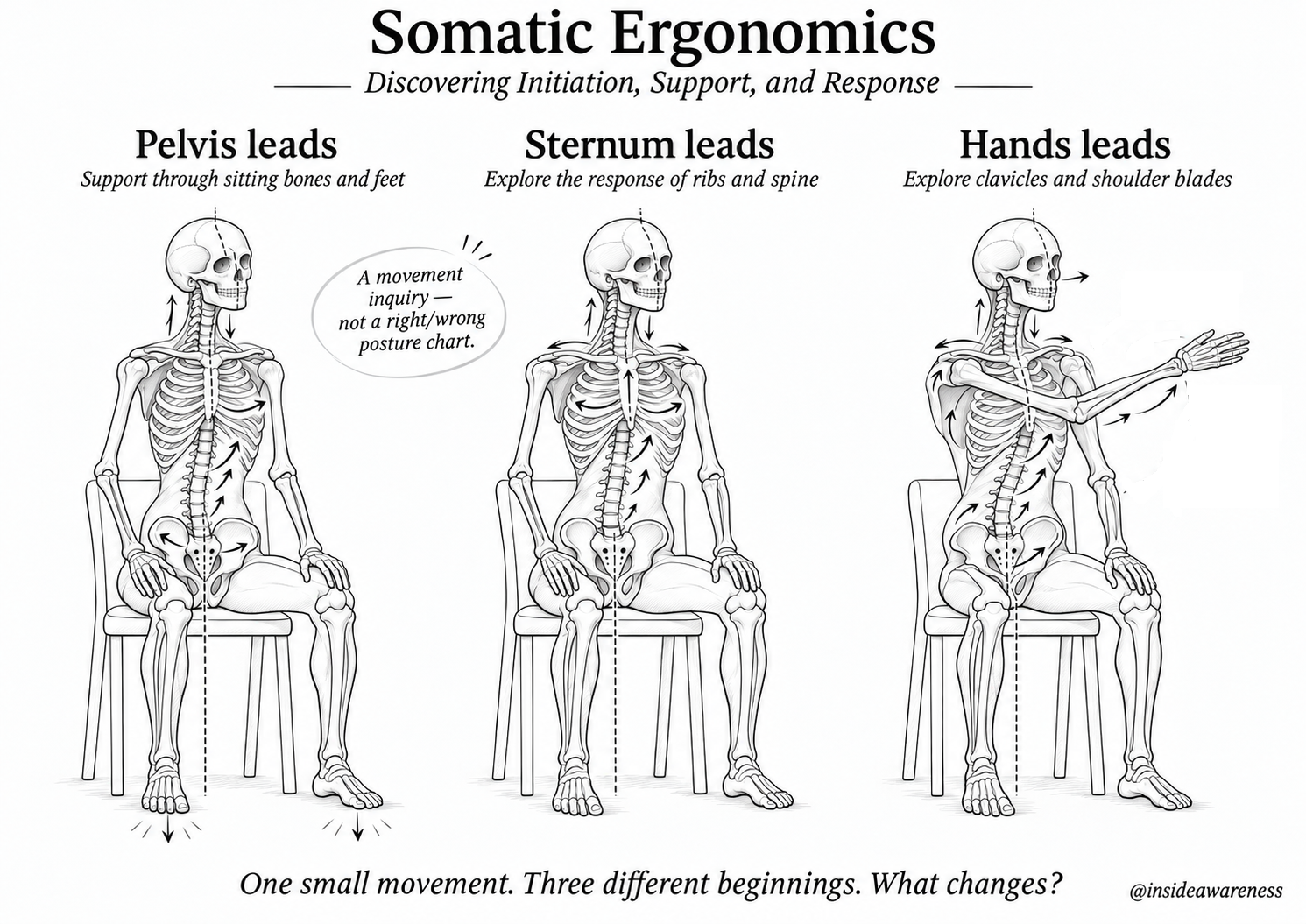
Somatic Ergonomics

Discovering Movement Within Everyday Activities
An Emerging Educational Focus | Inside Awareness

As our daily activities increasingly involve computers, tablets, phones, reading, and other tasks requiring sustained attention, I have become interested in how these familiar activities influence our patterns of functional movement.

Ergonomic education has brought valuable attention to workplace design, physical support, posture, and the importance of changing positions.

I am interested in exploring another dimension of this relationship.

What happens to our natural skeletal movement patterns when we concentrate?

Even while sitting, which we often perceive as a stationary position, the body has the potential for subtle movement through the feet, pelvis, spine, ribs, clavicles, shoulder blades, neck, and head.

The individual vertebrae participate in small movements. The pelvis provides a foundation for shifting weight. The rib cage responds to breathing. The shoulders and arms can participate in rotational movement rather than remaining fixed in one position.

These relationships extend into standing, walking, reading, writing, and using our electronic devices.

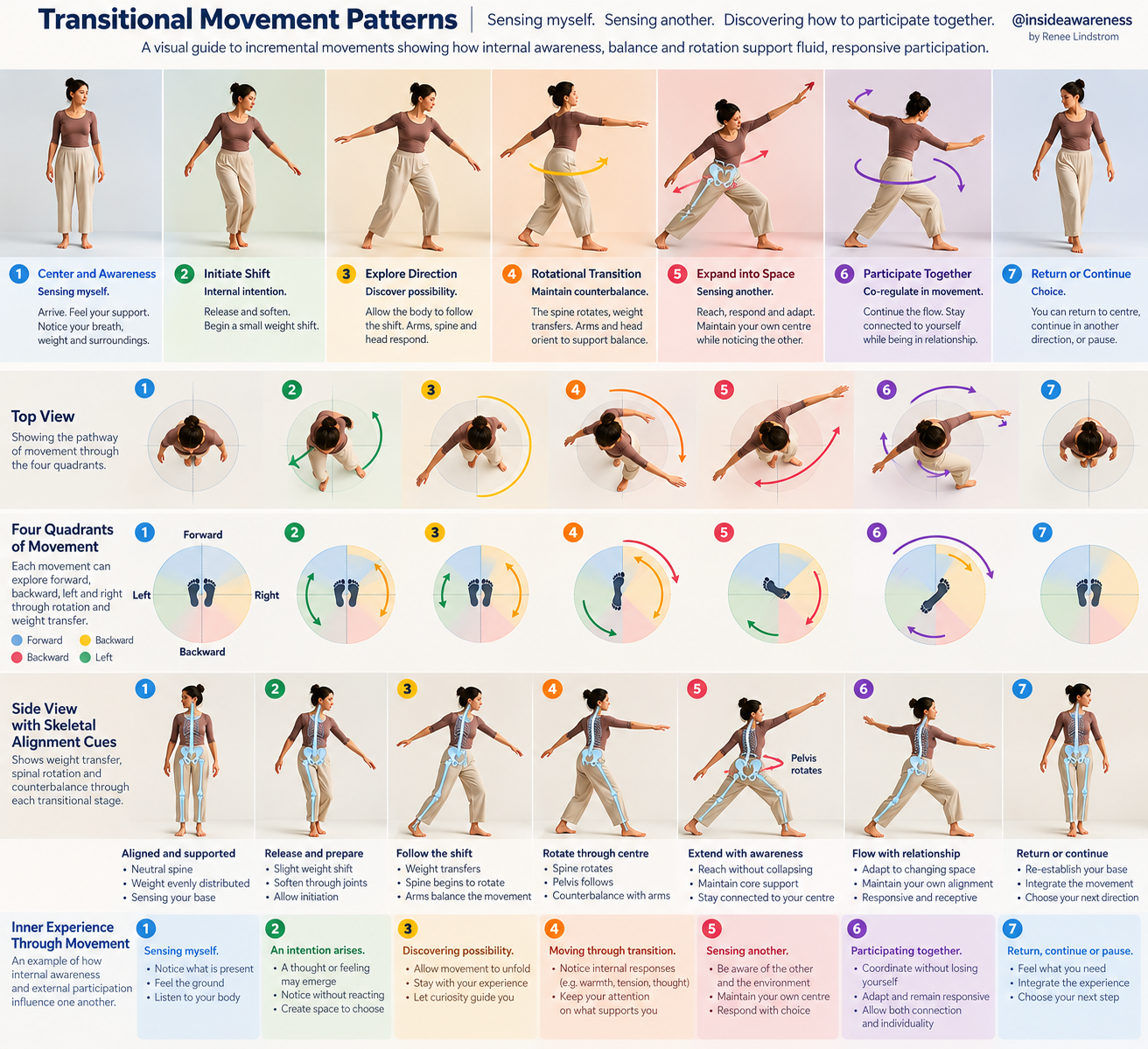
Through years of facilitating Balance and A Fear of Falling and other Guided Patterns for Lived Function lessons at Inside Awareness, I have been exploring how natural rotational counterbalance and skeletal transitions influence our experience of support, mobility, and ease.

An emerging focus I am calling Somatic Ergonomics brings these movement relationships into everyday living.

Rather than emphasizing a correct posture to maintain, the invitation is to discover the small skeletal movements that may remain available within an activity.

Could recognizing these movements support greater flexibility, more responsive skeletal support, and freedom to shift between positions without unnecessary effort?

A Consideration for Adults and Early Childhood Learning

As children encounter increasingly structured learning environments and activities involving screens, books, and sustained attention, I wonder how we can support their developing relationship with natural movement.

Children begin life exploring movement through spontaneous shifts of weight, rotation, reaching, rolling, and discovering support.

How might we continue to recognize and encourage this curiosity as learning environments and daily activities change?

For adults, the inquiry may be one of rediscovery.

Can we remain engaged in thought and focused activities without unnecessarily holding our bodies still?

Somatic Ergonomics is an emerging focus within Inside Awareness Guided Patterns for Lived Function, with opportunities for dedicated ergonomic movement lessons exploring subtle skeletal transitions in sitting, standing, walking, and everyday activities.

It is also a developing consideration for The Legacy Educational Project, connecting movement awareness with lifelong experiential learning.

The intention is not to replace established ergonomic recommendations, but to complement them by introducing another relationship to explore: how we participate in movement from within.

What might become available when we begin to recognize movement where we previously perceived stillness?

Movement does not have to stop when attention begins


Somatic Ergonomics – Renee Lindstrom @insideawareness

โ€“ Copyright 2014 โ€“ 2026 โ€“

With respect and gratitude,

I acknowledge the practices and teachings that have contributed to the ground from which this work has grown: Moshe Feldenkrais and the Feldenkrais Methodยฎ of somatic education; Marshall Rosenberg and Nonviolent Communication; Chรถgyam Trungpa Rinpoche and the Shambhala teachings; and Dyan Grant Francis, Subtle Energy Solutions and Black Sect Feng Shui.

These influences are acknowledged with appreciation for the learning they made possible, while the patterns and interpretations presented here reflect my own continuing inquiry, lived experience and educational development.


Inside Awareness | Renee Lindstrom | @insideawareness

Original concepts, lived experiences, educational approaches, and program development by Renee Lindstrom.

Written and developed in collaboration with ChatGPT by OpenAI, providing editorial, organizational, and creative assistance.

Illustrations created using OpenAIโ€™s image-generation tools, guided by the educational themes and creative direction of Inside Awareness.
November News @insideawareness

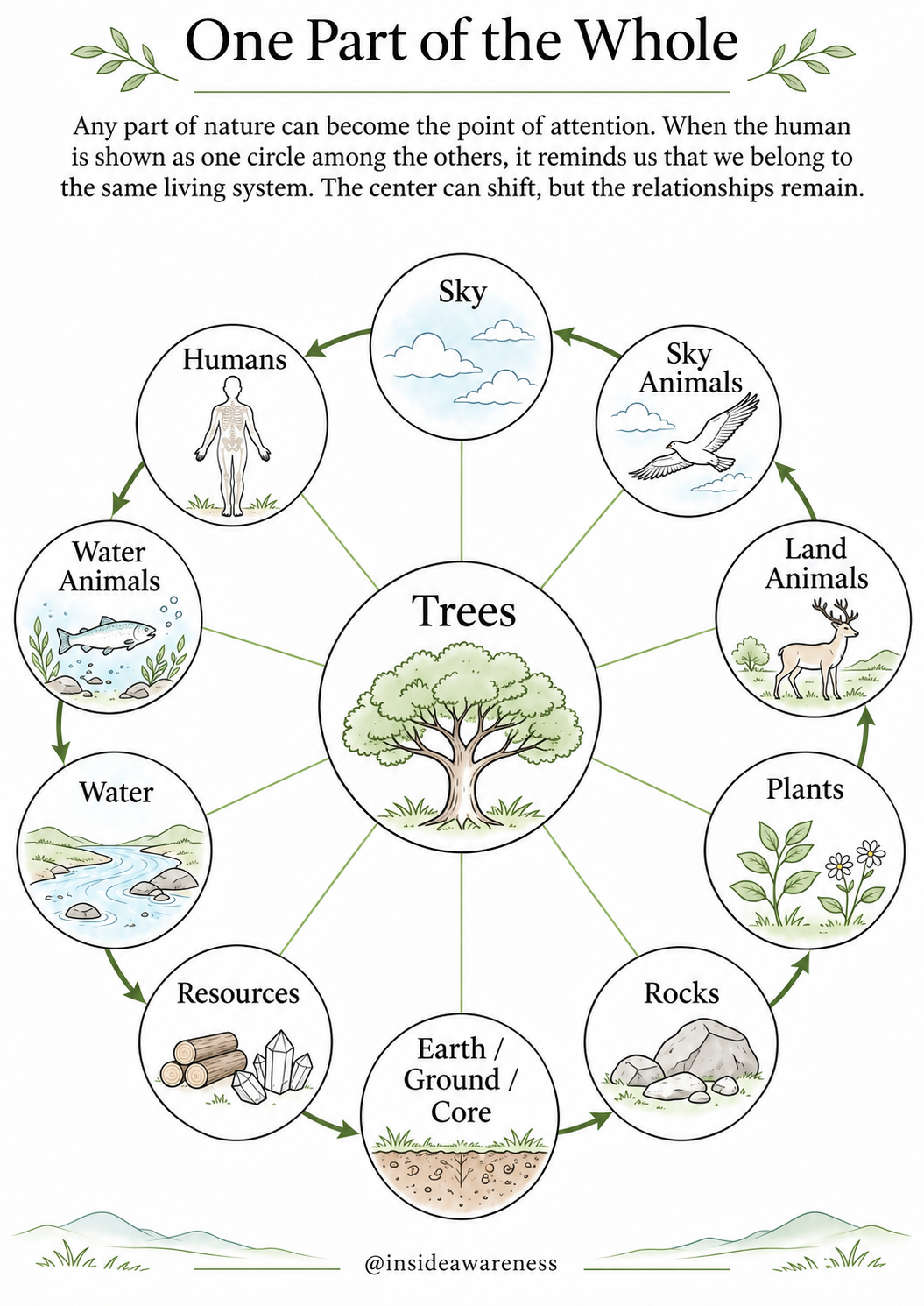
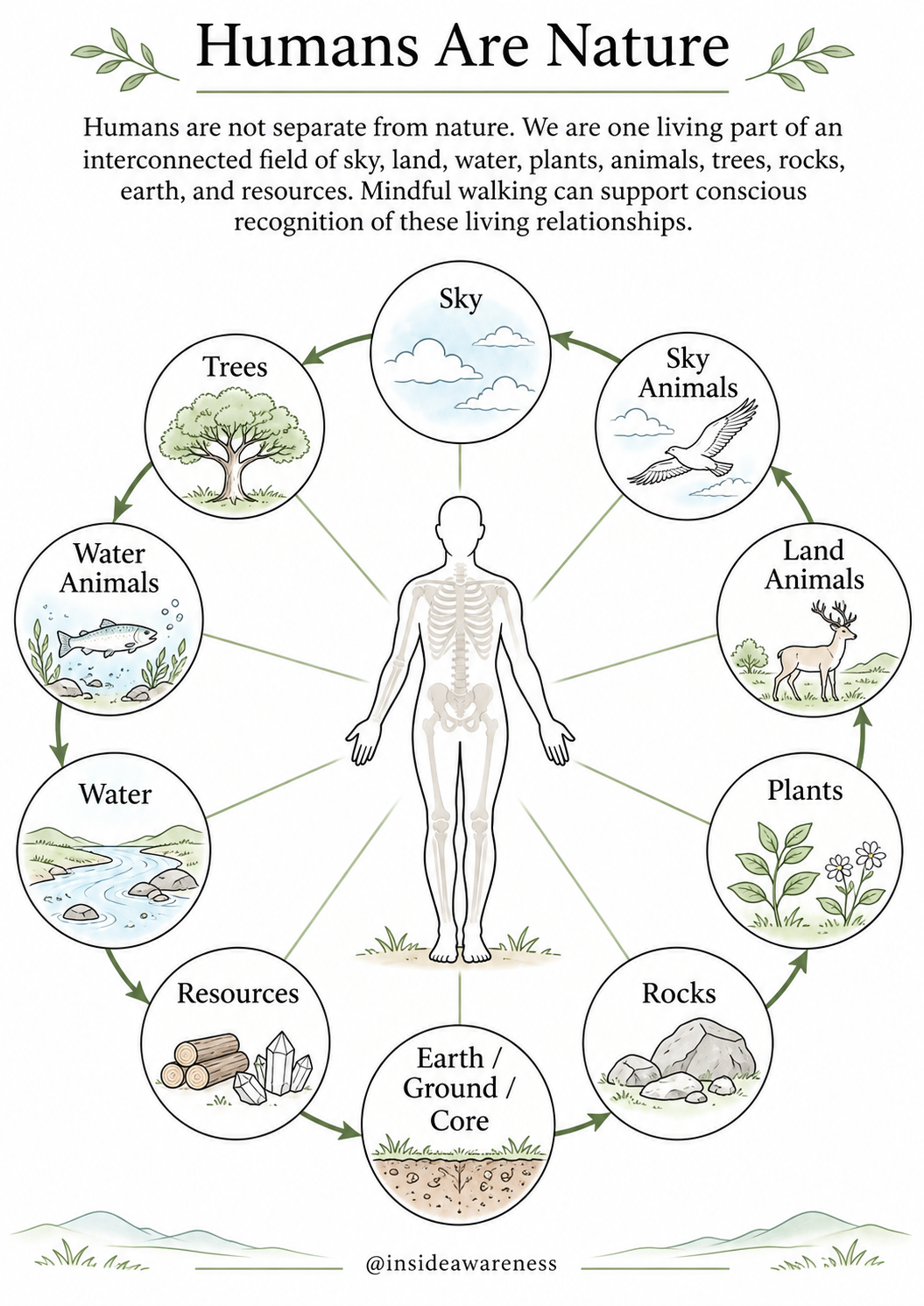
A year ago I partially lost my website details due to technical errors. It created an opportunity to redesign the educational material that favored integrative approaches that had been organically and spontaneously happening since graduating from the formal Feldenkrais training in 2007. Many approaches were attempted until it became easy and effortless. Perhaps not technically in the back end, rather in its presentation. Students may engage in learning opportunities with Inside Awareness and arrive in a movement class to increase functionality, yet discover an approach that increases mindful awareness through conscious recognition. Another may enter through a need to increase understanding and clarity in relationships and discover how increased physical function, such as breathing, can support balance and calm that increases windows of tolerance to manage emotions. The subjects below are visuals of the topics that Inside Awareness focuses upon for exploration one my engage in. However, the relationships with the other topics are contained within the essence of all the lived experience subjects. While creating the topics to reflect one part of the whole, this diagram below demonstrates a reflection that came to mind. It reflects one part of the whole in the relationship with nature. One that is based upon inclusion, not separation. As many of my students know I focus on the whole experience versus isolation of mental, emotional and physical explorations. Instead their is consideration of the whole expression. I hope you will enjoy this content, images and descriptions. Explore the topics you are drawn that I hope expresses the new integrative descriptions and that reflects one part of the whole experiences in their relationships. Perhaps encouraging you to consider them in your own lived experience. Renee Lindstrom \ @insideawareness

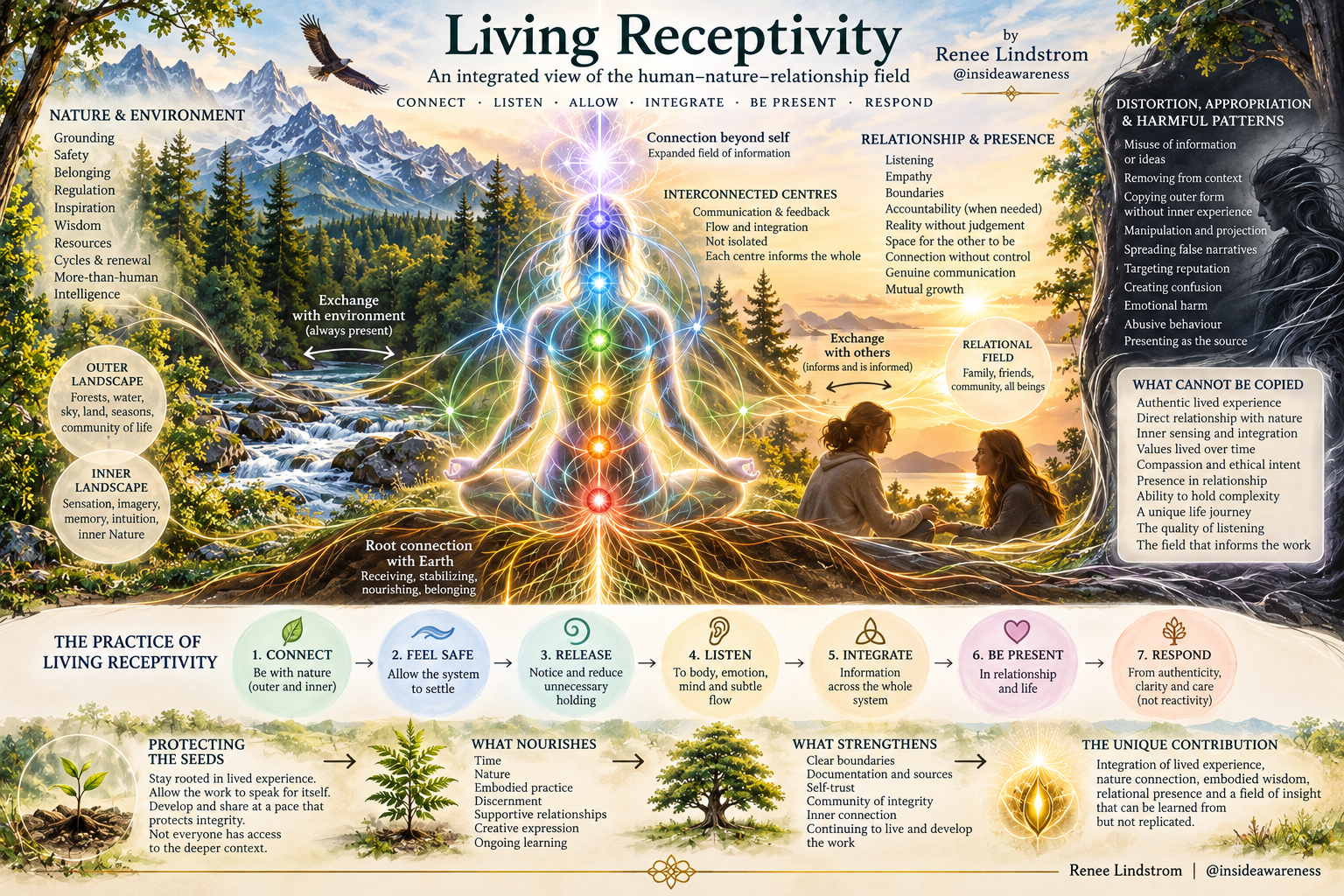
Recognizing Our Place Within the Whole

As I have been organizing years of learning, teaching, and lived experience, an image came to mind that reflects a recognition I would like to share.

We have learned to study and understand life through separate subjects, categories, systems, and functions. This has contributed enormously to our knowledge and understanding. Read more @ https://wp.me/p17H3e-jl5.

Inside Awareness Subjects

Guided Patterns for Lived Experience

One approach to learning. Many ways to explore life.

Everyday life offers opportunities to discover how we listen, move, communicate, make choices, and participate in relationship with ourselves, others, and the environments around us.

Each subject offers a different entry point into conscious recognition through lived experience.

Explore the Subjects

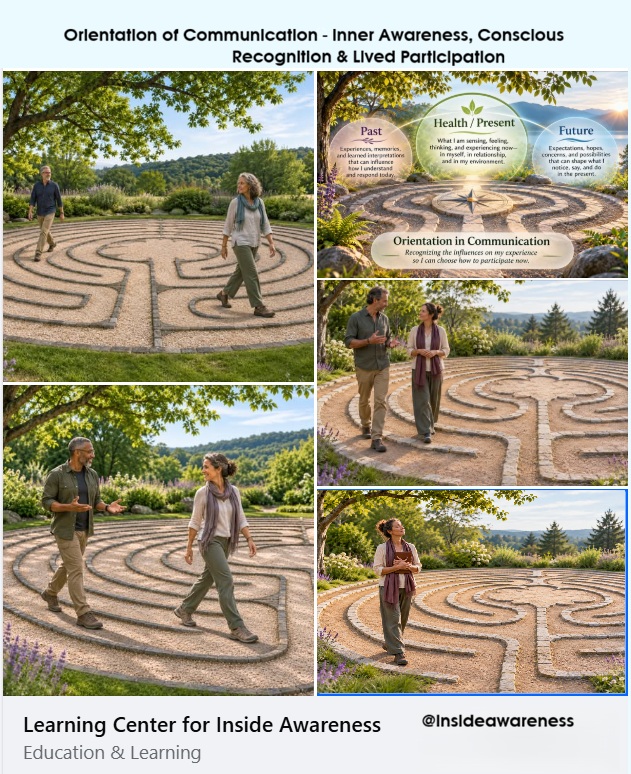
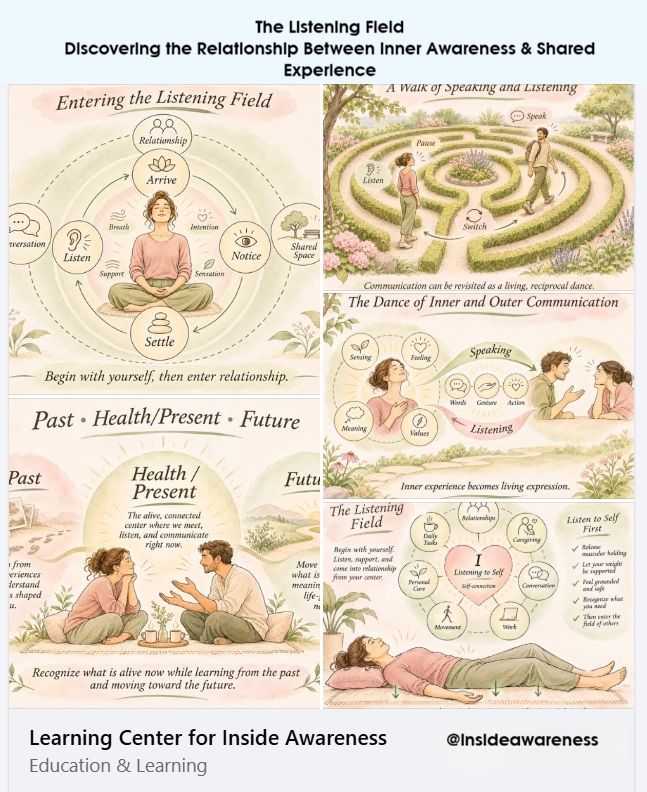
Listening & Communication

Listening, inner and outer communication, and recognizing how we participate in conversation.


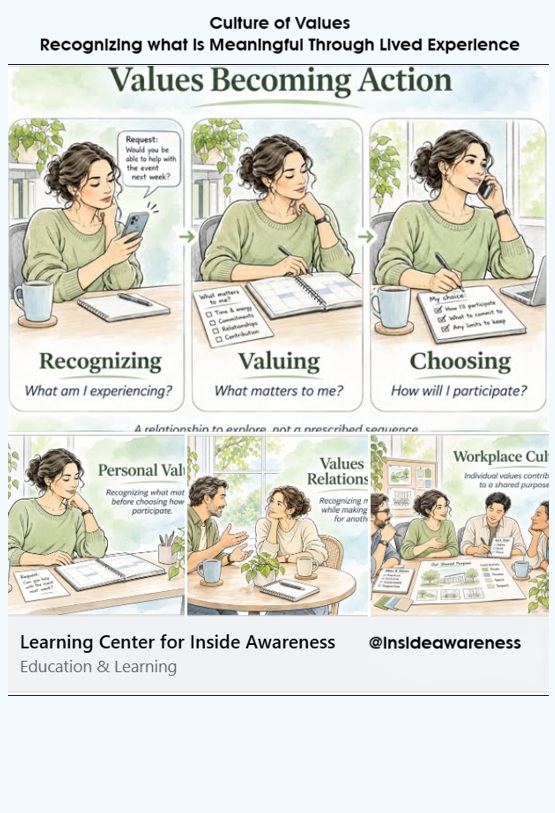
Culture of Values


Exploring how values become recognizable through personal experience, relationships, and workplace participation.


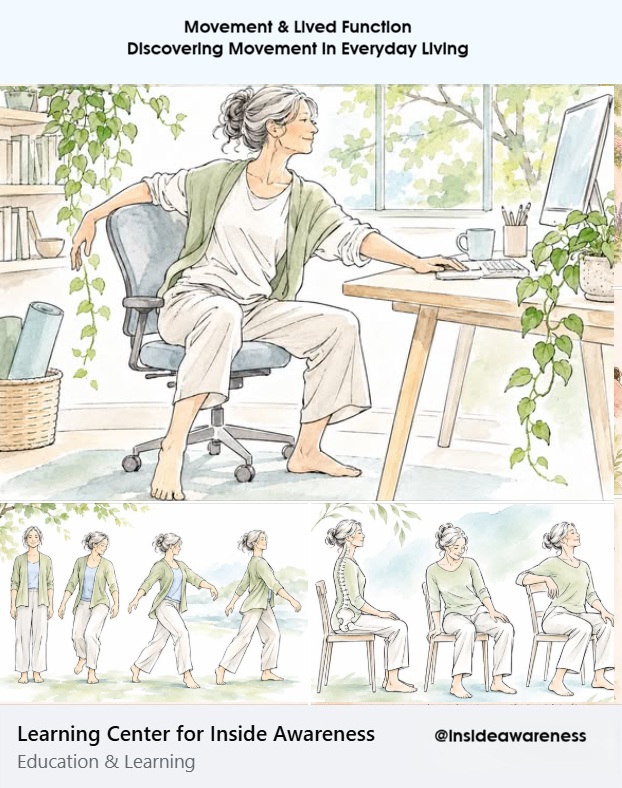
Movement & Lived Function


Discovering possibilities for movement, balance, coordination, and everyday function through guided learning.


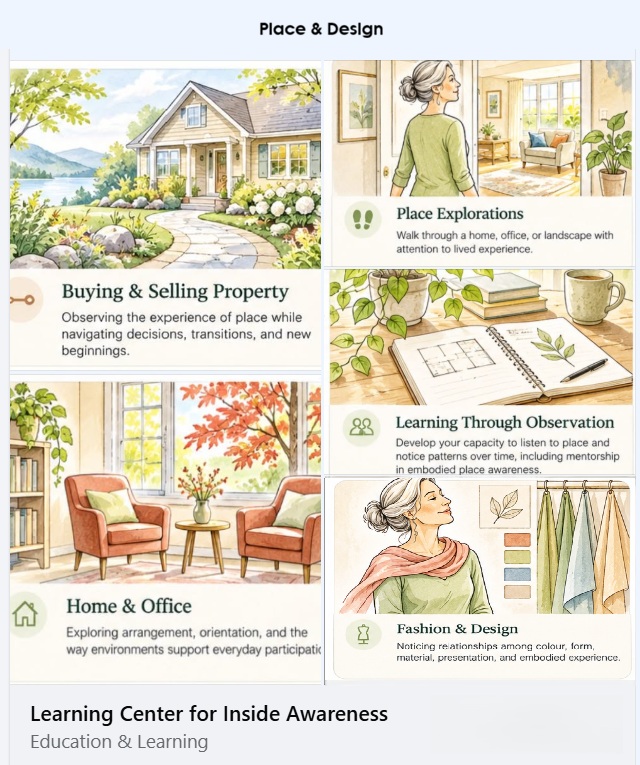
Place & Design


Exploring the relationships between ourselves and the environments we inhabit, create, and choose.


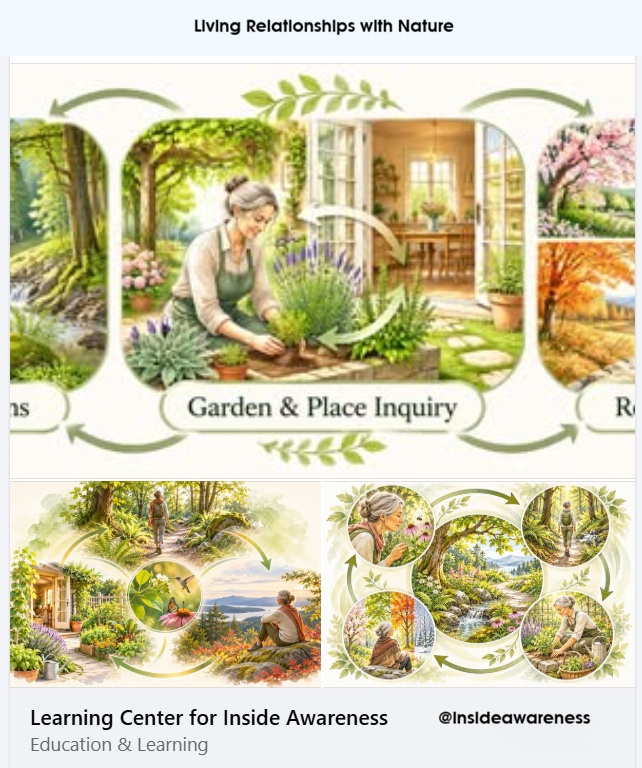
Living Relationships with Nature


Deepening awareness through walking, observing, sensing, and participating with natural environments.


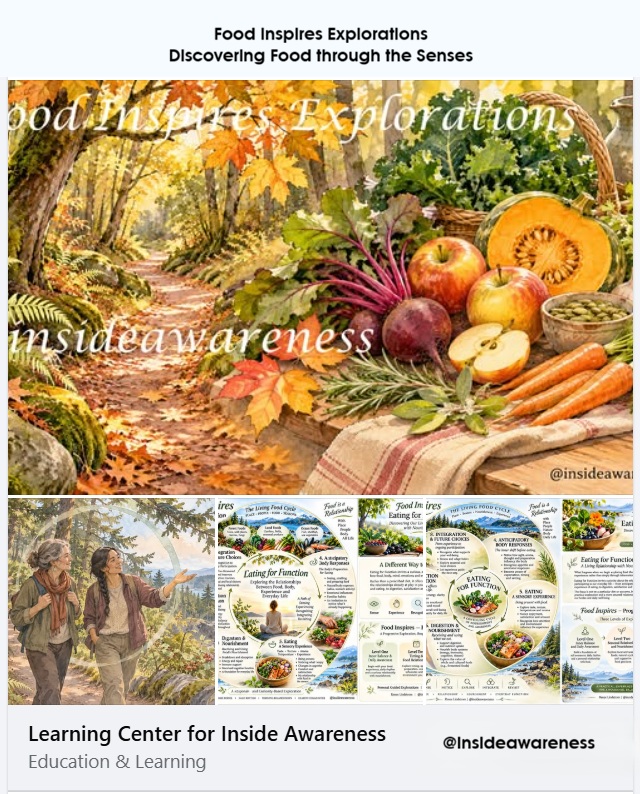
Food Inspires


Exploring our relationships with food, nourishment, sensory experience, and traditional food culturing.


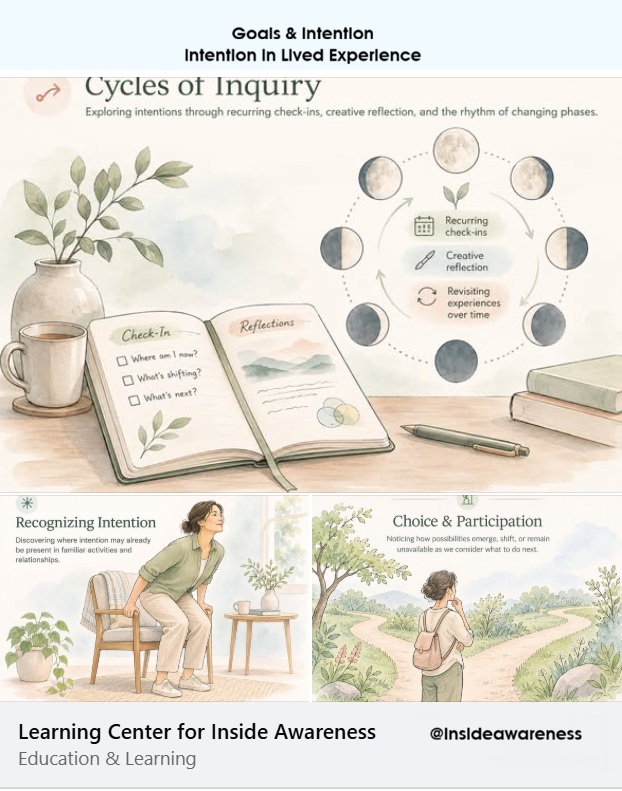
Goals & Intention


Recognizing the motivations, influences, and choices that participate in shaping our life paths.


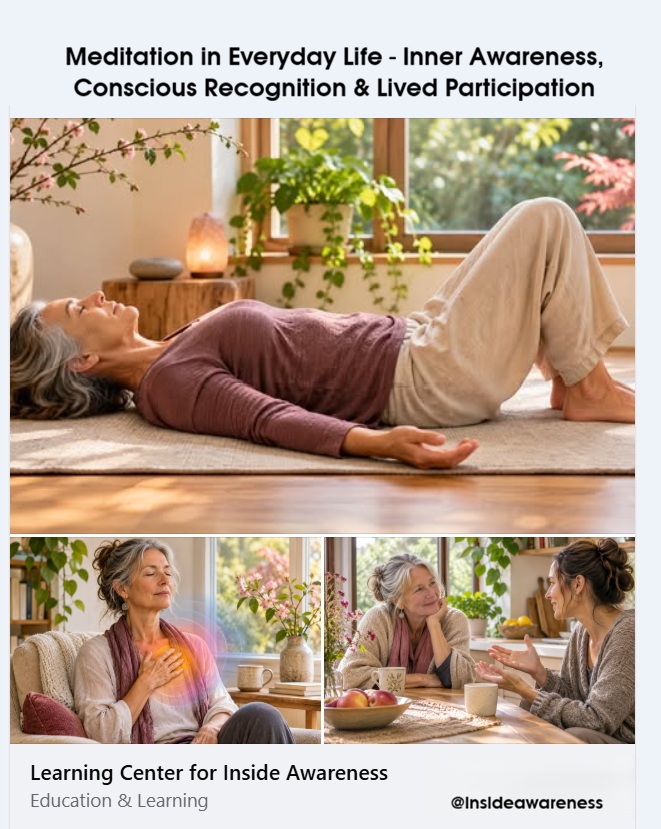
Meditation & Everyday Life


Exploring awareness through meditation, rest, sleep, and ordinary living experiences.


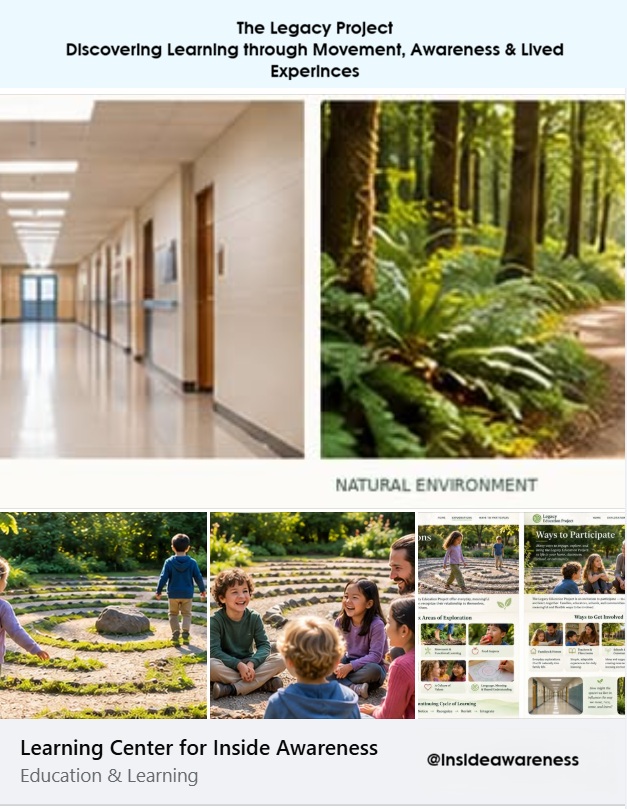
Legacy Education Project


Supporting lifelong learning through educational experiences for children, adults, and future educators.


Listening Field

An open invitation to explore.

What else might become recognizable when we are willing to listen, experience, and discover without a predetermined outcome?


NEW ARTICLE POSTS

Food Inspires

Thinking About Food vs. Experiencing Food

We can spend considerable time thinking about food.

What should I eat? What should I avoid? What is the latest nutritional advice?

Yet thinking about food and experiencing food are two different activities.

What happens when we make room to notice its colours, textures, weight, aromas and flavours?

Perhaps nourishment begins to feel less like another problem to solve and more like a relationship to explore.

Food Inspires โ€” A Date with Food

Walking with Inner Awareness

Inside Awakened Subject Pathways – Renee Lindstrom, GCFP โ€“ @insideawarens โ€“ Copyright 2014 โ€“ 2026

With respect and gratitude,

I acknowledge the practices and teachings that have contributed to the ground from which this work has grown: Moshe Feldenkrais and the Feldenkrais Methodยฎ of somatic education; Marshall Rosenberg and Nonviolent Communication; Chรถgyam Trungpa Rinpoche and the Shambhala teachings; and Dyan Grant Francis, Subtle Energy Solutions and Black Sect Feng Shui.

These influences are acknowledged with appreciation for the learning they made possible, while the patterns and interpretations presented here reflect my own continuing inquiry, lived experience and educational development.


Acknowledgement of Creative Collaboration

The Inside Awareness educational programs have developed through decades of lived experience, professional practice, personal inquiry, and teaching.

The written materials and visual illustrations presented on this website have been developed with the assistance of ChatGPT by OpenAI.

This collaboration has supported the organization and expression of existing educational perspectives, the development of accessible written materials, and the creation of visual illustrations reflecting the principles of conscious recognition and lived experience.

The original educational concepts, personal experiences, teaching perspectives, and creative direction remain those of Renee Lindstrom, founder of Inside Awareness.
Renee Lindstrom | Inside Awareness

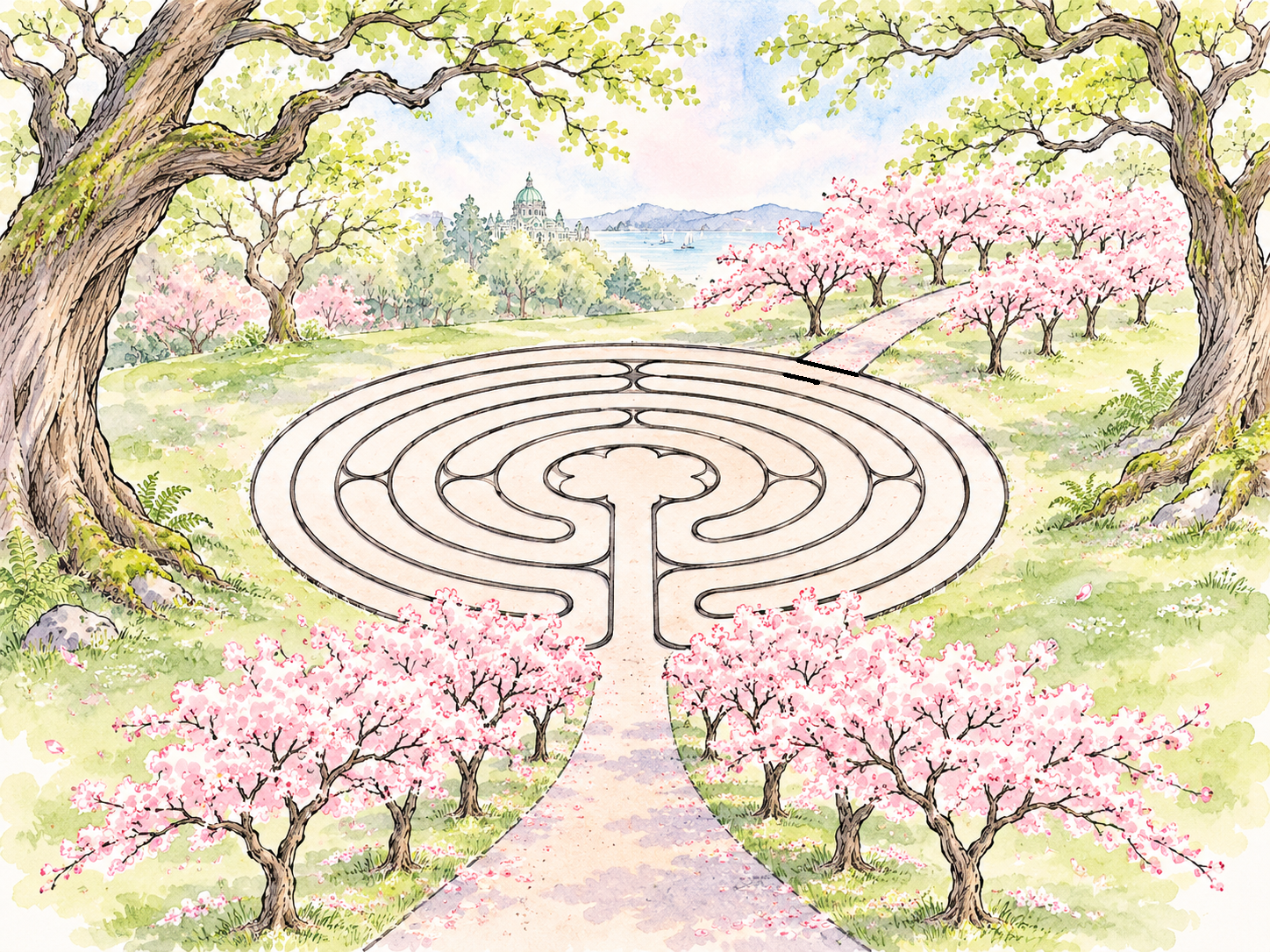
Walking the Labyrinth โ€” A Living Experience of Centre, Movement, and Conscious Recognition

Over the years, my relationship with walking labyrinths has become closely connected to my explorations of movement, listening, communication, intention, and conscious recognition.

I would like to share some of what has developed through these experiences and why the labyrinth has become meaningful within my educational work.

For me, walking a labyrinth is an opportunity to discover an inner sense of centre through lived experience.

Walking in Nature and Walking a Labyrinth

Walking through nature offers a beautiful opportunity to connect with ourselves through our surroundings.

A woodland pathway may meander through trees, curve around rocks and logs, rise and fall with the terrain, and introduce unexpected discoveries through changing seasons.

The ground beneath our feet, the sounds, scents, light, and changing spaces continually invite sensory awareness.

Our bodies respond to these changes through movement, balance, and orientation.

We are walking with ourselves while being held by nature.

A labyrinth is also a guided pathway, although it offers a different experience.

Rather than travelling through changing terrain toward a destination, the labyrinth provides an organized pathway that moves inward toward a centre and outward again.

There is a place to arrive, turn, and begin the outward journey.

The pathway is already established. We don’t need to decide where to go next.

There is an opportunity to let go of directing the journey and simply experience walking it.

This predictable outer structure may create room for greater attention to our inner experiences.

Movement, Rotation, and Orientation

My work as a Feldenkrais practitioner has introduced another dimension to how I experience labyrinths.

Much of our built environment is organized through straight lines and square corners: homes, classrooms, hallways, sidewalks, roads, and furniture.

Our bodies, however, are three-dimensional. Functional movement includes changing relationships among the feet, pelvis, spine, ribs, shoulders, and head.

Turning involves rotational movement and counterbalance, not simply changing the direction of a rigid structure.

A circular labyrinth offers a particularly interesting experience of changing direction through its winding circuits.

As we walk, our orientation continually changes. Weight transfers through our feet. Our skeleton participates in the curves and turns.

Some labyrinth designs have rounded circuits, while others use square pathways. More elaborate designs introduce quadrants and directional relationships that can be explored in connection with the compass.

Each provides different opportunities for movement awareness.

My interest is not in identifying one design as better than another. It is in recognizing how the structure of a pathway may influence movement, attention, and our experience of ourselves.

The Intention Belongs to the Walker

One person may enter a labyrinth while experiencing grief.

Another may be exploring a difficult decision, wishing to release a reaction, or hoping to find greater emotional clarity.

Someone may walk in prayer or connection with God, spirit, or another expression of higher meaning.

Another may simply wish to experience walking, breathing, balancing, or unwinding.

The labyrinth does not require everyone to share the same intention or belief.

What I have come to appreciate is the opportunity to bring something meaningful into awareness and explore it through movement.

The pathway creates a familiar structure. The experience belongs to the individual.

Three Experiences That Have Stayed with Me

At a busy outdoor festival, I had created a small rope labyrinth on the grass.

On the afternoon of the final day, another booth holder decided to walk it.

Afterward, they shared that partway through the walk, something had shifted. They suddenly became aware of the trees and natural surroundings.

We had been beneath those trees, in a large grassy area, for two and a half days.

Yet they had not consciously noticed them until that moment.

I found this meaningful. The environment hadn’t changed. Something in their awareness had.

Another experience was more personal.

Following a difficult year of interactions with one of my children, I had laid out a labyrinth using coloured braided material for an upcoming event.

We visited the location around their birthday, and I spontaneously suggested that we walk the labyrinth together.

The intention was to let the past year go and walk into the new one together.

I remember entering the pathway carrying uncomfortable feelings.

As we walked inward, I became aware of those feelings and the effort I was carrying.

At the centre, something shifted.

Walking outward was a different experience. I felt calmer, clearer, and less burdened by the emotional responses I had brought into the walk.

My immediate experience of connection with my child had changed.

They later shared that their experience had shifted in a similar way.

The labyrinth hadn’t resolved all the circumstances of the previous year. Yet, in that moment, it offered an opportunity for a different experience of ourselves and our relationship.

A third experience came through a woman attending one of my labyrinth workshops.

She became interested in how walking a labyrinth individually, before gathering together, might influence the experience of a group.

She was preparing to attend a difficult meeting involving significant institutional decisions.

She decided to invite the participants to walk a labyrinth before beginning.

Later, she shared that the meeting had been noticeably different from previous ones. She experienced greater calm, respect, and kindness among the participants.

I cannot know everything that contributed to those changes.

What interests me is the possibility that an individual experience of centering before coming together may influence how people participate in a shared conversation.

The Relationship With Listening and Communication

These experiences have influenced my explorations of inner and outer communication.

When we enter a conversation, we bring more than words.

We bring our physical responses, memories, feelings, values, interpretations, and expectations.

Sometimes we are responding to the present. At other times, our past experiences or future concerns are influencing what we hear and how we respond.

The labyrinth offers me a physical experience of recognizing where I am, what I am carrying, and how I am participating.

Walking inward may provide an opportunity for recognition.

Reaching the centre offers a point of orientation and turning.

Walking outward may introduce a different experience of returning to our relationships and surroundings.

This is not a required outcome or an instruction about how someone should feel.

It is an invitation to explore.

The intention connects with what I have been developing through Inside Awareness: recognizing our inner experiences while participating in the world around us.

Sensing myself. Sensing another. Discovering how to participate together.

Returning to Centre

I have come to experience the labyrinth as an organized pattern that can support centering through movement, sensory awareness, intention, and relationship.

It offers a physical path for exploring connections among mental, emotional, physical, and spiritual experiences, according to what is meaningful to each walker.

Its historical and spiritual associations remain meaningful to many people. My own exploration adds a somatic and educational perspective without asking anyone to replace their existing understanding.

For me, the labyrinth has become a living opportunity to recognize what is happening within myself while remaining connected to the environment and people around me.

Sometimes we may discover something unexpected.

Sometimes there may be no remarkable change.

And sometimes the experience of following a familiar pathway may simply offer a moment of ease.

The Centre of the labyrinth is a physical place. The inner sense of Centre is something we may discover through the experience of walking.

That is the relationship I continue to explore.


Walking the Labyrinth – Renee Lindstrom | Inside Awareness @insideawareness โ€“ Copyright 2014 โ€“ 2026

Embodied Feng Shui โ€” Listening to Place

Where Life Path Meets Place

My approach to Feng Shui is not primarily concerned with identifying what is right or wrong within an environment or prescribing corrections to its arrangement.

I am interested in exploring the influences of place on lived experience.

Every environment offers a particular arrangement of space, movement, relationships, sensory experiences, and possibilities for participation.

Through Embodied Feng Shui, I invite people to become curious about how they experience their surroundings, what they notice, what may have become familiar or overlooked, and how the environment relates to their intentions and everyday choices.

The nine life areas provide a framework for differentiating these relationships. They offer opportunities to explore where attention is directed, which aspects of life may be receiving greater emphasis, and which possibilities may not yet have been consciously recognized.

Rather than interpreting a home or property for someone, my intention is to support the person in recognizing their own relationship with place.

This approach shares a foundation with my work in functional movement and communication.

The intention is not to fix the person, correct the environment, or prescribe the right response. It is to make the relationship between them more available for conscious recognition and choice.

When we begin to recognize how we participate in our environments, we may discover new possibilities for organizing our spaces in ways that support our values, intentions, and lived experiences.

Renee Lindstrom
@insideawareness

Copyright 2014 – 2026

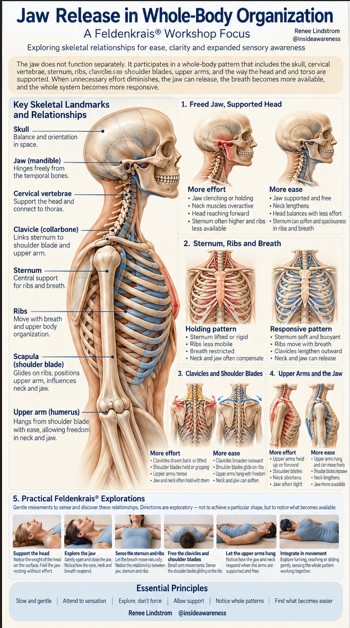
Temporomandibular joint syndrome: Jaw Release in whole body organization

by Renee Lindstrom, GCFP, founder of Inside Awareness Center for Integrative Somatic Learning

Read more @ Awareness through Feldenkrais:

Read more:

The only way to change is through action

Follow the journey on Twitter, Instagram or Facebook

by Renee Lindstrom, GCFP @ Inside Awareness

Feldenkraisยฎ, Feldenkrais Methodยฎ, Awareness Through Movementยฎ, and Functional Integrationยฎ, are registered service marks of North America. Feldenkrais Methodยฎ

Embodiment before strategy

Minimalist line art emphasizing embodiment before strategy

Embodied somatic action harmonizes with cognitive focused strategies and increases conscious connection to motivation. It leads to clarity of motivation before action. This pattern increases the potential for successful outcomes in all life areas, and reduces inner and outer conflicted states. Leading with strategies indoctrinates self and others and reduces innovation, motivation and spontaneous outcomes. Embodiment cultivates awareness and increases possibilities for higher outcomes and experiences.

Cognitive Strategies Vs Somatic Awareness

Strategies are cognitive based upon beliefs, while somatic processing is a learning path of awareness. A cognitive based belief system can stunt a person’s perspective by its nature as it has a focus of attention in one or two life areas only. For example, if a person is only focused on wealth and its attainment, every action will be strategic to meet that need. Generally, there will be a lack of mindfulness through the experience. The experience will lack the balance and harmony that is born from lived mindful awareness. Without this mindfulness there can be perpetual states of conflict, inside and out. Conflicted states fanned by the flames of seeking ways to increase wealth. This can influence every aspect of living as this conflict is expressed through emotional behaviour, expression and physical action. It can extend to every relationship that begins with critiquing through the lens of how to use others to their advantage in growing greediness. Strategy focused actions usually led to winners and losers. Strategies born from beliefs lack conscious awareness of the intent in the present moment. Beliefs are the past, yet they control the present, the future. This pattern can lead to extreme actions and statements for justification, with the last attempt feeding the next.

The process of mindfully connecting to one’s inner motivation before strategies increases conscious awareness. This process is more likely to grow beyond a single minded focus such as in this example, to become wealthy. The isolation that comes with self perceived status can expand into a state of thriving, instead of striving, through the increased range of information that comes with inclusion. Achievement will not be at the cost of people, places and things and instead include consideration for them. Those who are strategy first decision makers are not eliminating somatic experiences, they simply have no control over it. Their focus on power and control is strategic and is without the abilities of self regulation. How can one self regulate an experience they are cognitively ignoring? Being led by uncontrollable somatic experiences can lead to conflict and harm, of self and to others. They may lack the discernment for recognizing they are living in a cycle of going from one catastrophic experience to the next. Often overlapping.

Embodiment before strategy is a learning pattern integrated into the program topics at Inside Awareness. Learn more about the lifestyle program topics.

Connect to inquire about programs, coaching and mentoring

Stay connected by liking and subscribing.

Follow Socials:

Facebook, LinkedIn, Instagram, TikTok, X or Pinterest, Tumblr

Copyright 2026 Renee Lindstrom, GCFP

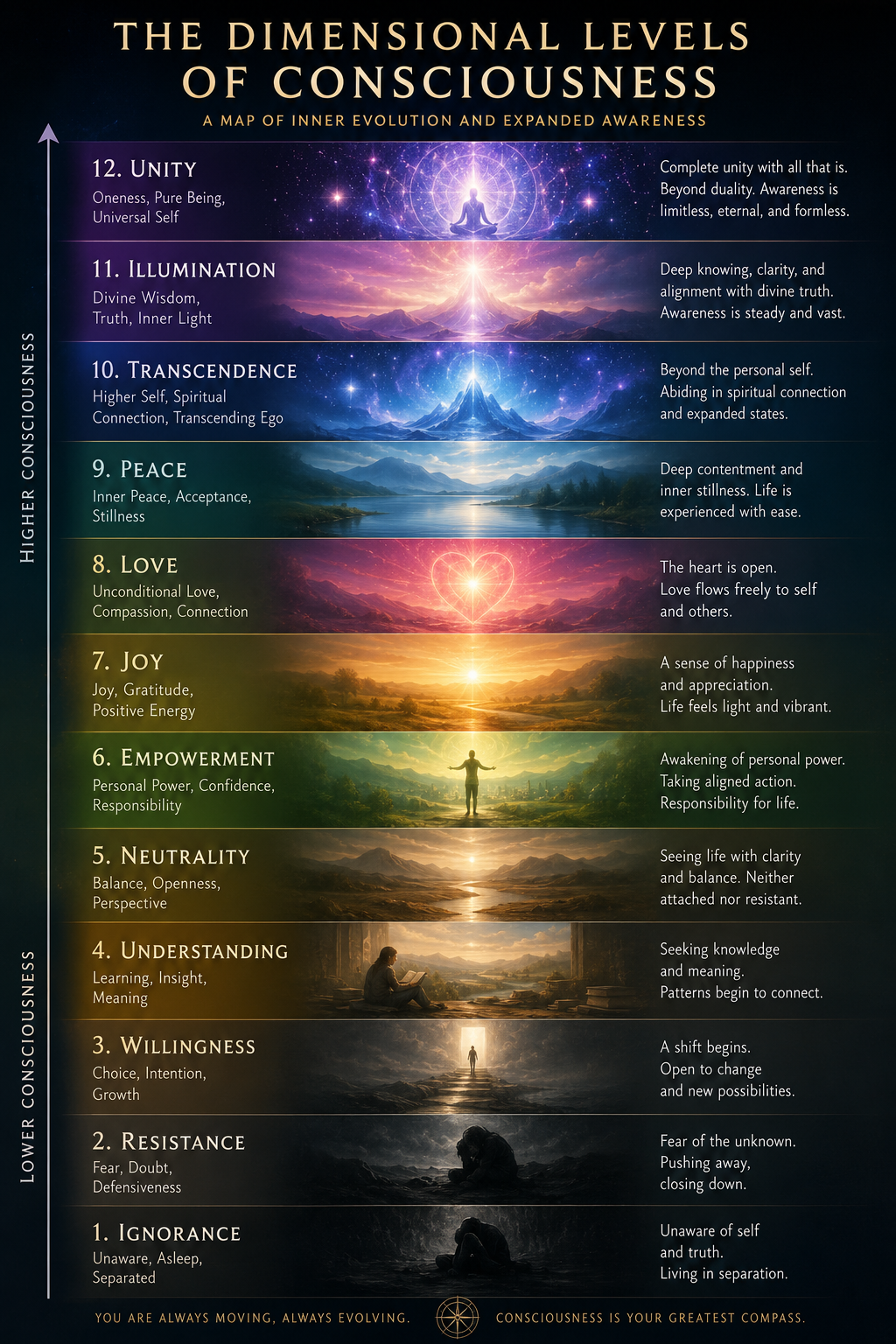
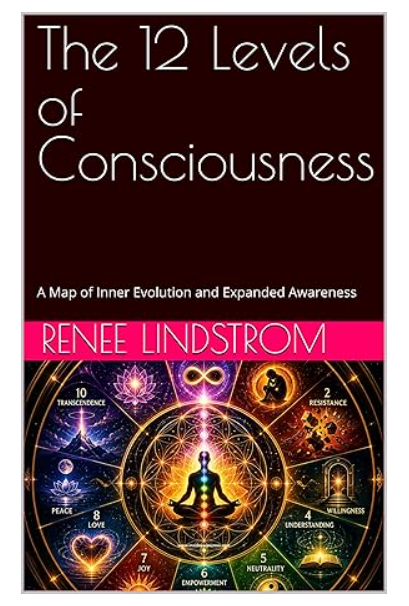
Announcing the release of the 12 Levels of Consciousness

Now Available on Amazon Kindle

Each of the programs offered at Inside Awareness has the potential to increase understanding and clarity of each of these 12 levels of consciousness in the Dimension Levels of Consciousness Map using practice steps of skill development in the patterns of actions for day to day activities in oneโ€™s lifestyle. These qualities bring optimism, hope, self love and esteem in ordinary life experiences initiating fulfillment and contentment. Learn more about the programs in the link below, under the maps 12 Level descriptions.

Get 12 Levels of Consciousness Poster – Poster Link


The mind focus origins in psychology uses Maslow’s Hierarchy of Needs to describe the levels of behaviour evolution. These 12 levels of consciousness uses a somatic focus to initiate cognitive mindfulness. The descriptions interprets the balance of the two intertwined dimensions: the body and the mind. This pattern is designed to come into alignment through somatic awareness versus the conceptualization of the cognitive attributes.

Each of the levels are described in the 12 Levels of Consciousness available on Amazon Kindle.

Get your action cards on pdf to print for reflection, consideration and personal action step! 12 Action Cards – Levels of Consciousness

Listen to a meditation for the 12 Levels of Consciousness: below on YouTube

Another New Addition for integration is listening to music for integration. This playlist is selection that would be played on a radio station. Young and interactive day to day topics that align with integration of new behaviour postures and conditioning. Add it to your playlist if you enjoy a selection of different genera’s.

For example, When Separation Dissolves – refers to #8 in the Levels of Consciousness.

Please like and subscribe if you like this content.

Follow Socials:

Facebook, LinkedIn, Instagram, TikTok, X or Pinterest, Tumblr

Copyright 2014 โ€“ 2026 Renee Lindstrom, GCFP

Subscribe to get the latest posts sent to your email.