by Renee Lindstrom, founder Inside Awareness Center for Integrative Somatic Learning
Embodied Mindfulness approach to personal change
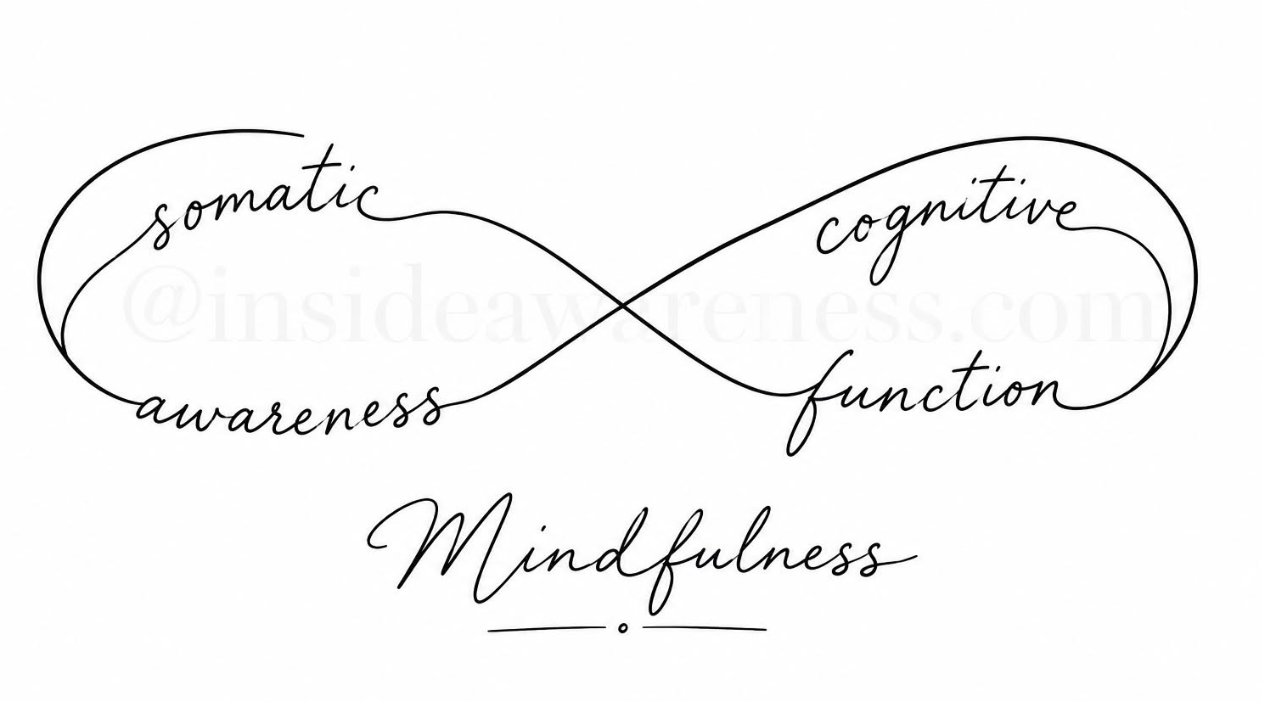
Here is a life style map diagram of the the focus of attention in the learning topics at Inside Awareness. The intention of lifestyle learning patterns are for Human Flourishing.
Human Flourishing
Flourishing is a state of living optimally, in deep fulfillment and ongoing personal growth, beyond basic survival or simple happiness. Flourishing encompasses a sense of purpose, rich relationships, physical health, and resilience to adapt to challenges
The body reveals.
The mind interprets.
Awareness connects the two.
Recent Lifestyle Articles:
Goals: 2027 Manifesting through intention first before solutions
3. Article on Relationships: The fractals creating the words expressed from the speaker you are listening to suggests need to take caution before going into agreement with their perspective …
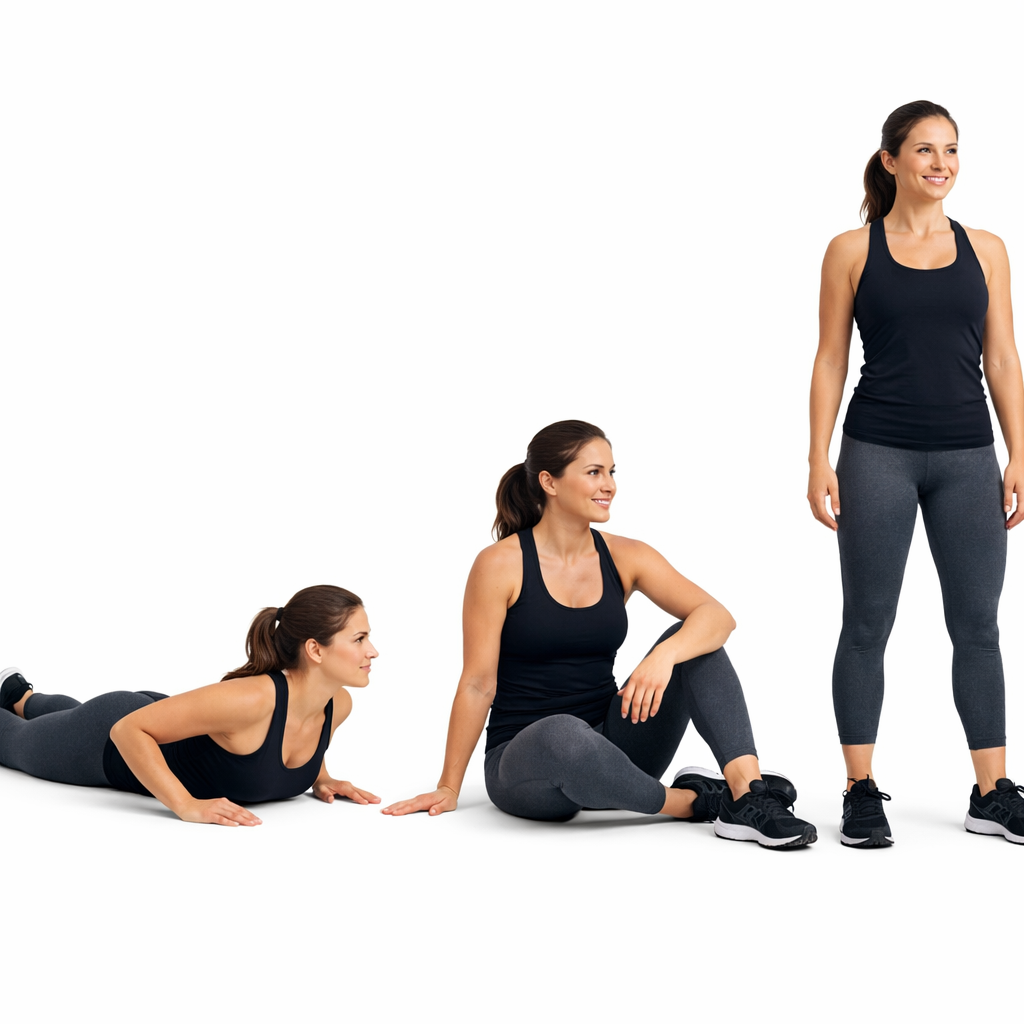
A woman demonstrates a sequence of recovery poses from lying down to standing up during a workout.
1. Standing
2. Sitting
3. Prone
Here are some reflections of this Feldenkrais Practitioner prior to a Breath Workshop held in April, ’26 to center and ground prior to leading a group through a specific guided patterns of movement. .
The focus of attention in the verbal guided patterns to go beyond the busy mind of thinking into an expanded awareness of the somatic experience
The process of observing the guided pattern suggestions is another focus of attention for balancing the somatic experience with cognitive conceptual function. This focus in this pattern leads with somatic experiences to redirect cognitive functional focus of attention. In the process of this focused pattern, the mind can enter a state not unlike a mindfulness meditation. In this mindfulness like state the cognition can expand beyond beliefs, opinions, evaluative thinking and social conditioning into a field that cultivates deeper awareness.
The guided micromovements focus on the body’s structural design for potential movement beginning with the core – the skeleton.
Why? The natural design of the bodies ability to transition through postural shifts is through the bone pressure using the force of gravity. Original movement transitions are not through muscle and soft tissue lifting the bone and bearing the weight of the bone matter. That only creates constraints, pain and limited function. Organizing the skeletal bones to transition through flexibility and expanded range of motion increases ease and effortlessness in functionality.
Micromovements through the perspective of skeletal function is its own separate type of workout from what is currently focused on, and this focus can be far more challenging than the current mainstream focus is aware of
Imagine repeating changing patterns of micromovements toning the muscles through available functional transitions that release the few muscles that have become the primary motivation for controlling movement. New muscle patterns are created as habitual holding is released through the tonification and dormant muscles are activated, while the organization in the brains is expanding through conscious awareness.
These guided patterns go beyond the conceptualization of cognitive intellectualization that has locked movement into patterns that eventually create diminishing capacity through its limited understanding. Beliefs, opinions and evaluative expressions lock down the brains functional capacity. This is expressed through a lack of flexibility in all qualities of function; mentally, emotionally and physically.
This suggests that these guided patterns for integrating movement through a focus that taps into conscious awareness that balances both the somatic experience and cognitive function can give all aspects of functional experiences a workout from perceptions, mobility to brain function. Ihe focus is completely on expansion and identifying limitation whether it is through thinking, emotional and physical patterns.
This fantastic connection in this process is that it is through organic functional movement, the brains focus of attention and mindfulness. Imagine a fitness workout that is actually a pattern for learning and going beyond what we know into a expanded reality that reduces fear, pain, effort and suffering into ease, flexibility, groundedness and agility.
Learning focus here is through the bones and not socially conditioned thinking patterns that come through titles, names, labels, trends and images of right and wrong beliefs. Current examples are the bastardization of the cultural practices of yoga and tai chi where cognitively designed exercises have been turned into chair yoga and chair tai chi. These are exercises packaged as a concept and they lack the somatic awareness component of the source philosophy. It’s the development of a marketing strategy for creating an image that taps into the focus of attention of society’s ego concepts of self image. Are they beneficial for becoming active. Yes, however they are examples of misleading advertising that is associated with the mindfulness and expanded consciousness of the traditional philosophies.
The above is an evolution of deeper understanding of social conditioning and the lack of balance between somatic experiencing and cognitive conceptualization that is developing from the focus of attention and observations of the practitioner of functional integration.
It is an example of reflection for tapping into and grounding thought patterns for organizing a focus on balancing the mind to guide patterns that will open students consciousness and not reflect boxed in cognitive concepts. Pausing to organize thoughts to set them aside to guide others into mindfulness is an important part of this practitioners process. I hope you enjoy the content.
Body Mindfulness – Core Body Functional Breathing Audio
Feldenkrais®, Feldenkrais Method®, Awareness Through Movement®, and Functional Integration®, are registered service marks of the Feldenkrais Guild® of NorthAmerica
In the last post called; Lifestyle Hacks – Reverse pain, stiffness and aging in fingers, hands, wrists & lower arms naturally the focus is on a physical shift in the felt sensations through a pattern of self-care. In the same self-care pattern there is an emotional release that is available. The tough connective tissue like the skin, facia, flesh, muscles, ligaments, etc., all create a felt sensation that stimulates tension, anxiety stress, impatience, irritation, and angry feelings. The softening and release of inflammation in the same connective tissue creates a different range of emotions through the felt sense shift. The softening can create an enjoyable range of emotions like an increase in tolerance, joy, playfulness, peace and harmony. The self-care that was suggested in this post focused on one’s hands. Our hands have a huge map in our brains due to their constant use. Each time we move our fingers, hands, wrists lower arms and elbows it deepens the groove in the neural pathways in the brain. The lack of micro-movements in the same functional areas will reduce the grooves in the neuro pathways and eventually they will be lost. This is when the saying, if you don’t use it, you’ll lose it, applies.
The Feldenkrais perspective has focused on patterns to introduce these lost movement patterns and reintegrate them. This self-care would increase the felt senses in an Awareness through Movement Lessons. This means one could feel a difference in the movements of the joints and bones differently. The muscles around the joints and flesh would be softer increasing the range of motion.
From my perspective of a Nonviolent Communication Educated Communication Specialist please note I do not have the perspective that we carry stories in our physical function. Rather the short and long-term memories are stored in the prefrontal cortex in the hippocampus area. However, the tension or held patterns in the functional physical body can stimulate the stored memories. A Western trend currently is to fixate on memories as a way to resolve issues and shift movement patterns. Unfortunately, the story memories are a function in the brain that has an alignment with another function which is physical movement. Physical functional movement can be stimulated by memories, and memories can be stimulated by movement. Stories cannot be held in the arm, the belly, etc. They however can stimulate emotional responses that would influence these areas. I have come to call these environmental influences.
An example I would like to share it with a student who had worked with a therapist to resolve physical pain through processing emotional trauma by having the body part held while releasing the story. This was called somatic therapy. The person had been doing this work for a few years when I began to work with the actual physical function from a somatic perspective in movement transitions. The person’s habit was to defer to the stories as trained by the therapist so I suggested we focus attention on the felt senses in the movement. In two visits the arm was functioning normally pain-free. No stories, only micro-movements with an increase in rotation and getting other joints and bones to participate in the movement. The student had been off work for a few years due to this injury and soon they were back at work.
From both a Feldenkrais perspective and a communication perspective I work with what is in the present moment. This is a focus of attention on the felt senses now, not in the past and not in the future. If I can bring a mindfulness focus like this into the lesson the student begins to train their minds in the same way as in mindfulness meditation. The difference is it is in movement, focus and sensing, not sitting in meditation. It’s more of a mindfulness function where the physical, mental and emotional are aligned to experience the present.
Disclaimer – words, phrases and sentences have similar use however, they can have different definitions depending upon the context. The English language is limited and such that it is left up to interpretation. Each person has different resources for forming memories to shape opinions, beliefs and interpretations from.