Category Archives: Uncategorized
Awareness through Behaviour: Objectification
Relationship, Health & Wellbeing, Community, Fame, Wealth & Abundance
I wrote a blog post with the following paragraph that I want to highlight and bring attention to. It is in an article on aging. Through the experience of working with an age range focused on the interconnectedness of mental, emotional and physical behaviours with the intent to increase functions this topic plays out in one’s abilities for tolerance and flexibility. When people age it is presented in one’s appearance to those who have a trained eye. Whether the victim or perpetrator, objectification in one’s history is identifiable in functional responses observable through touch, sight and sound. (felt-sense, visually, or words spoken)
Here it is:
This perspective is included in the focus on patterns guided through integrative studies in learning groups and sessions. it will be a topic featured more in-depth through the mentoring programs @ Inside Awareness and in conversations and articles. Subscribe to stay InTouch and connect to new material and opportunities, or follow Renee on social media. Hit like if you enjoy content.
Follow on Facebook, LinkedIn, Instagram, TikTok, X or Pinterest
To read more on the article I reference go to Awareness through Aging: from the inside out
Copyright 2014 – 2024 Renee Lindstrom, GCFP
Feldenkrais®, Feldenkrais Method®, Awareness Through Movement®, Functional Integration®, are registered service marks of the Feldenkrais Guild® of North America. Feldenkrais Method®
The duality of how a group of people present themselves in the community & the reality of how people perceive them
Fame & Recognition, Relationships, Community, Learning & Knowledge, Past, Health & Wellness, Abundance & Wealth, Careers, Future

I wrote a blog post with the following paragraphs that I want to highlight and bring attention to. It is in an article on aging. Through the experience of working with an age range focused on the interconnectedness of mental, emotional and physical behaviours with the intent to increase functions this topic plays out in one’s abilities for tolerance and flexibility. When people age it is presented in one’s appearance to those who have a trained eye.
Here goes:
As a somatic and empathic practitioner, teacher, coach and mentor some patterns have shown themselves over 25 years that are relevant to include in the cultural soup for consideration and future development. These have my unique perspective as they mirror the dominant somatic, empathic heart-centered filter I have for interpreting incoming information of environmental stimuli.
This perspective has been a focus of attention in the integrative studies in learning groups and sessions. It is a topic that will be featured more in-depth through the mentoring programs @ Inside Awareness and in conversations and articles. Subscribe to stay InTouch and connect to new material and opportunities, or follow Renee on social media. Hit like if you enjoy content.
Follow on Facebook, LinkedIn, Instagram, TikTok, X or Pinterest
To read more on the article I reference go to Awareness through Aging: from the inside out
Copyright 2014 – 2024 Renee Lindstrom, GCFP
Feldenkrais®, Feldenkrais Method®, Awareness Through Movement®, and Functional Integration®, are registered service marks of the Feldenkrais Guild® of North America. Feldenkrais Method®
The disconnection and detachment with our body parts causes fear, anxiety, panic, irritation, anger and lack true potential in movement

In a post called, “Lost connection with our feet,” I introduced the concept of people often referring to their body parts as a third party in our conversation. Our cultural conditioning leaves the majority of us disconnected from having a focused felt sense of the body parts that keep us upright to stand, walk, run, sit and get up from standing or out of bed. Pain will be felt immediately and that will be the focus of the conversation. People will point to an area where they feel pain usually without the ability to identify the body part, or they will give an incorrect label of the body part they want checked out.
The education that has been a part of our cultural conditioning has lacked focus on the integration of the connected experience through the body. I have found that the focus is on memorizing the names of the muscles, bones and organs rather than focusing attention on the experience of those part’s from a felt sense ability through the transitions of movement. Even suggesting the focus of attention on ones felt senses will be received with varying degrees of experiential understanding and thoughtfulness. The response is usually related to yoga, tai chi, kinesiology, physical therapy or some other exercise patterns versus the actual ability to either visualize the movement or feel the functional aspects of it. There is a blank in understanding and clarity. The mind goes to association with other outside possibilities. As an empathic responder to the environment inside and out this was the hardest gap to bring clarity to for myself and others.
As a Feldenkrais Practitioner this tells me that the person responding back with these comparisons is unable to quiet the mind of memories and analysis long enough to go into feeling the actual functional connected movement patterns inside their body. The mind is actively seeking answers and concepts versus sensing. This is an important concept to distinguish as the two abilities are used for different outcomes. In my experience the analytical comparisons will not support a new pattern of movement that integrates into the brain and body connection via neural pathways. Rather, it will became an artificial strategy creating rigidity and blocking an increase in a range of motion. The expectation created by the thinking and need to know will increase the level of pain, anxiety and pain which will increase the contraction in the muscles and soft tissue intensifying the pain. It will create a contrived pattern of movement that is memorized with the concept of being the right way to do it versus organic spontaneous movement. The rigidity will significantly increase the levels of pain even more and reduce all function due to the levels of fear associated with the pain.
People seek answers and will even ask, is this the right way to….. walk, balance breath, etc., forgetting that as a baby they couldn’t ask anyone. Their movement was free range and more efficient than any current day concept.
This lack of mindful clarity and understanding to the interconnectedness of the physical body creates a disconnect to the skeleton and it’s available core micro movements. In the post mentioned in the first sentence called, “Lost connection with our feet,” the focus was on the functional physical balance. In Chinese medicine the 6 meridians that are focused upon in acupuncture begin in the mouth and end in the feet. This training suggests that the energy is released from the body through the feet into the earth’s gravity. The feet connect the bodies energy to the earth’s gravity. In Feldenkrais the functional perspective of the skeleton is viewed as architectural engineering and the view is how the feet connect with the earth’s gravity by pushing off it. When pushing off the earth the force of the earth’s gravity translates from the feet through the core of the skeleton all the way to the skull. However to experience this efficiently the focus of core movement is through the skeleton, not concepts, muscles, or flow of energy in patterns. These add value to movement, however they cannot create the experience of pushing off from the earth’s gravity.
The dominant force of movement pushing off the earth using the skeleton with the micro movements through the bones and joints tones the muscles. (Not the same as yoga stretches or massage) Muscle development is of value, however not the central core of whole and spontaneous healthy movement. Dominant muscle focus lifts the feet away from the earth that translates into walking separately from, or against, the earth instead of with it. The bones create connection with the earth while the muscles create disconnection.
When someone is walking through the force of the earth’s gravity through the skeleton there is less effort, more flexibility and an increase in resilience. If there is pain in one’s feet there are higher levels of anxiety, irritability, anger and panic. As one limbers up through miro movements, the pain subsides along with irritability, anger and panic.
This Feldenkrais Practitioners perspective of balance begins in the micro movement availability of the skeleton as it responds to the environment. This includes pushing off the earth’s gravity through the bones. As an ex Shoe Store Manager there is some understanding of the cultural conditioning that has evolved through the generations of shoe development.
Upcoming Awareness through Movement Group Lesson Series
For Personal Functional Integration get in touch


1st Phase of Integration – Getting Started (Introduction & Pattern)
2nd Phase of Integration – Getting Intouch (Experiencing & Connection)
3rd Phase of Integration – Integration (Embodiment)
Follow the journey on Twitter, Instagram or Facebook

Copyright 2014 – 2024 Renee Lindstrom, GCFP
Feldenkrais®, Feldenkrais Method®, Awareness Through Movement®, Functional Integration®, are registered service marks of the Feldenkrais Guild® of North America. Feldenkrais Method®
SHARE THIS:
Somatic behaviour focus can redirect attention away from labels, being diagnosed & judged Such as word addictions with too many analytical definitions & moral judgements

I do not often use the word addictions. Only recently have I used it in my posts. I don’t let it influence my personal or group lessons. It is such a distracting word with so many changing definitions and a word that is normally very personal to the person speaking it into life, or listening to someone else speaking it to life. What I focus on is the instinct that turns one towards an addictive quality. For me the instinct is triggered by survival. An easy example is sex. Sex is a basic need in the base level of needs along with water, food, shelter, air. If someone is operating under anxiety, stress, fear, or anger emotions it will trigger an instinctual reaction. In this example it would be self soothing through basic intercourse without much meaning, other than relief. However, the urge in the gut is often still there during and after. If one increases sleep patterns, eats healthy, and starts to experience self fulfilling needs being met, including meaningful relationships, the instinctual need to self sooth shifts as the survival instinct diminishes. This doesn’t mean one loses their sex drive, it just shifts it into more meaningful interactions. This self soothing example can be replaced with the actions of gambling, drinking, drugs, smoking, food, etc. Often the focus is on the label – addiction, which can shift the mind focus to the past behaviour, memories, or blaming and shaming self and others. If one can capture the moment, there is a felt sense of the instinct that is felt prior to going into the habit of reacting to it. This is a moment to observe what just happened. (Something is happening in the moment of the trigger.) This can be the point of change. Notice the trigger and instead of going into the strategy for self soothing, one can process the trigger and create inner balance. This is an important skill development. Leaving it unchecked creates a type of random chaos either by oneself, or others who have clued in on how to keep one in the agitated state. (Yes, common strategy for others is to redirect someone’s focus of attention to get their own needs met). The person who introduced this to me, Dr. Marshall Rosenberg, Ph.D., used an example of eating. Often when people become uncomfortable, they will reach for food. He would suggest the person reaching for food to stop and ask themselves if they are hungry, or if something else was instead gnawing at them. Usually, they are not hungry, and this pause to check in is enough to shift the experience to talking about whatever it is that instigated the action of reaching for food. It could be as simple as being asked an uncomfortable question. The trigger is inner conflict. If you disagree with someone, it can cause inner conflict. If you hear a hard to hear message, it can create inner conflict. If someone tries to control you it can cause inner conflict. etc., etc.
LEARNING OPPORTUNITIES:
- Learning opportunities:
- Integrating personal and group values to create a point of connection in relationships and environment
- Introduction to transforming reactions into value focused connections
- Integrating values through intention
- Integrating values through the environment
- Somatic Movement to increase physical, mental, and emotional function, health and wellbeing
- Clarity of Environmental Stimulus to reduce blocks to health and wellbeing
Connect to inquire about your personal or group needs
Read Protect your energy with the power of crystals at Energy Muse Affiliated Link

or The Power Healing Crystals and Gemstones at Energy Muse Affiliated Link

The only way to change is action
Conversation is an equal opportunity and shared experience
Integrate values through Subtle Energies in the environment:
Read Protect your energy with the power of crystals at Energy Muse Affiliated LInk
or The Power Healing Crystals and Gemstones at Energy Muse Affiliated Link
1st Phase of Integration – Getting Started (Introduction & Pattern)
2nd Phase of Integration – Getting Intouch (Experiencing & Connection)
3rd Phase of Integration – Integration (Embodiment)
Follow the journey on Twitter, Instagram or Facebook

Copyright 2014 – 2024 Renee Lindstrom, GCFP
Feldenkrais®, Feldenkrais Method®, Awareness Through Movement®, Functional Integration®, are registered service marks of the Feldenkrais Guild® of North America. Feldenkrais Method®
Posted in Uncategorized
Tagged #addictions, #attention, #focus, #intention, #somaticbehaviour, Balance, Communication, Empathy, Goals, Relationships, Renee Lindstrom, Values
How to set intentions for a Crystal shopping list

If you are a beginner to using Crystals the best steps to take before even going into the gem shop, going online or attending a trade show is to determine what your needs are.
First Step
The first question to ask yourself is:
- What purpose do I have for obtaining crystals? Is it for healing, meditation, goal setting, focus, home decor, making jewelry, and for creativity, etc.?
The second question to ask yourself is:
- What area of life to I want to enhance with the crystals benefits? Is is health and wellbeing, career, study and education, relationships, and goal setting, etc.?
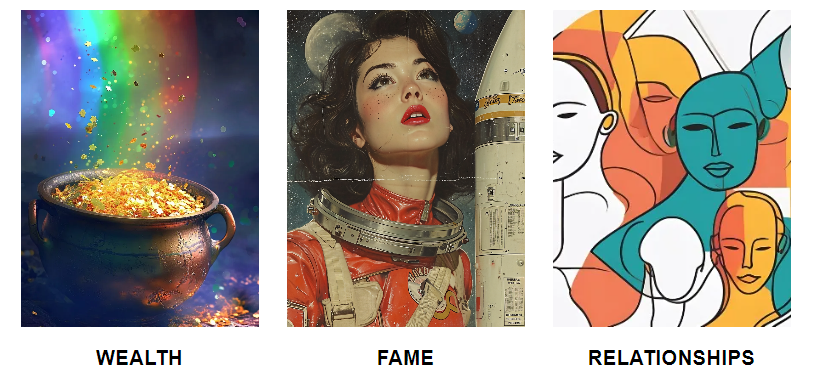


The third questions to ask yourself is:
What benefits or qualities am I longing for? For example:

Click pic to see more crystals and qualities
These three questions identify your intention. Crystals are a way to focus attention using an intention to manifest. One of the biggest time wasters is going into a store or show without a connection to your purpose for getting a crystal. Not only at the show, but for the next period of time of not knowing what to do with it or how to display it that could last for years. Be prepared for success in exploring crystals knowing your intention.
Second Step
Once you identify the qualities your are seeking by answering the above questions, including naming the life area you long to enhance with them, the exploration then becomes what crystals speak to those qualities, or your needs. This would be when you can feel more prepared to go into a shop, online or trade show to search out what crystals or stones would fulfill your needs. However don’t forget the important 3rd step!
The Third Step
The third step is to look around the space you would like to place the crystal or stone in. How much space do you have? What will you display it on? Will it be in a showcase position or in a bowl with other stones. If for healing is there a dedicated space. Is it for your office desk or nearby, etc.?
Read more from the Energy Muse – Online Crystal Merchant
The Power Healing Crystals and Gemstones Energy Muse – Anniversary SaleLink to: Crystal Display Ideas and Considerations
To save future clutter and finances prepare yourself by connecting to your intention. Crystals and stones languish in cupboards and on shelves gathering dust in unattractive arrangements as some buyers didn’t start out with a connection to what purpose it would fulfill for them. It was attractive, or sounded good, and an impulse buy. In mentoring or coaching, Renee has experienced many people who have bought crystals impulsively and then forgotten them on the shelf or in storage. Crystals are alive with qualities and meant to be used. The more they are used the brighter and more beautiful they are. Those forgotten ones become lackluster and dusty. As crystals are accelerator’s they absorb their surroundings, as people do, and emanate the energies back out the same as people do.
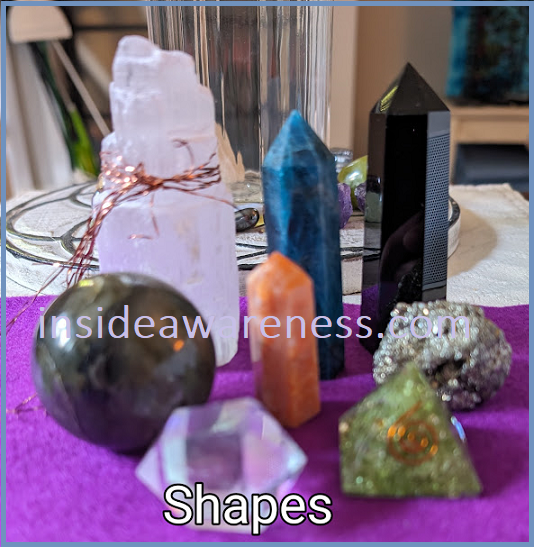
Link to What shape of Crystal would be your best choice for your intention
Follow the journey on Twitter, Facebook, Pinterest, Instagram
Mindfulness through Crystals

Copyright 2014 – 2025 Renee Lindstrom, GCFP,Feldenkrais® Practitioner since 2007, Communication & Empathy Coach since 2004, Art of Placement since 2
Changing starting position in posture transitions
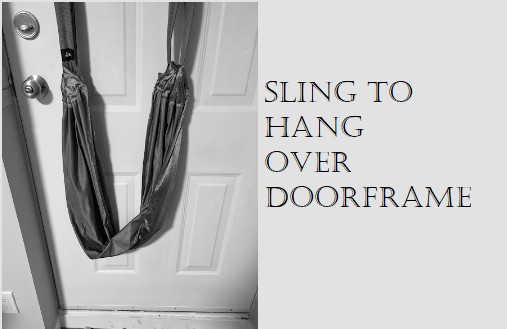
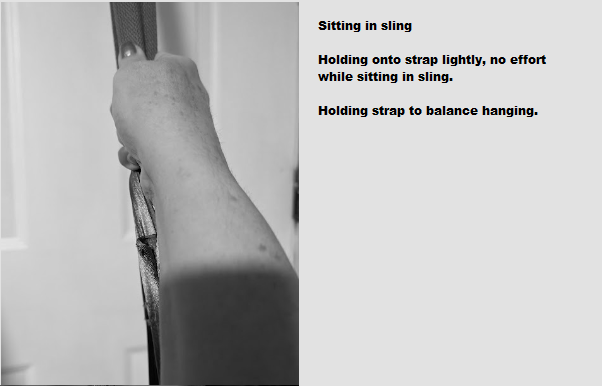
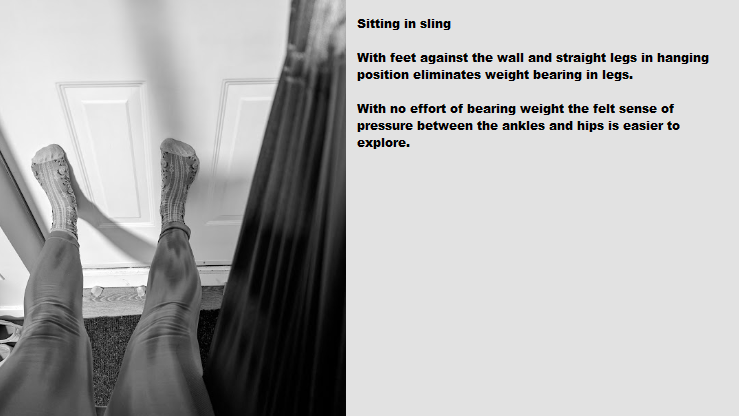
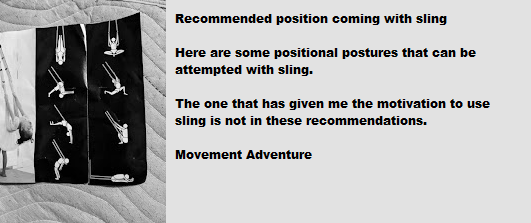
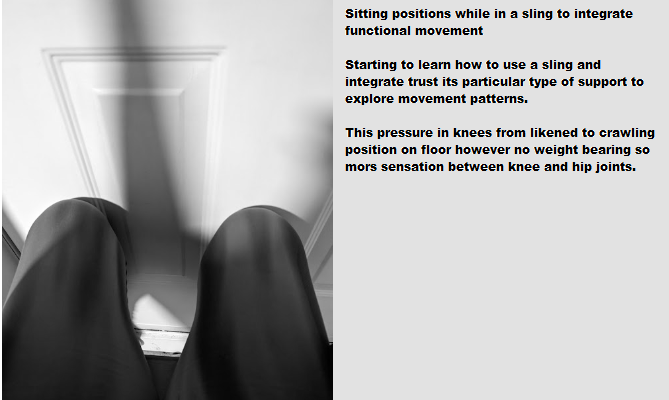
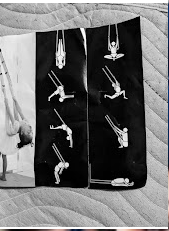
In Awareness through movement group lessons Renee will change the starting point position for guiding similar patterns of movement.. For example, a pattern of movement in standing can also be reflected in a sitting or a prone position. Some patterns in a prone position can be experienced while facing upward or facing downward. During this recent past fall and winter her focus has been on exploring the flexibility in the pelvic, sacrum and hip joint connections in more in-depth. She has seen a trend in younger and younger people with serious lower back, pelvic, hip, knee and ankle complaint’s. This includes joint replacements. It seems to be a rapidly increasing solution. Hence her own personal focus on using a sling for the potential of increasing her own flexibility through her spine ribs and limbs as it responds to leg positions in postural transitions. Any increased agility as a result will increase the available sensory awareness of skeletal movement patterns in transitions.
No she is not going to bring slings into her classes. At least not in the near future! She will use the increased sensations of the weight shifting through the skeleton into her Functional Integration and Awareness through movement guided patterns.
If you’re needing support with improving. or increasing your range of movement try group lessons or personal functional integrations lessons.
Renee is a Certified Feldenkrais Practitioner – since 2007
Upcoming in person Victoria Awareness through Movement Lesson Series & Workshops
See Renee for personal Functional Integration Sessions
Follow the journey on Twitter

Mindfulness through Movement
Copyright 2014 – 2024 Renee Lindstrom, GCFP,
Feldenkrais® Practitioner since 2007, Communication & Empathy Coach since 2004, Art of Placement since 2001
Posted in Uncategorized