
Experiencing Listening Before Trying to Improve It
We participate in listening relationships throughout everyday life.
We listen to ourselves, family members, colleagues, friends, and people whose experiences may be different from our own.
Sometimes these exchanges feel natural and satisfying.
At other times, we may experience misunderstanding, resistance, uncertainty, or a loss of connection.
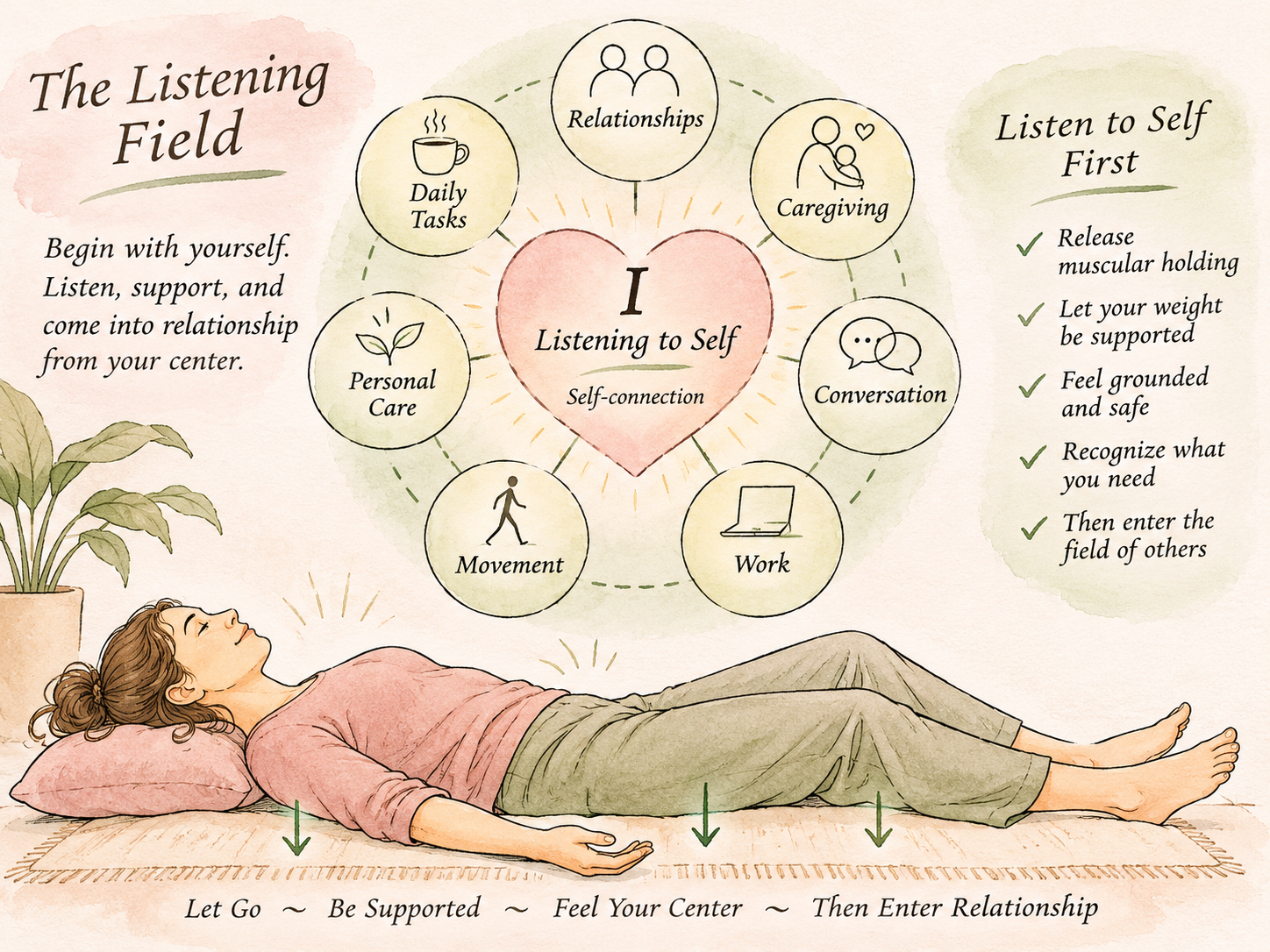
The Inside Awareness Listening Field introduces opportunities to explore these experiences through conscious recognition rather than beginning with a strategy for correcting them.
Participants are invited to notice what they bring into a listening experience, how they respond to others, and what becomes recognizable through shared participation.
The intention is not to become a perfect listener. It is to develop a more conscious relationship with listening itself.
01 — Open Inquiry
Beginning with Our Own Experience
Open Inquiry offers an opportunity to explore questions, observations, and experiences without needing to define them in advance.
A participant may begin with something familiar.
Perhaps a conversation felt uncomfortable.
Perhaps they noticed that they stopped listening when a particular subject arose.
Perhaps they are curious about why they feel comfortable speaking in one setting and hesitant in another.
There is no requirement to arrive with a clearly identified problem or a desired solution.
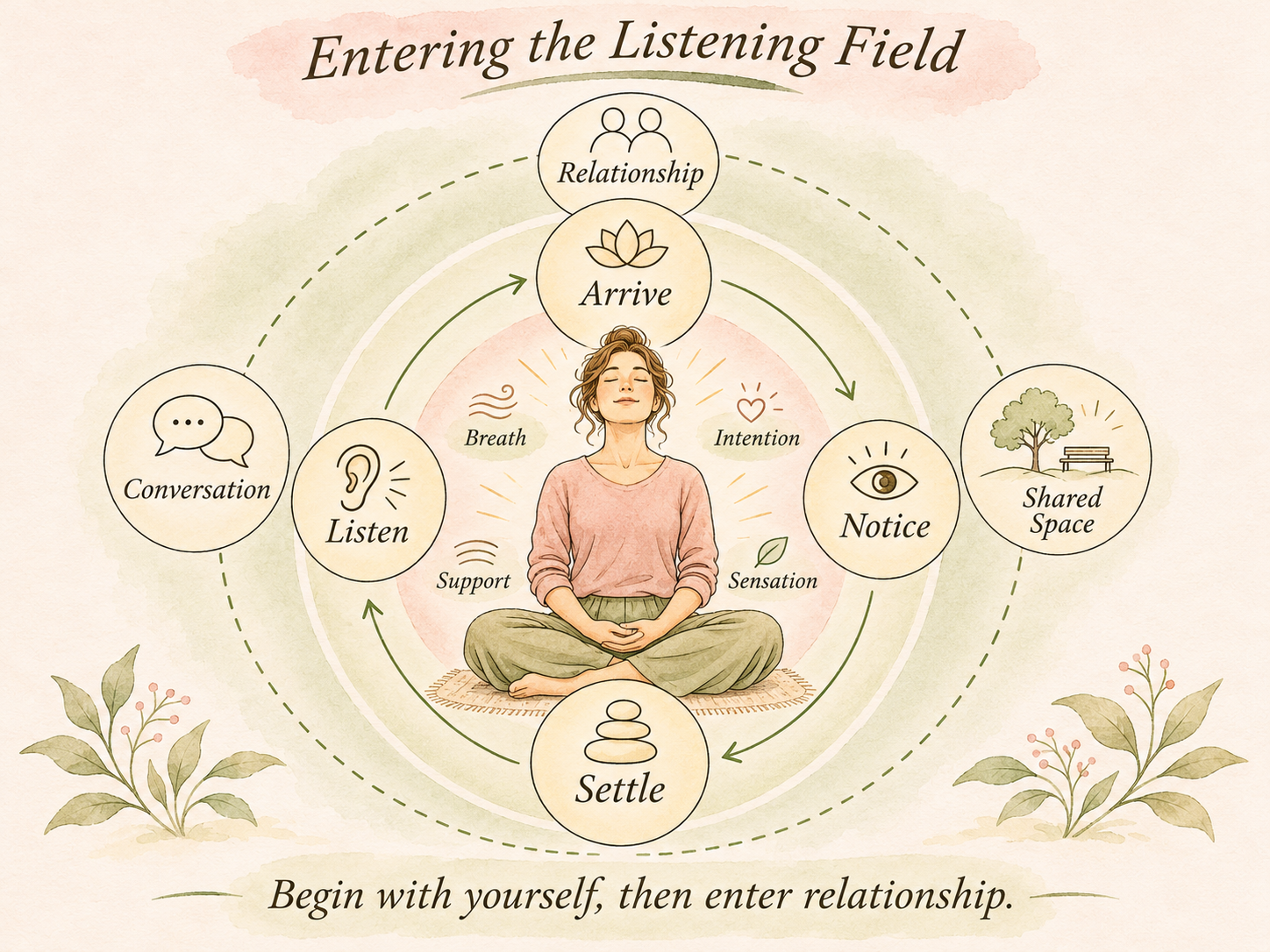
Entering the Listening Field
An exploration may begin with a simple guided check-in.
Participants are invited to notice their physical surroundings and their experience of being present.
They may recognize the support of a chair, the contact of their feet with the floor, sounds in the room, or their breathing.
Attention can then move toward inner experiences.
What am I arriving with?
What is meaningful to me in this moment?
What expectations or intentions am I bringing?
What am I already anticipating?
This introduction encourages participants to become familiar with their inner experience before entering an interactive conversation.
No one is required to disclose what they discover.
Recognition Before Change
Open Inquiry does not begin by identifying what a participant should change.
It offers opportunities to recognize experiences that may already be influencing their participation.
An emerging question can become the beginning of an exploration.
We can begin listening to ourselves before deciding what we need to do differently.
02 — Responsive Dialogue
Discovering Understanding Through Reciprocal Listening
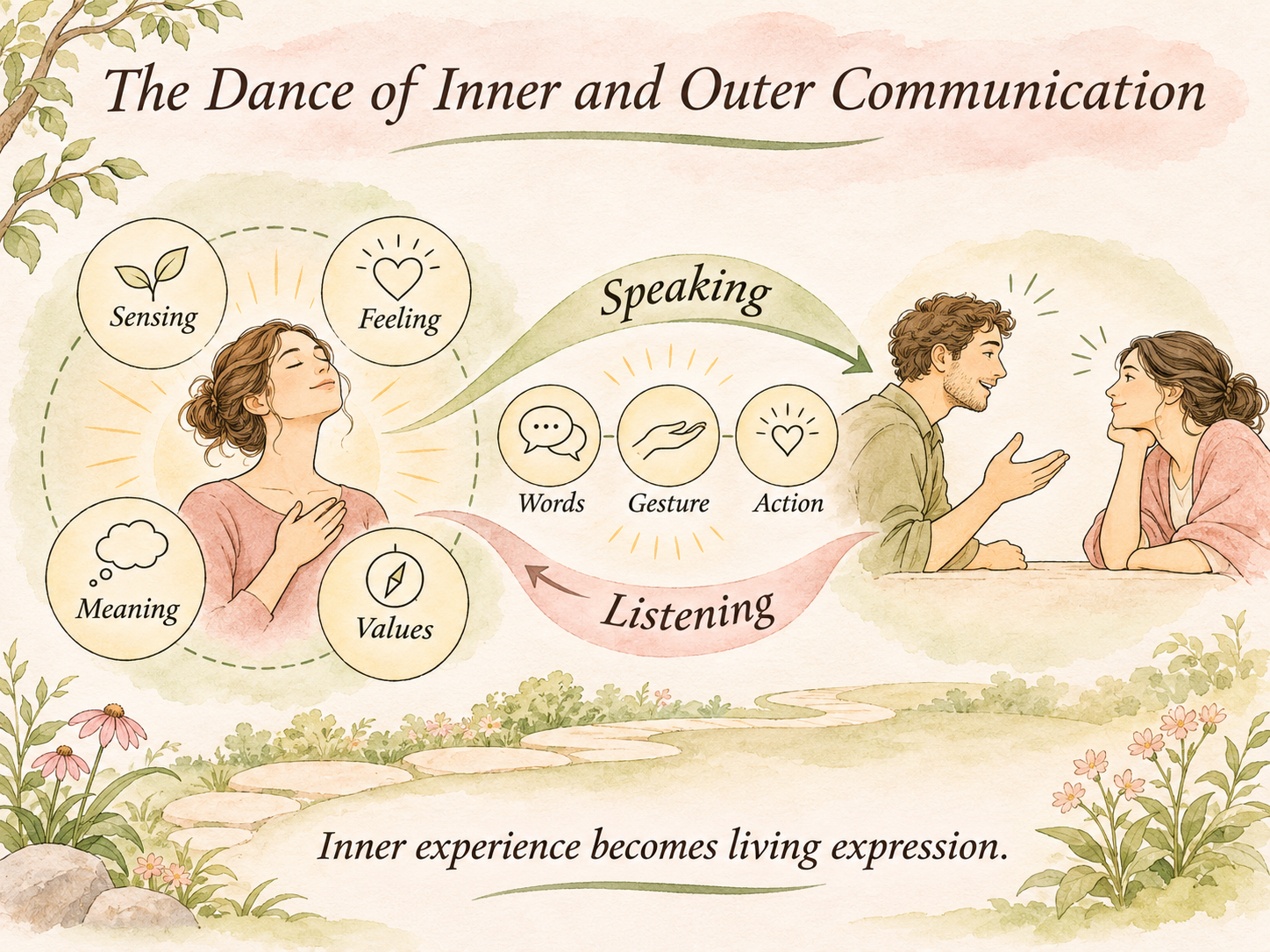
Responsive Dialogue introduces guided opportunities to explore listening and speaking together.
Participants may bring a personal experience, question, or situation they would like to explore.
The focus is not on debating different positions or establishing which person’s interpretation is correct.
It is on discovering how meaning is expressed, received, understood, and sometimes misunderstood.
Speaking and Listening
One participant begins by expressing their own experience.
The listener attends to what is being shared while noticing their own responses.
They may recognize the desire to interrupt, advise, agree, disagree, or interpret.
Rather than treating these responses as failures, participants can become curious about them.
The listener is then invited to reflect what they heard and check whether they understood the speaker’s intended meaning.
The speaker may clarify or add to their expression.
When appropriate, the roles exchange.
Each participant has an opportunity to experience the relationship from both perspectives.
Recognizing Differences Without Abandoning Ourselves
Two people may remember the same event differently.
They may assign different meanings to familiar words.
They may also arrive with different expectations about what a conversation is intended to accomplish.
Responsive Dialogue introduces opportunities to recognize these differences without requiring immediate agreement.
Participants can explore how personal values, past experiences, assumptions, and present intentions influence communication.
They can also recognize when a boundary, a pause, or a different form of participation is meaningful.
The invitation is to remain connected with one’s own experience while making room for another person’s intended meaning.
Responsive Dialogue becomes an opportunity to experience listening as mutual participation rather than a competition between interpretations.
03 — Emergent Learning
Recognizing What Develops Through Repeated Experience
Learning about listening does not end when a guided conversation concludes.
Sometimes an experience introduces immediate recognition.
At other times, something becomes clearer after reflection or through another everyday interaction.
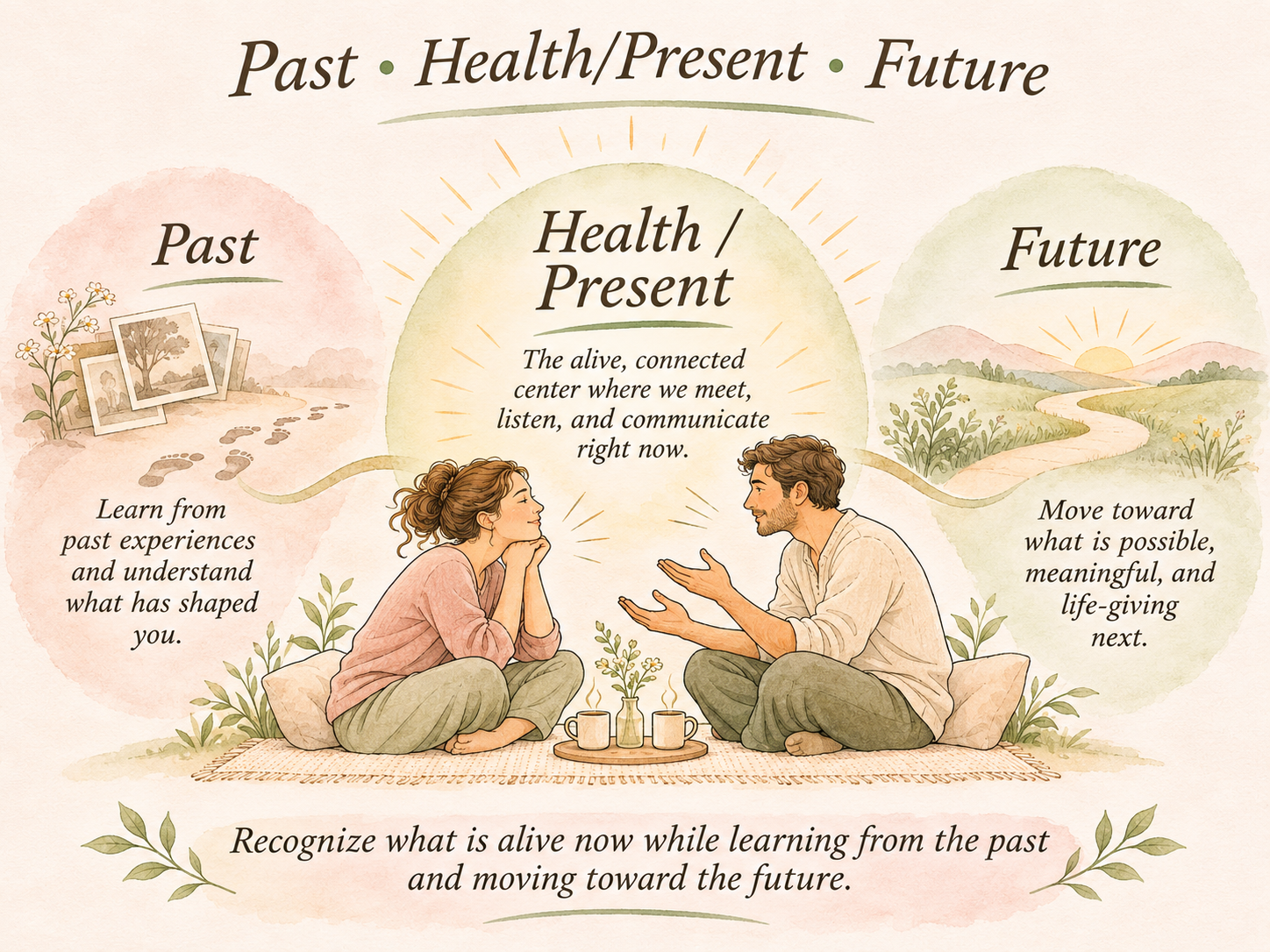
Emergent Learning offers opportunities to revisit discoveries and recognize how our relationship with listening develops over time.
Learning Through Everyday Relationships
A participant may notice that they are becoming more aware of personal expectations before conversations.
Someone else may recognize a familiar interpretation arising while listening.
Another may discover greater clarity about their own values, intentions, or availability for a particular exchange.
These experiences can become part of ongoing personal learning without requiring participants to evaluate themselves against a prescribed standard.
Revisiting What Becomes Meaningful
Journaling, personal reflection, guided conversation, and returning to earlier questions can support conscious recognition.
Participants may explore:
What did I recognize about my listening experience?
What was different from my expectations?
What became clearer through the exchange?
What continues to interest me?
What am I noticing in everyday relationships?
A new discovery may introduce another question rather than a final answer.
That question can become an invitation for further exploration.
Facilitator Learning and Mentorship
An ongoing intention of Inside Awareness is to support others who wish to introduce experiential listening into families, educational settings, community groups, and organizations.
Mentorship can explore the qualities of listening, observation, timing, responsive inquiry, and respect for individual experience.
Developing facilitators may become familiar with recognizing their own expectations and interpretations before guiding others.
They can learn to create opportunities for reciprocal participation without assuming authority over another person’s meaning or directing participants toward a preferred conclusion.
Facilitation also involves recognizing boundaries, differing readiness, and the distinction between making room for an experience and requiring someone to share it.
The intention is to support the development of listening relationships in which learning can emerge through recognition, choice, and mutual participation.
Continuing the Exploration
Open Inquiry, Responsive Dialogue, and Emergent Learning are interconnected ways to participate within the Listening Field.
They are not stages that everyone must complete in a prescribed order.
An individual may begin with personal reflection.
Two people may explore reciprocal listening.
A group may become curious about how expectations and interpretations influence their shared experiences.
Each offers opportunities to recognize how listening participates in everyday relationships.
We do not need to begin by knowing how to change a conversation. We can begin by recognizing how we are already participating in it.
Exploring Participation
Individuals, couples, groups, educators, and prospective facilitators are welcome to inquire about guided listening explorations, reciprocal dialogue experiences, and developing mentorship opportunities through Inside Awareness.
Back to The Listening Field Explorations
Listening Field – Guided Patterns for Lived Function – Inside Awareness | Renee Lindstrom
@insideawarens – Copyright 2014 – 2026
Developed through years of values-based educational exploration, influenced by Marshall Rosenberg’s Nonviolent Communication, somatic learning through the Feldenkrais Method, and the integration of intention and conscious recognition through lived experience.

