
Culture of Values
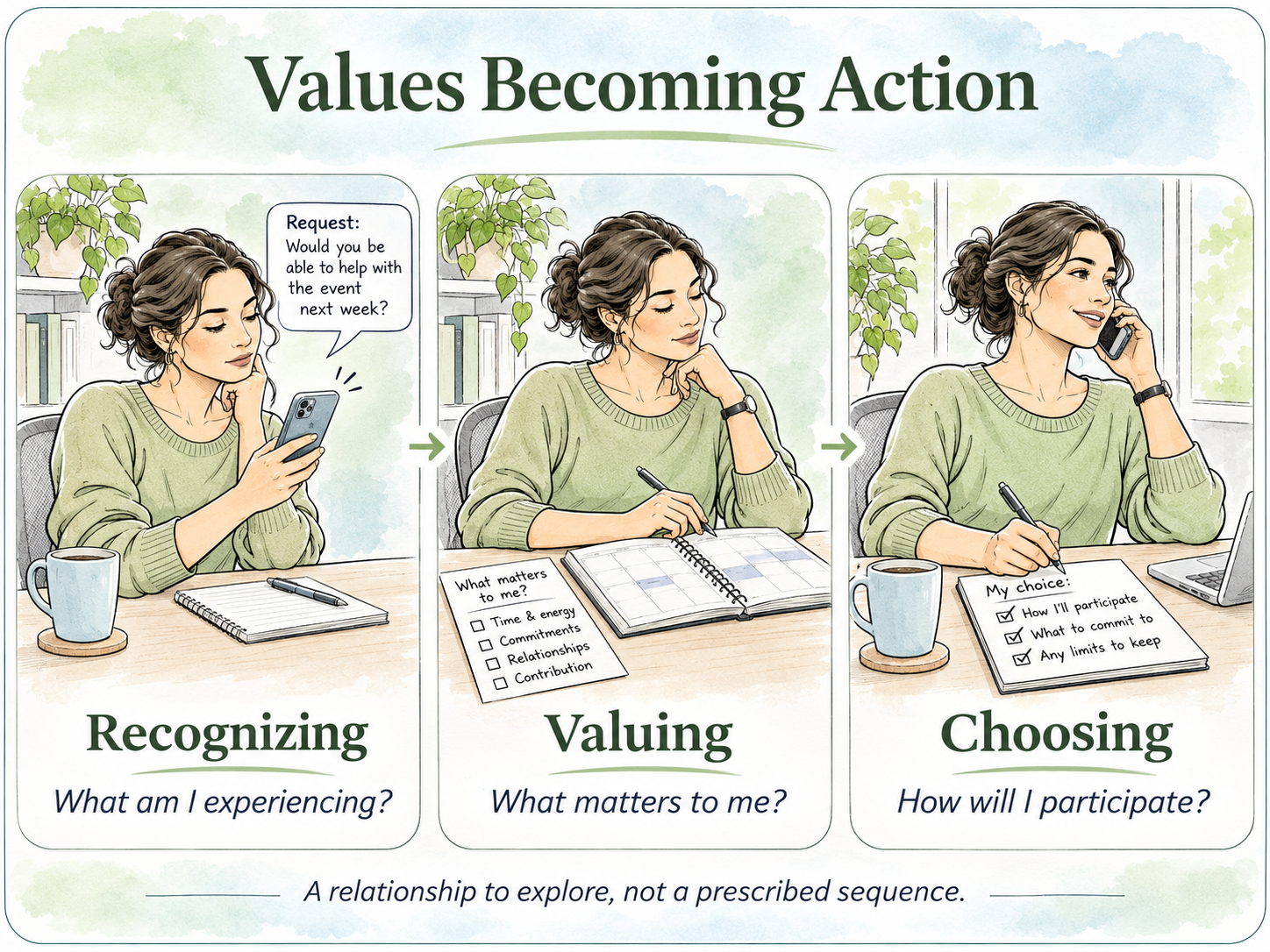
Discovering What Is Meaningful Through Lived Experience
Our personal values influence everyday choices, relationships, communication, and the ways we participate in our environments.
Yet familiar words such as respect, consideration, acceptance, cooperation, and belonging may hold different meanings for each individual.
The Inside Awareness Culture of Values explorations introduce opportunities to recognize these meanings through personal experiences rather than relying solely on established definitions or expectations.
Participation can begin through individual reflection, guided group experiences, or the integration of values awareness into educational and organizational environments.
The intention is not to teach people which values they should hold. It is to nurture conscious recognition of the values already influencing their lived experiences and choices.
01 — Personal Inquiry
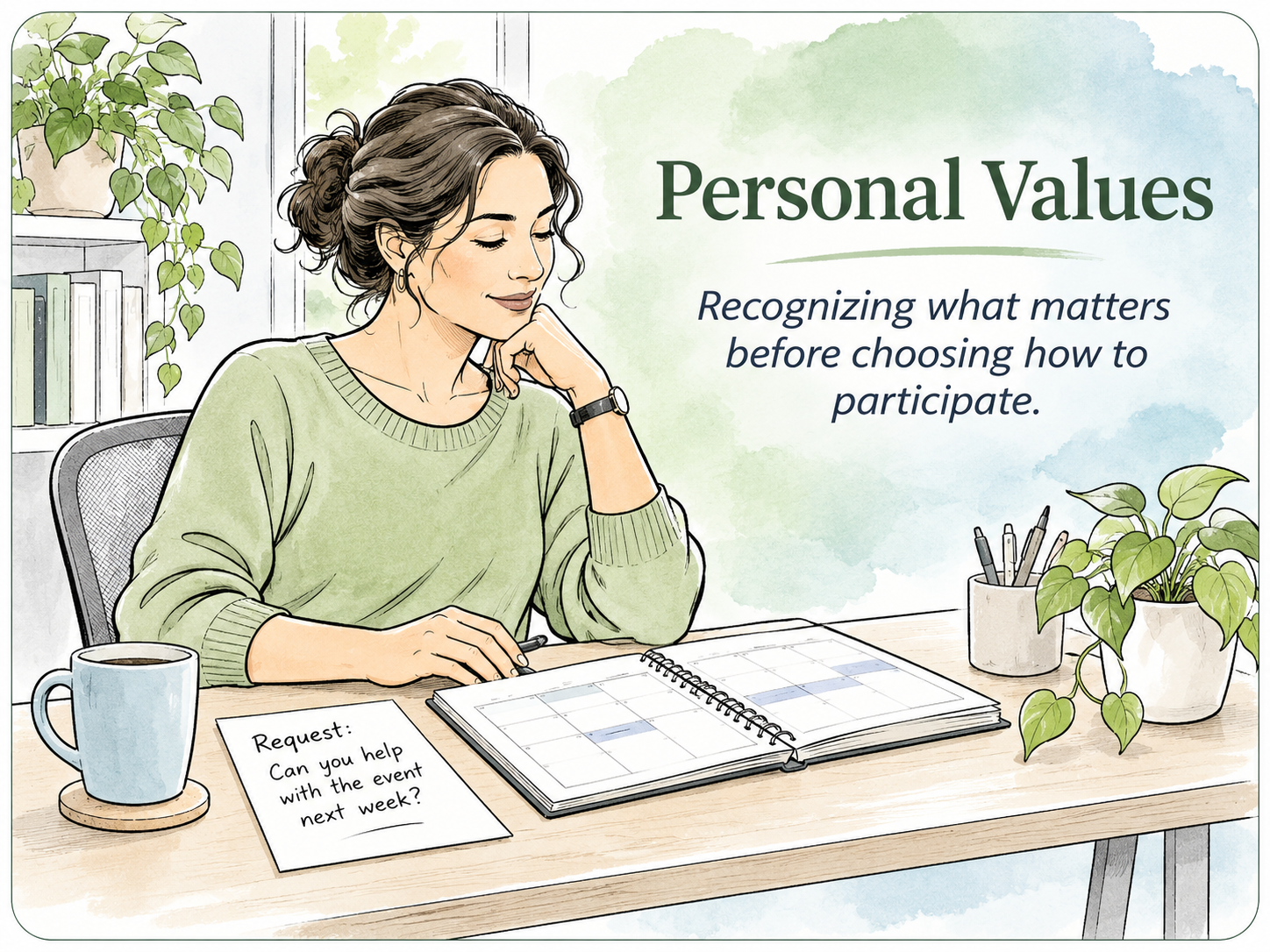
Discovering Values Through Everyday Experiences
Personal inquiry introduces opportunities to become more familiar with what is meaningful within our daily lives.
Through guided reflection, participants explore experiences in which personal values and needs have been met or unmet.
Rather than focusing exclusively on difficulties or what needs to change, attention is also given to recognizing and celebrating experiences that have been satisfying, enjoyable, or supportive.
This counterbalance became a foundation of the original Culture of Values journal.
Participants were invited to revisit two daily experiences: one in which something meaningful was met and another in which it remained unmet.
Both provided opportunities for conscious recognition.
Personal exploration may include recognizing feelings, sensory experiences, intentions, learned interpretations, and the relationship between personal values and everyday actions.
An important dimension is discovering how self-value becomes expressed through choice.
For example, recognizing a need for consideration, autonomy, or balance may influence whether we accept a request, express a preference, establish a boundary, or choose another way to participate.
The focus is not on judging earlier choices or trying to become a different person.
It is on developing greater familiarity with our own experiences so that meaningful choices become more accessible.
What is meaningful to me, and how am I participating in creating it through my daily life?
02 — Group & Workplace Learning
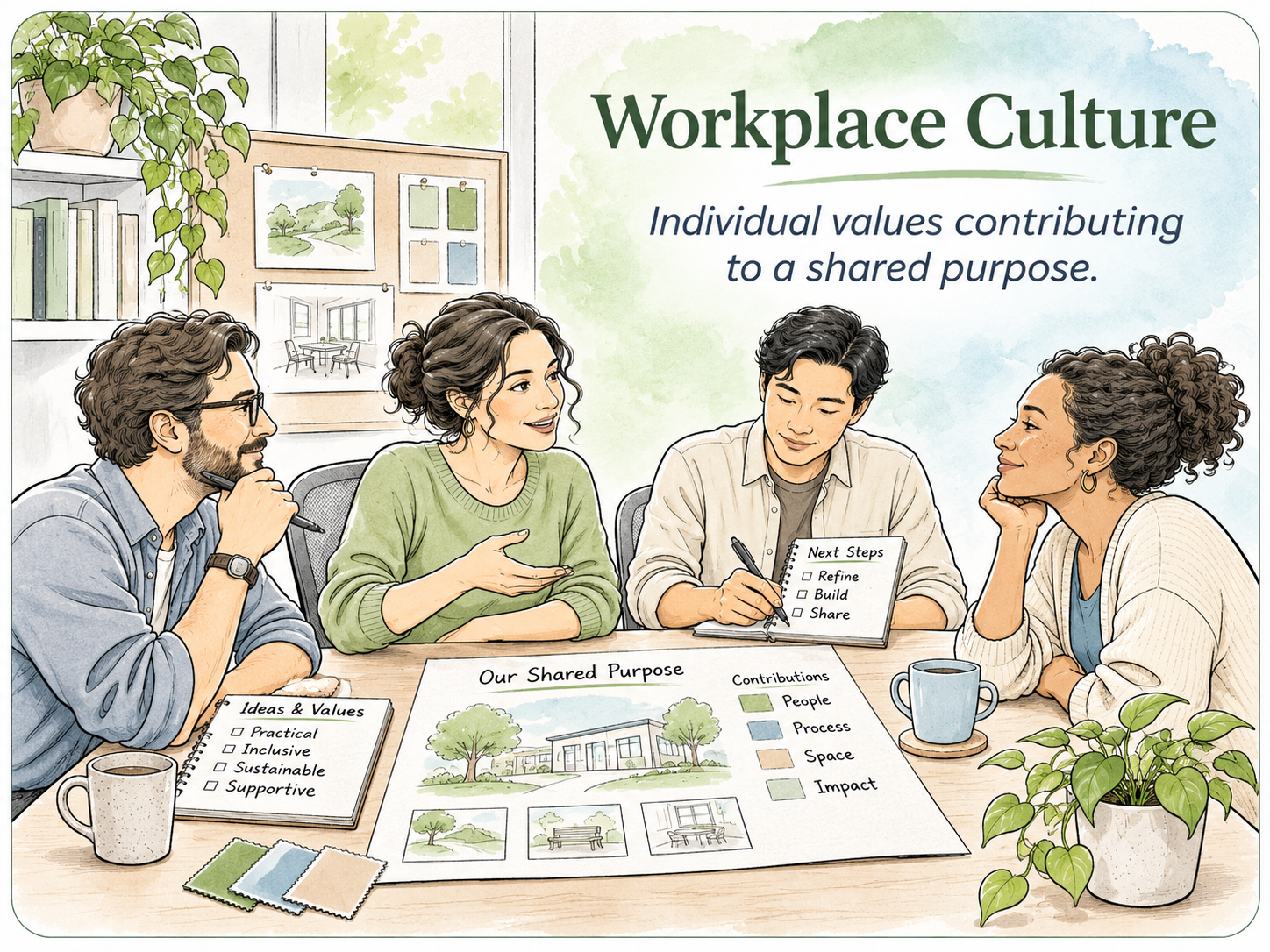
Recognizing Individual Values Within Shared Experiences
Every group brings together individuals with different histories, responsibilities, intentions, values, and interpretations.
Even when participants share a common purpose, they may experience or understand familiar values differently.
One person may associate cooperation with reaching an agreement. Another may experience cooperation through having room to express an independent perspective.
Group and workplace explorations introduce opportunities to recognize these differences without immediately turning them into disagreements about who is right or wrong.
Experiential activities may begin with familiar subjects such as personal preferences, environmental design, everyday decisions, or shared experiences.
These offer accessible opportunities to recognize individuality before moving into more challenging conversations.
Guided listening circles can then introduce opportunities for participants to express what is meaningful to them while others listen without interruption or immediate rebuttal.
Through these experiences, individual values and intentions may become more recognizable.
The focus is not on creating agreement through persuasion or requiring everyone to share the same understanding.
It is on discovering how different experiences and intentions can contribute to a shared relationship or organizational purpose.
Empathy Within Group Experiences
When disagreements, withdrawal, or resistance emerge, these responses may introduce another opportunity for recognition.
Rather than focusing exclusively on the issue being debated, participants and facilitators can become curious about the experiences arising within the present relationship.
What might be meaningful to the person responding?
What has changed in their participation?
Is there something that has not yet had room to be expressed?
These inquiries do not require us to assume another person’s feelings or abandon shared agreements and responsibilities.
They offer possibilities for empathy while respecting individual autonomy and the needs of the group.
The intention is to support shared participation without requiring individuals to abandon what is meaningful to them.
03 — Educational Integration
Bringing Values Awareness Into Everyday Participation
Culture of Values began developing through facilitated talking circles and became an ongoing educational exploration of personal meaning, feelings, needs, intention, and conscious recognition.
In 2013, the development of the values calendar introduced a recurring weekly focus that could be revisited through everyday experiences.
The adult calendar offered 52 values for personal exploration throughout the year.
Companion educational materials were subsequently developed to support children, parents, educators, and school communities through classroom inquiries, values journals, seasonal calendars, and creative experiences.
These resources grew from the recognition that learning the definition of a value does not necessarily mean recognizing how it is experienced in daily life.
Educational integration introduces opportunities to bring this experiential approach into existing learning and organizational environments.
A weekly or monthly value can provide a familiar focus of attention.
Participants may explore its meaning through conversations, personal reflection, creative activities, shared experiences, and recognition of everyday actions.
The same value can be revisited as experiences and understanding develop.
Supporting Educators and Facilitators
Adults introducing these explorations are invited to participate as learners themselves.
Rather than determining what another person should feel, believe, or discover, facilitators develop familiarity with observation, reciprocal listening, personal values, and responsive invitations.
The intention is to nurture learning environments where different perspectives can be recognized without requiring one interpretation to become the correct understanding for everyone.
These approaches may contribute to personal development, family relationships, community learning, and workplace culture.
The children’s educational applications continue through The Legacy Educational Project, while Culture of Values remains an adult-focused pathway for personal, relational, and organizational learning.
Values become more meaningful when we recognize how they participate in the ordinary experiences of living.
A Living Relationship With Values
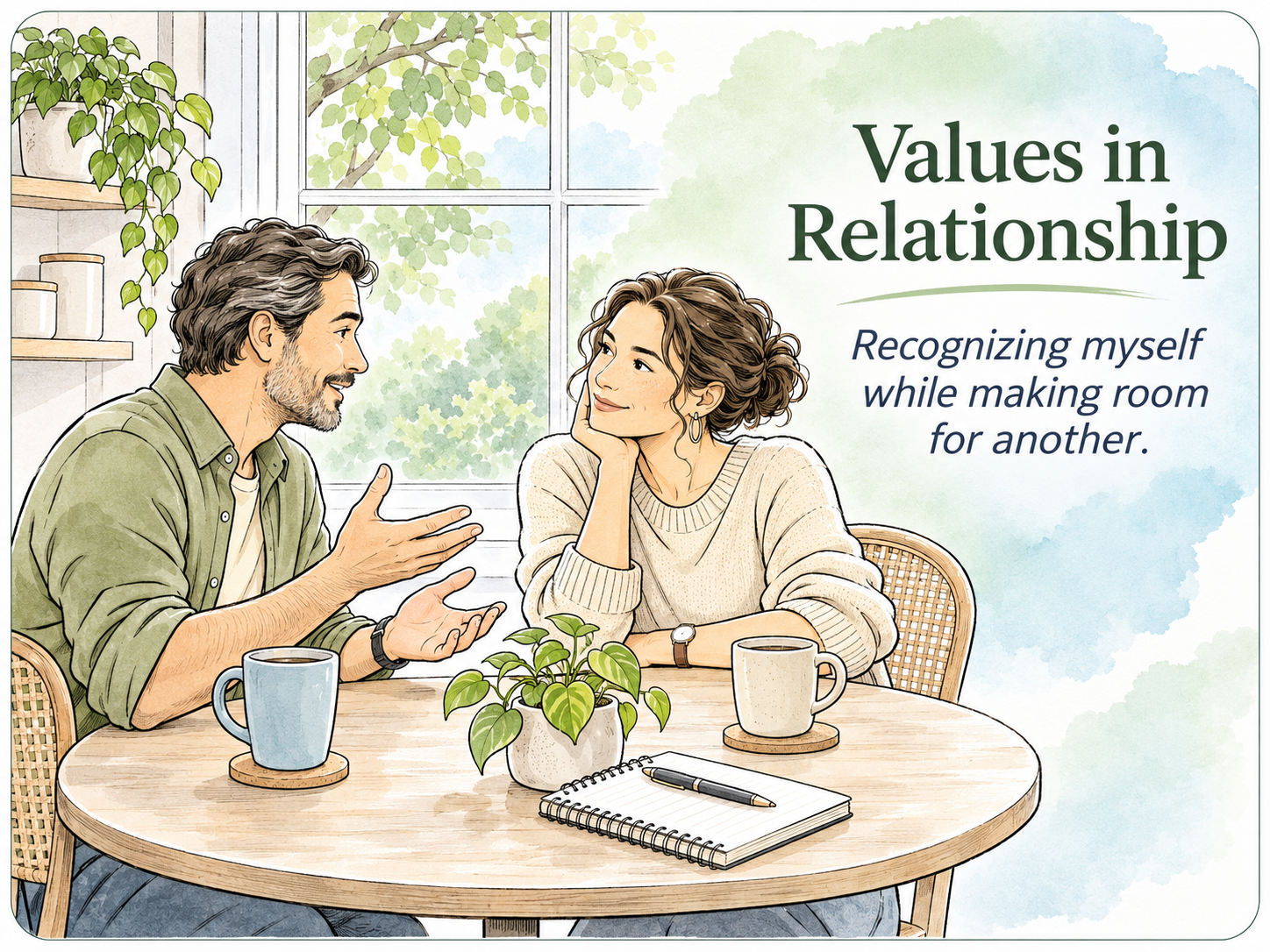
The three participation pathways are interconnected, but they are not steps that must be completed in sequence.
Personal inquiry can introduce greater awareness of what matters to us.
Group experiences may reveal how differently people understand and express those same values.
Educational integration creates opportunities to return to these discoveries through the familiar experiences of daily life.
The intention is not to establish a fixed way of behaving or communicating.
It is to nurture a living relationship with personal values through recognition, experience, intention, and conscious action.
Recognizing what matters. Discovering choices. Participating with greater awareness.
Exploring Participation
Individuals, groups, educators, and organizations interested in the Culture of Values approach are welcome to connect with Inside Awareness to explore possibilities for participation and educational development.
Inside Awareness | Renee Lindstrom
An experiential values education approach informed by Marshall Rosenberg’s Nonviolent Communication, the Feldenkrais Method, and years of exploring conscious recognition and intention through lived experience.
Culture of Values – Guided Patterns for Lived Function – Inside Awareness | Renee Lindstrom
@insideawarens – Copyright 2014 – 2026
Developed through years of values-based educational exploration, influenced by Marshall Rosenberg’s Nonviolent Communication, somatic learning through the Feldenkrais Method, and the integration of intention and conscious recognition through lived experience.

