Tag Archives: Relationships

Somatic behaviour focus can redirect attention away from labels, being diagnosed & judged Such as word addictions with too many analytical definitions & moral judgements

I do not often use the word addictions. Only recently have I used it in my posts. I don’t let it influence my personal or group lessons. It is such a distracting word with so many changing definitions and a word that is normally very personal to the person speaking it into life, or listening to someone else speaking it to life. What I focus on is the instinct that turns one towards an addictive quality. For me the instinct is triggered by survival. An easy example is sex.  Sex is a basic need in the base level of needs along with water, food, shelter, air. If someone is operating under anxiety, stress, fear, or anger emotions it will trigger an instinctual reaction. In this example it would be self soothing through basic intercourse without much meaning, other than relief.  However, the urge in the gut is often still there during and after. If one increases sleep patterns, eats healthy, and starts to experience self fulfilling needs being met, including meaningful relationships, the instinctual need to self sooth shifts as the survival instinct diminishes. This doesn’t mean one loses their sex drive, it just shifts it into more meaningful interactions. This self soothing example can be replaced with the actions of gambling, drinking, drugs, smoking, food, etc. Often the focus is on the label – addiction, which can shift the mind focus to the past behaviour, memories, or blaming and shaming self and others. If one can capture the moment, there is a felt sense of the instinct that is felt prior to going into the habit of reacting to it. This is a moment to observe what just happened. (Something is happening in the moment of the trigger.)  This can be the point of change. Notice the trigger and instead of going into the strategy for self soothing, one can process the trigger and create inner balance. This is an important skill development.  Leaving it unchecked creates a type of random chaos either by oneself, or others who have clued in on how to keep one in the agitated state. (Yes, common strategy for others is to redirect someone’s focus of attention to get their own needs met).  The person who introduced this to me, Dr. Marshall Rosenberg, Ph.D., used an example of eating. Often when people become uncomfortable, they will reach for food. He would suggest the person reaching for food to stop and ask themselves if they are hungry, or if something else was instead gnawing at them. Usually, they are not hungry, and this pause to check in is enough to shift the experience to talking about whatever it is that instigated the action of reaching for food. It could be as simple as being asked an uncomfortable question. The trigger is inner conflict. If you disagree with someone, it can cause inner conflict. If you hear a hard to hear message, it can create inner conflict. If someone tries to control you it can cause inner conflict. etc., etc.

LEARNING OPPORTUNITIES:

  • Learning opportunities:
    • Integrating personal and group values to create a point of connection in relationships and environment
    • Introduction to transforming reactions into value focused connections
    • Integrating values through intention
    • Integrating values through the environment
    • Somatic Movement to increase physical, mental, and emotional function, health and wellbeing
    • Clarity of  Environmental Stimulus to reduce blocks to health and wellbeing  

Connect to inquire about your personal or group needs


Read Protect your energy with the power of crystals at Energy Muse Affiliated Link

or The Power Healing Crystals and Gemstones at Energy Muse Affiliated Link


The only way to change is action

Conversation is an equal opportunity and  shared experience


Integrate values through Subtle Energies in the environment:


Read Protect your energy with the power of crystals at Energy Muse Affiliated LInk

or The Power Healing Crystals and Gemstones at Energy Muse Affiliated Link


by Renee Lindstrom
 1st Phase of Integration – Getting Started (Introduction & Pattern)
 2nd Phase of Integration – Getting Intouch (Experiencing & Connection)
 3rd Phase of Integration – Integration (Embodiment)

Follow the journey on TwitterInstagram or Facebook

Copyright 2014 – 2024 Renee Lindstrom, GCFP
Feldenkrais®, Feldenkrais Method®, Awareness Through Movement®, Functional Integration®, are registered service marks of the Feldenkrais Guild® of North America. Feldenkrais Method®

Attributes in relationships that work creatively

In relationships it is the quality in the experience that creates the space for someone to present as their best selves. Any type of relationship. This means that there are the attributes of respect, acknowledgement, appreciation, cooperation, participation, equality, fairness, trust, stability, to be seen to be heard, to be valued, responsibility, integrity, balanced give and take, empathy, compassion, kindness, equal giving and receiving, clarity, understanding, patience, acceptance, etc., etc. These above attributes are not a part of the interactions, or in the relationship overall if one dominants to get their needs met on the backs of others. The above attributes create inner connection and connection with others and in their absence, an environment of conflict is stimulated inside and outside. A lack of these attributes creates ill health and shifts the focus of attention into survival, fight or flight. If one is not heard, seen or valued chronically it can increase the ill health mentally, emotionally, physically, in the space and out into groups, and the community. Only someone who lacks these qualities in themselves, ie. lack of self respect, self appreciation, and self accountability, etc., would treat others with this base note behaviour. Why, if you respect yourself, you can respect others. If you hold yourself accountable, you will hold others accountable etc. It creates a value in the space surrounding you that people enter into. Time is better spent and more productive and efficient. People are speaking creativity and with innovation. Which direction is your motivation taking you and those around you? Are you elevating people into being their best self or are you dragging them down into your possible jealousy, hatred and greed?

Learning opportunities:

  • Learning opportunities:
    • Integrating personal and group values to create a point of connection in relationships and environment
    • Introduction to transforming reactions into value focused connections
    • Integrating values through intention
    • Integrating values through the environment
    • Somatic Movement to increase physical, mental, and emotional function, health and well being
    • Clarity of  Environmental Stimulus to reduce blocks to health and wellbeing  

Connect to inquire about your personal or group needs


The only way to change is action

Conversation is an equal opportunity and  shared experience


by Renee Lindstrom
 1st Phase of Integration – Getting Started (Introduction & Pattern)
 2nd Phase of Integration – Getting Intouch (Experiencing & Connection)
 3rd Phase of Integration – Integration (Embodiment)

Follow the journey on TwitterInstagram or Facebook

Copyright 2014 – 2024 Renee Lindstrom, GCFP
Feldenkrais®, Feldenkrais Method®, Awareness Through Movement®, Functional Integration®, are registered service marks of the Feldenkrais Guild® of North America. Feldenkrais Method®

More for you to check in for increasing awareness of your home experience

Pic by Renee Lindstrom

Language of Environment & Landscape

Read more on:


Renee Lindstrom offers:  Indoor & Outdoor Landscape Life & Wellness Consulting & Coaching  enhancing relationship skills, emotions and flexible movement awareness!


About Renee Lindstrom ‘s intention for living in the garden of life

I, like many, wasn’t borne into a thriving, balanced and attuned family landscape.  The illusive patterns that sowed the illusive culture of my lifestyle weren’t heart-centered.  Instead they were based upon fear, anger, unhappiness, discontent and jealousy.
Thinking

This led to years of seeking out meaning, understanding, and a life purpose that didn’t include the harming elements of my earlier family life.  This also led to supporting others along the way.

Through this exploration I have  made the connection to one’s  thinking and their results.  I have observed how the ways of ‘thinking’ create one life’s garden.

We are prisoners to our thinking

To put it another way,  I have seen and experienced examples of how we think becomes what we experience and  create in our lifestyle.  A lifestyle that can be calm and wonderful, or chaotic.  Thinking seems to be responsible for how we actively respond mentally, emotionally, physically and spiritually.  Being unconscious to it makes us prisoners to it.

I have also discovered the process of thinking is separate from mental functions.  How do I know this?  As a babe we aren’t born with a pattern of thinking, yet as a babe we had the mental ability to integrate cultured patterns of thinking.
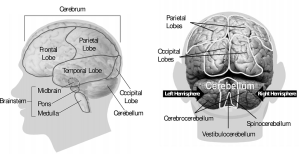
Usually ones focus isn’t on the brain’s functional abilities and its relationship to how experiences are processed.

I have witnessed and heard stories of  life times  lived through reactive behaviours originating from thoughts.  Thoughts based upon one’s thinking process that are not real or the truth of what is happening in the moment.  One example of a case study in years past is the reaction of running from situations,  literally by driving across the continent!  As the reaction would begin to calm I would be contacted only to discover the flight was from an initial triggering thought that wasn’t connected to any real actions of checking in to the source of it.  The flight was an expensive reactive behaviour mentally, emotionally, physically, financially and spiritually.

Exploring this life path I have discovered that even though I was born long after the honeymoon was over in my families experience, I thrive in beauty and the attributes of loving kindness, and have a high propensity for empathy.  My family and I simply weren’t a match.  In retrospect, the pain and suffering became the incentive to find ways to align with my true nature.  Along the way I have found clarity and understanding, and come away with some ways to live in the beauty that the garden of life can be.

A system of understanding to have clarity & for understanding

that is balancing

Sharing these ways with others while continuing my own practices has become an open system of learning.  This system goes out beyond the closed thinking patterns of making evaluations and moral judgments, and beliefs of  right and wrong thinking.  Each of the methods I integrated had their challenges in the learning stages due to the depth of ego that is experienced in our culture.  Ego is imbedded into behaviour yet it’s another elusive quality that people experience without being consciously aware of it and unable to identify and name it.

To borrow an evaluative experience from Buddhism, each method I dug deeply into is founded upon the concept of becoming enlightened.  However the challenges of  the teachers and participants wanting to be seen, heard and valued caused hurdles to overcome and created events of pain and suffering for all immersed in the educative experiences.    Taking the time to integrate these methods as a foundation for living myself has taken time and evolved over the years.  The system I am interested in contributing follows the Buddhist concept of eliminating incorrect use of ego.  We all have ego, however, I focus upon ego usage that pays attention to power with, not more over/under.  Why?  I want to live in the beauty that inspires and motivates.  The heightened stimulus I hope to experience comes from passion.  Passion for life, living and creating.

Mentoring others to switch on their innate ability to learn 

Somes ways of contributing to others as they commit to engaging in life to align more with their true nature are with individual programs or mentoring  integratable life components.   Life area programs and components focus in these areas of one’s experiences:

  • surroundings
  • inner sense of oneself (confidence, self-esteem, empowerment)
  • life purpose
  • cultivating awareness to identify and name intention
  • functional movement that cultivates awareness that holds the connection to the interplay of body movement, reactive behaviour, thinking and emotions
  • functioning relationships that cultivates awareness the holds the connection to the interplay of what’s real in the moment, what one thinks, and how one responds
  • value-based programs to support inner discernment to transform  moral judgments into value based judgments

Finding your intention and creating a target for meeting the goals of who you long to be with these programs 

The learning modules here at Inside Awareness can be specific to life areas whether you are:

  • looking for your life purpose
  • seeking to improve your relationships to all life
  • wanting to enhance your physical abilities
  • introduce a sense of sacredness in your environment

Each module are concrete actions steps that bring one into the shift they long for.

Each module has a foundation in practical steps and have applications that are logical yet bring focus to the elusive.

Renee focuses upon switching back on one’s inherent ability to learn where the experience becomes the teacher and the student becomes the sage.

The intention is to increases creativity and expressiveness in living.by Renee Lindstrom

Awareness Through Living Mentoring Programs Available:

 1st Level – Getting Started (Introduction & Pattern)
 2nd Level – Getting Intouch (Experiencing & Connection)
 3rd Level – Integration (Embodiment)


Follow the journey on TwitterInstagram or Facebook

by Renee Lindstrom, GCFP @ Inside Awareness,  Living in Natures Love Blog
Renee Lindstrom Live
Copyright 2014 – 2020 Renee Lindstrom, GCFP

Sage responses for when the pain of break up is increased by thinking over past events

Being the one who is broken up with can be the most challenging and chaotic as the minds condition has no choice but to go into what it has been trained to do.  Such as:

  • Blaming & Shaming
  • Right & Wrong Thinking
  • Make moral judgments
  • and more…..

I have been there myself.  I have experienced the open darkness of pain where it feels like there is a tear in the fabric of my reality.  When I sought out support and empathy whether it was professional or in my personal friend group I wasn’t thrown the kind of lifeline for  my grief and regret that steered me through the depth of emotions.  Rather it added to the chaotic thinking emotions and increased the effort to sort out.  Recently in the midst of supporting someone else’s break up I had a moment where  I considered how much I would have benefited to have someone  support me with this type of feedback, while recognizing this will have to be repeated until the chaos of the mind training settles and one can enter more permanently into the experience of sadness and forgiveness that is the letting go process.


When I listen to  you I am taken into your story of regret and grief. I hear that you are replaying events in your mind thru the lens of pain you’re feeling now stimulated by this break up. Replaying events is part of the grieving process, however I encourage you to be aware that the need in the moment you made those choices then is far different than the one now. The present need is based on this current event and it cannot go back and preside over past events.

The current event is stimulating your pain body and your memories are surfacing. Putting attachment to them by going into assessing and criticizing yourself is feeding the pain your feeling. These thoughts are false realities. The truth is that in this moment you’re a feeling deep sorrow and pain as you experience this loss.


by Renee Lindstrom

Awareness Through Communication

 1st Level – Getting Started (Introduction & Pattern)
 2nd Level – Getting Intouch (Experiencing & Connection)
 3rd Level – Integration (Embodiment)

Follow the journey on TwitterInstagram or Facebook

by Renee Lindstrom, GCFP @ Inside Awareness,  Living in Natures Love Blog Renee Lindstrom Live
Copyright 2007 – 2020 Renee Lindstrom, GCFP

I was reminded of how sympathy can influence not being seen or heard

For me it is an experience of one merging their pain with an others.
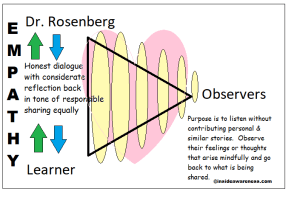
Going into sympathy reflects merging old pain together with an others circumstances.

Let me explain.

In a circle with Dr. Marshall Rosenberg in 2004, he began demonstrating a deepened empathy pattern and I found myself curious about how some of us in the circle were independently holding the space and others where crying in sorrow.  I asked an advanced trainer who had worked with Dr. Rosenberg for many years about the differences in experience.  I was told that those who were not sobbing  didn’t have a similar pain as the person who was receiving empathy.  Those who were  had that same abuse in their lifetime that stimulated old pain.   Fortunately this intensive was to transition from moral judgments and right and wrong thinking.  This explanation was shared with clarity and as a matter of fact.  What I learned was that those identifying with the pain had an opportunity to heal themselves in witnessing the resolution in the person who was receiving empathy from Dr. Rosenberg.  The key was to feel their pain rise up and let their thoughts rest.  The skill was to resist  going into their own story that would hijack the circumstances away from the speaker.  I call this the ultimate witnessing ability.  (This is when you can stop yourself from hijacking someones story away from them and making it about you.)

Empathy practice, the NVC way, is to fully hear what someone is saying without interpreting it back through your past experiences and personal perspectives.  The only way someone is going to feel seen and heard is if you are able to listen to their words while being attentive to what you are hearing.  The following ways of habitually listening are not empathetic, instead they challenge the speaker.

  • Comparisons – telling your perspective or someone elses
  • Being an authority
  • Moral Judgments – no right and wrong, not speaking to what’s wrong with someone
  • Assessments
  • Diagnosis
  • Labeling
  • Criticizing
  • Coming up with solutions
  • Asking questions – your job is to listen, not understand

Dr. Marshall Rosenberg, Author or Nonviolent Communication
NVC – Nonviolent Communication

Book a personalized  session for self, work or group
250-361-7508

Awareness Through Communication

 1st Level – Getting Started (Introduction & Pattern)
 2nd Level – Getting Intouch (Experiencing & Connection)
 3rd Level – Integration (Embodiment)

Follow the journey on TwitterInstagram or Facebook

by Renee Lindstrom, GCFP @ Inside Awareness,  Living in Natures Love Blog Renee Lindstrom Live
Copyright 2007 – 2020 Renee Lindstrom, GCFP

Desk Wealth Corner

by Renee Lindstrom, GCFP @ Inside Awareness

This desk corner is about abundance. Abundance in finances, investments, and resources.  For me it also represents abundance in the quality of experiencing life and relationships that includes the cycle of giving and receiving.  An example is the balance of giving and taking.    If wealth is from natural resources the question to consider is in the equal contribution back to restore and maintain balance and the quality of  nature and the environment.  In other words, is only taking and not  giving back?

3 Wealth Corner Tips:

  1. Declutter and open up space in this corner
  2. Add blue, purple, and red colours
  3. Add objects reflecting moving water such as fish (3), picture,  or fountain

INQUIRE ABOUT Value Based Integration into the Workplace, Life & Empathy Relationships Coaching

Integrative experience for physical, mental and emotional wellness

Find out more on how integrating the arts of movement, communication and space compliment your experience and encompasses a holistic approach to wellness in your space

Connect with Renee

Follow on Twitter for more tips to consider in your life areas for conscious change.


Feldenkrais® Practitioner since 2007, Communication & Empathy Coach since 2004, Art of Placement since 2001