Inside Awareness Behavior principles are founded upon one similar to the first steps in a of Buddhist Mediation. In meditation one is sitting on a cushion to become comfortable being still in space while watching their thoughts. The purpose is to become *mindful and to experience the environment coming into ones awareness softly versus directing ones attention outwardly. The difference in these two focuses of attention is that one is open and expanded, and other one is closed and limiting.
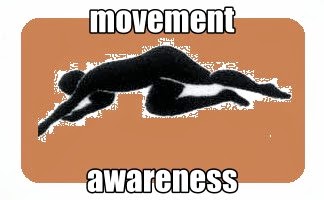
Mindfulness in Movement follows a principle of the Feldenkrais® Method. (Somatic Movement Education Method) This is learning to focus on slowing down, pausing and beginning to recognize something different within yourself and your movement patterns. If we compared it to a practice like yoga it could be described as becoming aware of the movements leading up to the pose, not the finally pose itself. The difference is the inclusion of the senses; how you hear, sense and translate information to learn your own patterns of movement versus being shown or holding the final pose. In a guided meditation walk or labyrinth walk you are given the posture and path way to focus your journey in. Mindfulness in Movement focus’ your attention and gives you options which gently guides you to becoming conscious of your unconscious habits. It is a waking up of body parts and functions based upon the unique design of our body, mind and sensing functions.
Upcoming Workshops
TUESDay,
TUES, JAN 7 – FEB 25 6:45 PM – 7:45PM
LOCATION: Victoria West Community Centre
521 Craigflower Road
Increase vitality, well-being and sensual perception using mindful meditative qualities and body movement awareness. Benefits include: increased organic breathing patterns , flexibility, quieter nervous system and groundedness. Renee Lindstrom 8/$60
Our last workshop in a series of six and the individual workshops have evolved into a deeper focus of practice and understanding empathy. The areas that came up for exploring included self-empathy, empathy in relationships and group empathy. The purpose was to support group members to recognize their own stories inside their mind that did not allow them to be present with what was actually happening in their relationship. How we have done this it by developing skills for learning to recognize and identify their thoughts and behavior as a result of their thinking.
The last exercise involved having a volunteer demonstrate a process while sharing a personal life event and transforming what they had been telling themselves about it into a connection that included the rest of body functions, outside of the frontal lobe of their brain!
At the beginning of the practice this participant shared their resistance at connecting to another person in their life. In the process ego dropped away as the mind stories became silent and what was real began to emerge. As the stories of their mind became less interesting , what was real was their new self-connection to what was being experienced in the moment. When the participant connected to what was real in them they expressed how they had a growing awareness of what was going on for the other person that went beyond their original resistance.
You couldn’t ask for more! The beauty that was visible in the participant and those in the group supporting this persons process was tangible through relaxed faces and the feelings of a group connection. Through the practice other participants began to recognizing their own stories and habits in experiencing how they supported the process. Did they become present to what they were hearing or did it stimulate their own stories or need to fix it by coming up with solutions. If so, all these participants witnessed how this breaks the emphatic connection and experienced the effects of disconnection of it becoming about them and their ego mind and no longer the person going through the exercise.
Beautiful! The participants having a practice of learning a language of connection demonstrated the ability to go beyond the disruption and carry the process back to the original speaker while holding empathy for the interrupter’s!
This brings up the question – Is empathy the absence (quieting) of ego?
For more information on these workshops with Renee Lindstrom go to relationships link
Chogum Trungpa Rinpoche, originally from Tibet, taught North Americans a structure to experience mindfulness in meditation. A structure to occupy the mind and body with focus of attention in a particular way to encourage the mind to slow down to have freedom from thought driven action.
The structure in meditation is particular. You enter into a room with reverence, sit on a cushion that has a mat between it and floor. You have a choice of sitting in two or three positions. When you sit you notice your thoughts and practice labeling them, “thinking.” You follow your breath outwards counting for cycles of 10 breathes. As you sit you notice when your thoughts wander off and then as soon as you notice this you simply bring yourself back to the pattern of breathing and observing your breath. Your eyes are aimed 6 feet in front of you down towards the floor and an you begin to sense the environment. Sitting begins at a cycle of 20 minutes, walking mediation for 10 and back to sitting for 20 minutes. For a retreat the 20 minutes stretches into longer periods of time. The purpose is to begin to have an experience of empty space between the thoughts. An experience quite unlike a mind driven experience.
Sharing Awareness through Communication workshops based on world recognized models for communicating and development, a dawning realization is for the need of a similar structure. Chogyam was sharing that the mind needs attention and a structured system of focusing it to participate, not dominate. Our series of classes has evolved into realizing this same need for structure with a purpose of giving the mind space between thoughts and allowing it room for participating, not dominating. This then deepens the quality. Therefore it isn’t the quantity of thoughts and filling up the silence that matters, it’s the quality that becomes recognizable. Therefore a growing mindfulness can come from learning while developing a lite quality of curiosity in studying one’s own behavior.
A recent comment, “When I hold onto the thoughts in my mind that want to jump out and only share back what I am hearing from my friend, my friend shares more. I am getting to know more about this person and I thought I already knew everything about them. They are also speaking from a deeper place.”
Learning opportunities to discover for yourself how to improve your relationships with clarity and developing mindfulness, western style, are available. For more explore the classes listed, inquire about presentations, workshops and coaching. There are organized group classes, classes designed with your needs in mind, online classes and private sessions for coaching and improving your relationships.
Feldenkrais®, Feldenkrais Method®, Awareness Through Movement®, Functional Integration®, are registered service marks of Feldenkrais Guild® of North America. Feldenkrais Method®
In order to arrive at the right movement, it is first necessary to think of a better movement rather than the right, the right movement has no future development, the latter can be improved – the right remains the limit forever.








 Inside Awareness Center for Integrative Somatic Learning