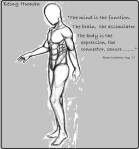
Tag Archives: Movement

Contemplative Movement

Mondays, Mar 9 – 30, 6:30 – 8:30 pm

ATM_5

LOCATION:  Monterey Recreation Centre, 1442 Monterey Avenue

Explore a flow of movement through patterns to increase mindful and conscious sensual awareness.   A movement system designed on the principles of somatic relationships of your body, brain and behavior expanding neural pathway connections.  It is a journey of inner reflection of your movement that calms your mind, removes blocks and balances your inner and outer self-image.  You may bring a blanket to increase comfort and remember to dress comfortably. (Recommend no jeans or belts)  Leave with increased clarity, and balance of body, heart (emotions) and mind.  4/64.00  Cass 124248

Register@ Monterey Recreation Centre – 250-370-7300 or online 

_______________________________________________
Mindfulness in Movement

Mindfulness in Movement follows a principle of the Feldenkrais® Method. (Somatic Movement Education Method)   This is learning to focus on slowing down, pausing and beginning to recognize something different within yourself and your movement patterns.   If we compared it to a practice like yoga it could be described as becoming aware of the movements leading up to the pose, not the finally pose itself.  The difference is the inclusion of the senses; how you hear, sense and translate information to learn your own patterns of movement versus being shown or holding the final pose.  In a guided meditation walk or labyrinth walk you are given the posture and path way to focus your journey in.  Mindfulness in Movement focus’ your attention and gives you options which gently guides you to becoming conscious of your unconscious habits.  It is a waking up of body parts and functions based upon the unique design of our body, mind and sensing functions.

Movement (1)

Upcoming Workshops

TUESDay, 

  • TUES,  JAN 7 – FEB 25 6:45 PM – 7:45PM

LOCATION:  Victoria  West Community Centre

  • 521 Craigflower Road
Increase vitality, well-being and sensual perception using mindful meditative qualities and body movement awareness.  Benefits include: increased organic breathing patterns , flexibility, quieter nervous system and groundedness.  Renee Lindstrom 8/$60
REGISTRATION @ 250-590-8922
.
Other Somatic Movement Workshops for the fall:
Image

Victoria Mayor declares Sept 16, ’13 Victoria’s Labyrinth Friendship Day!

SC20130913-134209

Body Movements and State of Being

Are you aware your body posture tells your inner story?  How you hold yourself is a statement to the world.  It is an open book  to those who can read it.  
Take a moment to consider your own posture world story:Notice your chest between your breasts.

  • Is this area exposed and out facing the world (yang) or is this area sunken and protected from the world (yin)?
  • Are your shoulders set back and wide (yang) or are they hunched forward and down (yin)?
Now notice your breathing while considering these two postures.  As you breath in and out does your posture shift in these above mentioned areas or do you hold this posture locked into place?
Regardless of how you are holding your chest, shoulders and arms, begin to soften this area from it’s automatic holding pattern.  Try the following for a short series of 4 or 5 breathing cycles:

  • If you are yang – broad chested go into a yin position slowly with your next exhalation of breathe.  With an inhalation go into your normal posture.
  • If you are yin – sunken and protected chest,  rise up and go into a yang position with your next inhalation.  Return to your familiar posture on an exhalation.
Notice any changes your feel either physically, mentally or emotionally after a cycle of  4 or 5 breathes and continue for another 2 to 3 cycles of 4 to 5 breathes.  Remember to alternate between the two postures.  Stop to notice between cycles any differences you feel.This pattern of breathing releases your spine which settles your nervous system!  Notice how this reduces your stress throughout the week if you continue to integrate these simple breathing exercises daily!

The possible yin/yang chest stories:

Yin – represents the moon, water and emotions – Too much without balance of Yang – introverted (Western culture labels it – being a victim)
Yang – represents the sun, dessert and action – Too much without yin – extroverted (Western culture labels it – aggressive)

For more on posture balancing & how it can improve your whole life experiencing – email: renee(at)insideawareness(dot)com

Body sense can change how your feeling!

How can your body posture create your attitude and behaviour and affect your sense of  well-being?

Emotions happen not just in the mind; they’re in the body as well.
One isn’t expressed without the other

Try this simple exercise to find out more…….

1.  What are you feeling now in this moment?  If you are not feeling happy, content, and are not enjoying the quality in the moment, uncross your arms and legs, sit up and start to notice if you have any tension in your jaw.
  • Are your teeth clenched together?
2.  Loosen your lower teeth from your upper and let your jaw become slack.
  •  Notice your tongue  placement and if it is against the roof of your mouth let it fall.  
3.  Relax your forehead, eyes and cheeks.
  • Take a moment  to massage the space between your eyebrows to soften the tight knot and widen your eyes a few times and then let them relax.  
4.  Notice your breathing pattern.
  • Are you holding your breathe?  If so, begin to breathe as you would normally and follow your exhale for 3 rounds of 5 breaths. Pause between each round.  If you notice each out breathe has a different length don’t change it, simply notice it.  A few times on an out breath, slouch, round your back and bring your upper arms together towards each other in the front.  Let your chest sink onto your diaphragm.  
5.  Now go back and notice how you are feeling.  
  • Have your original feelings shifted into something else?

It is impossible for you to think about something, without having some form of physical response to it.

Every thought always reflects through the body in some way, because of the electro-chemical, neurological, and physiological processes going on in both your brain and body.

This exercise demonstrates in a simple way how you can change your emotions and thought patterns through your physical body posture and patterns of movement.


Integrating the emotional and physical behaviors into ones own image of self

In private sessions with clients there is less distraction and the benefit can be  deepened awareness of their  own behavior.  This includes clarity  of how reactions are dependent on both thinking and locked in movement patterns.    The two are locked into behavior!

Clients searching for a change in their relationships will enjoy the simple movement techniques I introduce to increase their focus.   Some will begin to alternate between talking and movement sessions.  Both these types of sessions are designed to increase the success in their progress and are compatible.

Clients who come for improving their movement and reducing pain will find themselves integrating their emotional reactions that are  keeping them in their pain and strain.

Both types of clients discover physical movement and emotional reactions are married together in their reactions.  They come to know  the  value in  learning their automatic  habits.  If someone is able to observe their habits then there will be change.

One example is  a  client who discovered one of the largest muscles in their body and that they had not been using them.  They didn’t even know at first how to engage it!    This client originally came to improve their relationship connections.  To relieve their tension and increase their breathing patterns  I introduced small movements  for them to experience.  Afterwards  our sessions began to alternate between the two types of sessions, movement awareness and talking awareness.

They discovered a large muscle that was dormant and not being used.  They realized the strain that this put on their whole body in the effort to move in any activity.  They also realized they did not even know  how to activate this muscle.  There was no connection to the brain signals.

Then came  the awareness of  tension being held in another set of muscles.  The control that went into holding these muscles stopped any ability to  engage these new ones!  The control of this other set of muscles was directly related to emotional behavior!  The balance then came from intellectually knowing one is safe and supported to begin to release control.

I love my work!  When clients can experience their journey through learning techniques their journey is more concise and clear.  There is beauty in waking up the parts that have no brain awareness!  When this client stopped using these big muscles the brain lost the memory of it.  Therefore there is a disconnection until they relearn they have these muscles and  how to use it.  If they are not aware that they have stopped using it,  how will they even know about it?

This is something that cannot be learned through outside sources and activities. It takes a control environment of focused somatic learning.  

When the education stops change begin! 

Quote

“Health is meas…

“Health is measured, not by the capacity to stay standing, but by the ability to be knocked down and then return to standing.” Moshe Feldenkrais