
by Renee Lindstrom, GCFP
Mindfulness through Movement

Observing people’s posture in standing and walking for the past 10 years has been educational. I have begun to notice subtle posture nuances that clearly indicates ones state of mind and their physical and emotional well-being. The most common condition I am observing in people is a separation between what one thinks and a connection to physical movement.
Generally I notice ones focus of attention is on interpretation of what is happening versus actual experience. For me this means having a fixed perspective, opinion or belief. If a physical ailment surfaces there is a fixed belief to go and have someone fix it or use tools to make physical movement easier. Tools like a cane, walker, scooter, special chair and bed. What’s missing is an easier possibility! This is the exploration of how to move differently. I am not referring to practices such as yoga, therapy, stretching or exercising as the difference is that you are following a limited structured pattern. I am referring to increasing awareness of feeling how you move in the process of moving. This includes increasing your ability to focus your attention on how each bone and joint movement can be sensed.
When mobility increases I notice that there is an increase in coping. The mask of fear, anger, pain and anxiety is replaced with a peaceful and open appearance.
Recently I wrote about settling the fight, flight, fright experiences of the Hippocampus from the perspective of communication. I have noticed that another more effective way to settle these reactions has been through the application of Feldenkrais® Movement.
Working with three ways to settle ones flight, fight and fright reactions I find the application of Feldenkrais Movements the quickest and most effective for shifting and integrating change. It engages more immediate functional connection between ones physical, mental and emotional states of being. Many times I have experienced someone in a series of 6 classes for balance where after the first or second class someone has given up their cane. They describe that they are less fearful to stand and support themselves.
This year a trend has been the lack of connection to feeling one’s legs. I had to purposely show someone that they dragged a leg behind them when there wasn’t any physical reason for this. It turned out this leg had been broken years before and this person forgot how to use this leg. This resulted in collapsing. When life became too difficult to enjoy they requested an operation, however there wasn’t anything to operate on!
Recently I encouraged someone to consciously shift weight purposely into one of their legs and their reaction was to say that this leg couldn’t support them. I asked them how they had walked all these years and suggested that this leg must actually be supporting them. We spent a few minutes practicing shifting weight from foot to foot and their fear was tangible. A short week later the leg that was not trusted appeared stronger and I smile as there was no hesitation in using this leg. The fright, flight and fight reactions were not visible!
What is exciting as a practitioner giving guidance to explore patterns of movement is that there it bypasses the stories in ones mind and focuses them on discovering their movement process. It teaches them ways to feel the movement. It increases present awareness (being in the moment).
To other ways for calming ones state of flight, fright and fight can be through increased understanding of your emotional and intellectual functions and your environment.
Learn more about workshops, classes and personal appointment opportunities:
Read more:
Renee Lindstrom, GCFP,
Feldenkrais® Practitioner since 2007, Communication, Empathy, Values Coach since 2004, Art of Placement since 2000, Labyrinths of Victoria since 2012, #yyj Peace Week Grassroots Calendar Founder, Vice-Chair of World Children’s Summit on Peace & Nature in 2015

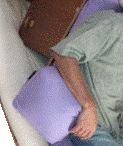 To keep her upright props were placed under her arm on the side that was contracted (shorter side). Blocks were put under her feet so she could feel them on the floor.
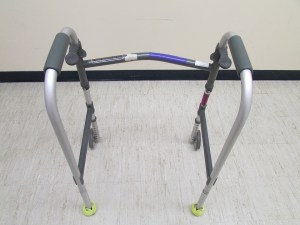 I saw a new student to our balance class walking in behind her walker. She was bent completely over with arms outstretched in front of her, hands on the walker handles, head and eyes looking directly down towards the floor. I was surprised and curious at how to teach the class and include her.
 From the looks of her posture she never stood back up! Did I forget to mention she is 4 foot 11 inches and a senior!


 Inside Awareness Center for Integrative Somatic Learning