Tag Archives: Movement

Announcement for 2026

Center for Inside Awareness Channel on YouTube

I sent this news out to my students today.

I wanted to share some updates with you that I may not have brought up outside of our focused integrations sessions, whether in movement, communication/relationships or spatialย awareness and placements.ย  For the past ten to 15 years years I have been integrating the interplay between these areas with a deeper focus on habitual or automatic behaviours and choices.ย  For the pastย two year’s this has shifted to writing it out in an organized way.ย  Beginning with the Learning Center Topics, starting with separatingย the nine life areas with an eye on behaviour and interactions.ย  There are somatic programs in each of these nine life areas to support the topic they are categorized under. Many of you may have participated in.

In 2026,  I will be launching a new system of interactive patterns in expressive communication where this separation of life areas will be a core focal point in the model.  These practical and actional patterns support an authentic somatic and empathic perspective.  As written by an actual somatic empath living within their interactive experiences 24/7.  Trust me, somatic and empathic expression in behaviour is not based upon the outside strategies of someone trying to describe them.  It is one of the influences towards developing a somatic learning system that goes beyond what is being described in current social conditioning trends. 

A companion book titled  ‘Somatic Archetypes’ will be available.  This will be a foundation pattern to support a practical reference to core reactive responses.  Practical in that they will focus on actionable somatic understanding and not have any focus on evaluative expressions or right or wrong thinking.  The intention is to marry this understanding in active interactions in the moment.  The shift includes somatic engagement, versus old thinking patterns of social conditioning that shifted focus away from it in organized institutionalized education.

A new understanding of social conditioning has emerged with a powerful influence to cut through a term I learned in meditation, spiritual materialism. This is a result of the practices of functional integration and mentoring in how to speak authentically and with integrity that began in 2002. Spiritual materialism is an evaluative expression for the ego self-image.  In Feldenkrais, there is an understanding of an inner felt self-image that supports a new defining inner experience of it that isn’t built up through socially conditioned learned reactions that are focused on materialism through strategies.  Rather, it has a focus on being present from within and sensing from the inside first before outward actions of functional movement or spoken words. This means leading through the felt senses consciously to replace leading through thinking.   

Renee Lindstrom @somaticlifestyleinnovator Channel on YouTube

To support this upcoming launch, I have put my YouTube playlists in order. I have three channels. One has playlists to support the topics of the Inside Awareness Center for Integrative Somatic Learning. (Pictured above).  This includes the nine life areas broken into separate playlists. ie. Feldenkrais is in the Health Center. It is joined by Communication and Eating Plans. In these playlists, you will see early attempts to engage people to shift their focus of attention. For example, the #yyj Nature Walks, which is under the playlist of knowledge. There is also the Culture of Value program for early childhood development in that playlist that demonstrates the first stages of its development. The other channel is in my name, and it is for somatic innovation. The focus was to connect to the environmental triggers that stimulate types of behaviour to educate. 

Podcast

Finally, the third just started this past summer and fall, is my podcast.  Currently, it is voice audios of articles I have written to lay a foundation.  It will evolve and expand to include lives and interviews.  

As a dominant somatic empathic learner myself, I have first-hand experience in the alienation of children and adults with these learning styles. There is very little consideration given to the value of these learning styles and in fact, they are categorized, labelled and diagnosed as conditions, with an aim to drug and eradicate the differences they display to the expectation in the tightly defined patterns of Institutionalized education. Patterns that were designed for learning concepts with ease and little variance in the organized structure. This cognitive focus included debate-style communication development that lacked empathy training. In this context, empathy training is the skill development for good listening patterns where the core inner response is an interactive, flexible, and open-minded process, versus the closed-mindedness that results from judging the context of what is being heard as right and wrong based upon personal judgment and understanding.  


The programs at the Inside Awareness Center for Integrative Somatic Learning are focused on a mindfulness that balances both sets of needs of the cognitive style interpretation, and the somatic and empathic. It harnesses all components through functional integration of the physical body working in partnership with the emotional responses that generate the filter for thinking.

The intention for these YouTube platforms is to build an audience and to develop financial opportunities that will support this focus on somatic education.. Until now, I have funded it with my time and energy. I look forward to taking it to the next level. I am hoping you will consider viewing my channels, liking and subscribing to help build this lofty goal. If the content appeals to you, I hope you will share it to support getting a buzz going on these topics.

The following are the links to the YouTube channels. Please keep in mind, these are early developments that have been a learning process and for the process to grow a level of comfort and ease in being on stage. The last link is to a page on the Inside Awareness Center for Integrative Somatic learning explaining the nine life areas that are the core foundation in my perspective of functional integration, somatic dialogue and spatial awareness.

Center for Inside Awareness @ https://www.youtube.com/@somaticlifestyleinfluencer/playlists

Article of explanation @ https://wp.me/p17H3e-h6I

Renee Lindstrom – somatic lifestyle innovator @ https://www.youtube.com/@somaticlifestyleinfluencer/playlists

Renee Lindstrom – Podcast @ https://www.youtube.com/@somaticlifestyleinfluencer/playlists


Feldenkraisยฎ Practitioner ’07, Communication & Empathy Coach, Art of Placement

Mastery of Fear & Anxiety stimulated by the physical environment of pain, from memories of past pain somatically

by Renee Lindstrom, GCFP, Author of Somatic Archetypes

On Podcast – @ReneeLindstromofficial

Since 2007, this author has had the opportunity to work with people who have had long-term chronic physical pain. In these cases, the body has been the environmental stimulus to inner messages and emotional responsive reactions. Usually, in Canada, people in these circumstances will seek out acute care to resolve the pain complaints. In some cases, the results of seeking solutions can backfire. The backfire comes from the interactive seeds of socially conditioned language. In this health wellness area, physical constraints from pain, the evaluative assessments by practitioners are conceptual and focused on fixing strategies. Sometimes this works, and other times it doesn’t. It only works with certain personalities. In some personalities, it increases anxiety. The current socially conditioned language is such that some people take it personally, which essentially means internalizing it. Others brush it off. Both responses have their peculiar consequences.

There is another communication perspective that is grounded in somatic awareness. In this form of communication, it starts where you are in the moment. It is not conceptual. This means the first focus is not on labelling and diagnosing, it is on the behaviour. Yes, physical function has a behaviour! It’s called one’s posture and postural transitions.

Here is an example I have created to demonstrate what a somatic response might be. It’s not based upon anyone in particular. In this example, someone is seeking understanding, support and reassurance after the disillusionment of conceptual assessments and labelling………

Here is my written response:

  • Nerve pain assessment:

With regards to the nerves in these circumstances, they were the last to be ignited from the environmental stimulus contributing to their flare-up.  Stands to reason, if the environment calms down, they will as well.

  • Somatic perspective of integration between mental, emotional and physical:

I am going to respond from a meditative mindfulness perspective.

You’re triggered. Something has happened that has stimulated past reactions to old injuries and events in your life that have come forward into the present.  Perhaps not with conscious awareness in a way to catch yourself, however, somatically.  It’s a somatic response directing your focus of attention through reactive conditioning.  A reaction that is familiar and shaped by past events (muscle, mental and emotional memory).  Does it present in the way that has been suggested?  Perhaps to someone who has learned to diagnose and label living experiences as conditions.  

So, let’s look at the past.  Yes, you have acute situations that have created a familiar pattern of response that has reared its ugly head due to the many factors all playing out at the same time.   Unfortunately, this means your physical body constraints in your movement patterns are similar to ones that have given you grief in the past.  Your responsive reaction is conditioned by those old experiences.  

How to engage your focus of attention differently? 

  • By shifting your focus of attention. 

Easy for me to write as I am not feeling the pain you’re having.  However, the hyper focus on it can increase the levels of discomfort more than 10-fold. 

How to shift your focus of attention? 

  • By changing the thought sentence structure in your inner mental pattern of thinking.  

Shift what if, or ……(whatever you’re saying to yourself), to, I have been here before and moved forward out of it. 

Your new mantra, “I have been here before and moved forward out of it.  I have been……..”

Micro Movements to shift focus of attention for calming the nervous system

The hyper focus is an aspect of your brain that is an alarm.  It is a warning system of the brain, and right now, yours is in a glitch as all sorts of events have hit all at once.  In meditation, we would focus on our breath.  This is the absolute hardest when experiencing this glitch.  

2.  So, move your body in the breathing patterns I have shown you.  This is where the body’s micro movement abilities can come in differently and play a big part in calming this glitch down.  Right now, the glitch is telling you an elusive story that your body is letting you down, and it’s not your safe haven in the moment.  So let’s change it.  The body can be fluid or it can be rigid through the constraints conditioning it.  Your body has gone into constraint due to circumstances.  That’s all. 

  • What do we know from past interactions? 

The physical function is not isolated from the emotional reactions and thought stories in our mental process.  It’s all one process,  all stimulated together and interplaying off one another.  Your glitch is your emotions reacting to the stories you are telling yourself.  What you’re telling yourself is stimulated by the real felt patterns you are somatically aware of.  The mantra above is what you tell yourself immediately upon catching yourself having these thought patterns that are not based upon the felt senses in the moment. 

  • Why?

You can take care of yourself.  You’ve done it before and have a historical pattern of it.  You are identifying the past and what didn’t work, now identify what did.  Balance it out. See number 3.

3.  In meditation, we learn to create gaps between our thoughts to calm our thoughts that run together and create havoc in our emotional responses.  We learn that thoughts in our mind run through in patterns that are not logical.

So we focus on our breath in sitting and watch these damn thoughts while attempting to become present in the moment.  Soon, we notice that the thoughts slow down.  I mean they, ….slooooowwwwwww down to the point of having significant spaces between them.  That’s when the magic happens.  That’s when somatically, the connection to what is really happening can be experienced.  This is when you learn, the thoughts are the illusion.  They have you spinning in circles, trying to catch your tail.  In these gaps you see, hear, touch, smell and taste batter.  All of a sudden, you can begin observing and taking in so much more information that is restricted by the thinking patterns you have learned.  That all thinking is – learned patterns of thought.  They are not real!  They are your perspective based on old information and learning. 

  • Let’s look at what’s real. 

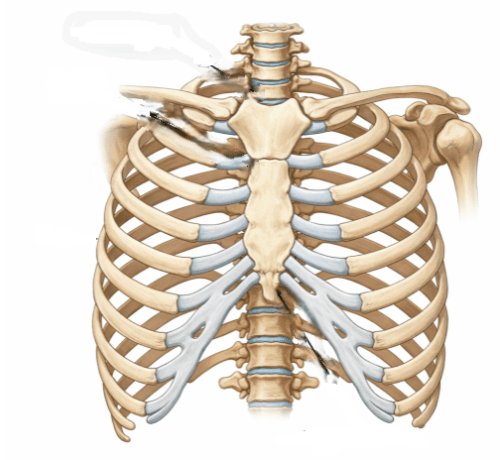
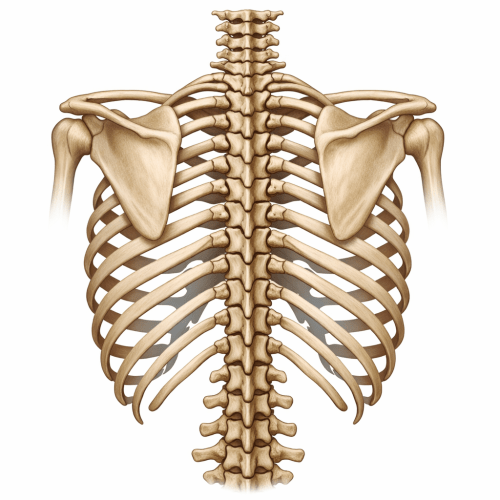
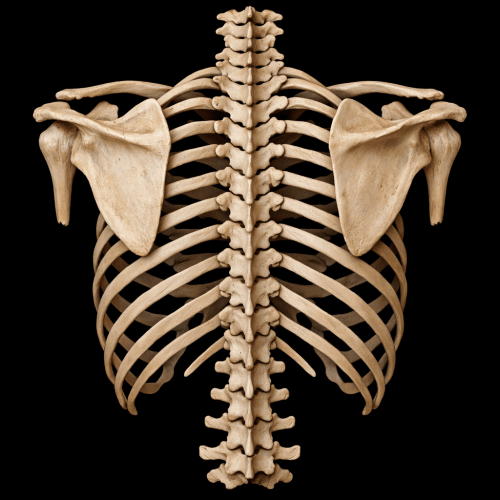
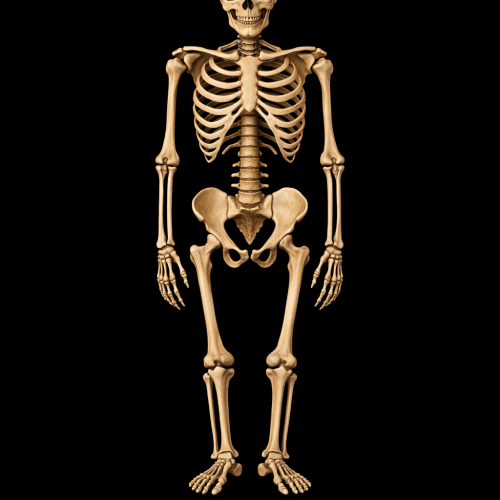
Your skeleton is real.  It’s the strongest part in your body and lasts centuries after everything else is gone.  Begin to adjust through the skeleton.  However, if the pain and fear are too great, begin by focusing on your out breath. 

  • As you breathe out, count, starting at one. 

Each exhale will be different.  Redirect your mental function by giving it this job.  Count your breath. 

  • Get a straw and exhale through the straw.  Get your mental function to set a time for one minute and count the number of out breaths in that one minute. 
  • Then continue to exhale through the straw without counting for another 2 minutes. 
  • Come back and exhale while counting again, and notice if the number has changed from the first time.  Notice if the breath out is slower, longer and if there are spaces in between.

Come back to it many, many times to train your brain with this pattern.  Integrate it.  Do it in times of non-fear to have it as a tool in your kit for when you are. 

When you are in fear, focus on the exhalation, not the in breath. 

Recap

We have a mantra, a perspective and a pattern of breathing.  This will calm your nervous system and the glitch to create a new starting point.  In this new starting point, your constraints,  physically, mentally, and emotionally, can begin to limber up, increasing your windows of tolerance.  

We have been through these cycles together before.  You have this somatic experience, yet right now you are in a moment of old thinking that there is an acute care that will resolve this outside of you. It is an old pattern seeking relief and reassurance.   That’s just one focus of attention that is decreasing the window of tolerance.  Start by building the window of tolerance from inside.  You’ve got this.  I have witnessed it. 

You’ve got a few people to sit in this with you to begin to build up your levels of tolerance.  Recently, you’re strategies in bringing new people on board while in the acute stages didn’t support you rather added to deconstructing it.  

Follow Renee’s podcast and stay up to date on somatic learning, from the inside out.

@ReneeLindstromofficial

Please like and subscribe

Follow on socials:

Follow on Facebook, LinkedInInstagram, TikTok, X Pinterest,  Tumblr

Feldenkraisยฎ Practitioner since 2007, Communication & Empathy Coach since 2004, Art of Placement since 2001

The Somatic Archetypes in Functional Movement

by Renee Lindstrom, Author of The Somatic Archetypes – the Fantastic Five

Listen while reading, or listen to this companion audio

Somatic functional movement patterns, using the Feldenkrais Method of Somatic Education, guide participants through patterns designed to refocus their attention away from pre-conditioned beliefs and pre-existing understanding of movement. In other words, what they already know. The patterns encourage exploration of movement by bringing their focus to their sensory awareness from the inside with these fantastic five core senses.

This picture demonstrates interpretive dance patterns of movement. The interpretation hints at sensing movement, yet the focus of the patterns these models are making could suggest they are focused outside themselves, versus from inside connections, as in contact dance. Functional Integration, and Awareness through Movement, the Feldenkrais Way focuses on the skeletal movements in connection to the contact with gravity and its responses through the joints that are unlocked and in a posture to invite gravity to travel through the whole skeleton. In the picture above, the models are not making solid contact with the floor to connect to the force of gravity moving up through their bones. It appears to me, as a Feldenkrais Practitioner specializing in this movement pattern, that they are using their soft tissue to support their weight.

When the skeleton is making full contact with gravity through the feet in standing, the sit bones in sitting, the hands in a posture of pushing off, or crawling on hands and knees, or in a prone position on the full skeleton on the front, back or side body on a hard surface the pressure thorugh the bones creates a weightlessness in the soft tissues in the body. The more one makes contact with gravity through skeletal movements, the more ease and freedom one has in their joints, vertebrae and ribs. This increases counter-balance and functional movement abilities.

The guidance patterns in the Feldenkrais Method use felt sensory words on the actual movement of the anatomy, with a focus on the potential for using the force of gravity. It is a powerful shift from analytical thinking that takes one out of a closed mindset function into the exploration of the experience itself, through the movements in connection with the force of gravity. The focus is on the felt sense of the bones and the discoveries through them to reconnect the body’s own elusive responsive connections to the intricacies of movement that are beyond the current comprehension of social conditioning. In essence, the movement is retraining the brain to expand and use more of the available functions in movement.

Why do I write reconnect?

When babies are born, they have the capabilities to use their full range of available learning potentials to guide them to come upright and participate in society. They do so without the educational encouragement of those surrounding them. Those surrounding do encourage them, yet they lack the understanding of how the function of the brain, body, felt senses, and mental is coming online to work in harmony that enables a baby to roll over, sit up, crawl, stand, walk and run while learning to speak and think. It is beyond the comprehension of the family members, as their own process was just that, a process. It wasn’t memorized, itemized or catalogued. It was learning through the experience.

With the focus of attention in society that seems to be focused on evaluative concepts and analytical statements, there has been a separation from the somatic patterns of functional learning that each of us was born with. When an adult speaks, it is through the evaluative expression of analytical thought patterns and statements that are far removed from the actual experience of functioning through the somatic experience. When speaking from an analytical perspective, it is a small interpretation of functional learning. It is like the difference between ballet and contact dance. One dance disconnects the artist from the ground and lacks the connection to the force of gravity, and the other pushes off the ground using the force of gravity. If you observe the two styles of dance separately, one stretches their muscles and holds their joints in a way that is different than the other. The contact dance method uses organic functional movement patterns. One dance appears to have effort with an intention to be interpreted as effortless, while the other one is effortless. This would describe the difference between mentally organized movement from strategies of thinking and spontaneous movement that includes all functioning components through the somatic felt sense as the origin. Basically, one is from the outside trying to define what can happen organically from the inside out.

The early learning patterns for movement are inherent within us as we are born. They evolve around the somatic senses of the fantastic five: sight, sound, touch, taste and smell. Each of the senses stimulate the others, and they are the inspiration to get up off the floor and walk, talk and become members of society. Each child will have one or two senses that will have the strongest response and will become the filter to the environmental stimuli surrounding them. I have begun to call these senses Somatic Archetypes.

I offer movement through group classes and individuals that support these dominant Somatic Archetypes in response to the guided patterns. These are called Awareness through Movement lessons that are group classes, and the other is a personal session or consultation called a Functional Integration.

Please investigate the classes and a personal session or consult:

Read more about the Fantastic Five Stomatic Archetypes:

Please like and subscribe

Follow on FacebookLinkedInInstagram, TikTok,  X Pinterest, Tumblr


Feldenkraisยฎ Practitioner since 2007, Communication & Empathy Coach since 2004, Art of Placement since 2001

Aside

Inside Awareness LIfestyle Articles from somatic perspective by topic, Knowledge, Career, Community, Past, Health, Future, Wealth, Fame and Relationships Continue reading

Culture of Values – 5 Easy Steps for grounding

These guided grounding patterns compliment the Culture of Values Educational Program

Click Covers to read more……..

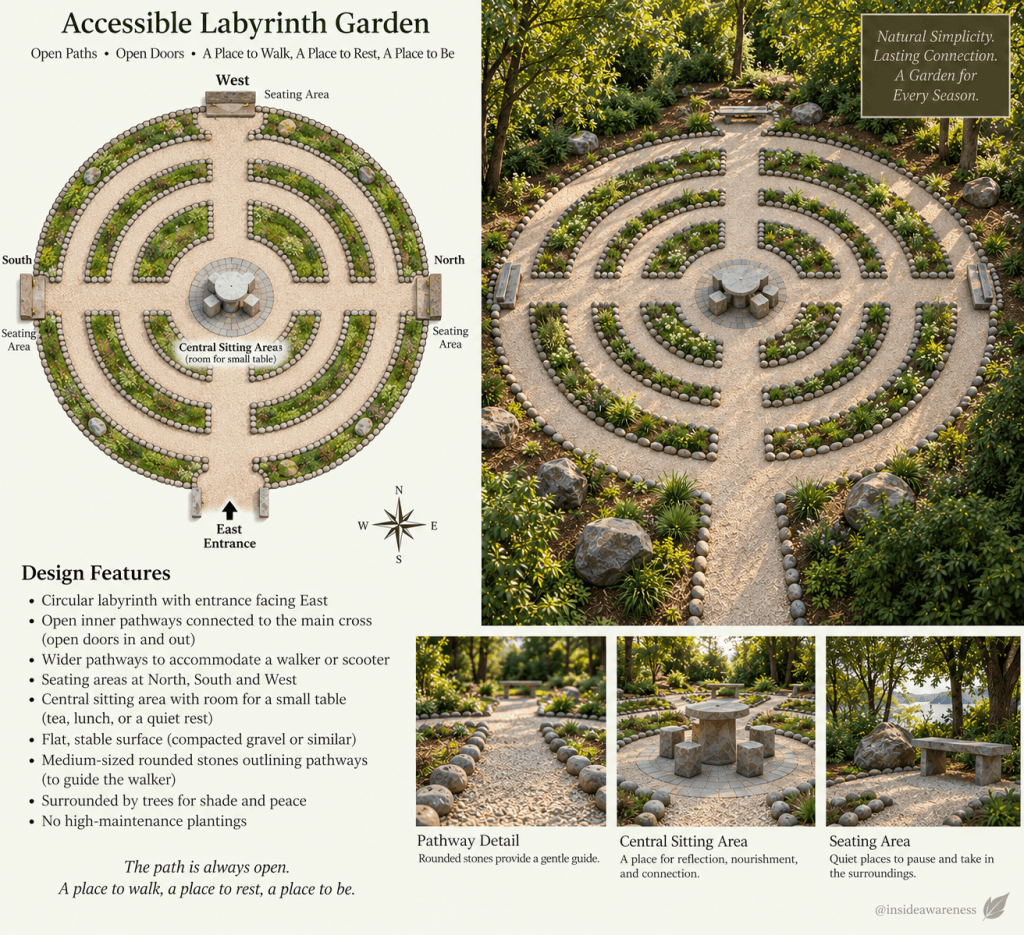
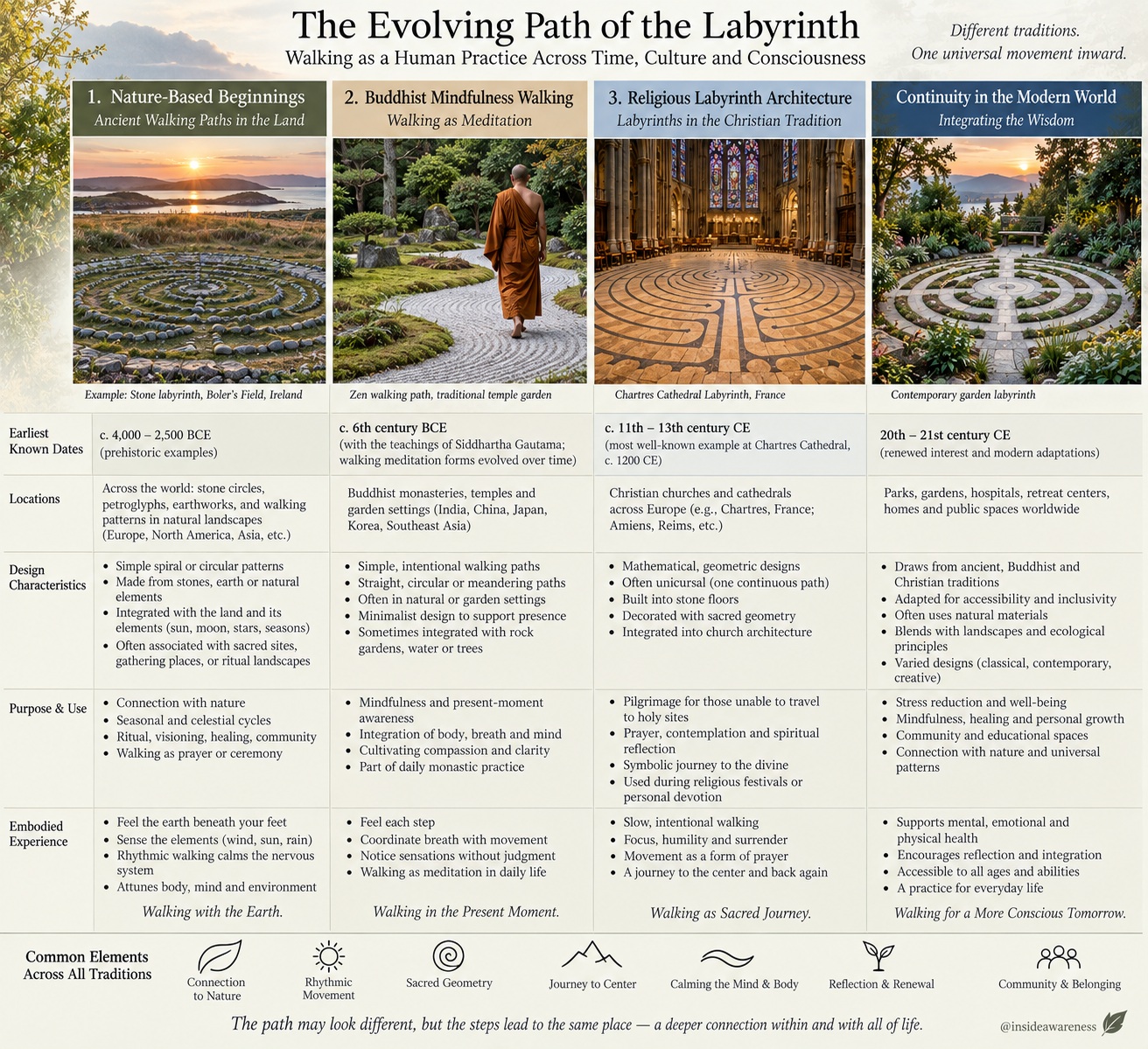
Compatible grounding integrative experience with values, feeling and needs, mindfulness and history through the walking pattern of the labyrinth

Click cover pic to read more……..

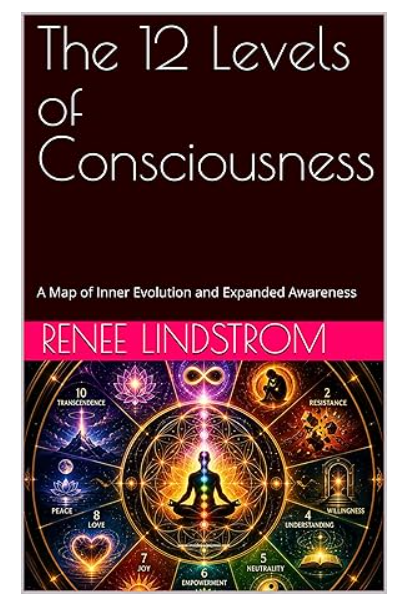
Other titles by Renee Lindstrom

Copyright 2014 โ€“ 2024 Renee Lindstrom, GCFP
Feldenkraisยฎ, Feldenkrais Methodยฎ, Awareness Through Movementยฎ, and Functional Integrationยฎ, are registered service marks of the Feldenkrais Guildยฎ of North America. Feldenkrais Methodยฎ
Awareness through Behaviour: Objectification

Relationship, Health & Wellbeing, Community, Fame, Wealth & Abundance

I wrote a blog post with the following paragraph that I want to highlight and bring attention to. It is in an article on aging. Through the experience of working with an age range focused on the interconnectedness of mental, emotional and physical behaviours with the intent to increase functions this topic plays out in oneโ€™s abilities for tolerance and flexibility. When people age it is presented in oneโ€™s appearance to those who have a trained eye. Whether the victim or perpetrator,  objectification in one’s history is identifiable in functional responses observable through touch, sight and sound.  (felt-sense, visually, or words spoken)

Here it is:

Anyone who attacks another person through words and actions, in the light or the dark, lacks self-esteem, self-confidence, skill sets, maturity and finesse. Their life may be a pursuit of trying to fill the void of loneliness, love and self-love, connection and self-connection, beauty and inner beauty, peace and inner peace, confidence from within that is courageous and outwardly to take right action and more. This imbalance that creates a void has the potential pattern for acquiring things, people, status and lustful deceit to manipulate. It lacks the inner sense of abundance. I witness a lack of connection to the value and quality they place in their acquisitions in these circumstances. There is a disconnect and this is the point that corruption can enter.

This perspective is included in the focus on patterns guided through integrative studies in learning groups and sessions. it will be a topic featured more in-depth through the mentoring programs @ Inside Awareness and in conversations and articles. Subscribe to stay InTouch and connect to new material and opportunities, or follow Renee on social media. Hit like if you enjoy content.

Follow onย Facebook,ย LinkedIn,ย Instagram,ย TikTok, ย Xย orย Pinterest

To read more on the article I reference go to Awareness through Aging: from the inside out

Copyright 2014 โ€“ 2024 Renee Lindstrom, GCFP
Feldenkraisยฎ, Feldenkrais Methodยฎ, Awareness Through Movementยฎ, Functional Integrationยฎ, are registered service marks of the Feldenkrais Guildยฎ of North America. Feldenkrais Methodยฎ
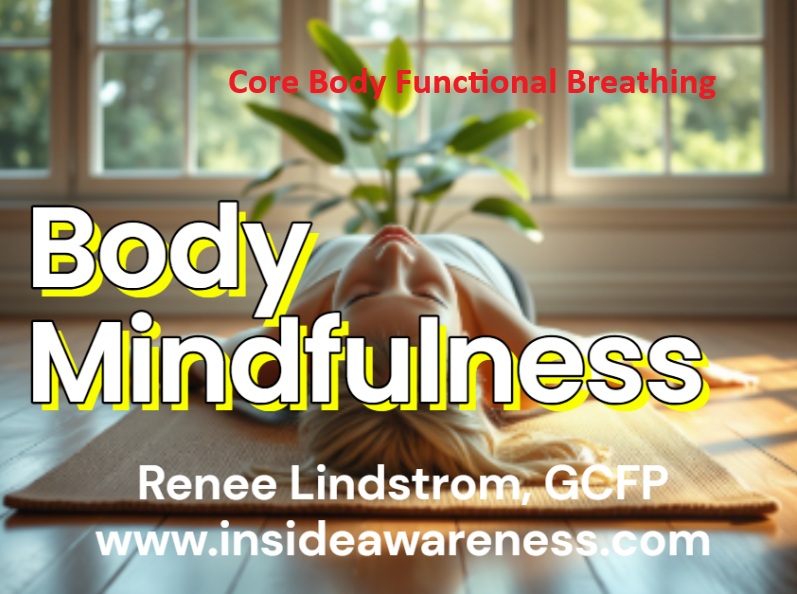
The disconnection and detachment with our body parts causes fear, anxiety, panic, irritation, anger and lack true potential in movement

In a post called, “Lost connection with our feet,” I introduced the concept of people often referring to their body parts as a third party in our conversation. Our cultural conditioning leaves the majority of us disconnected from having a focused felt sense of the body parts that keep us upright to stand, walk, run, sit and get up from standing or out of bed. Pain will be felt immediately and that will be the focus of the conversation. People will point to an area where they feel pain usually without the ability to identify the body part, or they will give an incorrect label of the body part they want checked out.

The education that has been a part of our cultural conditioning has lacked focus on the integration of the connected experience through the body. I have found that the focus is on memorizing the names of the muscles, bones and organs rather than focusing attention on the experience of those part’s from a felt sense ability through the transitions of movement. Even suggesting the focus of attention on ones felt senses will be received with varying degrees of experiential understanding and thoughtfulness. The response is usually related to yoga, tai chi, kinesiology, physical therapy or some other exercise patterns versus the actual ability to either visualize the movement or feel the functional aspects of it. There is a blank in understanding and clarity. The mind goes to association with other outside possibilities. As an empathic responder to the environment inside and out this was the hardest gap to bring clarity to for myself and others.

As a Feldenkrais Practitioner this tells me that the person responding back with these comparisons is unable to quiet the mind of memories and analysis long enough to go into feeling the actual functional connected movement patterns inside their body. The mind is actively seeking answers and concepts versus sensing. This is an important concept to distinguish as the two abilities are used for different outcomes. In my experience the analytical comparisons will not support a new pattern of movement that integrates into the brain and body connection via neural pathways. Rather, it will became an artificial strategy creating rigidity and blocking an increase in a range of motion. The expectation created by the thinking and need to know will increase the level of pain, anxiety and pain which will increase the contraction in the muscles and soft tissue intensifying the pain. It will create a contrived pattern of movement that is memorized with the concept of being the right way to do it versus organic spontaneous movement. The rigidity will significantly increase the levels of pain even more and reduce all function due to the levels of fear associated with the pain.

People seek answers and will even ask, is this the right way to….. walk, balance breath, etc., forgetting that as a baby they couldn’t ask anyone. Their movement was free range and more efficient than any current day concept.

This lack of mindful clarity and understanding to the interconnectedness of the physical body creates a disconnect to the skeleton and it’s available core micro movements. In the post mentioned in the first sentence called, “Lost connection with our feet,” the focus was on the functional physical balance. In Chinese medicine the 6 meridians that are focused upon in acupuncture begin in the mouth and end in the feet. This training suggests that the energy is released from the body through the feet into the earth’s gravity. The feet connect the bodies energy to the earth’s gravity. In Feldenkrais the functional perspective of the skeleton is viewed as architectural engineering and the view is how the feet connect with the earth’s gravity by pushing off it. When pushing off the earth the force of the earth’s gravity translates from the feet through the core of the skeleton all the way to the skull. However to experience this efficiently the focus of core movement is through the skeleton, not concepts, muscles, or flow of energy in patterns. These add value to movement, however they cannot create the experience of pushing off from the earth’s gravity.

The dominant force of movement pushing off the earth using the skeleton with the micro movements through the bones and joints tones the muscles. (Not the same as yoga stretches or massage) Muscle development is of value, however not the central core of whole and spontaneous healthy movement. Dominant muscle focus lifts the feet away from the earth that translates into walking separately from, or against, the earth instead of with it. The bones create connection with the earth while the muscles create disconnection.

When someone is walking through the force of the earth’s gravity through the skeleton there is less effort, more flexibility and an increase in resilience. If there is pain in one’s feet there are higher levels of anxiety, irritability, anger and panic. As one limbers up through miro movements, the pain subsides along with irritability, anger and panic.

This Feldenkrais Practitioners perspective of balance begins in the micro movement availability of the skeleton as it responds to the environment. This includes pushing off the earth’s gravity through the bones. As an ex Shoe Store Manager there is some understanding of the cultural conditioning that has evolved through the generations of shoe development.

Upcoming Awareness through Movement Group Lesson Series

For Personal Functional Integration get in touch

by Renee Lindstrom
 1st Phase of Integration โ€“ Getting Started (Introduction & Pattern)
 2nd Phase of Integration โ€“ Getting Intouch (Experiencing & Connection)
 3rd Phase of Integration โ€“ Integration (Embodiment)

Follow the journey on TwitterInstagram or Facebook

Copyright 2014 โ€“ 2024 Renee Lindstrom, GCFP
Feldenkraisยฎ, Feldenkrais Methodยฎ, Awareness Through Movementยฎ, Functional Integrationยฎ, are registered service marks of the Feldenkrais Guildยฎ of North America. Feldenkrais Methodยฎ
SHARE THIS: