Take time to read some of the outcomes of others who have had these same excuses underneath.
1. I’m not interested.
Are you, your partner and peers empowered by your connection and satisfied with your relationships? Are your interactions successfully executed and in the energy of gratification?
2. Everything is going fine, thanks.
Are you settled into a groove of accepting what life throws at you and not interested in connecting to how to enrich your life and bring aliveness to yours and others experiences?
3. I’m too busy now.
Are you too overwhelmed and coping just to get by?
4. I’ve heard this before, how do I know you can perform?
This is about how you perform and finding new ways for increasing your success rate!
5. Who are you and what do you do?
I am an objective third-party that can translate the behaviors that are keeping you, your partner, peers and family from hearing each other and find mutual agreements for moving forward towards success!
6. What can you possibly teach me?
Your blind spots that are your weaknesses.
7. I’ve worked with a consultant before and it didn’t work.
That is no reason to give up and not find a person more suited to your unique needs.
8. I can’t afford your services
If this is the case, you can not afford not to have someone to support your increased success rate with employee and client relationships.
9. That all sounds great, but I have no money
Best time to invest in yourself. You are your own resource!
Some case studies:
These cases focus upon doubt that they can’t afford coaching or are resistant to change:
1. Husband is diagnosed with critical condition and wife is not able to cope with the fear of loosing him. Why? She believes she has not had any responsibility in their marriage and fears she cannot take care of herself. Rather than enjoying the remaining time together and increase his healing potential, the focus is on her as she collapses. Even to the point that she cannot drive and he is responsible for getting her to her appointments and his own. He visibly should not be behind the wheel. He passes away after a year of disruption, confusion, anxiety without any recognition and lack of loving connection. She discovers that her live continues.
2. Husband is unable to share feeling about children and time they take from his relationship with his wife. He goes into resentment with his partner and dislikes his children and eventually he looses his business and family in despair. Children grow up believing father does not love them and they are lacking in some way.
How could they not afford coaching – the cost was higher than they expected!
A few cases receiving somatic coaching with Renee Lindstrom:
3. Wife and husband are married for over 20 years and are unable to resolve their differences in a way that each partner feels mutually heard and that they matter. They have a business together that they both work in. Coaching began after one partner has left the marriage home and one partner became suicidal. With coaching both partners are able to move forward separately while supporting one another through the transition and reaching a mutual settlement that included value for each of them.
2. A client’s health history created a search for solutions from many sources that didn’t show any signs of supporting an increase in mobility and wellness. After only a few sessions this person experienced increased mobility that translated into a renewed joy in living. A bleak future of deterioration became one of optimism.
3. Clients that when young business people did not seek support to change their ability to be in relationships. As elders now they experience life without a community. They didn’t have families and didn’t take time to develop their social network. As their abilities decrease and they can no longer distract themselves with the usual activities, they find themselves in a state of despair. They are faced with the pain they ran away from as children and alone. They long to be taken care of and supported in their increasingly ill-health. There is no one who is that interested in them. Their doctors get tired of seeing them for every little ailment real and imaginary and begin searching frantically to find support. Sessions consist of reducing their anxiety levels so that they can relax and reduce their stress. At a time of enjoying their later years they are dealing with depression and longing to die. Honest conversation, accountability discussions and empathy coaching turns hopelessness into hopefulness.

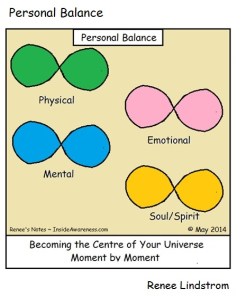

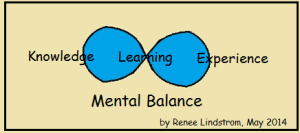
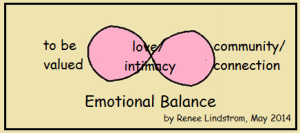
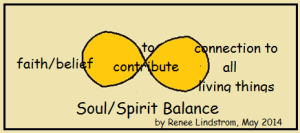


 Sometimes we are leaders and sometimes we are followers in relationships! If we are in balance, we are always in motion and flowing in and out of planning and action. To describe this balance in the popular terms of yin and yang lets first look at their attitudes: We could also describe these two dominate behavioral types as round (yin) and sharp edges (yang).


 Inside Awareness Center for Integrative Somatic Learning