Tag Archives: Inside Awareness

This weeks consideration is a value for basic survival:

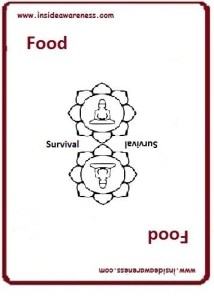
getting InTouch - Value - Food

What is your relationship with food?  Reflect on how you personally feel about your diet.  Consider if you find the textures, colors and tastes pleasurable to your senses.  If not, what might the cause be?   Reflect upon whether you may be taking food for granted or if you have a deep appreciation for food.

It is only when we have an inner appreciation for our food that we will connect to giving from the heart to others with less than ourselves without guilt, shame or resentment.   Renee, June ’14
__________________________________________________________________________
©by Renee Lindstrom, GCFP, May, 2014
Feldenkrais® Practitioner since 2007, Communication & Empathy Coach since 2004, Art of Placement since 2000

Follow Inside on:

Facebook             Google Plus          Twitter          Pinterest

_______________________________________________________

Body Balance: Inverted Foot

images (1)

Observing and exploring  an inverted foot posture I was told that due to a medical condition as a child the tendons in some of the toes had been cut.  With no opinions and continuing to investigate what movement was available, without any one particular focus, the lesson ended with new joint movement in the ankle.  There was also more contact between the foot and the floor  with less inversion.

Upon return for the following lesson the foot presented itself without being inverted!  The curling in was not present.

Renee’s notes:  When viewing the inverted foot the image of a baby who has not put any weight on their feet yet or developed their limb, ankle and foot muscles is what came to mind.  Exploring it from this perspective created a curiosity that led the lesson.

Recommendation:  Explore the facts with a curiosity and forget the labels!

____________________________________________________________________
©by Renee Lindstrom, GCFP, May, 2014
Feldenkrais® Practitioner since 2007, Communication & Empathy Coach since 2004, Art of Placement since 2000
Follow Inside on:

Facebook                      Twitter          

________________________________________________

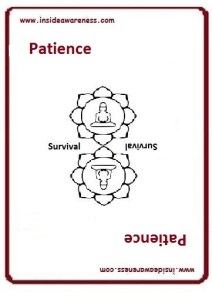
Patience – Value Reflection

getting InTouch - Value - Patience

__________________________________________________________________________
©by Renee Lindstrom, GCFP, May, 2014
Feldenkrais® Practitioner since 2007, Communication & Empathy Coach since 2004, Art of Placement since 2000
Follow Inside on:

Facebook             Google Plus          Twitter          Pinterest

_______________________________________________________

FAQ – Who would come to Inside Awareness?

 This is a great question:

  • The focus of Inside Awareness is on learning to increase the quality of life experiences beginning inside and expanding out.  Much like a drop water expands equally out on all sides.   The learning practice is based upon the four aspects of self; physical, emotional, mental and beliefs which are easily translated into focused areas of personal  and relationship development.
  • Inside Awareness programs have been designed for early childhood to end of life, (and all stages in between!)  Patterns of movement, habitual behavior and language, and lifestyles are a thread through life and are unconscious actions and reactions until a focus of attention is placed on them specifically.  Learning with Inside  is designed for developing this skill so something new can happen! This is to learn  moving beyond conflict, pain and struggle with more awareness and ease into a space of deeper connection inside and outside.

Therefore adults, parents, children, educators, employees and employers would benefit with these learning and coaching programs.

__________________________________________________________________________
©by Renee Lindstrom, GCFP, May, 2014
Feldenkrais® Practitioner since 2007, Communication & Empathy Coach since 2004, Art of Placement since 2000
Follow Inside on:

Facebook             Google Plus          Twitter          Pinterest

_______________________________________________________

Frequently asked Question’s:

1.  How often should I (we) book appointments?

Movement Behavior

Critical Learning  – When asked this question by someone that has obvious shifts with these methods and who has a constraint that limits their quality of life from their movement patterns :

  • The suggestion would be for sessions to be closer together to not lose the experience  between  them.  The goal is to change habits through specialized learning.  This may result in having a reduced length of time in the long run.  It could be once a week, twice a week or even three times a week depending upon critical learning, resistance to learning and acceptance to changes.  
REMEMBER THAT MORE CONNECTION INCREASES THE EXPANDED AWARENESS OF LIFESTYLE & RELATIONSHIP CONTRIBUTORS TO YOUR RESTRICTED MOVEMENT PATTERNS.  YES YOUR RELATIONSHIPS AND OUTSIDE STIMULUS CONTRIBUTES TO HOW YOUR MOVE! 

.

Awareness Learning – When asked this question by someone who would like to improve the quality of their life experiences:

  • The suggestion is to come for personal sessions at a constant pace to lose the learning in between lessons and to enhance learning by adding movement workshops.  This increases one’s sensation awareness in their movements.     

Relationship Behavior

Critical Learning – When asked this by couples, parents or educators and employees who are in the middle of crisis management:

  • The answer is to book sessions close together to support the process and to increase clarity and understanding. In this way issues become manageable.  If left the result is increased pain and struggle.  This may be coming once, twice or even three times a week!  It is easier to process and move forward in the aliveness than to stretch it out and continue distancing or solidifying the behaviors responsible for creating the issues in the first place.  
REMEMBER WITHDRAWAL AND RESISTANCE DOES NOT MEAN THE ISSUES WILL GO AWAY.  YOU MAY BE FOOLING YOURSELF AS IT MAY ACTUALLY MEAN THE BEGINNING OF THE END.  IF ONE SIDE IS PROCESSING AND ONE SIDE IS PROTECTING THEMSELVES IN RIGHT AND WRONG THINKING, THE SIDE PROCESSING WILL BECOME BORED AND NOT BE CONTENT TO CONTINUE WITH IT! 

Awareness Learning – When asked about personal coaching:

  • The suggestion would be to receive personal coaching at a regular pace so as not to lose the momentum and to develop inner accountability with outside support would enhance skill development.  Adding workshops would enhance the experiential part of oneself.   
REMEMBER THAT THERE IS NO END POINT, THERE IS ONLY EVOLUTION AND INCREASED AWARENESS  & QUALITIES OF EXPERIENCING YOUR LIFE!


2.  Are youR suggested booking time-lines mandatory?

No these are not booking requirements that are mandatory to book and receive enhanced life learning skills and change  with Inside Awareness.  These are suggested guidelines to support your continued success in learning how to improve your personal experiences and living experiences.  

How often you book is the value you place on yourself and what you can afford to spend upon your personal development.    

__________________________________________________________________________
©by Renee Lindstrom, GCFP, May, 2014
Feldenkrais® Practitioner since 2007, Communication & Empathy Coach since 2004, Art of Placement since 2000
Follow Inside on:

Facebook             Google Plus          Twitter          Pinterest

_______________________________________________________

Body Image and Breathing

by Renee Lindstrom, GCFP @ Inside Awareness, Living in Natures Love Blog & Renee Lindstrom Live

PrintExplore Feldenkrais in 2 ways:
  1. Group Glasses & Workshops called:  Awareness through Movement or ATM (Classes below)
  2. Individual Sessions called:  Functional Integration (for increasing available movement for conditions, injuries, athletes, musicians, dancers and development

Cultivating Awareness through ATM focused upon Breathing


First Movement Awareness Workshop in a Series of Three called,  Breathe Easier 

The focus of our recent workshop was our spine and the relationship between the spine and breathing.  Yes, the spine!  Consider a moment if you have ever connected to the flexibility of your spine to the quality of breathing you are experiencing.   To begin integrating the vertebrate and spine into breathing, we began with a  picture demonstrating the curvature of the spine.  The intention was to start releasing a rigid posture into a more relaxed one through use of our imagination.  How many times to you visualize your spine in a day?

Learning then shifted focus as we went  into experiencing some simple movements.  Steps were added to increase the experience as we went along.  The awareness came through the changes class members began to notice in themselves.

For their benefit, here are some reminders for the week ahead.  Each one can be done separately during the day or in combination by adding the steps in progression.  REMEMBER:  The quality of your movement matters.  Slow it down, make it same and learn to cut your effort.  Do only 20 percent of your big movements!  Learning matters and it only happens when you slow down and pay attention.

Breathing Logo

CHEST & BELLY

  • Soften upper chest area to allow expansion and retraction with in and out breaths
  • Remember there are no lungs in the belly.  Belly breathing is specific to an activity like singing, dance – it is NOT the only way to breathe
  • Begin to pull belly in when breathing in and notice where the air goes.
  • Begin to push out breath in to belly and notice the chest sink.
  • Practice this for a few rotations during the day, perhaps when waking and before going to bed and let the practice go and simply notice any differences.

ROCKING YOUR SPINE

  • Spend time sitting on the front edge of your chair and notice if you can sense your sit bones.
  • Feet flat on floor under your knees.
  • Knees and legs in alignment to your hips, so, hip width apart.
  • Relax your back so that you can sense any slight adjustments
  • Notice your head on top of your spine and that it is  opposite your pelvis.
  • Unlock your neck and as you breath in bring your weight forward on your sit bones.
  • Let the movement come from your pelvis and continue to relax your upper body.
  • After following your in breathe several times begin following your out breath
  • As you breath out let your weight shift back on your sit bones. 
  • Continue to soften upper chest and neck.
  • Begin to alternation and notice when your lower back arches forward and when it rounds back.

SLIDING SHOULDER BLADES

  • Hands resting on your thighs.
  • A few times as you breath in bring your shoulder blades closer to your spine.
  • Then switch and as you exhale widen the space between your shoulder blades.
  • Alternate for a few breaths and then stop and notice any changes.

TIPPING HEAD

  • With an in breath let eyes, nose and chin travel up so that your chin moves away from your chest.
  • After a few in breaths stop and follow your outward breath.
  • When you exhale let you chin drop slightly towards your chest.
  • After some time begin to alternate with your cycle of breathing.
  • Stop and notice where your attention goes.

EYES

  • Soften your eyes.
  • Begin to let your eyes travel up to the ceiling as you breath in and bring them back to the horizon in front of you as you exhale.
  • After some time begin to let your nose and chin travel up after your eyes start the movement.
  • Notice if you see everything in between the two points or do your eye jump.  What do you need to do to slow your eye movement to see everything?
  • Stop, wait a moment and notice.
  • Now take your eyes down towards the floor a few times with your outward breathe.
  • Add the movement of the chin and nose letting your eyes lead.
  • Stop, notice for a few breaths and then begin to alternate between the two.
  • Stop and notice.

As mentioned above, benefits can be achieved by practicing each of the above separately or doing one movement for a short time and then adding the next area to it increasing it.  REMEMBER  it is to be done slow, easy with many stops for noticing changes.  It’s not in the effort, it in learning to cut your effort.

See you all at the second in our series.   I look forward to seeing how you have integrated the changes and if your movements reflect your own image of what you are going.  Sometimes we think we are doing something and it is not what is actually happening.  One of the benefits of being coached is a coach can see the outcome more clearly!


Connect with Renee

Follow on TwitterInstagram  Pinterest or Facebook


Renee Lindstrom, GCFP,
Feldenkrais® Practitioner since 2007, Value-Based Communication & Empathy Coach since 2004, Art of Placement  since 2000, Founder of Greater Victoria Peace & Intercultural Celebrations since 2010 & Greater Victoria Labyrinths since 2012, #yyj Peace Week Calendar Founder – 2014 & 2015

Integrating the emotional and physical behaviors into ones own image of self

In private sessions with clients there is less distraction and the benefit can be  deepened awareness of their  own behavior.  This includes clarity  of how reactions are dependent on both thinking and locked in movement patterns.    The two are locked into behavior!

Clients searching for a change in their relationships will enjoy the simple movement techniques I introduce to increase their focus.   Some will begin to alternate between talking and movement sessions.  Both these types of sessions are designed to increase the success in their progress and are compatible.

Clients who come for improving their movement and reducing pain will find themselves integrating their emotional reactions that are  keeping them in their pain and strain.

Both types of clients discover physical movement and emotional reactions are married together in their reactions.  They come to know  the  value in  learning their automatic  habits.  If someone is able to observe their habits then there will be change.

One example is  a  client who discovered one of the largest muscles in their body and that they had not been using them.  They didn’t even know at first how to engage it!    This client originally came to improve their relationship connections.  To relieve their tension and increase their breathing patterns  I introduced small movements  for them to experience.  Afterwards  our sessions began to alternate between the two types of sessions, movement awareness and talking awareness.

They discovered a large muscle that was dormant and not being used.  They realized the strain that this put on their whole body in the effort to move in any activity.  They also realized they did not even know  how to activate this muscle.  There was no connection to the brain signals.

Then came  the awareness of  tension being held in another set of muscles.  The control that went into holding these muscles stopped any ability to  engage these new ones!  The control of this other set of muscles was directly related to emotional behavior!  The balance then came from intellectually knowing one is safe and supported to begin to release control.

I love my work!  When clients can experience their journey through learning techniques their journey is more concise and clear.  There is beauty in waking up the parts that have no brain awareness!  When this client stopped using these big muscles the brain lost the memory of it.  Therefore there is a disconnection until they relearn they have these muscles and  how to use it.  If they are not aware that they have stopped using it,  how will they even know about it?

This is something that cannot be learned through outside sources and activities. It takes a control environment of focused somatic learning.  

When the education stops change begin!