Tag Archives: Green Behavior

Educational Labyrinth Journey’s for Children & Teens

Teaching Labyrinth Workshop held at Brentwood Bay Elementary in Central Sannich followed by sharing at the World Children’s Summit on Peace and Nature Event held in Greater Victoria on Sept. 21, 2015

Somatic experience & a pathway to connection

Renee Lindstrom offers a somatic learning experience for leadership development for children and teens that includes mindfulness, logic, perception and movement patterns.  These tools can reflect the skills to connect  that begins inside while, at the same time, connecting with others in a respectful way regardless of differences. These techniques turn blocked and closed experiences into open expansive opportunities.
.
Sharing the Teaching Labyrinth at St. Andrew’s Regional High School was a powerful experience to observe a shift from being closed and guarded to open and receptive in a group of teenagers.   There was ease and simplicity using these tools that created a shift that was noticeable to view.  They were noticeably  acting with deeper qualities of inclusion, respect and connection.  Checking in with the students afterwards this was what they described. Their experience of this was tangible.
.
Maze Labyrinth Hearts
The purpose of the somatic exercises was to give these students a model and the opportunity to experience this shift using these integrative tools  so they could then duplicate it with ease and simplicity in the future.    After exploring personal and group movement patterns we moved on to exploring a labyrinth pathway.  A labyrinth has no barriers.  It is a pathway into the center (heart) and back out again.  It is not a maze which is confusing and a challenge requiring one to use their thinking.  A labyrinth shifts a walker from the chaos of their thinking into a calmer somatic experience.
 .
labyrinth thumbnail
.
The suggestion for walking a pathway in an inclusive and grounded way was it could be a more subtle and meaningful form of support in conflict resolution.  The concept is that everyone has differences and that if we include an opening shared experience for connecting deeper individually while walking together before talking,  this may open the space  to be more willing to hear these differences.
In communication practice I urge my students to stop and check in before reacting and speaking out.  The purpose is to pause and translate what they are thinking into a connection that the other person can hear.  This pathway reflects this process and together with some movement techniques for clarity and groundedness,  walking this pathway becomes a pattern reflecting this process.
I recommend these patterns as tools in organization and educational institutions:
  • as a preventative experience to cut conflict before it happens
  • as a way to connect before trying to resolve differences
  • to create respect and acceptance in a community experience
  • to bring together a community
  • to support making decisions
  • to cut anxiety before events, meetings, challenges

Support your school, business group or community organization to explore connection before solutions.  Cut thought the labels creating enemy images such as victim, perpetrator and bullying and support ways that are easy and simple. Move from the chaotic mind into mindfulness of acceptance and respect.

Inquire about school integrative labyrinth programs

Go back

Your message has been sent

Warning
Warning
Warning
Warning

Warning.


Copyright 2014 – 2022 Renee Lindstrom, GCFP,
Feldenkrais® Practitioner since 2007, Value-Based Communication & Empathy Coach since 2004, Art of Placement  since 2000, Founder of Greater Victoria Peace & Intercultural Celebrations since 2010 & Greater Victoria Labyrinths since 2012, #yyj Peace Week Calendar Founder – 2014 & 2015

Follow Inside on:
Facebook             Twitter

Announcing sister site focused upon creating a Culture of Values

Launching:

Culture of Value & Kids Peace Bus Value Based Calendar Education Systems this September!

peace bus for a greener planet

Kids Peace bus Calendar of Values is a structure of learning patterns that breaks through complex critical thinking due to its simplicity of experiencing.  These patterns model ethical and humane behavior that layered with learning empathetic listening  and speaking, children can learn to communicate using a language that values others and is inclusive.  The Kids Peace Bus Calendar of Values is the foundation that can make later development of complex social learning systems easier and less time-consuming.

The Kids Peace Bus Calendar of Values program is a value-based educational component that is also a structure of implementation that is easy.  It is a program that makes learning fun,  and can grow into an organic system for creating *green behavior!   

Integration programs include:  

  • yearly calendar of values to follow for easy integration,
  • setting goals for creating a community and social culture for learning support
  • Teacher’s agendas and personal workbooks for simple integration and value definition development
  • vocabulary building
  • discussion topics for listening and dialogue skill building (designed for organic honesty & empathy)
  • community building ideas  


A pattern of movement for conflict resolution process?

A conflict resolution Labyrinth walk? Yes of course! Shared a creative afternoon yesterday exploring why early communities (pre-religion) would have walked a labyrinth. A hot question on the minds of the participants as the day started and answered only after a guided and experiential journey of labyrinth patterns. An answer was not given in the traditional teaching way, but integrated through a personal exploration, in the safety of a group. An experience that started with strangers (disconnected from each other) and ended in a calm, centered, meaningful and grounded group connection. As the underlying intention was to answer this community question they had a growing realization of the power of walking this pattern before meetings. The purpose: to have the participants walk it together prior to the business meeting to reintegrate community and expand acceptance of each others differences through the pattern of movement. This is what I describe as Green Behavior and love the implications. Can you imagine different outcomes with exploring labyrinth walks for conflict resolution?

__________________________________________________________________________
by Renee Lindstrom, GCFP,
Feldenkrais® Practitioner since 2007, Communication & Empathy Coach since 2004, Art of Placement since 2000
 15th Annual TSL Labyrinth Gathering Vcr Island – Victoria Event Organizer
Follow Inside on:

Facebook             Google Plus          Twitter          Pinterest

______________________________________________________

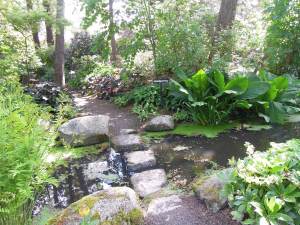
How do you handle blocks along your path?

  • Do you always step aside letting others pass you?  
  • Are you the one that blocks the path and ensures others have to step around you?  
  • Or do you switch back and forth?  First moving out of the way and then becoming the blocker?


Finnerty Gardens 008


  • How do you know when to lead and when to follow?

Personal Leadership

These are a few questions that you will answer at the Labyrinth Workshop this coming Saturday! Find out more

Read more on Labyrinth’s 


__________________________________________________________________________
by Renee Lindstrom, GCFP,
Feldenkrais® Practitioner since 2007, Communication & Empathy Coach since 2004, Art of Placement since 2000
 15th Annual TSL Labyrinth Gathering Vcr Island – Victoria Event Organizer
Follow Inside on:

Facebook             Google Plus          Twitter          Pinterest

______________________________________________________


Waking up to one’s attitudes of consciousness

For the purposes of learning about one’s inner consciousness,  let’s say there are two types of consciousness.  One is an automatic and  habitual experience,  acted out regardless of consequences and without any thought to it.  This is a closed state without choice that lacks understanding.   Generally,  it is  a reaction to something that is not happening and is not reality.  It is a perspective based upon the past or future and not the present moment.   The second is a focused awareness of attention for understanding reactions  before taking them.  This is an open state of choice, acceptance and the point of shifting and making change.  It is a response to what is real in the moment.  An example as follows:

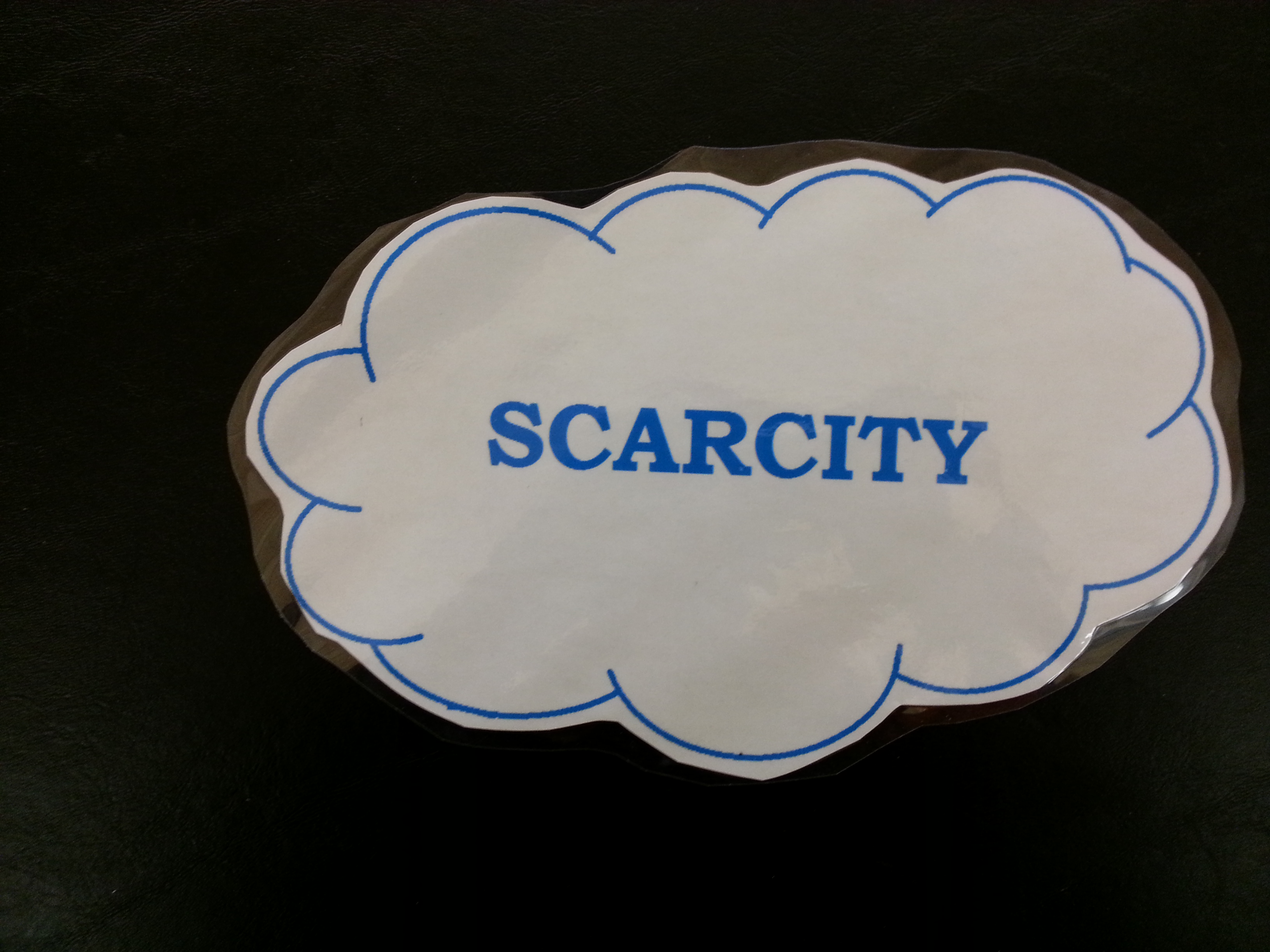
Attitude of:

2014-05-26 18.48.03


Attitude of Scarcity Effects:

Some Inner Thoughts:  

  • There is never enough ……….
  • I am going to lose ……………..
  • I am not going to be able…………
  • I’ve  never had…………………..
  • Will there be enough when ……………….
  • They have more………..
  • Mine is not ………………..

Feelings:  Fear, Anxious, Terrified, Despondent, Hopeless(ness), Frustrated, Angry, Tense, Shaky, Panicky

Some Mental & Emotions Reactions:

  • Hoarding (resources, finances, properties, objects, friends, lovers)
  • Compromise (nature, resources, sustainability, family, relationships, friendships, employment, one’s own values)
  • Hopelessness (wanting to die, not wanting to go on)
  • Aggressiveness (acquiring at all costs)
  • Control (working out, diet, environment, hierarchical position of authority)
  • Lack of Control (letting circumstances happen without taking any action of responsibility)

Some Physical Reactions:  Stress, Tension, Anxiety, Holding, Clenching, Shallow Breathing, Locked eye movement, loose of flexible movement and balance

As children scarcity is an unconscious learned attitude of  behavior much like eating, rolling over, sitting, crawling, standing and walking.  The difference is that it has been learned through the modeling of those around us while learning  functional movement is an inner resource of somatic awareness and experiencing.

Learning skills to transition this attitude into one of abundance  is more than a possibility.  It is a reality and begins with becoming aware of one’s habitual behavior responses.  This can be learned through  combining the mental and emotional with getting InTouch Talk or through physical movement with getting InTouch Movement.  These are easy integrative learning methods.     It supports your contemplative practices or can be supported by adding contemplative  practices to be able to cut the distraction.

 For more on getting InTouch workshops  or movement coaching, relationship coaching 

__________________________________________________________________________
©by Renee Lindstrom, GCFP, May, 2014
Feldenkrais® Practitioner since 2007, Communication & Empathy Coach since 2004, Art of Placement since 2000
Follow Inside on:

Facebook             Google Plus          Twitter          Pinterest

_______________________________________________________