Tag Archives: Feelings

Waking up to one’s attitudes of consciousness

For the purposes of learning about one’s inner consciousness,  let’s say there are two types of consciousness.  One is an automatic and  habitual experience,  acted out regardless of consequences and without any thought to it.  This is a closed state without choice that lacks understanding.   Generally,  it is  a reaction to something that is not happening and is not reality.  It is a perspective based upon the past or future and not the present moment.   The second is a focused awareness of attention for understanding reactions  before taking them.  This is an open state of choice, acceptance and the point of shifting and making change.  It is a response to what is real in the moment.  An example as follows:

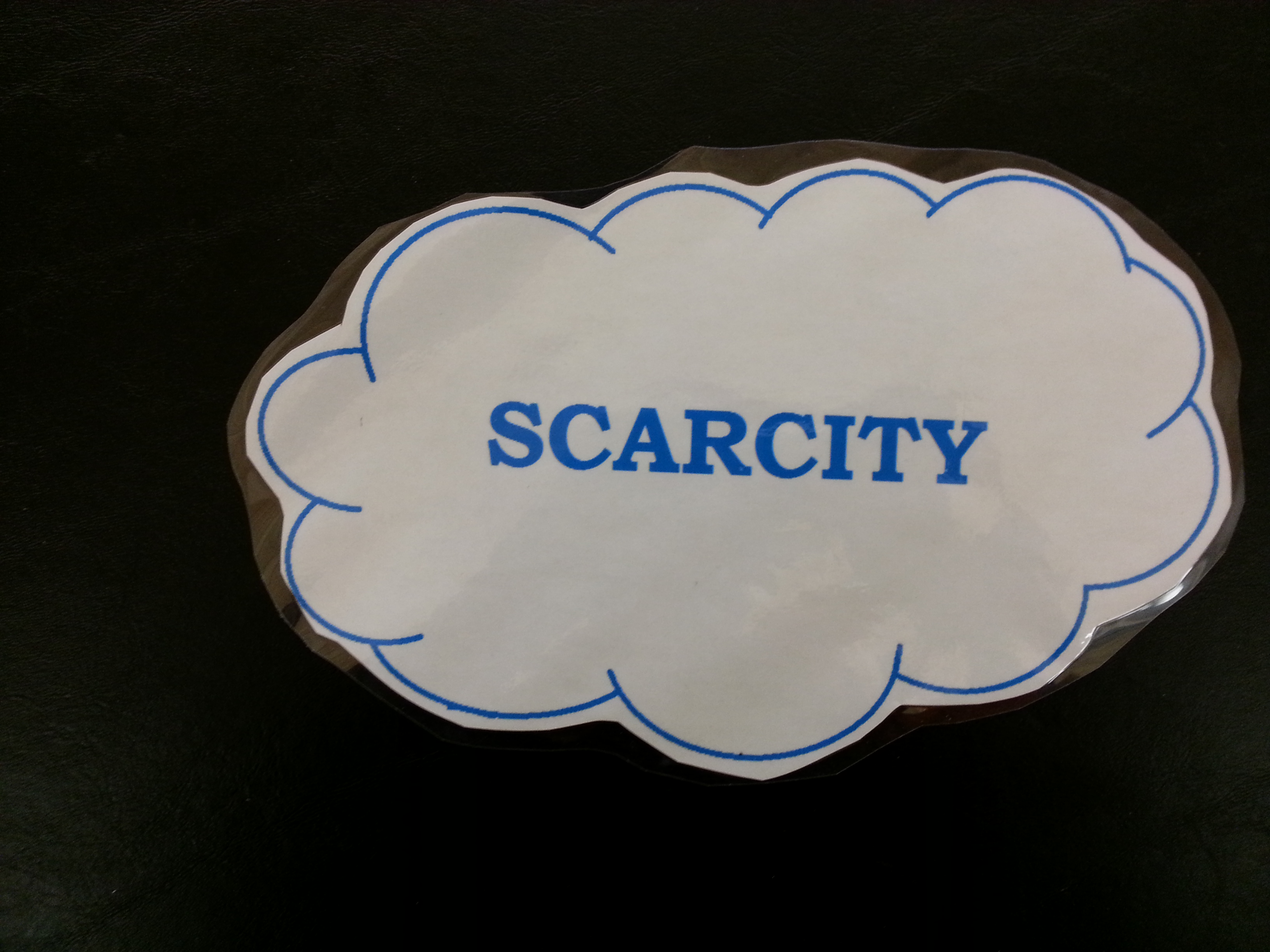
Attitude of:
2014-05-26 18.48.03


Attitude of Scarcity Effects:

Some Inner Thoughts:  

  • There is never enough ……….
  • I am going to lose ……………..
  • I am not going to be able…………
  • I’ve  never had…………………..
  • Will there be enough when ……………….
  • They have more………..
  • Mine is not ………………..

Feelings:  Fear, Anxious, Terrified, Despondent, Hopeless(ness), Frustrated, Angry, Tense, Shaky, Panicky

Some Mental & Emotions Reactions:

  • Hoarding (resources, finances, properties, objects, friends, lovers)
  • Compromise (nature, resources, sustainability, family, relationships, friendships, employment, one’s own values)
  • Hopelessness (wanting to die, not wanting to go on)
  • Aggressiveness (acquiring at all costs)
  • Control (working out, diet, environment, hierarchical position of authority)
  • Lack of Control (letting circumstances happen without taking any action of responsibility)

Some Physical Reactions:  Stress, Tension, Anxiety, Holding, Clenching, Shallow Breathing, Locked eye movement, loose of flexible movement and balance

As children scarcity is an unconscious learned attitude of  behavior much like eating, rolling over, sitting, crawling, standing and walking.  The difference is that it has been learned through the modeling of those around us while learning  functional movement is an inner resource of somatic awareness and experiencing.

Learning skills to transition this attitude into one of abundance  is more than a possibility.  It is a reality and begins with becoming aware of one’s habitual behavior responses.  This can be learned through  combining the mental and emotional with getting InTouch Talk or through physical movement with getting InTouch Movement.  These are easy integrative learning methods.     It supports your contemplative practices or can be supported by adding contemplative  practices to be able to cut the distraction.

 For more on getting InTouch workshops  or movement coaching, relationship coaching 

__________________________________________________________________________
©by Renee Lindstrom, GCFP, May, 2014
Feldenkrais® Practitioner since 2007, Communication & Empathy Coach since 2004, Art of Placement since 2000
Follow Inside on:
Facebook             Google Plus          Twitter          Pinterest

_______________________________________________________


Dissatisfied Feelings and their root source

Dissatisfied Feelings & Roots


Fear Based Strategies

Are you curious about how fear creates strategies that nurture conflict in ALL relationships?

Fear will rise with any pain whether physical, mental or emotional as a response to personal needs that have not been met.

  • Physical pain from an injury will increase the fear of potential future pain long after the injury is healed.  
  • Emotional and mental pain from unmet needs such as inclusion, acceptance, being heard, being seen, acknowledged, etc., will increase fear of potential future pain long after the situation has passed

Strategies for personal safety may be adopted and become an automatic behavioral response resulting from ignoring the step of connecting and discussing a bothersome  issue when it first arises.  Ignoring it may be meeting a temporary need for safety, yet long-term it may develop into  subtle fear based strategies for protecting oneself.  Some of these subtle and often unrecognizable strategies are:

Safety at work (or in groups)

The needs for safety may arise in relationships that lack integrity, honesty, clarity and respect.  It may be that one person in any given conversation assumes the power over or authoritarian role that excludes the value and gifts of others.  Those taking control may even perceive themselves as being helpful when their helpfulness may not be appreciated due to the lack of equality it creates.  What is lacking is the understanding that this persons behavior is actually a strategy for meeting their own needs for safety!

Safety at school

Children’s behavior on the school ground may reflect the lack of safety in the classroom for the student when their needs for fairness, to be heard and included are not met.  These children develop strategies to meet these needs ensuring this doesn’t continue to happen to them on the playground.  They act out with their fellow students what they felt themselves in the classroom or what was modeled for them at home.

Safety in relationships

The need for safety in relationships is as simple as not hearing and integrating the important messages of each person.   Unable to be in the discomfort of  the feelings that arise when listening to someone else the listener may go into the strategies of fixing what it is they  are hearing. They may also  begin to share how it happened to them.  Both strategies “hijack” the story away.  It stops being about the original speaker and  becomes about them.   How warm and fuzzy would someone feel if they found themselves cut off from sharing and in the backseat listening  – again?

Have you ever been sharing and found yourself cut off by the listeners opinions?  These opinions  may not start with an acknowledgement  that they are an opinion and only what they believe.  Rather,  it may come across as authoritarian  therefore creating inner conflict.   Unrecognizable in these moments is the discomfort for the listener from the feelings coming up for them!   Giving opinions disconnects them from the pain of being in their feelings.  They have developed a solution for their own personal safety by disconnecting.

These fear based strategies have a purpose of creating safety for that person based upon old experiences.  This person is living each moment through the lens of the past and new interactions  are not fresh and spontaneous.  It is also not real.  The behavior is not a reaction to anybody else’s  truth of what is happening in the moment.

Getting beyond fear can be as simple as learning empathy.  Self – empathy first to get to the space of hearing the other person has feelings!  Yes this is written correctly.  If someone is in fear they are not even aware that anyone else has feelings!  It simply is a fear response of self survival and a reason to learn the tools to get beyond fear and unconscious fear based strategies.

________________________________________________________

Renee is successfully working with others to integrate a whole system of wellness that includes the development of personal curiosity and exploration  creating a safe learning environment.  The focus may be relationship coaching on current, past or future  issues or have a  focus on improving physical movement patterns.  Whether physical, mental or emotional relief comes through learning conscious behavioral change.   She does not focus upon fixing, strategies or diagnosing.  In fact her methods steer clients away from self imaging labels and focuses upon learning sensory awareness that creates a new type of self-image.  Personal  development that increases self-reliance, independence and confidence.  

Feelings and body-brain responses are not separate experiences

Have you ever considered that feelings and physical movement affect one another and that they are married together?  Have you ever considered that a person’s history of feelings may be creating their current behavior?

Imagine for a moment the feelings of fear.  How does fear affect  body posture and experience?  Fear is a tool  that is designed as a  warning system to get out of danger.   Some of the reactions of fear are:

  • Tensed muscles for  strength and quick action
  • Focused eyes with short-range view 
  • Increased heart rate
  • Quick breathing or stopped all together
  • Mind becomes focused with danger

Imagine the effects if the reactions listed above become chronic and long-term. What would happen in the body?   I have noticed that in some case experiences when  the fear responses have been relaxed physically, mentally and emotionally that their  has been an increase in the ability to  sense physical responses that previously had not been felt.   In order to keep up the fear in ones posture many of the sensory awareness abilities had been shut down!  How does this affect ones perspective?  Any  incoming information would be perceived through fear and corresponding  limited reflexes.  How would this affect  the thought process and resulting reactions?

Are we taught how to engage and disengage our fear reactions  physically, mentally or emotionally during our  early years?  Is a part of  our educational system  teaching children to know when fear emotions are engaged and if so, how to disengage it?  Are we learning that our thinking is the last place information lands in the behavioral process and a reaction includes all the behavioral events of movement posture, sensory awareness, perception, brain process and  memory from cultural influences?

Are we learning that the fear posture we keep up and not processed may become future sources of unconscious  bullying and/or being bullied? That this becomes our relationship with ourselves and others in our networks?

________________________________________________________

Renee is successfully working with others to integrate a whole system of wellness that includes the development of personal curiosity and exploration which includes creating a safe learning environment.  The focus may be relationship coaching on current, past or future  issues or have a  focus on improving physical movement patterns.  Whether physical, mental or emotional relief comes through learning conscious behavioral change.   She does not focus upon fixing, strategies or diagnosing.  In fact her methods steer clients away from self-limiting labels and focuses upon learning sensory awareness that creates a new type of self-image.  Personal  development that increases self-reliance, independence and confidence.  


If you haven’t the feeling word in your vocab, chances are you will not feel it – ever!

Class participants created a feelings list last night from their own vocabulary.  As the list developed we noticed the focus was on what I would call the unmet need scale of feelings.  This  included: sad, hurt, angry, frustrated, etc. The list did not include one feeling that I would call the met need scale of feelings such as: happy, joyful, peace, calm, etc. Imagine if we don’t have this in our vocabulary we don’t know how to experience it. Our brain simply doesn’t have this experience to draw from if we don’t recognize it. “If we don’t use it we lose it.”

Root Causes of 10 Feelings

Have you ever considered what the source of some of your feelings are?  Check out some root causes of 10 feeling words that do not focus upon labeling or moralistic judgement.  Check in next time and not label someone a bully, notice any changes if you were to reword it.  What if you changed it to; their need for peer respect, kindness and safety are not being met?

Think about this.  If a student or employee feels embarrassed by their teacher or boss, how to they process their feelings?  Is there a chance that they will go out into the playground, office, store or even take it home  and act out violently?   How do you process hard to hear messages?

1.  Scared – If you are scared your needs for these values are not being met;

  • safety, consideration,  need for inclusion, belonging, peer respect, to contribute

2.  Angry – If you are angry your needs for these values are not being met;

fairness, autonomy, respect, to be seen, to be heard, acknowledged, appreciation  to matter, choice, safety, consideration, safety, peace….

3. Frustrated – If you are frustrated your needs for these values are not being met;

trust, honesty, acknowledgement, to be seen, appreciation, respect, calm, peace

4.  Hurt – If you are hurt your needs for these values are not being met;

appreciation, respect, kindness, acknowledgement, recognition, honest, trust, reliability, fairness, honesty, justice

5.  Disappointed –  If you are disappointed your needs for these values are not being met;

trust, dependability, honesty, committment

6.  Confused – If you are confused your needs for these values are not being met;

fairness, clarity, understanding, empathy

7.  Sad – If you are sad your needs for these values are not being met;

support, understanding, caring, inclusion, belonging, consideration  respect, trust, respect, friendship, community, acknowledgment, recognition, fairness, mutuality

8.  Lonely – If you are lonely your needs for these values are not being met;

friendship, companionship, relationship, community, belonging, inclusion, to matter, to be valued, to contribute, recognition, acknowledgement, appreciated

9.  Overwhelmed – If you are overwhelmed your needs for these values are not being met;

ease, space, peace, quiet, freedom, autonomy, support, understanding

10.  Embarrassed – If you are embarrassed your needs for these values are not being met;

understanding, acknowledgement, respectful communication, belonging, inclusion, to be heard, to matter and be valued, acceptance


See 10 Words Commonly confused as feelings


10 Words commonly confused with feelings

Theses 10 words are mistakenly used to describe feelings when they are words to describe experiences or make evaluations.  Check out beside them what the true feelings of the speaker might be when they are used:

 1.  Abandoned  – terrified, hurt, bewildered, sad, frightened, lonely

2.  Attached – scared, angry, defiant, hostile

3.  Belittled – angry, frustrated, tense, distressed

4.   Betrayed – angry, hurt, disappointed, enraged

5.  Blamed – angry, scared, confused, antagonistic, hostile, bewildered, hurt

6.  Bullied – angry, scared

7.  Cornered – angry, scared, anxious

8.  Criticized – in pain, scared, anxious, frustrated, humiliated, angry, embarrassed

9.  Disliked – sad, lonely, hurt

10.  Dumped on – angry, overwhelmed

What might the root causes of these feeling experiences be?  More at Root Causes of 10 feelings.