Tag Archives: Environment

How does your environment support the change you want to be in the world?

  • Have you ever considered that your environment supports who  you want to be?
  • How would your environment be a metaphor of your experience?
  • If you changed your environment would it make your goals easier to keep?

Find out how you can create the environment to keep the goals you want to achieve in our upcoming November workshop on Setting Goals and keeping them.

Location:  Monterey Recreation Centre – Oak Bay – sign up on-line, by phone (250-370-7300)   or in person at 1442 Monterey Avenue

Saturday, November 30 – 10:00 a.m. – noon
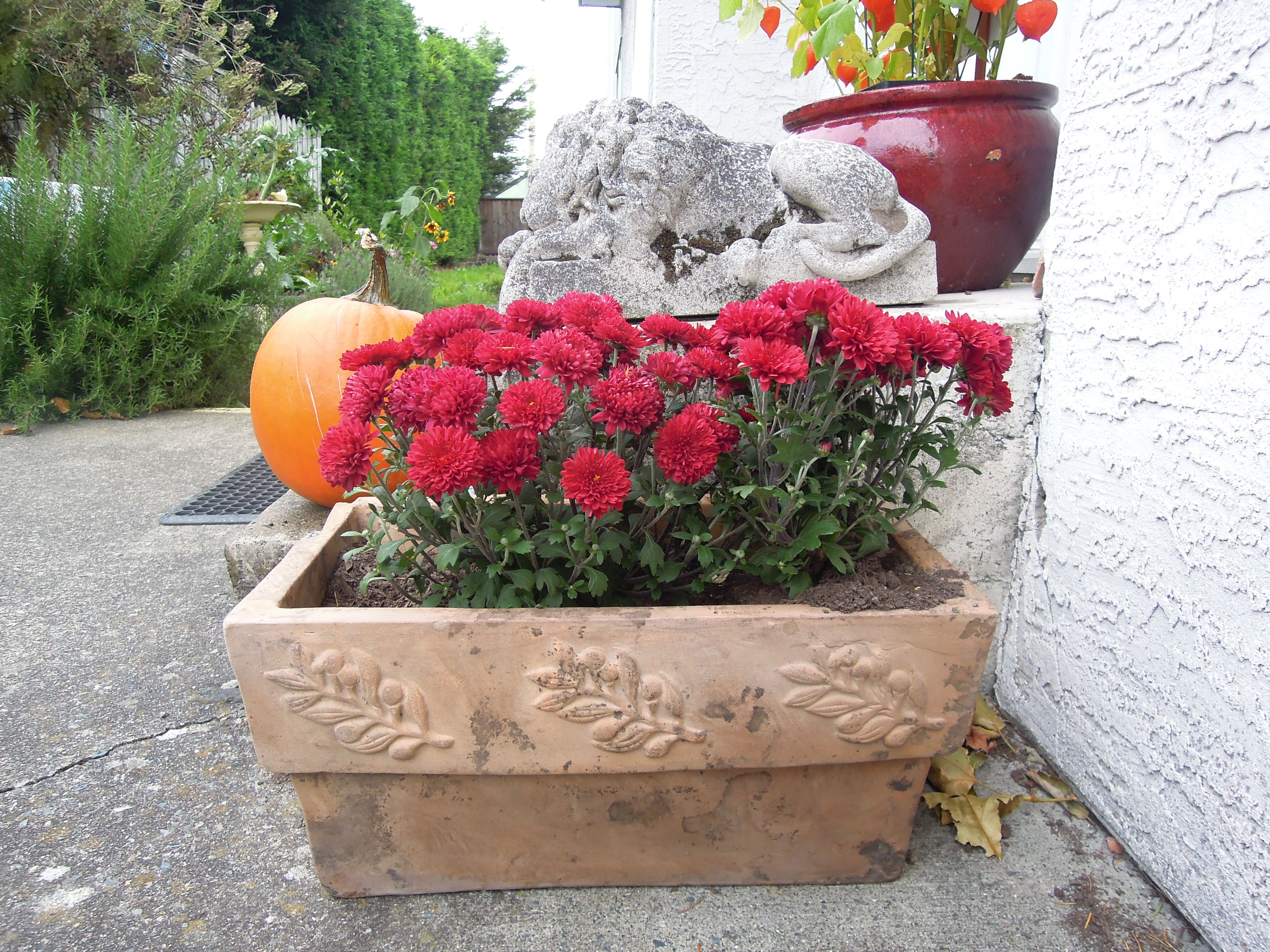
Importance of our Front Door

‘Find out more on the Importance of our Front Doors in making change’

Renee began to recognize the connection between environment and relationships when she had a design consultation business in the mid nineties.  On consultations she noticed how the environment told the story of the person, couple, family or organization.  There was a noticeable connection in the story, motivation, confidence, empowerment and success.  Find out how to begin to maximize your own story for future success.
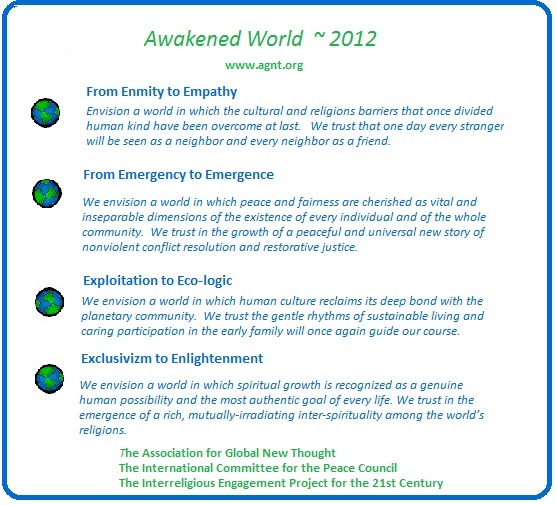
Visions worthy of our attention for shifting focus towards Global Unity

Click to enlarge

Poster supporting Global Visions created by Renee Lindstrom to feature and bring awareness to creating global change that begins with personal awareness.

Follow Renee on Facebook  & on Twitter

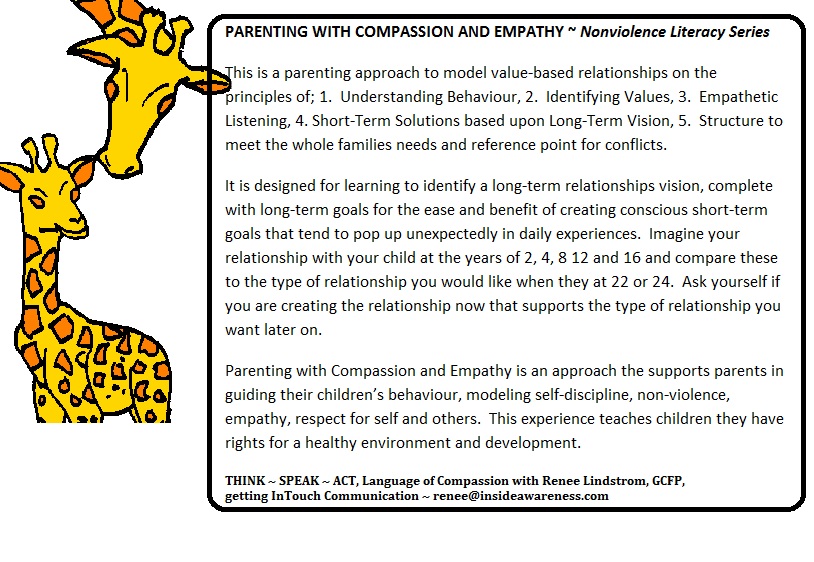
TOPIC’S IN PARENTING WITH COMPASSION AND EMPATHY ~ Nonviolence Literacy Series

Click to Enlarge

FOR MORE INFORMATION ON PARENTING APPROACH OF WORKSHOP/WORKBOOK SERIES go to  LINK

CONNECT ON FACEBOOK FOR MORE ON PARENTING @ LINK 

About Parenting Approach with Compassion and Empathy ~ Nonviolence Literacy Series

CLICK TO ENLARGE

Hands, Computers and You

Hands, Computers and You – An Article on Feldenkrais by Cliff Smyth

We use them almost constantly. A considerable portion of the neurons in the somato-sensory strip of our brains is devoted to them. Yet, as with many aspects of our embodied lives, we often don’t pay much attention to our hands and arms – until we experience some discomfort or pain.

The computer revolution, especially rapid in the Bay Area, means more and more of us spend more of our time sitting (or slumping!) in a chair, making fine movements with our fingers, holding up our arms and hands, and focusing our eyes on characters on a screen.

I remember 30 years ago we used to laugh at the futuristic cartoon character George Jetson who got pain in his finger from his job of pushing a button all day! Today many of us know that pain and discomfort associated with using a keyboard is no joke.

Conventional wisdom says that changing the physical environment through ergonomic improvements or altering the amount of work done (not always an option for many of us) are the best ways to prevent or reduce computer-related injuries.   read more 

_______________________________________________________

Feldenkrais®, Feldenkrais Method®, Functional Integration®, and Awareness Through Movement®, are Servicemarks of The Feldenkrais Guild®

The path – which one are you on?

New phrase for incorrect eating habits to wake you up and encourage your curiosity

Functional Behavioural Problems

What does this mean?  Mindless eating habits conditioned by the environment that are unconscious. A couple of examples of what this mean could be;

Size of plate – using a 14 inch plate and a 10 inch plate generally the visual appearance of the plate when full looks identical.  The thing is one plate is 4 inches bigger than the other therefore there is 4 inches more to fill up to give it the same appearance of full.  That’s over 100 percent more food!  The question is do people feel any less full eating from the 10 inch plate than the one eating the 14 inch plate.

Glasses – would you drink more from a short, fat glass than a tall skinny one? Be curious, check it out.  Watch the next time you pour into a tumbler and into a high ball glass.  Which one are you filling up more due to your perception of size?

Take time to notice what hidden conditions are adding to your potential of overeating.  For example at a restaurant they clear away the food plates between servings.  Would you eat as much food if they left the dishes on the table as a visual reminder of what you had consumed?  Next time you go out to eat make a conscious choice to only order the entrée and notice if you are any less full at the end, than you are when you have had apps., a starter, entrée, dessert and coffee. Perhaps only have one other plus the entrée.  Experience and begin to notice the differences in your experiences.

These ideas came from Brian Wansink, PhD who calls himself a behavioural engineer that he developed through his experience of tests and experiments in the psychology of eating (and overeating) at Cornell University that he calls, Mindless Eating: How Environmental Cues Affect Our Food Choices.  He has written a book and continues his work that discusses subjectivity, a balanced way to lose weight based upon not creating or adding a sense of rightness or wrongness to your experience.  It breaks through the mindlessness of eating through promoting curiosity and exploration.

I particularly like his concepts for the subjectivity of creating variety and beauty in the school lunch lines that promote fruit and vegetables.  It was as simple as putting the fruit into a nice bowl, and placing it in the line up under good lighting and to give the veggies exotic names to increase the consumption in the 100 percent’s!   His goal wasn’t to punish the kids by taking away their chocolate milk!

He promotes becoming nutritional gatekeepers.

check it out at mindlesseating.org