
“Life is like riding a bicycle. To keep your balance you must keep moving.” Einstein
“Life is like …
Body Balance: Inverted Foot

Observing and exploring an inverted foot posture I was told that due to a medical condition as a child the tendons in some of the toes had been cut. With no opinions and continuing to investigate what movement was available, without any one particular focus, the lesson ended with new joint movement in the ankle. There was also more contact between the foot and the floor with less inversion.
Upon return for the following lesson the foot presented itself without being inverted! The curling in was not present.
Renee’s notes: When viewing the inverted foot the image of a baby who has not put any weight on their feet yet or developed their limb, ankle and foot muscles is what came to mind. Exploring it from this perspective created a curiosity that led the lesson.
Recommendation: Explore the facts with a curiosity and forget the labels!
____________________________________________________________________
©by Renee Lindstrom, GCFP, May, 2014
Feldenkrais® Practitioner since 2007, Communication & Empathy Coach since 2004, Art of Placement since 2000
Follow Inside on:
________________________________________________
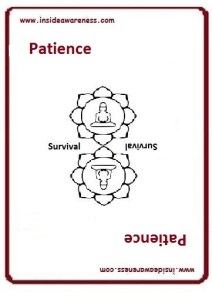
Patience – Value Reflection
__________________________________________________________________________
©by Renee Lindstrom, GCFP, May, 2014
Feldenkrais® Practitioner since 2007, Communication & Empathy Coach since 2004, Art of Placement since 2000
Follow Inside on:
_______________________________________________________
Posted in Uncategorized
Tagged Culture of Values, getting InTouch, Inside Awareness, Patience, Renee Lindstrom, Values
Body Balance – Re-introducing Food
When someone has stopped eating a balanced diet due to health, pain, depression and simply not having the energy, the hardest thing to consider is starting to eat again. The thought is too much effort. It is overwhelming and a challenge. One may feel resistance, doubt and frustration. If there is any residual effects of pain, sickness and struggle, food and diet may be the last thing on the priority list.
Our body naturally goes into survival without a balanced intake of food and it will increase anxiety, fear, depression, impatience, frustration and anger. It will distort critical judgement and slow understanding, clarity and perception. This will distort perception and encourage painful behaviors. Here are some steps to consider for making it easier:
Steps for reintroducing food for ease and support
- Step #1 – get InTouch with a familiar diet
Throw out rules and diet concepts. Remember back to the foods enjoyed in the past. Connect to the diet that is familiar (when growing up). Have conversation with a support team about the meals and foods enjoyed in the past.
*Remember this can be tweaked. Be patient.
.
- Step #2 – get Support: plan for a complete structure
Find support to make a simple plan. Those in the supporting remember to focus on how to do it versus what to do. It is the how that is overwhelming! Post pictures of portion sizes of where to start. The first area to consider is protein intake. A healthy balance to begin is 20 grams of protein per meal with veggies, fruit and smaller portions of carbs. This is what 20 grams of protein would look like.
20 grams of protein
- Step #3 – get a Meal Plan together
Get support to write out a one week plan of meals and snacks. The chart would include: breakfast, lunch and dinner with some snack ideas. Post this in a convenient place.
Example ~ Created for a Senior who stopped eating due to two years of prepared unfamiliar food that was disliked.

- Step #4 – Shopping List
Create an adaptable shopping list made up that only requires check marks beside the items for the weeks shopping needs.
Shopping list

__________________________________________________________________________
©by Renee Lindstrom, GCFP, May, 2014
Feldenkrais® Practitioner since 2007, Communication & Empathy Coach since 2004, Art of Placement since 2000
Follow Inside on:
_______________________________________________________
Posted in Uncategorized
Tagged balanced diet, Body Balance, Diet, diet concepts, Eating Support, Food, Meal Planning, Physical Balance, Shopping, Shopping List
FAQ – Who would come to Inside Awareness?
This is a great question:
- The focus of Inside Awareness is on learning to increase the quality of life experiences beginning inside and expanding out. Much like a drop water expands equally out on all sides. The learning practice is based upon the four aspects of self; physical, emotional, mental and beliefs which are easily translated into focused areas of personal and relationship development.
- Inside Awareness programs have been designed for early childhood to end of life, (and all stages in between!) Patterns of movement, habitual behavior and language, and lifestyles are a thread through life and are unconscious actions and reactions until a focus of attention is placed on them specifically. Learning with Inside is designed for developing this skill so something new can happen! This is to learn moving beyond conflict, pain and struggle with more awareness and ease into a space of deeper connection inside and outside.
Therefore adults, parents, children, educators, employees and employers would benefit with these learning and coaching programs.
__________________________________________________________________________
©by Renee Lindstrom, GCFP, May, 2014
Feldenkrais® Practitioner since 2007, Communication & Empathy Coach since 2004, Art of Placement since 2000
Follow Inside on:
_______________________________________________________
Frequently asked Question’s:
1. How often should I (we) book appointments?
Movement Behavior
Critical Learning – When asked this question by someone that has obvious shifts with these methods and who has a constraint that limits their quality of life from their movement patterns :
- The suggestion would be for sessions to be closer together to not lose the experience between them. The goal is to change habits through specialized learning. This may result in having a reduced length of time in the long run. It could be once a week, twice a week or even three times a week depending upon critical learning, resistance to learning and acceptance to changes.
REMEMBER THAT MORE CONNECTION INCREASES THE EXPANDED AWARENESS OF LIFESTYLE & RELATIONSHIP CONTRIBUTORS TO YOUR RESTRICTED MOVEMENT PATTERNS. YES YOUR RELATIONSHIPS AND OUTSIDE STIMULUS CONTRIBUTES TO HOW YOUR MOVE!
.
Awareness Learning – When asked this question by someone who would like to improve the quality of their life experiences:
- The suggestion is to come for personal sessions at a constant pace to lose the learning in between lessons and to enhance learning by adding movement workshops. This increases one’s sensation awareness in their movements.
Relationship Behavior
Critical Learning – When asked this by couples, parents or educators and employees who are in the middle of crisis management:
- The answer is to book sessions close together to support the process and to increase clarity and understanding. In this way issues become manageable. If left the result is increased pain and struggle. This may be coming once, twice or even three times a week! It is easier to process and move forward in the aliveness than to stretch it out and continue distancing or solidifying the behaviors responsible for creating the issues in the first place.
REMEMBER WITHDRAWAL AND RESISTANCE DOES NOT MEAN THE ISSUES WILL GO AWAY. YOU MAY BE FOOLING YOURSELF AS IT MAY ACTUALLY MEAN THE BEGINNING OF THE END. IF ONE SIDE IS PROCESSING AND ONE SIDE IS PROTECTING THEMSELVES IN RIGHT AND WRONG THINKING, THE SIDE PROCESSING WILL BECOME BORED AND NOT BE CONTENT TO CONTINUE WITH IT!
Awareness Learning – When asked about personal coaching:
- The suggestion would be to receive personal coaching at a regular pace so as not to lose the momentum and to develop inner accountability with outside support would enhance skill development. Adding workshops would enhance the experiential part of oneself.
REMEMBER THAT THERE IS NO END POINT, THERE IS ONLY EVOLUTION AND INCREASED AWARENESS & QUALITIES OF EXPERIENCING YOUR LIFE!
2. Are youR suggested booking time-lines mandatory?
No these are not booking requirements that are mandatory to book and receive enhanced life learning skills and change with Inside Awareness. These are suggested guidelines to support your continued success in learning how to improve your personal experiences and living experiences.
How often you book is the value you place on yourself and what you can afford to spend upon your personal development.
__________________________________________________________________________
©by Renee Lindstrom, GCFP, May, 2014
Feldenkrais® Practitioner since 2007, Communication & Empathy Coach since 2004, Art of Placement since 2000
Follow Inside on:
_______________________________________________________
Exploring without rules is learning!
 A few hardcore Feldenkrais® students came to join in one evening of Conscious Movement through Dance. As the circle began sharing it was explained that the evening wasn’t a Feldenkrais® focused event for their benefit. They chose to stay and take part in a movement with the intention to connect conscious awareness and action in a dance pattern. This concept had been explored with the other participants for a several nights before. This evenings focus was putting patterns of isolated movements into a bigger flow of patterns to experience.
As the larger focused movement pattern was taken up off the floor into big movements a smile crossed their faces. They mentioned that they had never taken their Feldenkrais® lessons off the floor, therefore never experienced them in an upright action! Beautiful moment that encouraged the remaining group members to smile.
Exploring without rules is learning!
Many thanks to the Church of Truth in James Bay for their support in hosting this wonderful series and letting us play with Conscious Movement in Dance!
__________________________________________________________________________
©by Renee Lindstrom, GCFP, May, 2014
Feldenkrais® Practitioner since 2007, Communication & Empathy Coach since 2004, Art of Placement since 2000
_______________________________________________________


 Inside Awareness Center for Integrative Somatic Learning