Category Archives: Uncategorized

Steps to truly hear someone for the purpose of deepening a connection

  1. Listen with an intention to connect deeper to another – a heart connection
  2. Regardless of the topic, observe what inner responses come up for you. Recognize these as though in a Buddhist meditation-begin to notice your responses as personal responses without judgement and go back to what words you are hearing.
  3. Notice if you want to share your story or if you want to give advice and STOP.  Simply let it go by without acting upon these urges.
  4. If there are a lot of words coming at you, ask for a pause to try to tell back what you heard. Explain you want to hear what they are saying.
  5. Reflecting back what you have heard, may create a response that takes them to another topic. This is an opportunity to track. Developing tracking skills will allow you to come back to the main trigger point in the future with more ease and not being taken down the garden path to some other situation.

read more

____________________________________________________________________

Personal Mentor/Coach, Educational Programs:  Business, School,  Organization
by Renee Lindstrom, GCFP,
Feldenkrais® Practitioner since 2007, Communication & Empathy Coach since 2004, Art of Placement since 2000
Follow Inside on:

Facebook             Google Plus          Twitter          Pinterest

______________________________________________________
Clear communication seems as elusive as the pot of gold

Speaking/listening, or a lack of it, has caused many of us a considerable amount of trouble. Clear communication seems as elusive as the pot of gold, perhaps because we were not educated in the topic as a child. As the new ‘children of light’, begin to find themselves in positions of power, it could actually be put on the top of the school curriculum, but for now…we’re on our own ……………read more 

____________________________________________________________________
Personal Mentor/Coach, Educational Programs:  Business, School,  Organization
by Renee Lindstrom, GCFP,
Feldenkrais® Practitioner since 2007, Communication & Empathy Coach since 2004, Art of Placement since 2000
Follow Inside on:

Facebook             Google Plus          Twitter          Pinterest

______________________________________________________

How do you handle blocks along your path?

  • Do you always step aside letting others pass you?  
  • Are you the one that blocks the path and ensures others have to step around you?  
  • Or do you switch back and forth?  First moving out of the way and then becoming the blocker?


Finnerty Gardens 008


  • How do you know when to lead and when to follow?

Personal Leadership

These are a few questions that you will answer at the Labyrinth Workshop this coming Saturday! Find out more

Read more on Labyrinth’s 


__________________________________________________________________________
by Renee Lindstrom, GCFP,
Feldenkrais® Practitioner since 2007, Communication & Empathy Coach since 2004, Art of Placement since 2000
 15th Annual TSL Labyrinth Gathering Vcr Island – Victoria Event Organizer
Follow Inside on:

Facebook             Google Plus          Twitter          Pinterest

______________________________________________________


Value of the week:

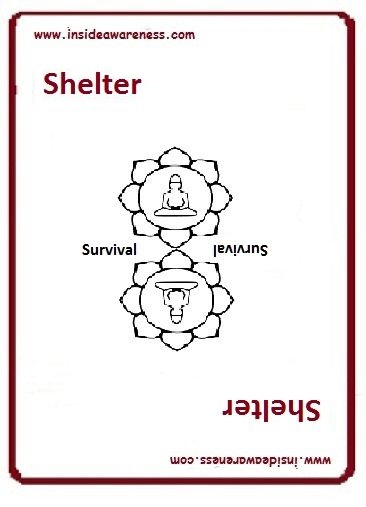
getting InTouch - Value - Shelter

Take a moment to reflect upon walking up to your front door.  In your imagination notice the environment on the walk up to your front door.  As you turn the key and begin to enter notice any shifts inside.  What feelings arise?  Do you go from a sense of being rushed into a quieting state of peace, relaxation and groundedness?  If not, why not?  What is happening in your home that is not supporting you in this way?

Now imagine not having a home.  What feelings come up?  Do you take your home for granted?  Do you have a love/hate relationships with your home?

Consider all the above and the consequences of how this may affect your health and well-being.

__________________________________________________________________________
by Renee Lindstrom, GCFP,
Feldenkrais® Practitioner since 2007, Communication & Empathy Coach since 2004, Art of Placement since 2000
 
Follow Inside on:

Facebook             Google Plus          Twitter          Pinterest

______________________________________________________


Moshe on learning

Renee Lindstrom's avatarInside Awareness Center for Integrative Somatic Learning

“…self-knowledge through awareness is the goal of reeducation. As we become aware of what we are doing in fact, and not what we say or think we are doing, the way to improvement is wide open to us.”

Moshe Feldenkrais

View original post

Parkinson’s

Renee Lindstrom's avatarInside Awareness Center for Integrative Somatic Learning

Feldenkrais® Method Research

This study demonstrates that the disabilities of Parkinson’s Disease can be lessened with early Feldenkrais intervention as gains are made in musculoskeletal flexibility, alignment and functional movement. Early intervention is important and can delay the need for pharmacological intervention, which, because of long-term use, is associated with potentially unwanted and toxic side effects. The study illustrates improvements in balance, gait, and functional movement made by an individual who was not yet receiving medication for Parkinson’s disease. A second case study illustrates improvements of balance gait and functional movement made by an individual who was already receiving medication for the disease. These case studies illustrate the dramatic improvements that Feldenkraisintervention can achieve in the patient with Parkinson’s disease.

Shenkman, M., Donovan, J., Tsubota, J., Kluss, M., Stebbins, P., Butler, R. Management of Individuals with Parkinson’s Disease: Rationale and Case Studies. Physical Therapy 69: 944-955, 1989.

Wendell…

View original post 44 more words

Waking up to one’s attitudes of consciousness

For the purposes of learning about one’s inner consciousness,  let’s say there are two types of consciousness.  One is an automatic and  habitual experience,  acted out regardless of consequences and without any thought to it.  This is a closed state without choice that lacks understanding.   Generally,  it is  a reaction to something that is not happening and is not reality.  It is a perspective based upon the past or future and not the present moment.   The second is a focused awareness of attention for understanding reactions  before taking them.  This is an open state of choice, acceptance and the point of shifting and making change.  It is a response to what is real in the moment.  An example as follows:

Attitude of:

2014-05-26 18.48.03


Attitude of Scarcity Effects:

Some Inner Thoughts:  

  • There is never enough ……….
  • I am going to lose ……………..
  • I am not going to be able…………
  • I’ve  never had…………………..
  • Will there be enough when ……………….
  • They have more………..
  • Mine is not ………………..

Feelings:  Fear, Anxious, Terrified, Despondent, Hopeless(ness), Frustrated, Angry, Tense, Shaky, Panicky

Some Mental & Emotions Reactions:

  • Hoarding (resources, finances, properties, objects, friends, lovers)
  • Compromise (nature, resources, sustainability, family, relationships, friendships, employment, one’s own values)
  • Hopelessness (wanting to die, not wanting to go on)
  • Aggressiveness (acquiring at all costs)
  • Control (working out, diet, environment, hierarchical position of authority)
  • Lack of Control (letting circumstances happen without taking any action of responsibility)

Some Physical Reactions:  Stress, Tension, Anxiety, Holding, Clenching, Shallow Breathing, Locked eye movement, loose of flexible movement and balance

As children scarcity is an unconscious learned attitude of  behavior much like eating, rolling over, sitting, crawling, standing and walking.  The difference is that it has been learned through the modeling of those around us while learning  functional movement is an inner resource of somatic awareness and experiencing.

Learning skills to transition this attitude into one of abundance  is more than a possibility.  It is a reality and begins with becoming aware of one’s habitual behavior responses.  This can be learned through  combining the mental and emotional with getting InTouch Talk or through physical movement with getting InTouch Movement.  These are easy integrative learning methods.     It supports your contemplative practices or can be supported by adding contemplative  practices to be able to cut the distraction.

 For more on getting InTouch workshops  or movement coaching, relationship coaching 

__________________________________________________________________________
©by Renee Lindstrom, GCFP, May, 2014
Feldenkrais® Practitioner since 2007, Communication & Empathy Coach since 2004, Art of Placement since 2000
Follow Inside on:

Facebook             Google Plus          Twitter          Pinterest

_______________________________________________________