A self care life hack that has merit by shifting the dimensions between pain, struggle & effort to softening, ease & effortlessness

Peace and Harmony

In the last post called; Lifestyle Hacks – Reverse pain, stiffness and aging in fingers, hands, wrists & lower arms naturally the focus is on a physical shift in the felt sensations through a pattern of self-care. In the same self-care pattern there is an emotional release that is available. The tough connective tissue like the skin, facia, flesh, muscles, ligaments, etc., all create a felt sensation that stimulates tension, anxiety stress, impatience, irritation, and angry feelings. The softening and release of inflammation in the same connective tissue creates a different range of emotions through the felt sense shift. The softening can create an enjoyable range of emotions like an increase in tolerance, joy, playfulness, peace and harmony. The self-care that was suggested in this post focused on one’s hands. Our hands have a huge map in our brains due to their constant use. Each time we move our fingers, hands, wrists lower arms and elbows it deepens the groove in the neural pathways in the brain. The lack of micro-movements in the same functional areas will reduce the grooves in the neuro pathways and eventually they will be lost. This is when the saying, if you don’t use it, you’ll lose it, applies.

The Feldenkrais perspective has focused on patterns to introduce these lost movement patterns and reintegrate them. This self-care would increase the felt senses in an Awareness through Movement Lessons. This means one could feel a difference in the movements of the joints and bones differently. The muscles around the joints and flesh would be softer increasing the range of motion.

From my perspective of a Nonviolent Communication Educated Communication Specialist please note I do not have the perspective that we carry stories in our physical function. Rather the short and long-term memories are stored in the prefrontal cortex in the hippocampus area. However, the tension or held patterns in the functional physical body can stimulate the stored memories. A Western trend currently is to fixate on memories as a way to resolve issues and shift movement patterns. Unfortunately, the story memories are a function in the brain that has an alignment with another function which is physical movement. Physical functional movement can be stimulated by memories, and memories can be stimulated by movement. Stories cannot be held in the arm, the belly, etc. They however can stimulate emotional responses that would influence these areas. I have come to call these environmental influences.

An example I would like to share it with a student who had worked with a therapist to resolve physical pain through processing emotional trauma by having the body part held while releasing the story. This was called somatic therapy. The person had been doing this work for a few years when I began to work with the actual physical function from a somatic perspective in movement transitions. The person’s habit was to defer to the stories as trained by the therapist so I suggested we focus attention on the felt senses in the movement. In two visits the arm was functioning normally pain-free. No stories, only micro-movements with an increase in rotation and getting other joints and bones to participate in the movement. The student had been off work for a few years due to this injury and soon they were back at work.

From both a Feldenkrais perspective and a communication perspective I work with what is in the present moment. This is a focus of attention on the felt senses now, not in the past and not in the future. If I can bring a mindfulness focus like this into the lesson the student begins to train their minds in the same way as in mindfulness meditation. The difference is it is in movement, focus and sensing, not sitting in meditation. It’s more of a mindfulness function where the physical, mental and emotional are aligned to experience the present.

Disclaimer – words, phrases and sentences have similar use however, they can have different definitions depending upon the context. The English language is limited and such that it is left up to interpretation. Each person has different resources for forming memories to shape opinions, beliefs and interpretations from.

Lifestyle Hacks – Reverse pain, stiffness and aging in fingers, hands, wrists & lower arms naturally

Sometimes the greatest gifts are unexpected. While testing some oil mixtures for my face I had left overs in the bowl and decided to put them on my hands, wrists, and lower arms. Then I read about how an inexpensive face mask could hold the moisture during the facial. I decided to try it and remembered I had vinyl gloves. Wearing the gloves over the oils made a significant difference in the effects of the absorption of the oils.

When taking the gloves off and rubbing in the oils there was a significant felt sense difference in all the joints and soft tissue. This is when my Feldenkrais Practical mindfulness kicked in. Working with students in chronic long term pain in these areas has been a huge focus of attention in teaching Awareness through Movement Lessons and in personal Functional Integration sessions. This little hack could have the potential to soften the connective tissue that has become habitually inflamed and hardened. This harden and stiff tissue becomes the environmental influence of how the bone and joints are used. As it softens the bones and joints have more range potential in their movement patterns and this reduces the pain.

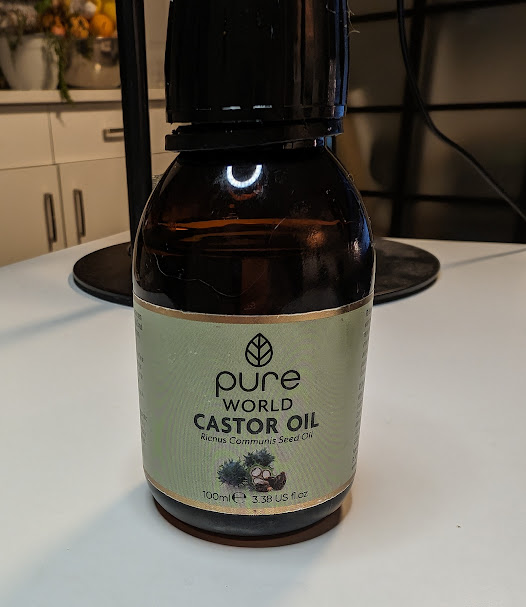
The bonus is the oils also reduce the look of aging in the skins appearances. One of the oil I use in this combination is Caster Oil. It removes, lumps, bumps and supports scar healing. The other oil is Sea Buckthorn which I have successfully used to remove pigmentation spots. The other ingredients is what gives it the aliveness and luxuriousness effect.

Here are the ingredients:

  1. Caster Oil
  2. Sea Buckthorn Oil
  3. Aloe Vera Gel
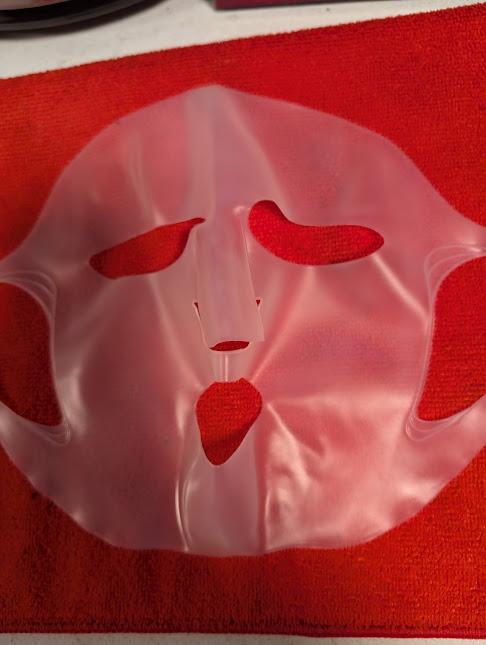
  4. Facial Mask
  5. Vinyl Gloves

I added a small amount of Aloe Vera Gel, 1 teaspoon to tablespoon, with a teaspoon or less of Caster Oil and 6 to 8 drops of Sea Buckthorn Oil. Mixed together and applied. Remember the Sea Buckthorn Oil is orange. Don’t wear good clothing. It may appear orange on your face however doesn’t stain your skin orange, unless you lave it on. I usually do this in the evening or on a day off for self-care.

It takes less than three minutes to mix the ingredient and I leave on for twenty minutes. It’s the best 1/2 hour you’ll spend. I wouldn’t wait until later in life to take action. I would begin early in life. My mother-in-law had be start paying attention before I was 21! I would say you can start at any age, however the habitual behaviour is important. It’s easier to follow a habit than it is to start something new.

Castor Oil

This is a versatile oil. It is used as an antibacterial moisturizer, to reduce scars and skin spots, and bumps of all sorts. It reduces scar marks and supports major organs when used as a poultice. Also used to regrow hair.

Here is a link to Caster Oil on Amazon

Sea Buckthorn Oil

A skin moisturizing oil to reduce pigment spots and rough raised spots.

Here is an affiliate link to Sea Buckthorn Oil on Amazon

Aloe Vera Gel

This is a brand that can be used in juice and for skin.

Aloe Vera Gel affiliate link on Amazon

Vinyl Gloves

For use in hand treatments with oils, etc. Link to Vinyl gloves on Amazon.

Silicone Facial Mask

Keeps in moisture during an oil facial. Here is an affiliate link to this Mask on Amazon.

Aging Well from an embodiment perspective to reduce facial lines

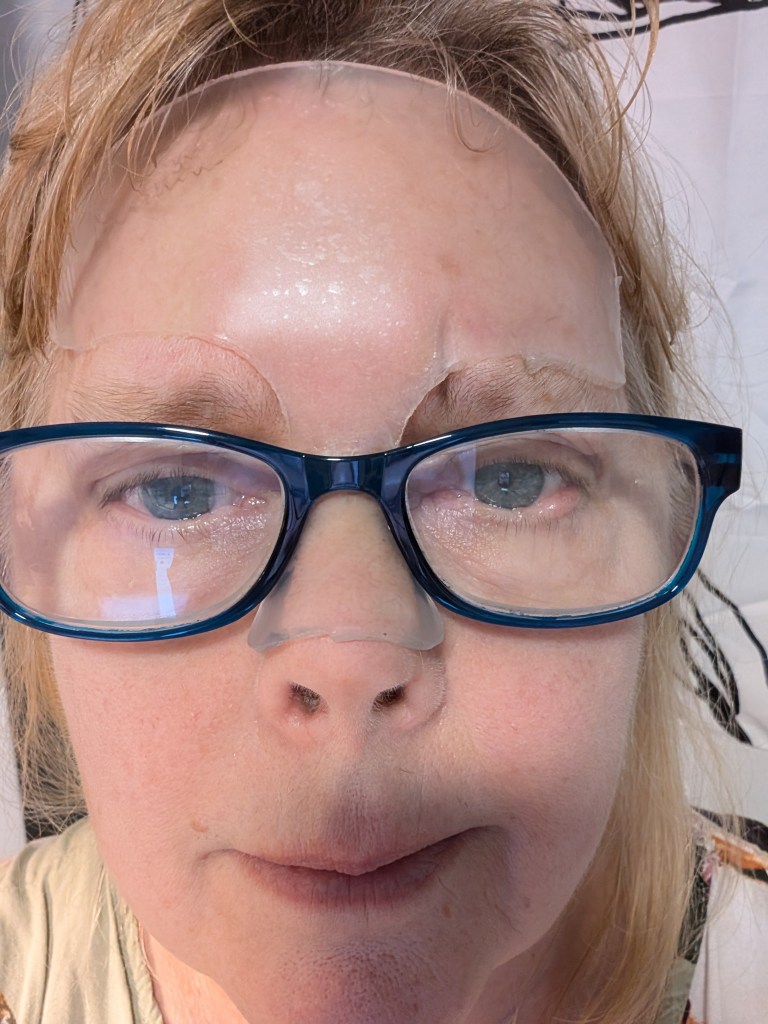
In the space between my eyebrows I have some developed muscles from squinting. These muscles have created up and down grooves. You an see the fine lines in this picture and the grooves in the one below.

As a Feldenkrais Practitioner of Feldenkrais Method of Somatic Education one of the learning points is the build up of muscles from repetitive use. In this situation it is deep grooves that are being created were I don’t necessarily want them. What I have begun doing to shift this is learn to let go of the habit. When I sense that I have contracted these muscles and hold them, I release it. The use of the silicone patches has supported this ability to consciously notice it.

Even though I was suspect of these at first these silicone patches are shifting the muscle memory that hold the contraction giving the appearance of the grooves. Instead of using fillers like Botox, I am changing the habitual behaviour of engaging these muscles. The other step I am taking is using Caster Oil. I began testing Caster Oil at the same time as using these silicone patches. I have read the benefit’s for skin using Caster Oil and find that it is making a noticeable difference in the quality of my skin.

I used the silicone patch on my forehead between my eyes for three evenings and it flattened the up and down groves creating a face surface. This lasted for a week. One morning I woke and the muscles had returned to the former shape that created grooves. It is a worthwhile hack in my opinion.

Here is a link to getting some inexpensive silicone patches to experience with.

For a link to Caster Oil and more suggestions go to Aging suggestions

This information is for educational purposes’ only. I only give suggestions that I try myself and have noticed change through the exploration.

Listening – Weekly Culture of Values Focus

Culture of Values Focus for this week – Sept 8 to 14, ’24 – Dialogue. Read more @ https://atomic-temporary-16610124.wpcomstaging.com/…/dialogue-weekly-culture…/ #communication #cultureofvalues #universalvalueeducation #feelingsandneedslanguageineducation

Sept 8th to 14th ’24

Definition of Listening:

Listening is an action of hearing the sounds in the surroundings.  This includes other people’s voices. Hearing what others are saying is a way to get to know what is important to them and to learn from them. 

Remember Dialogues definition from last week:

Dialogue is a conversation with others that increases understanding, addresses problems, and questions thoughts and actions.

Dialogue and Listening are needed to have a balanced conversation of meaning. This balance brings success and achievement for all in relationships equally. When someone speaks they are leading the conversations and the listener is following. To have equality the speaker becomes the listener. This means the listener becomes the speaker. Leadership is a balance of giving and receiving in dialogue.


This pattern was developed from a talking circle.  The format was to go around and ask each participant what the focused value word meant to them.  Sometimes a definition from the dictionary was read out first.  People often did not know the definition meaning.  ‘Renee Lindstrom’


Weekly Feeling Observations:

Feeling Observations this week

The Culture of Values educational program is available through Amazon. The program includes:

Why? How? When?

August ’24 Book Launch

How I spent my summer in 2024! Publishing four lifestyle educational books and programs.


  • For Educators and Parents

Two books with a focus on integrating values into the dialogue consciously through intention

Get your copies of the agenda and companion program of guided patterns or learn more through a group workshop or through mentoring. Connect If you are interested in creating an educational environment and would like to learn how to start. We are beginning a train the trainer program.


  • For Parents and Educators

Activities for Integrating practical & logical mindfulness for processing reactions with feelings, needs & movement


  • Goal Setting for Home and Business

Setting goals through intentional actions using beautiful crystal qualities


Culture of Values Program for Educators and Parents, The Teaching Labyrinth for Parents and Educators, and Integrative Living with Crystals and Stones for integrating intentional goals and Feng Shui Placements.
Copyright 2014 – 2024 Renee Lindstrom, GCFP
Feldenkrais®, Feldenkrais Method®, Awareness Through Movement®, Functional Integration®, are registered service marks of the Feldenkrais Guild® of North America. Feldenkrais Method®

The disconnection and detachment with our body parts causes fear, anxiety, panic, irritation, anger and lack true potential in movement

In a post called, “Lost connection with our feet,” I introduced the concept of people often referring to their body parts as a third party in our conversation. Our cultural conditioning leaves the majority of us disconnected from having a focused felt sense of the body parts that keep us upright to stand, walk, run, sit and get up from standing or out of bed. Pain will be felt immediately and that will be the focus of the conversation. People will point to an area where they feel pain usually without the ability to identify the body part, or they will give an incorrect label of the body part they want checked out.

The education that has been a part of our cultural conditioning has lacked focus on the integration of the connected experience through the body. I have found that the focus is on memorizing the names of the muscles, bones and organs rather than focusing attention on the experience of those part’s from a felt sense ability through the transitions of movement. Even suggesting the focus of attention on ones felt senses will be received with varying degrees of experiential understanding and thoughtfulness. The response is usually related to yoga, tai chi, kinesiology, physical therapy or some other exercise patterns versus the actual ability to either visualize the movement or feel the functional aspects of it. There is a blank in understanding and clarity. The mind goes to association with other outside possibilities. As an empathic responder to the environment inside and out this was the hardest gap to bring clarity to for myself and others.

As a Feldenkrais Practitioner this tells me that the person responding back with these comparisons is unable to quiet the mind of memories and analysis long enough to go into feeling the actual functional connected movement patterns inside their body. The mind is actively seeking answers and concepts versus sensing. This is an important concept to distinguish as the two abilities are used for different outcomes. In my experience the analytical comparisons will not support a new pattern of movement that integrates into the brain and body connection via neural pathways. Rather, it will became an artificial strategy creating rigidity and blocking an increase in a range of motion. The expectation created by the thinking and need to know will increase the level of pain, anxiety and pain which will increase the contraction in the muscles and soft tissue intensifying the pain. It will create a contrived pattern of movement that is memorized with the concept of being the right way to do it versus organic spontaneous movement. The rigidity will significantly increase the levels of pain even more and reduce all function due to the levels of fear associated with the pain.

People seek answers and will even ask, is this the right way to….. walk, balance breath, etc., forgetting that as a baby they couldn’t ask anyone. Their movement was free range and more efficient than any current day concept.

This lack of mindful clarity and understanding to the interconnectedness of the physical body creates a disconnect to the skeleton and it’s available core micro movements. In the post mentioned in the first sentence called, “Lost connection with our feet,” the focus was on the functional physical balance. In Chinese medicine the 6 meridians that are focused upon in acupuncture begin in the mouth and end in the feet. This training suggests that the energy is released from the body through the feet into the earth’s gravity. The feet connect the bodies energy to the earth’s gravity. In Feldenkrais the functional perspective of the skeleton is viewed as architectural engineering and the view is how the feet connect with the earth’s gravity by pushing off it. When pushing off the earth the force of the earth’s gravity translates from the feet through the core of the skeleton all the way to the skull. However to experience this efficiently the focus of core movement is through the skeleton, not concepts, muscles, or flow of energy in patterns. These add value to movement, however they cannot create the experience of pushing off from the earth’s gravity.

The dominant force of movement pushing off the earth using the skeleton with the micro movements through the bones and joints tones the muscles. (Not the same as yoga stretches or massage) Muscle development is of value, however not the central core of whole and spontaneous healthy movement. Dominant muscle focus lifts the feet away from the earth that translates into walking separately from, or against, the earth instead of with it. The bones create connection with the earth while the muscles create disconnection.

When someone is walking through the force of the earth’s gravity through the skeleton there is less effort, more flexibility and an increase in resilience. If there is pain in one’s feet there are higher levels of anxiety, irritability, anger and panic. As one limbers up through miro movements, the pain subsides along with irritability, anger and panic.

This Feldenkrais Practitioners perspective of balance begins in the micro movement availability of the skeleton as it responds to the environment. This includes pushing off the earth’s gravity through the bones. As an ex Shoe Store Manager there is some understanding of the cultural conditioning that has evolved through the generations of shoe development.

Upcoming Awareness through Movement Group Lesson Series

For Personal Functional Integration get in touch

by Renee Lindstrom
 1st Phase of Integration – Getting Started (Introduction & Pattern)
 2nd Phase of Integration – Getting Intouch (Experiencing & Connection)
 3rd Phase of Integration – Integration (Embodiment)

Follow the journey on TwitterInstagram or Facebook

Copyright 2014 – 2024 Renee Lindstrom, GCFP
Feldenkrais®, Feldenkrais Method®, Awareness Through Movement®, Functional Integration®, are registered service marks of the Feldenkrais Guild® of North America. Feldenkrais Method®

SHARE THIS:

Lost connection with our feet

As a Feldenkrais Practitioner the lost connection of mankind with their feet is observable in every student’s posture that attends my Awareness through Movement Lessons. One series is called, “Balance and a Fear of Falling.” In one-on-one Functional Integration sessions, it is felt through the movement patterns themselves. After the first lesson in the focused movement class series there will usually be such a huge shift in the individual participants abilities to balance that some students will report this back in the second class. They also seem happy in sharing that there is a drop in their fear levels. I will witness class participants leave their canes behind at the end of the second and third classes which I have to remind them to take with them. By the fourth class they are coming without them.

So, what is the secret? The simplest answer is that Feldenkrais doesn’t focus on the strategy to fix a perceived problem. Most Practitioners don’t get caught up in the ego of philosophies where it becomes about the label, appearance, or fame by being in competition with other modalities. It can be corrupted by those Practitioners that do though who are trying to capture it’s elusive nature and fit it into the preexisting knowledge base of human concepts. Organic learning is not containable in the precepts of the human mind. Moshe was a scientist with a mind that loved to explore learning like an adventure. This is a key element that has been passed down in a good practitioner.

In the Balance class mentioned above our first focus in on feet. The cultural conditioning in our society has caused a lost connection with one and their feet. Time and time again I hear this disconnection in the stories I am told and that I visually see in one’s response to their own feet. Usually, the speaker addresses their feet as a separate part of themselves. They have no whole connection to them as being a whole part of themselves. This is typical of an analytical process thinker in my experience. Their body parts and functions will be expressed with an outside view in the manner of it being a third party and no attachment. Imagine standing on one’s feet with no attachment to their felt sense.

These cultural conditioning habits of our society are points brought to the surface of attention in our movement lessons, however the emphasis as a Practitioner is on aligning one’s felt senses to the micromovements in the bones associated with the feet. The emphasis is on cultivating awareness, not memorizing one pattern, as one needs many patterns when it comes to balancing.

Currently live group classes happen at #yyj’s Monterey Recreation Centre in Oak Bay. I also work with people privately in person, online, over the phone and yes even by text and email depending upon the needs and travel of students.

Past career segways into understanding the social and cultural conditioning of feet

After a challenging year and a half that ended with the loss of my father, my mother, my lover and letting go of the strong hold of my career, I entered into a year of grace. I landed in #yyj’s Greater Victoria Communities and began living on a sailboat at Fisherman’s Wharf after finally taking a career break never explored previously. This began a journey to reintegrate into my empathic nature and to understand it, Re-emerging into society from a year of retreats and learning with a focus on a new career direction as a store manager ended up being with a shoe chain. Working for Naturalizer as store manager for stores at both Hillside and Mayfair Malls became quite an opportunity to explore the human conditioning with one’s feet. In a deep empathetic state while viewing the shape of people’s feet had a giant impact. This experience is a key foundational understanding I tap into when working on balance and cultural conditioning with my students. I am not a salesperson by nature and couldn’t consciously sell to people something through manipulation, so it was a short career. Even the carrot of taking on Regional Manager for B.C. wasn’t far enough removed from that behavioural conditioning.

Upcoming Awareness through Movement Group Lesson Series

For Personal Functional Integration get in touch

by Renee Lindstrom
 1st Phase of Integration – Getting Started (Introduction & Pattern)
 2nd Phase of Integration – Getting Intouch (Experiencing & Connection)
 3rd Phase of Integration – Integration (Embodiment)

Follow the journey on TwitterInstagram or Facebook

Copyright 2014 – 2024 Renee Lindstrom, GCFP
Feldenkrais®, Feldenkrais Method®, Awareness Through Movement®, Functional Integration®, are registered service marks of the Feldenkrais Guild® of North America. Feldenkrais Method®