A focus I have, as a somatic empathic practitioner, is the power and control through function. The lens or viewpoint is through functional movement, functional processing of information internally of the environment that stimulates action, reactions and expression.
This lens includes the past, present and future potential. It is also not exclusive to one function or another as my view is on the effects and potential for whole functional integration learned through social conditioning. The conditioning of the functioning movement, language process and relationships to emotions that are responses to thinking patterns and the felt senses that are spontaneous to actual experiences happening in the moment. The patterns I use are to retrain the brain through functional guidance that easily expands the conditions holding someone in a belief system constraining their potential for increasing mobility and flexibility. This includes the thinking constraints in functional movement or relationship interactions, internal or external.
A core function that is the power and control system of human function is breathing. This morning I have a workshop introducing movement patterns through the skeleton to expand the individual consciousness of each participant. They will all be starting from their own unique social conditioned experience. This suggests there isn’t a set pattern that will integrate a full range of functional movement that will be the exact same. Often, I will run into comments like, ‘that’s not the way I was taught in …………. ‘ You can fill in the blanks from your own experience. It seems other modalities focus on telling students that there is only one way you can breathe, meaning I hear it from those who have gone into agreement with that limited clarity of facilitators who believe what they are sharing with their students, until they themselves advance their functional body awareness of full mobility. Our social conditioning is such a right and wrong culture. I had a Pilates instructor participate as a student in a class, sit up from the lesson and began to have a disagreement. Four years later, they advertised the same workshop from my perspective and patterns. They were not ready to take in the patterns to explore and expand their consciousness at the time of my workshop, yet 100 percent believed they were right and I was wrong. This is a pattern that I now recognize as social conditioning. Each modality is locked into a belief system of right or wrong ways of functioning until challenged. Unfortunately, it’s also the instructor’s ability to integrate what they are hearing and how they interpret it that shifts the original clarity of the method and conforms it into a lesser consciousness.
This is on my mind as I enter the workshop today. I recently did a series on rolling with the ribs, and I ran into someone whose fear skyrocketed with the shift in how they were breathing. It interfered with an activity they had been doing that was locked in. The fear was so great and behaviour so locked in, they couldn’t be spontaneous. Instead of self-reflection to question their limiting belief to free up their fear, they believed any other movement patterns had to be wrong. They wanted to tell me that twenty years of practical application of Feldenkrais was wrong, as they had a Yoga instructor teach them that this was the way to breathe, and from what I heard is they believed it to be the only way in every activity. Breathing is life. Literally. There is no one way. It depends upon the activity. It also depends upon available skeletal movement function. This person was hyper-focused on the diaphragm and lacked internal felt sense, or image of the skeleton, nor the relationship to the other bones in the body that counterbalance the rib movements. Afterall, the diaphragm could not possibly counterbalance the weight of the skull nor support the mild fluctuations through the vertebra. Let’s get real here for a moment. So here’s my answer. Back to the basics and begin with the skeleton. That’s a joke, as that’s the only thing I do.
I will focus on the connection between the skull and pelvis, which is: the spine, rib cage, shoulder blades, breast bone and clavicles. I asked Ai for an image, and they can’t provide an accurate one. Even the earlier anatomy images are disappearing online and being replaced with terrible ones that aren’t necessarily correct. This is not a good sign for future learning.
Renee is a Certified Feldenkrais Practitioner – since 2007
by Renee Lindstrom, Author of the Somatic Archetypes
Follow along with Audio, or listen
The responses of the Somatic Archetypes are triggered by the environment. The Fantastic Five, sight, sound, smell, touch and taste, motivate responses and actions influenced by the elusive and solid experiences in the environmental landscape. The focus of Feng Shui is to create a balance of yin and yang energies. (masculine and feminine) If there is too much yang, the somatic responses will be aggressive to match the energy. Too much yin will encourage depressed states to match the energies. Therefore, the purpose of Feng Shui is to create an environment that will support all the Archetype needs for balance, harmony and motivation.
It would be in the best interest to learn your dominant Archetype senses to provide articles, furniture, fabric, and sound to please your dominant senses. When you share a space, consider every person’s Archetype. This would improve relationships and benefit connections. The value in this suggestion is that each person will view the space through their own somatic lens and the needs that may accompany them. An artist’s dominant sense will be inspired by patterns, shapes, textures, pictures, colour schemes, etc. A Perfumeurs dominant sense of smell may be inspired by fragrance, flowering plants, herbs and spices in the home. Consideration of each person is as important as balancing the space to meet everyone’s needs.
Observing the environment from a Feng Shui perspective would also look at the alertness needed for each separate environment. The alertness levels would need to be higher at work, and lower at home, or in a meditation space. Each location would be viewed for the messages that are obvious in the landscape, and adjustments would be made to the overall environment that would support each Somatic Archetype. These Archetypes are:
Sight
Beauty
Smell
Fragrance
Touch
Textures
Sound
Sound
Taste
Flavours
The Somatic Archetypes are the senses of perception in the environment, where their stimulus will determine the tone of how the information is perceived. For example, if an environment is cold, empty and grey, and a person experiencing it has a dominant visual sense, these features would increase the chance that the tone would be a cool and disconnected state versus a warm connected one. This influence is elusive, and it shapes the emotional response that affects mental and physical responses. It is as potent as how someone communicates their responses in a dialogue with you. The environment, in essence, is communicating silently with your somatic senses.
I offer Feng Shui consultations that explore the environment. This focus of attention is woven into the personal and group somatic communication and movement sessions, classes and workshops. This topic pairs well for increasing the quality in relationships and functional movement.
Please investigate the classes and a personal session or consult:
by Author Renee Lindstrom of The Somatic Archetypes
Audio above at link to listen or follow along while reading
The Archetypes
This introduction to defining these five senses includes both the noun and verb uses of these identifiers. It begins with a noun to describe sight, sound, smell, hearing and touch using a pattern that refers to conscious awareness for the intention or purpose to perceive and regain their felt sense.
As a Feldenkrais Practitioner, teacher and mentor, I have experienced these fantastic five somatic triggers as the core receptors of environmental influences that stimulate inner functional responses. These receptors are the beginning of any and every response that travels through the body, back and middle brain, and finally to the prefrontal cortex last. It happens quicker than one can track and control. The only thing that can be controlled is mental function and the information going in. Even thoughts of memories can influence and activate these five senses, suggesting there are internal and external sources of environmental influences. These five Archetype patterns for functional integration of the environmental stimulus that triggers receptors are introduced below. An important point to consider is that these Archetypes stimulate each other’s sensory awareness prethought. They have their own expressive language.
The Artist
The Visionary
Most babies are born with the gift of sight. Sight is through the beautiful body design of vision that includes the lens that takes in the world. Artists take in the world and interpret it through their unique abilities. An example, developing the quality of one’s eyes that was present at birth, would be the experiences of meditation. Mediators have spent time and energy softening their eye habits from which to take in the world, to retrain their brains that have developed a harsh and critical focus looking at the world. A subtle yet profound shift in quality of life.
The eyes are located in the head in direct contact with the brain.
The Musician
The Vocalist
A musician has developed their sense of hearing in an advanced way to differentiate musical sounds and notes. The universe is filled with musical tones that formed early music perspectives. There is a belief that primordial creation began with sound in some Eastern philosophies, such as Hinduism. This sense is as important as sight, touch, taste and smell. A sense that may be taken for granted until it is dimmed. It inspires and motivates action. For example, music. If a piece is playing, it will either heighten moods or it will create agitation. It can even inspire movement through dance spontaneously or provoke immediate frustration and annoyance. This is a hidden influence of behavioural responses. Hidden suggests unconscious awareness or taking this sense for granted. If sound is a dominant sense, the tone of voice or sounds a person will make will be another hidden environmental influence in controlled or spontaneous responses.
The skill to hear vibrations is a gift that translates into the health and well-being of individuals and relationships.
Sound is received through the ears that are directly connected to the brain.
Sound is expressed through the mouth, yet originates from below the head in the voice box at the base of the neck in the front.
The Somatic
The Toucher
A baby will be sensitive to the somatic touch of all the textures and levels of denseness of articles and items they come in contact with. Their skin is receptive and a source of information. The hands are known to make a larger map inside the brain of neuro-pathways as the baby gathers this intel through touch. The skin is an organ that covers the body. As a receiver, the skin responds to what the other senses are hearing, seeing, smelling and tasting. When these senses send signals to the brain, it sends signals to the skin that responds immediately. It happens faster than any identifying label or word in our common vocabulary to describe it. This somatic sense is at the core of function and integrates all the senses. The other senses influence one another similarly, yet the somatic sense of touch encompasses them all and is a source of awareness that can be conscious or unconscious. This is the Milky Way of our universal responsive experience to explore and investigate.
Touch encompasses the whole body through skin contact with solid surfaces, and elusive and unsolid influences like the wind, heat, cold, water, and emotional waves emanating from people and animals
The Perfumeur
Scent Enthusiast
Dual Activation of Scent Responses
Digestion
The sense of smell is a powerful activator. It is how a baby senses their mom and begins to locate their food source. The connection continues through life as smell is what activates the taste buds to create the ability to taste flavours. Smell will activate taste buds to taste flavours and begin the function of processing and digesting foods even before it is put in one’s mouth. It activates the stomach to receive the food with the right digestive enzymes and stimulates the organs to prepare for processing it through the gut. Digestion begins before putting food in one’s mouth and chewing.
Attraction
Scents create attraction that is confirmed through generations of creating special perfume scents for both males and females. Scent is a silent expression of attraction and a powerful expression for mating. The sense of smell will be one of the first unconscious expressions that will attract a person to another. This personal scent will only attract a few matches. It will not attract the general population. It is like a mother who has a connection to the scent of their child. You will often see them smell their child’s head. It is a form of expression and affection.
Scent is through the nose, located between the eyes and mouth on the head and direct link in the brain
The Taster
The Supertasters
The mouth function is the first dominant sense used at birth. Immediately, a baby begins to feed long before being able to focus their eyes on objects. The ability to suckle at birth is an inherent functional action of survival. When a baby begins to receive new foods to explore from three months on, their taste buds stimulate conscious awareness of different tastes. Some of these babies will have a stronger taste sense and be able to differentiate flavours. Many of those with this ability become tasters of fine wine and foods to classify them in the industry, or become critics of them for the benefit of others. However, it is the sense of smell that activates the taster buds.
The taste buds are in the mouth, on the surface of the tongue located in the head close to the brain
Early Somatic Development
Most babies are born with the gift of training their mental patterns to process information to fit within their social structures. This suggests that they learned the conditioning of those in their surroundings. I call this an environmental influence. It is a lifelong influence that is passed down to future generations. It’s taken for granted. When this thinking behaviour is taken for granted, it doesn’t include insight, especially if the educational system guidance is using the same patterning. The person sitting in meditation is retraining themselves not to attach to the random pre-conditioned thoughts and reactions that are arising. This begins to create a gap between the thoughts that leaves space for silence. It is in the silence that recognition unfolds, and one begins to recognize who they are outside the social conditioning of their family, friends, peers, etc. It is a profound experience to tap into the real person inside the layers of trying to belong and be what others want you to be.
Through the practical development and experience of Feldenkrais, I have discovered that there is a similar experience, as described in meditation. The difference for me as a student, practitioner, teacher and mentor is that it takes this meditative experience to the next level. It is in living action while in the engagement with day-to-day interactions and actions.
It is through the:
freedom of eye movement patterns that are spontaneous
sounds in the environment and inside your functioning body and thinking brain
touch of solid objects for feedback, and the elusive waves in the environment
smell stimulates attraction or warning, and stimulates digestion
taste, a somatic receptor, like touch and starts digestive functions, like smell
Patterns that have been lost through reactions of a lifetime of social interactions and conditioning. It adds the component of awareness and spaciousness, which increases windows of tolerance in ongoing daily activities.
The Thinker
The Intellect
Thinking is not a sense. Often, it is confused with the ability to hear, using the term auditory. However, thinking is a separate inner function for processing information that has been learned through social conditioning. Anyone using auditory to describe thinking is minimizing the ability to hear sounds separately from the ability to think and obtain memories from which to understand and process information.
Thinking is also a separate function from seeing, smelling, touching and tasting. However, thinking puts thought forms into statements that often reflect belief systems, opinions, and perspectives. These beliefs, opinions and perspectives are taken from long and short-term memories of past experiences and learned conditioning of our individual and unique social and cultural conditioning.
Mindfulness through thought patterns
coming out of the shadows of projections into the lighter qualities of present moment clarity
Memories are the past that shapes thinking patterns in the present and future.
Thinking in the present through the experience of the fantastic five senses and expressed somatically, not thought projections, can be conscious awareness in the moment that redirects and retrains thought focus.
The fantastic five senses can be a focus of attention for determining the value needs for creating the future using intention to create motivation.
These fantastic five somatic archetypes are at the core of Inside Awareness Center’s Integrative Learning programs. These programs are somatic dialogues, somatic movement and function, somatic spaces with support programs that are environmental influences in relationships, behaviours and function.
For the purposes of learning about one’s inner consciousness, let’s say there are two types of consciousness. One is an automatic and habitual experience, acted out regardless of consequences and without any thought to it. This is a closed state without choice that lacks understanding. Generally, it is a reaction to something that is not happening and is not reality. It is a perspective based upon the past or future and not the present moment. The second is a focused awareness of attention for understanding reactions before taking them. This is an open state of choice, acceptance and the point of shifting and making change. It is a response to what is real in the moment. An example as follows:
Hopelessness (wanting to die, not wanting to go on)
Aggressiveness (acquiring at all costs)
Control (working out, diet, environment, hierarchical position of authority)
Lack of Control (letting circumstances happen without taking any action of responsibility)
Some Physical Reactions: Stress, Tension, Anxiety, Holding, Clenching, Shallow Breathing, Locked eye movement, loose of flexible movement and balance
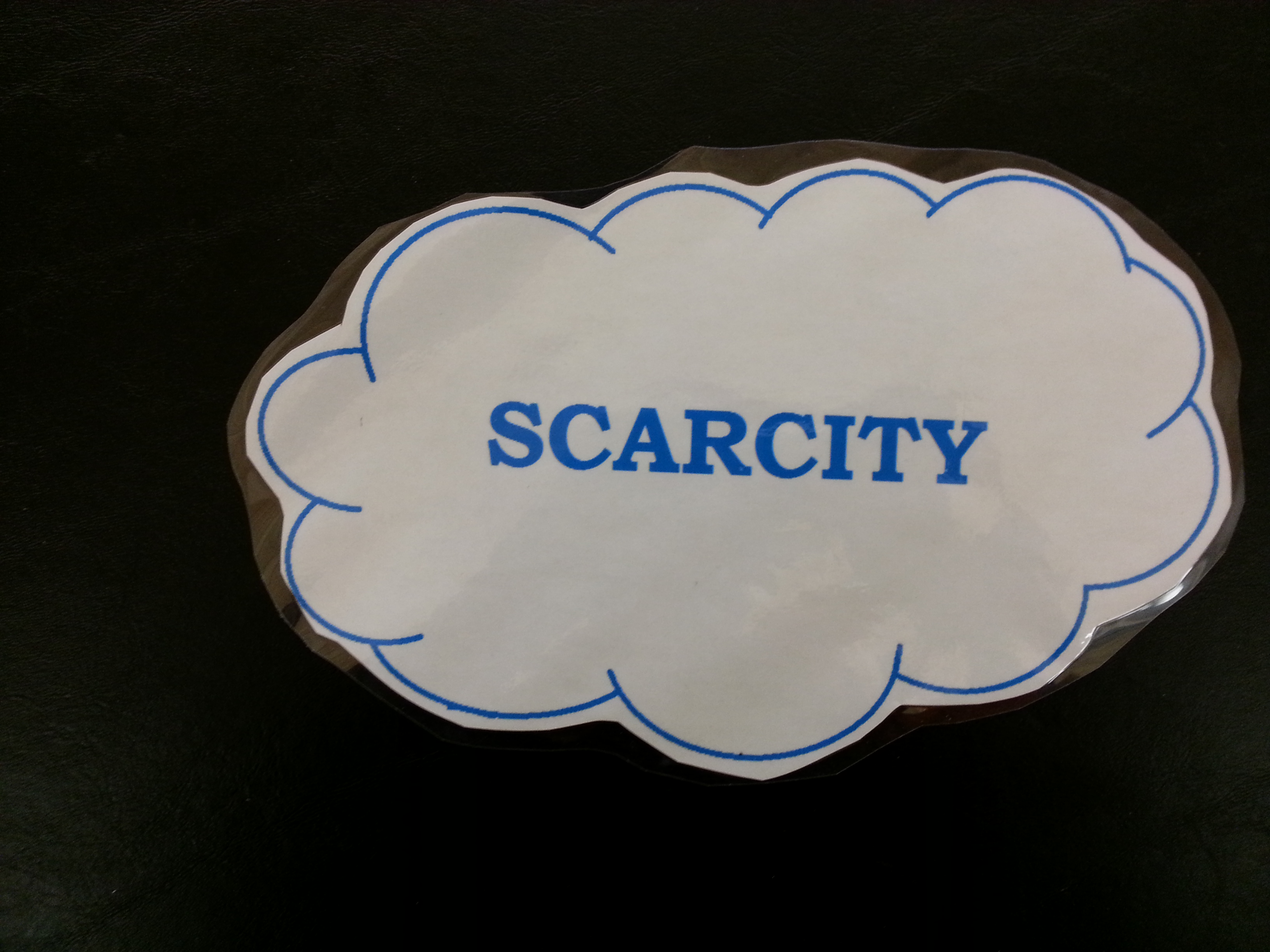
As children scarcity is an unconscious learned attitude of behavior much like eating, rolling over, sitting, crawling, standing and walking. The difference is that it has been learned through the modeling of those around us while learning functional movement is an inner resource of somatic awareness and experiencing.
Learning skills to transition this attitude into one of abundance is more than a possibility. It is a reality and begins with becoming aware of one’s habitual behavior responses. This can be learned through combining the mental and emotional with getting InTouch Talk or through physical movement with getting InTouch Movement. These are easy integrative learning methods. It supports your contemplative practices or can be supported by adding contemplative practices to be able to cut the distraction.
Wonderful explanation of mind wandering versus being in the moment. It includes a few sentences on the ability of the mind to organize only known to wo/man kind.














 Inside Awareness Center for Integrative Somatic Learning