Category Archives: Awareness through Movement

Quote

Why focused movement on Root Chakra today!

Today’s first #yyj Feldenkrais Awareness through movement classes happen in Aquarius under 1/4 Moon actions of Challenges, Decisions & Actions.  Aquarius governs these body parts: Wrists, Ankles, Joints, Circulation, Veins, Neurological System and reflects the 1st chakra – Read more on first chakra life influences & try sample movement experience.

Read more via Root Chakra

by Renee Lindstrom, GCFP @ Inside Awareness,  Living in Natures Love Blog
 & Renee Lindstrom Live

Shoes for increasing body balance

by Renee Lindstrom, GCFP @ Inside Awareness, Living in Natures Love Blog & Renee Lindstrom Live

Natural Foot Motion each of us was borne with.  Without it one is less likely to have balance.


For 13 years I have been asked about what shoes I would recommend by clients and students in my Feldenkrais® Private Movement Practice and Awareness through Movement Classes. Shoes are a very personal decision and one must be comfortable with the design, style, fit and personal concepts of what will give them the best support.

An opportunity to work more closely with foot pain led to some postural patterns becoming obvious. Postural patterns that seemed to be created by the insoles in ones shoes. Insoles that hold the foot in one place with no natural shift of weight through the foot from back to front, front to back and side to side. This surprising awareness was enough to break a 13 year pattern of not getting into shoe talk and the start of taking a deeper look.

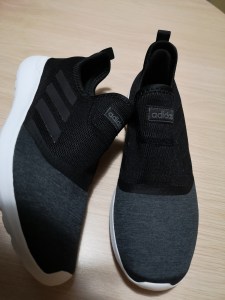
This pair of Adidas will explain one of the reasons I have not recommended shoes in the past. It goes against the past few decades of advertising and marketing that has been somewhat misleading.  Yet these are quite possibly the most comfortable shoes I have ever slipped on. These are wide enough to let ones toes move and the uppers are soft without any weight, seams or tight bands or pressure. It has a sock fit construction with pull tongue and heel making it easy to slip on and off.  The insoles are a soft foam with no rises, valleys or dips letting the weight move through the feet and toes curl to create natural arches. This design lets one have a more natural gait.  The only aspect of this shoe that I have reservations on is the slight incline of the heel, however smaller concern than I have for other styles.

Why recommend they type of shoe? 

“Flexible Body, Flexible Mind”   Moshe Feldenkrais

I am going to recommend this type of shoe as they are weightless.  When wearing them the focus is not on lifting the shoe in the same way as the more familiar styles of shoes.  This will increase the potential of increasing the movement of the foot and ankle versus the effort of lifting a heavier shoe.  Ideally one would not lift their foot from the floor or ground to take a step.  Instead  they would use the ground to push-off from that comes from  a shift of weight through their foot to create a pattern of movement moving up the up leg.  This shoe design has the potential to allow one to have freer movement through the bone structure in the feet.  The sock fit of the shoe eliminates the distraction of laces and weight at the top of ones foot allowing more felt sense awareness of how ones foot is moving.  My experience of this shoe is the one can begin to cultivate awareness of their feet in motion versus loosing a connection to them in heavier more confined shoes.

Link to Adidas Ultimafusion on Amazon

 more on Healthy Feet (reducing pain) coming soon

Find out more about Feldenkrais®

Follow on  Twitter,  Instagram  Pinterest or Facebook.

Book a Functional Integration® or Find out about upcoming classes

← Back

Thank you for your response. ✨


Copyright 2014 – 2019 Renee Lindstrom, GCFP,
Feldenkrais® Practitioner since 2007, Value-Based Communication & Empathy Coach since 2004, Art of Placement  since 2000, Founder of Greater Victoria Peace & Intercultural Celebrations since 2010 & Greater Victoria Labyrinths since 2012, #yyj Peace Week Calendar Founder – 2014 & 2015


Calming Fright, Flight, Fight reactions through movement techniques

by Renee Lindstrom, GCFP

Mindfulness through Movement

Observing people’s posture in standing and walking for the past 10 years has been educational.  I have begun to notice subtle posture nuances that clearly indicates ones state of mind and their physical and emotional well-being.  The most common condition I am observing in people is a separation between what one thinks and a connection to physical movement.

Generally I notice ones focus of attention is on interpretation of what is happening versus actual experience.  For me this means having a fixed perspective, opinion or belief.  If a physical ailment surfaces there is a fixed belief to go and have someone fix it or use tools to make physical movement easier.  Tools like a cane, walker, scooter, special chair and bed.    What’s missing is an easier possibility!  This is the exploration of how to move differently.  I am not referring to practices such as yoga, therapy, stretching or exercising as the difference is that you are following a limited structured pattern.  I am referring to increasing awareness of feeling how you move in the process of moving.  This includes increasing your ability to focus your attention on how each bone  and joint movement can be sensed.

When mobility increases I notice that there is an increase in coping.  The mask of fear, anger, pain and anxiety is replaced with a peaceful and open appearance.

Recently I wrote about settling the fight, flight, fright experiences of the Hippocampus from the perspective of communication.  I have noticed that another more effective way to settle these reactions has been through the application of Feldenkrais® Movement.

Working with three ways to settle ones flight, fight and fright reactions I find the application of Feldenkrais Movements the quickest and most effective for shifting and integrating change.  It engages more immediate functional connection between ones physical, mental and emotional states of being.  Many times I have experienced someone in a series of 6 classes for balance where after the first or second class someone has given up their cane.  They describe that they are less fearful to stand and support themselves.

This year a trend has been the lack of  connection to feeling one’s legs.  I had to purposely show  someone that they dragged a leg behind them when there wasn’t any physical reason for this.  It turned out this leg had been broken years before and this person forgot how to use this leg.  This resulted in collapsing. When life became too difficult to enjoy they requested an operation, however there wasn’t anything to operate on!

Recently I encouraged someone to consciously shift weight purposely into one of their legs and their reaction was to say that this leg couldn’t support them.  I asked them how they had walked all these years and suggested that this leg must actually be supporting them.  We spent a few minutes practicing shifting weight from foot to foot and their fear was tangible.  A short week later the leg that was not trusted appeared stronger and I smile as there was no hesitation in using this leg.  The fright, flight and fight reactions were not visible!

What is exciting as a practitioner giving guidance to explore patterns of movement is that there it bypasses the stories in ones mind and focuses them on discovering their movement process.  It teaches them ways to feel the movement.     It increases present awareness (being in the moment).

To other ways for calming ones state of flight, fright and fight can be through increased understanding of your emotional and intellectual functions and your environment.

Learn more about workshops, classes and personal appointment opportunities:


Read more:


Renee Lindstrom, GCFP,
Feldenkrais® Practitioner since 2007, Communication,  Empathy,  Values Coach since 2004, Art of Placement  since 2000, Labyrinths of Victoria since 2012, #yyj Peace Week Grassroots Calendar Founder, Vice-Chair of World Children’s Summit on Peace & Nature in 2015

Follow Inside on:
Facebook                   Twitter


Experiencing Presence through Left Brain, Right Brain Movement Awareness

As I consider today’s Self-Awareness through movement workshop I am searching for a focus point of motivation.  Recent Feldenkrais students have deepened the connection between left and right brain movement actions.  I recognize that this is the intention for today, the balance of the right and left brain in movement that creates  presence in action.

Babies are the most present and aware beings on the planet.  They have to be to be able to teach themselves to roll over, sit up, crawl, stand, walk, run do somersaults and cartwheels.  This will be a good place to focus the workshop participants.  Not on doing cartwheels, exploring babies first movements!


One segment of society that I have consistently worked with this past decade is seniors, men and women.  This includes those with diagnosed conditions and those without.  As my experience of theirs and societies behavioral patterns become more recognizable, I find an urge to begin to write a series to share some aspects that I am discovering that influence false believes of  aging.    If you are interested in learning more, check back in to explore this series!


Recent Comment:  Thank you for the amazing session which helped me to better understand the pain and anxiety issues I’ve been dealing with. Very insightful experience. I felt way more relaxed Friday evening and I’m monitoring myself to help ensure I’m releasing tension and breathing properly. Am impressed by it and by your skills. D

Renee Lindstrom, GCFP,
Jaw Release Program since 2007, Authored  Achieving your Goals  31 Day Program, Sleep Sweet Sleep, Kid’s Peace Bus Calendar of Values  Educational Program & InTouch with Your Values Self-Actualization Program.  Feldenkrais® Practitioner since 2007, Communication & Empathy Coach since 2004, Art of Placement  since 2000, Labyrinths of Victoria since 2012, #yyj Peace Week Grassroots Calendar Founder, Vice-Chair of World Children

Falling over in sitting and standing

I shared an article recently about an experience with someone in a Balance class who didn’t walk, stand or sit in an upright position.  I want to share now what motivated a change in her mental, emotional and physical behavior in her first two classes.

Our first class together was spent re-directing her focus from her storytelling to noticing how to stay upright in her seat to do the movement patterns being shared with her.

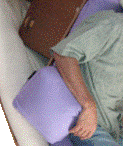
She didn’t show up for the second class yet did come back for the third. Between our third and fourth classes there was a significant difference.  She had been the first one to arrive at the third class.  This meant there was enough time to spend propping her up to stay in an upright position.  She was frozen solid through her shoulders, arms, neck, head and torso with one side of her rib cage being held so it was shorter than the other.  arm support To keep her upright props were placed under her arm on the side that was contracted (shorter side).  Blocks were put under her feet so she could feel them on the floor.
By the end of the lesson she became aware that she had stopped using her back muscle strength to hold herself upright even in sitting.  She had lost physical contact with engaging them!

After our class she went home and used the same propping technique to support herself in sitting.  This was obvious  as at the next class she was able to bring herself into an upright position in sitting and hold it.  She had no concept of this the week before.  As I place props under her arm I noticed her arms were more flexible and she was bracing herself less!

She was more happy and content in this class and I noticed she was listening more deeply and paying attention.  At the end of this class she exclaimed, “No one is showing us this or explaining how the body works.”

This is an extreme example of the meaning of Moshe’s quote:

Flexible Bodies, Flexible Minds

Moshe Feldenkrais

Renee Lindstrom, GCFP,
Feldenkrais® Practitioner since 2007, Value-Based Communication & Empathy Coach since 2004, Art of Placement  since 2000, Founder of Greater Victoria Peace & Intercultural Celebrations since 2010 & Greater Victoria Labyrinths since 2012, #yyj Peace Week Calendar Founder – 2014 & 2015

Beautiful Learning Moments with a Blue Heron

Blue Heron

Blue Heron

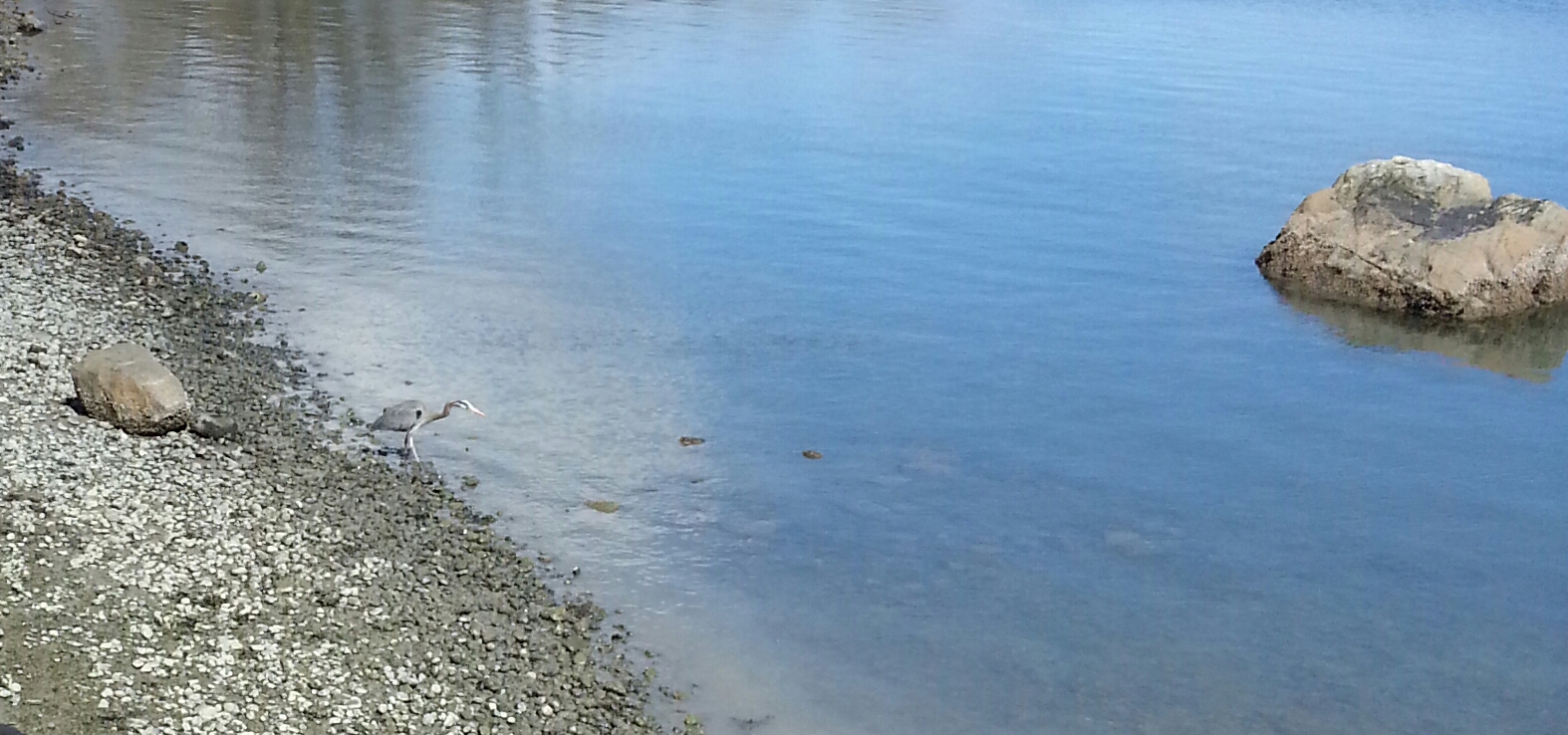
Yesterday a blue heron was along the water’s edge as I was leading a walking group by.

As  we where walking a participant had been talking and so our focus was not on the surroundings.  A thought ran through my mind, “look for the blue heron,” and so I looked up.  There, almost alongside of us, was the blue heron fishing.

How many times do we have these thought messages go through our mind and we don’t pay attention to them?

I am happy I listened this time as we enjoyed seeing this blue heron hunt for fish with no fear of us being watchers!  A highlight of our day that could so easily have been missed! One that brought us out of the story that was being shared into what was immediately in our surroundings!

Our walking lesson prior to going out in nature to walk was about noticing our immediate surrounding and how it influences us.  Many of us are unconscious of how our immediate surrounds stimulate pre-verbal responses.  It is a function of our brain-body connection we aren’t even aware that it is a part of our operating system!  This moment was a metaphor of that teaching!

Beautiful learning moments with a blue heron.

Westsong Walkway in West Bay ~ Monday, July 29th, 9 a.m. – 10 a.m.

  • SUMMER WALKING TOURS

We will focus on slowing down to connect and increase our experience.  So important in this fast paced world, even our thoughts and movements aren’t able to slow down!  Join us and explore  your fitness in a “new” way that is not focused on effort.  It is focused on turning the effort “off.”  Same fitness benefits!  Added benefit – see the beauty in our own Greater Victoria Communities……..

Register with renee@insideawareness.com for each tour of interest.  Cost – $10.00 (no debit or credit cards – cash only)