Feldenkrais®, Feldenkrais Method®, Awareness Through Movement®, and Functional Integration® are registered service marks of the Feldenkrais Guild® of North America. Feldenkrais Method®
A focus I have, as a somatic empathic practitioner, is the power and control through function. The lens or viewpoint is through functional movement, functional processing of information internally of the environment that stimulates action, reactions and expression.
This lens includes the past, present and future potential. It is also not exclusive to one function or another as my view is on the effects and potential for whole functional integration learned through social conditioning. The conditioning of the functioning movement, language process and relationships to emotions that are responses to thinking patterns and the felt senses that are spontaneous to actual experiences happening in the moment. The patterns I use are to retrain the brain through functional guidance that easily expands the conditions holding someone in a belief system constraining their potential for increasing mobility and flexibility. This includes the thinking constraints in functional movement or relationship interactions, internal or external.
A core function that is the power and control system of human function is breathing. This morning I have a workshop introducing movement patterns through the skeleton to expand the individual consciousness of each participant. They will all be starting from their own unique social conditioned experience. This suggests there isn’t a set pattern that will integrate a full range of functional movement that will be the exact same. Often, I will run into comments like, ‘that’s not the way I was taught in …………. ‘ You can fill in the blanks from your own experience. It seems other modalities focus on telling students that there is only one way you can breathe, meaning I hear it from those who have gone into agreement with that limited clarity of facilitators who believe what they are sharing with their students, until they themselves advance their functional body awareness of full mobility. Our social conditioning is such a right and wrong culture. I had a Pilates instructor participate as a student in a class, sit up from the lesson and began to have a disagreement. Four years later, they advertised the same workshop from my perspective and patterns. They were not ready to take in the patterns to explore and expand their consciousness at the time of my workshop, yet 100 percent believed they were right and I was wrong. This is a pattern that I now recognize as social conditioning. Each modality is locked into a belief system of right or wrong ways of functioning until challenged. Unfortunately, it’s also the instructor’s ability to integrate what they are hearing and how they interpret it that shifts the original clarity of the method and conforms it into a lesser consciousness.
This is on my mind as I enter the workshop today. I recently did a series on rolling with the ribs, and I ran into someone whose fear skyrocketed with the shift in how they were breathing. It interfered with an activity they had been doing that was locked in. The fear was so great and behaviour so locked in, they couldn’t be spontaneous. Instead of self-reflection to question their limiting belief to free up their fear, they believed any other movement patterns had to be wrong. They wanted to tell me that twenty years of practical application of Feldenkrais was wrong, as they had a Yoga instructor teach them that this was the way to breathe, and from what I heard is they believed it to be the only way in every activity. Breathing is life. Literally. There is no one way. It depends upon the activity. It also depends upon available skeletal movement function. This person was hyper-focused on the diaphragm and lacked internal felt sense, or image of the skeleton, nor the relationship to the other bones in the body that counterbalance the rib movements. Afterall, the diaphragm could not possibly counterbalance the weight of the skull nor support the mild fluctuations through the vertebra. Let’s get real here for a moment. So here’s my answer. Back to the basics and begin with the skeleton. That’s a joke, as that’s the only thing I do.
I will focus on the connection between the skull and pelvis, which is: the spine, rib cage, shoulder blades, breast bone and clavicles. I asked Ai for an image, and they can’t provide an accurate one. Even the earlier anatomy images are disappearing online and being replaced with terrible ones that aren’t necessarily correct. This is not a good sign for future learning.
Renee is a Certified Feldenkrais Practitioner – since 2007
by Renee Lindstrom, Author of the Somatic Archetypes
Audio for listening, in Authors voice
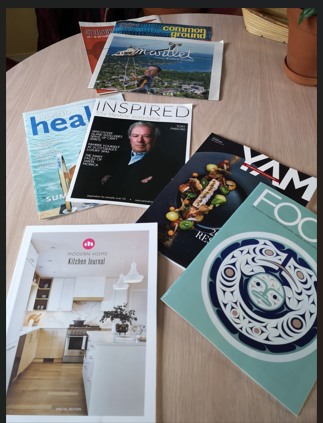
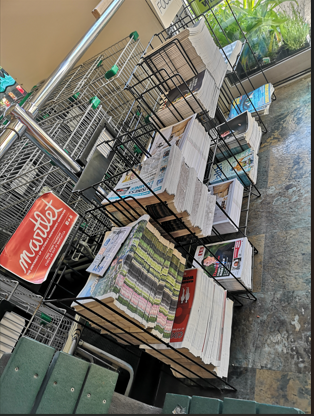
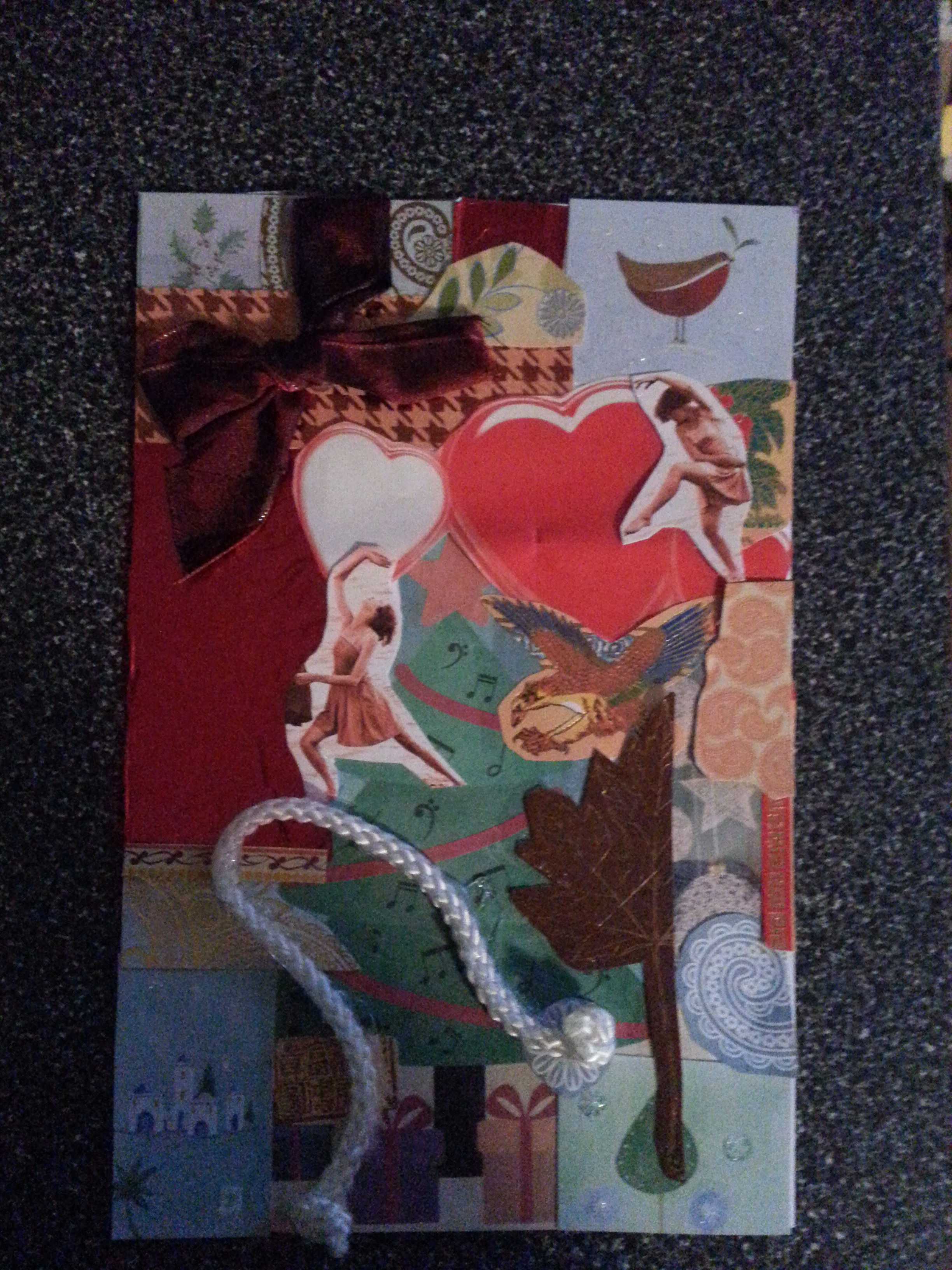
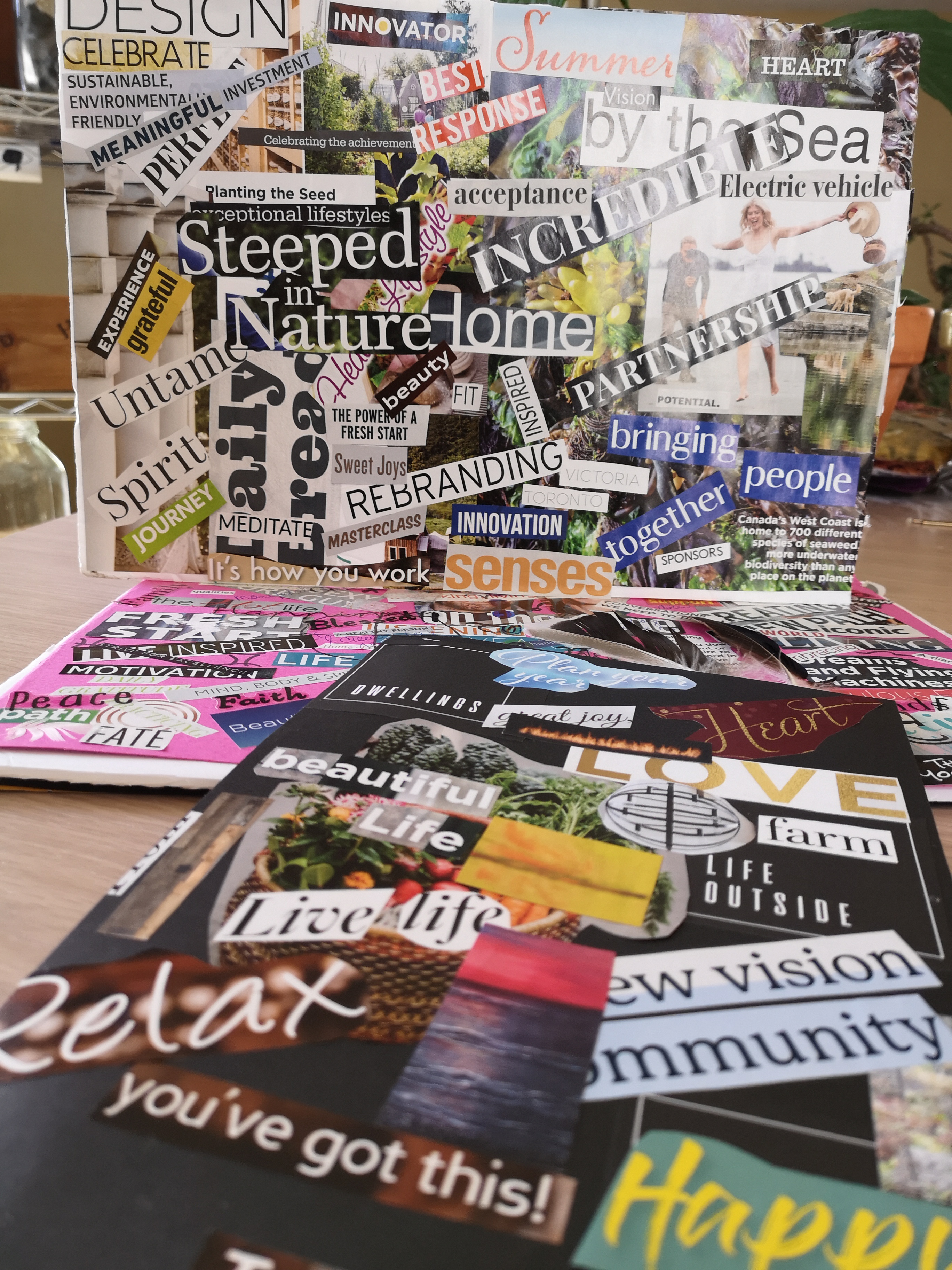
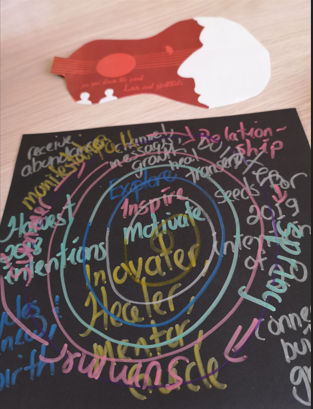
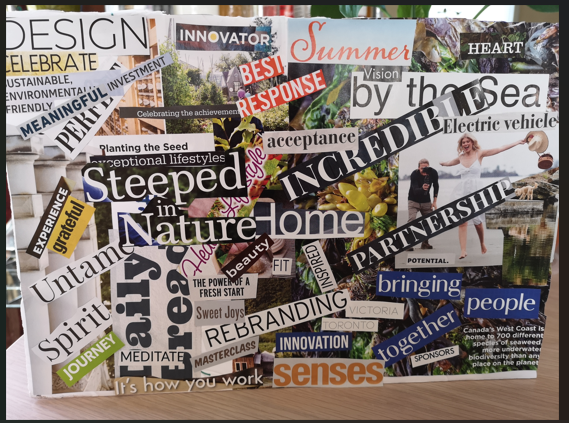
Here are some examples of the Author’s personal intentional goal-setting boards going back to ’14. Greater Victoria presented the community with free magazines and newpapers at pick up stations, whereby viewers could pick up copies each month. They were a treasure trove of topics, pictures and words to cut out for all genres for creating collages.
When this author began creating collages, the creativity was simple and lacked the in depth connection to the seeds of inspiration and skillset. Without giving up due to these lacks, they became more elaborate, skilled and creative. Unbeknownst to the Author, an organic integration occurred during this dedicated process. It translated into living actions and character, including the development of a more playful personality. It was a transforming life pattern.
This Author has what she calls a Somatic Heart expression and receptor, and it was covered by years of experiences with others who have no skill sets in recognizing this quality or in interacting with those who have this organic attribute.
Somatic Heart
Each seasonal or yearly intentional goal-setting activity reintegrated this inner connection to the warmth and playfulness of her heartfelt expressions and receptivity. It was a quiet and creative time to be thoughtful and take affirmative action for what she wanted and not for what she didn’t want. It was a subtle shift and possibly the most meaningful. This is not something she would have learned in a Tony Robbins or Jack Canfield program, as the approaches are completely different. One focuses on strategies and the external ego focus, while this is an active practice that leads into the depth of meaning in the core responses before expressing it outwardly to the world.
This approach is unique and individual and taps into core values, while there can only be one Tony Robbins and one Jack Canfield, with others duplicating them over and over. This approach presents the possibility for being authentically oneself and presenting the world with a face that shines from this alignment of self on the inside and expressed outwardly for others to connect to. This is what Tony Robbins did to become the person he is today. He is presenting as his authentic self and tapping into the needs of thousands. The problem is, it can only be done once to the levels of success he has experienced as he is the model, while this approach is an integrative learning model that each individual can integrate as a learned behaviour pattern that focuses on direction, making choices and decisions connected to an inner value system.
dav
This pattern of goal setting begins with a target intention that is overall for a period of time. It expands into doable size chunks, breaking the goals down into logical personal steps for achieving success by taking actional value based movements forward. The difference in this approach is in the actions for checking inward to connect to one’s core values, before taking a socially conditioned assertive approach. This means the assertiveness in this approach connects to self-value and esteem that emanates a different type of assertiveness. It is assertiveness that is more naturally mindful, self-connected and trustworthy. The aggressiveness from a socially conditioned action has potential for disconnection of self and energetically presents with less trustworthiness. This seems to lead to a sales job that is followed by justification. The Somatic Heart expression of this Author then suggests that goal setting that begins with an inner self connection with a focus through trained mindfulness and focus of attention can tap into one’s inner strength and courage to have grounded ownership of their goals that are centered in core values. An individual system within one, and not the goals of someone else’s storyline.
In an earlier post titled Be the Master Creator of your 2026 experience the pattern for creating goals was introduced as is the Somatic Archetypes. These Archetypes are the perception filters that are individual for each person. Consideration of these Archetypes are missing in the earlier goals step patterns that was compared to this approach. This pattern of goal-setting begins with this consideration.
This Somatic Archetype Goal Setting program is an educational system of somatic learning:
sets an overall goal intention
breaks it down into logical and actionable steps over a period of time as an integratable pattern
taps into your Somatic Archetype for personal learning and integration of understanding of unique differences
The benefits of this Somatic Goalsetting program are:
integrative learning happens natural that creates new habits that are productive to personal lifestyle goals
action steps develop skills to increase personal courage and self-confidence naturally
introduces a core value system that is unique to the participant
creates new beneficial habits for taking self-connected and self-directed lifestyle actions
by Renee Lindstrom, Author of the Somatic Archetypes
Follow along with Audio, or listen
The responses of the Somatic Archetypes are triggered by the environment. The Fantastic Five, sight, sound, smell, touch and taste, motivate responses and actions influenced by the elusive and solid experiences in the environmental landscape. The focus of Feng Shui is to create a balance of yin and yang energies. (masculine and feminine) If there is too much yang, the somatic responses will be aggressive to match the energy. Too much yin will encourage depressed states to match the energies. Therefore, the purpose of Feng Shui is to create an environment that will support all the Archetype needs for balance, harmony and motivation.
It would be in the best interest to learn your dominant Archetype senses to provide articles, furniture, fabric, and sound to please your dominant senses. When you share a space, consider every person’s Archetype. This would improve relationships and benefit connections. The value in this suggestion is that each person will view the space through their own somatic lens and the needs that may accompany them. An artist’s dominant sense will be inspired by patterns, shapes, textures, pictures, colour schemes, etc. A Perfumeurs dominant sense of smell may be inspired by fragrance, flowering plants, herbs and spices in the home. Consideration of each person is as important as balancing the space to meet everyone’s needs.
Observing the environment from a Feng Shui perspective would also look at the alertness needed for each separate environment. The alertness levels would need to be higher at work, and lower at home, or in a meditation space. Each location would be viewed for the messages that are obvious in the landscape, and adjustments would be made to the overall environment that would support each Somatic Archetype. These Archetypes are:
Sight
Beauty
Smell
Fragrance
Touch
Textures
Sound
Sound
Taste
Flavours
The Somatic Archetypes are the senses of perception in the environment, where their stimulus will determine the tone of how the information is perceived. For example, if an environment is cold, empty and grey, and a person experiencing it has a dominant visual sense, these features would increase the chance that the tone would be a cool and disconnected state versus a warm connected one. This influence is elusive, and it shapes the emotional response that affects mental and physical responses. It is as potent as how someone communicates their responses in a dialogue with you. The environment, in essence, is communicating silently with your somatic senses.
I offer Feng Shui consultations that explore the environment. This focus of attention is woven into the personal and group somatic communication and movement sessions, classes and workshops. This topic pairs well for increasing the quality in relationships and functional movement.
Please investigate the classes and a personal session or consult:





















 Inside Awareness Center for Integrative Somatic Learning