Tag Archives: Awareness through Movement

Images could describe learning to sense (feel) your head

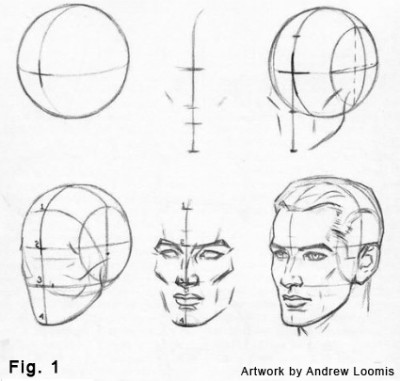
After last nights introduction to Awareness through Movement® for TMJ, I came across this diagram on learning to draw and observed that it could describe the class I just facilitated!

The first ball could describe how we could feel the weight of our head when we pause to check in .  As we are guided in a direction of observation throughout the lesson there is the potential to begin feeling the separate parts and how they function.  For example in this class open and closing one’s jaw.  How it feels in the eyes at the end of the lesson  is completely different from how it may have felt in  the beginning!  I love this diagram that also depicts growing sensory awareness!

Find more on Somatic Movement Classes with Renee in Victoria

You can find more about drawing @ Drawing Website

_______________________________________________________
Renee Lindstrom, GCFP
Feldenkrais® Practitioner since 2007, Communication & Empathy Coach since 2004, Art of Placement since 2000
___________________________________________________________________________

Exercise Tip for Toes

PrintExplore Feldenkrais in 2 ways:
  1. Group Glasses & Workshops called:  Awareness through Movement or ATM (Classes below)
  2. Individual Sessions called:  Functional Integration (for increasing available movement for conditions, injuries, athletes, musicians, dancers and development

Cultivating Awareness through ATM focused upon the feet

Exercises for between Awareness Through Movement® Lessons

Toes – Begin with one foot first.  With a small towel or scarf on the floor, begin to pull it towards you with your toes and sense the quality of your movement.  Notice the effort in each one of your toes.

Purpose:  to begin to loosen the toe joints and increase their ability to bend.  After a few pulls towards you now use your toes to push the towel/scarf away from you.  Lengthening them and beginning to push them into the floor as you push the towel/scarf away.

Slowly focus your attention remembering to practice with only one foot at a time. Begin to notice any sensation in your toes.  Curl your toes under and push them way to lengthen them.

Softly – begin to lighten the effort and softy pull the towel towards you and softly push it away.

Take time to notice first one foot and compare it to your second one before starting.  Notice any sensations in your toes and then explore to see if you notice anything elsewhere in your body that may feel differently.

Take time each day for a few minutes to wake up your toes!

Connect with Renee

Follow on TwitterInstagram  Pinterest or Facebook


Renee Lindstrom, GCFP,
Feldenkrais® Practitioner since 2007, Value-Based Communication & Empathy Coach since 2004, Art of Placement  since 2000, Founder of Greater Victoria Peace & Intercultural Celebrations since 2010 & Greater Victoria Labyrinths since 2012, #yyj Peace Week Calendar Founder – 2014 & 2015

 

‘Exercises to notice rotational mobility’

From the Feldenkrais Center Newsletter – Toronto

Simple turning exercises like the one below will help maintain rotational mobility.
Try this:

*Please note this exercise should be done slowly and gently
either standing or sitting in a straight-backed chair.

1. Turn your upper body and head to look to the right. Return to front, pause. Observe how far right you were able to see.

2. While keeping eyes still, and focused straight ahead, turn the head and upper body to the right. Return to front.
Notice any restrictions in turning while eyes are fixed and stationary.

3. This time turn the shoulders and upper body to the right while the head and eyes face forward. Return to front, pause

4. Repeat step 1. Notice how far back you can see now & the improved quality of turning.

*Repeat steps (1-4), this time turning to the left.
Do this exercise 3-4 times on both sides.

The Feldenkrais Center Newsletter 

‘Moshe’ on changing your habits and creating a new experience

A human being is like a computer that is capable of thousands of things. But we put in a card that only lets it do one thing. Until you change the card, that is all the computer will do: that one thing, over and over and over. That is the state in which we function and we believe that no other cards exist, that this card is the one and only card that we can function upon. I say that the difference between human beings and machines is that we make the cards. So, when one card doesn´t work, take it out and put in a new card.  ‘Moshe Feldenkrais’