Tag Archives: Functional Integration

Like everyone in the world I wondered if my live interaction with students would come back to life

Getting set up for Functional Integration sessions (Feldenkrais Method of Somatic Education)

Like everyone in our recent reality seeing people in person had stopped or shifted to phone calls and zoom.  In the past few weeks as talk of  lifting the  restrictions began I had  doubt and uncertainty about how to move forward myself.  There was a  lingering question of whether anyone would come.  I wondered if there was a future.  All it took was a student to connect and inquire if I was seeing anyone yet or not.  They shared they would be willing to connect on-line yet expressed a preference to come in person.  Okay they will come, so now what?

Time to source out disposable face masks, gloves, a face shield, hand sanitizer, cleaners for disinfecting and new cleaning cloths.  Then set to work on the new appearance of the space.  Removing all extraneous objects, getting the steamer in to steam everything including the carpet.  Setting it up to walk through to experience how it could work.  This included changing shoes and having a specific pair just for that space and having disinfectant ready for spraying the soles of their shoes.  Walking through it it became apparent that I will know have to giving directions on how to enter into the office with me opening and closing doors to limit touching.  It’s a lot of extra work.  Going through it I found I was hot and sweating.

My appreciation grew for those in the care industry who have been working on the front lines.

After walking through this and recognizing it was doable I recognized this could be be totally integrated.  Then this same student inquired how much extra I would like to charge for the additional costs, etc.  I was thankful for this inquiry of thoughtfulness  My focus of attention was on the equipment and how to get ready, not the financial costs.  My thoughts go to how living and working through this appears to be affecting pretty much all of the primary nine life areas.  Getting serious about conscious safety at work increases the knowledge on how to be safer in my home life areas.  What ever I experience in either area, work or home, influences all of these:

  1. Wealth
  2. Fame
  3. Relationships
  4. Past
  5. Health
  6. Future
  7. Education
  8. Career
  9. Community

3 things I have learned from this experience

  1. It is doable.
  2. Extra precautions for cleanliness can be taken for the benefit of all.
  3. We can ask for and also be more considerate meeting the needs for valuing others and one-self.

Follow the Journey on TwitterInstagram or Facebook


Book a personalized Coaching session for self, work, group or create a retreat
250-361-7508

by Renee Lindstrom

Awareness Through Living Mentoring Programs Available:

1st Level – Getting Started (Introduction & Pattern)
 2nd Level – Getting Intouch (Experiencing & Connection)
 3rd Level – Integration (Embodiment)

Follow the journey on TwitterInstagram or Facebook

by Renee Lindstrom, GCFP @ Inside Awareness,  Living in Natures Love Blog
Renee Lindstrom Live

Communication retraining the brain

In Cultivating Awareness foundational for experiential learning one will read about the similarities and differences between Renee’s educational programs and a Mindfulness Mediation Practice.

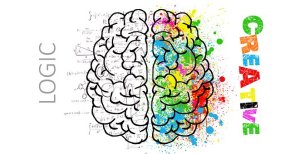
The focus of this article is on cultivating awareness to retrain the brain and balance used of left and right sides of the brain that Renee encourages her students to learn in the process of becoming self-directed and connected to what and how they are speaking.

The importance of a particular practice of identifying types of  thoughts became relevant when a student came back to class and shared their life changing self-awareness experience.  They discovered that they compare themselves and others while making critical moral judgments based upon their filter of jealousy. By slowing down to observe these patterns, this recognition can shift and transform their experience. The types of thoughts we address are in the following illustration.

In this diagram a maze is in the area of the fore-brain that depicts the essence of figuring it out and hitting walls until one finds their way forward. This can be complex and draining process.

In the following diagram a larger spiral leading directly into the center point is shown in the fore-brain area that demonstrates the ease in which cultivated awareness through communication can mirror.  This cultivation is not unlike the growing ability to focus ones attention as they would in a sitting mediation.  It is a different focus, pattern and foundation that one would practice that would include more of ones whole functional ability than the limiting thought process shown in the above diagram.

 Go back to – Cultivating Awareness foundational for retraining the brain


Book an appointment with Renee

Learn more about Renee’s  educational programs, workshops and events

Follow Renee’s Calendar on TwitterInstagram  Pinterest or Facebook


Encouraging others to become self-directed, improve abilities to notice and discover new connections, refine self-use, and integrate new and practical skills is life enriching for this teacher and students.

Copyright 2014 – 2019 Renee Lindstrom, GCFP,
Feldenkrais® Practitioner since 2007, Communication & Empathy Coach since 2004, Art of Placement  since 2000


Cultivating Awareness foundational for retraining the brain

Each of the these experiential learning opportunities share the same objectives of  cultivating awareness and focusing attention.

Another thing in common they have is that they are inclusive of the four aspects of the human condition and function:  mental, emotional, physical and belief systems.  These components are not isolated as separate functions as in other wellness styles.  In each of these functional events there is an education aspect that includes a mindful pattern cultivating expanded focus.

Here is a way of cultivating awareness through a pattern one may be familiar with:

Mindfulness Meditation

Change through Cultivating Awareness
  • 3 Steps to Mindful Meditation to Cultivate Awareness

Step – Begins with a foundation

Mat, Cushion, Posture

Step – Then a focus point

Breath

#3 – Followed by a pattern

Observe your thoughts & environment while following your breath

Improving the ability to notice, discover new connections, refine self-use, and integrate your new skills through the experiential learning techniques anyone can integrate the skills and action steps that creates a ‘being in the moment experience‘ like in a dedicated  meditative practice.

Read more:

First communication steps for retraining the brain


Book an appointment with Renee

Learn more about Renee’s  educational programs, workshops and events

Follow Renee’s Calendar on TwitterInstagram  Pinterest or Facebook


Encouraging others to become self-directed, improve abilities to notice and discover new connections, refine self-use, and integrate new and practical skills is life enriching for this teacher and students.

Copyright 2014 – 2019 Renee Lindstrom, GCFP,
Feldenkrais® Practitioner since 2007, Communication & Empathy Coach since 2004, Art of Placement  since 2000

Body Balance: Inverted Foot

images (1)

Observing and exploring  an inverted foot posture I was told that due to a medical condition as a child the tendons in some of the toes had been cut.  With no opinions and continuing to investigate what movement was available, without any one particular focus, the lesson ended with new joint movement in the ankle.  There was also more contact between the foot and the floor  with less inversion.

Upon return for the following lesson the foot presented itself without being inverted!  The curling in was not present.

Renee’s notes:  When viewing the inverted foot the image of a baby who has not put any weight on their feet yet or developed their limb, ankle and foot muscles is what came to mind.  Exploring it from this perspective created a curiosity that led the lesson.

Recommendation:  Explore the facts with a curiosity and forget the labels!

____________________________________________________________________
©by Renee Lindstrom, GCFP, May, 2014
Feldenkrais® Practitioner since 2007, Communication & Empathy Coach since 2004, Art of Placement since 2000
Follow Inside on:

Facebook                      Twitter          

________________________________________________

The Feldenkrais Method

The Feldenkrais Method®  is a form of experiential education that improves daily actions and human functioning.  The Method uses gentle movement and directed attention to create personal change, through group classes (Awareness through Movement® ), or individual sessions (Functional Integration® ).  The Feldenkrais Method is based on principles of human development.  the Method is named for its originator, Moshe Feldenkrais, DSc (1904-1984), a Ukrainian-born physicist, judo expert, mechanical engineer, and educator.

The Process of Functional Integration® by Ralph Strauch, Ph.D.

“How can something so gentle be so powerful?”
“You hardly did anything; how could that cause the
changes that I feel?”
I’m often asked questions like these at the end of
someone’s initial Feldenkrais Functional Integration
session. The work seems so gentle, so non-intrusive, that
people often find its effectiveness surprising. As you
come to understand the Method, however, the reasons
for its effectiveness become more understandable.
In a typical Functional Integration session you lie
fully clothed on a low table (similar to a massage table
but lower and wider) while the practitioner touches and
moves you in gentle, non–invasive ways. The intent of
this touch is to explore your neuromuscular
organization — your subconscious responses to touch
and movement — and to have a tactile, nonverbal
conversation with your central nervous system about
how you organize your body and your movement.
The process is akin to biofeedback, though more
subtle and complex. In conventional biofeedback you
are “hooked up” to a sensor measuring some aspect of
your physiology that you are normally unaware of,
such as the tension in a group of muscle fibers or the
temperature of your fingertip. The biofeedback machine
transforms this measurement into something you can see
or hear — lighting a light or sounding a tone when the
muscle fibers relax, or when your skin temperature rises.
Without knowing exactly how you do it, you can learn
to keep the light lit, or the tone on, thus consciously
controlling what are normally unconscious processes. In
this way you can learn to relax habitually tight muscles,
or to increase peripheral blood circulation by warming
your fingertip.
In Functional Integration the practitioner is the
biofeedback instrument — sensing and providing
feedback (through touch) about internal processes more
complex than those addressed by conventional
biofeedback.  Read more – article