Tag Archives: Fitness

Another bonus of rebounding – tighter pelvic floor muscles

by Renee Lindstrom, GCFP
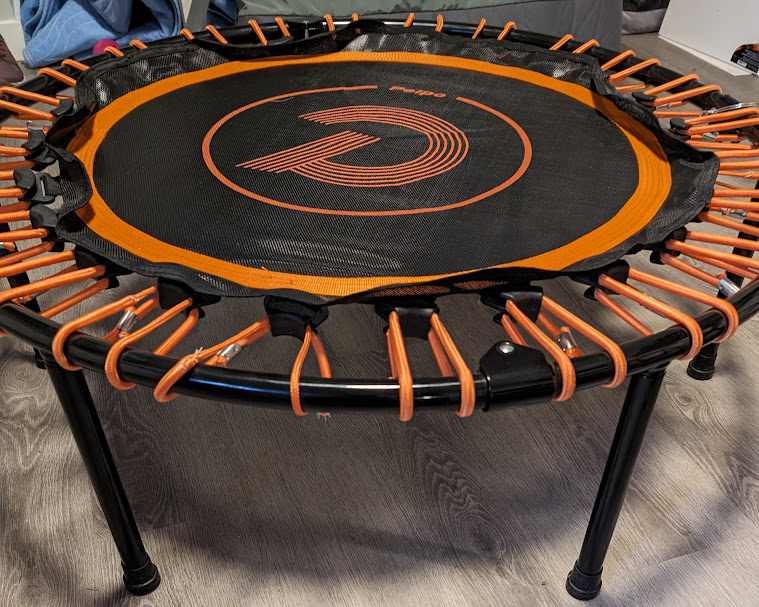
After a long chest ailment when my heart rate was increased my lungs would tighten up and scream with pain. If out walking I would have to put on a mask to regulate my breath and warm the air before passing through to my lungs. I was curious if rebounding would work. Out it came and each day began with jumping. My threshold was low to begin with and slowly it began increasing with the daily workouts. An unexpected bonus was the reduction in the number of times I needed to urinate during the day and the ability to hold my bladder muscles to wait for available washroom facilities. A valued outcome for this author who also starts the day with juicing. This has meant continuous trips to the facilities in the past.

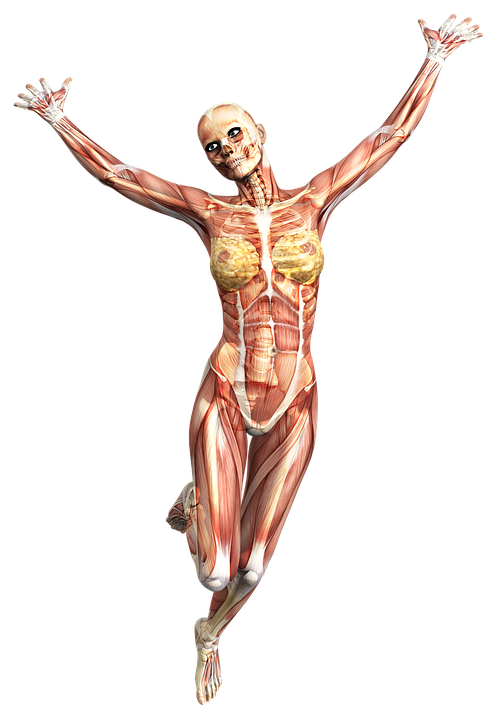
The rebounder surface bounces like a trampoline and requires core balance. Core muscles from the torso down through the pelvis are tightened slightly while at the same time muscles that extend into the thighs are lengthening and contracting. These are the muscles that control the bladder.

As each benefit becomes apparent it’s getting easier to commit to this daily workout. Some of the benefits in my experience have been:

  • increased sense of wellbeing
  • stronger felt sense of lower body; hips, thighs, knees, legs, ankles & feet
  • higher energy, get up and go (feeling aliveness versus drained)
  • sounder sleep
  • improved stamina & lung health
  • decreased inflammation
  • tightening flabby areas and creating shape in legs, thighs & belly

I have used the rebounder in the past to support lymph drainage and improve adrenal function. As I continue to improve my threshold and sense of wellbeing I wonder to myself why I ever stopped using it.

I have experienced movement students who have lost mobility due to their lack of active function by unconscious choice, pain or in some cases, illness. Students who begin focusing their attention on their micro-movements find that discomfort decreases, balance and flexibility improve and their quality of life increases. Others believe they don’t have time to take the daily effort that is needed to improve movement function and range of motion. These are the ones I refer to as making a choice for losing range of motion, although unconsciously.

If you don’t use it, you lose it

It isn’t like riding a bike. If days are spent without alternative choices in movement the brain actually does loose the movement patterning. Movement is dumbed down to reflect the dominant activity of the day. This is usually sitting in a chair or sofa looking at a screen. Sitting does not support any functional movement the body is capable of. There is a new analogy circulating that states, “sitting is the new smoking.”

What are some of the other activities that would improve with less sitting?

  • balance
  • walking
  • standing
  • running
  • bending
  • thrusting (improve sexual activity)
  • squatting
  • rolling
  • climbing
  • sleeping
  • reaching
  • breathing
  • sitting cross legged
  • cutting toenails
  • going up and down stairs

As a Feldenkrais Movement Specialist what I am being mindful of in my personal story is how in the past when working out I would over build my muscles to the point of losing connection to my skeleton and sensing its micro-movements and direct force of gravity. I am motivated to find the balance as my capacity to sense and differentiate inner movement is expanding beyond the skeletal movements. This is a slight shift in lifestyle I wasn’t aware of was coming. It’s an exciting new chapter.

READ MORE:

Article – Falling over is sitting and standing

Article –

LEARN MORE ABOUT:

Awareness through Movement

Upcoming Movement Classes

Renee’s rebounder

Here is an affiliate link to rebounders on Amazon:


The only way to change is action

Conversation is an equal opportunity and  shared experience

by Renee Lindstrom
 1st Phase of Integration – Getting Started (Introduction & Pattern)
 2nd Phase of Integration – Getting Intouch (Experiencing & Connection)
 3rd Phase of Integration – Integration (Embodiment)

Follow the journey on TwitterInstagram or Facebook

by Renee Lindstrom, GCFP @ Inside Awareness

Copyright 2014 – 2024 Renee Lindstrom, GCFP
Feldenkrais®, Feldenkrais Method®, Awareness Through Movement®, Functional Integration®, are registered service marks of the Feldenkrais Guild® of North America. Feldenkrais Method®

Acupressure Mat

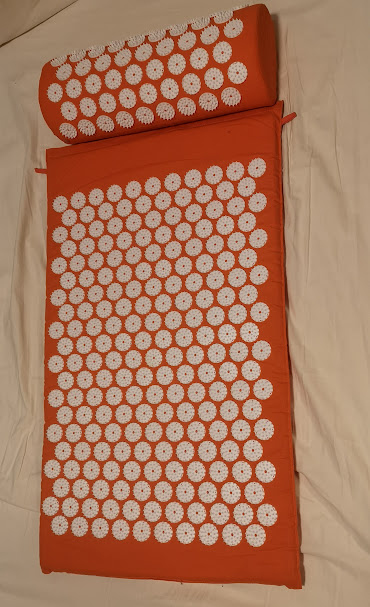
I began lying on an acupressure mat and 1/2 bolster in late Dec ’23, for 20 minutes a day. Not for the faint hearted! When first laying down the sharp points are surprising and can be temporarily painful. However within minutes my back softened and the points no longer caused discomfort. The only time the points caused any temporary uncomfortable moments when lying on them was when shifting my weight. For example, bending my knees and standing my feet to put more pressure into the small of my back. I also raised my lower back and began putting bolster under neath for more pressure into shoulder blades and lower back. This mat is long enough to target the length of my spine beginning at the top of my shoulder blades and down to the bottom of my sacrum. With the 1/2 bolster I can apply the points to my neck. 

I began to use this acupressure mat to test it for softening the muscles along my vertebrae from my neck down through my sacrum. As a Feldenkrais® Practitioner (since 2007) I am all too well aware of the common restrictions causing limited mobility through contraction of the muscles and soft tissue along the spine, ribs and into the pelvis. This restricts flexibility and limberness. that ultimately can cause injury and pain. What I wasn’t expecting was the increase in blood circulation when lying down on these points. It was immediate and the whole area warmed up. I quickly recognized the value in warming the organs up as well in these areas. Read more below on the benefits I have noticed in just a few days.

Here is an affiliate link to the same acupressure mat on Amazon:

Acupressure Mat

Noticeable benefits of lying on acupressure mat in a few short days

  • Release of TMJ joints inn lower jaw with angling the 1/2 roller. This was unexpected and increased the benefits for me. I hold tension in my TMJ joints naturally and I could feel them let go and my jaw drop. Due to TMJ stress myself I have taught a workshop since 2007 on how to shift habitual patterns through the facial muscles, neck and shoulder muscles to lengthen and tonify them to increase the flexibility of the jaw. Feeling this deeper release was tremendously rewarding to experience. If for only this benefit I would recommend lying on an acupressure mat! Upcoming TMJ workshop in March ’24
  • Increase in vitality the first day after lying on the mat for 20 minutes. There was an inner vitality that emerged motivating more activity throughout the day. Luckily I have chosen the morning to test it out.
  • I have noticed a deeper quality in my sleep even through I have chosen to lay on the mat in the morning. The articles I have read mention an increase in sleep when lying on it at night. I am too active right to bed time to lay on it at this time, yet still seem to have the same benefits. 
  • Each additional day I lay on the mat for twenty minutes I am noticing more benefits not immediately experienced. After a few days I began to notice a softening in my arm and leg muscles even though they are not on the mat. It seems to be coming from the ribs and vertebrae release. My fingers are more flexible and soft. The tightness around the bone has dissolved even through I haven’t actively focused upon functional movement patterns with them during this time. 
  • Today I experienced increased points of energy release along my lower back, beginning in my sacrum. At the base of my sacram I sensed a release, a pulsation and warmth that immediately increased sensation in my lower extremities. I likened it to a release of a tight muscles or constriction blocking the energy in this region of the spine. 
  • Generally overall I am experiencing a softening of tension through my whole body with increased sense of relaxation and wellbeing. 

For all these benefits I am experiencing I would recommend trying an accupressure mat. Yes it may be uncomfortable for the first few days, however, that quickly disappears and the benefits outweigh the initial discomfort. 

Here is an affiliate link to the same acupressure mat on Amazon:

Acupressure Mat

Cultivating Success with Awareness through Goals Programs

 1st Level – Getting Started (Introduction & Pattern)
 2nd Level – Getting Intouch (Experiencing & Connection)
 3rd Level – Integration (Embodiment)

Follow the journey on TwitterInstagram or Facebook


by Renee Lindstrom, GCFP @ Inside Awareness,  
Copyright 2014 – 2024 Renee Lindstrom, GCFP

Parkinson’s

Feldenkrais® Method Research

This study demonstrates that the disabilities of Parkinson’s Disease can be lessened with early Feldenkrais intervention as gains are made in musculoskeletal flexibility, alignment and functional movement. Early intervention is important and can delay the need for pharmacological intervention, which, because of long-term use, is associated with potentially unwanted and toxic side effects. The study illustrates improvements in balance, gait, and functional movement made by an individual who was not yet receiving medication for Parkinson’s disease. A second case study illustrates improvements of balance gait and functional movement made by an individual who was already receiving medication for the disease. These case studies illustrate the dramatic improvements that Feldenkraisintervention can achieve in the patient with Parkinson’s disease.

Shenkman, M., Donovan, J., Tsubota, J., Kluss, M., Stebbins, P., Butler, R. Management of Individuals with Parkinson’s Disease: Rationale and Case Studies. Physical Therapy 69: 944-955, 1989.

Wendell, L. L. Some effects of the Feldenkrais Method on Parkinson’s symptoms and function. Unpublished case study by L. L. Wendell client and Marilyn Johnson, Feldenkrais Practitioner. June 2000.

_______________________________________________________

Feldenkrais®, Feldenkrais Method®, Functional Integration®, and Awareness Through Movement®, are Servicemarks of The Feldenkrais Guild®

Anxiety, Depression and Mood

Feldenkrais® Method Research

Early research suggests that participation in a single Awareness Through Movement session may reduce anxiety levels, with increased effects after six to eight sessions. A study involving 147 female general curriculum and physical education teachers enrolled in a one-year enrichment program at a physical education college revealed improved mood after Feldenkraislessons. Feldenkrais lessons seem to ease depression and anxiety, and improve self-esteem in multiple sclerosis patients.

Kerr, G. A., Kotynia, F., Kolt, G. Feldenkrais Awareness Through Movement and state anxiety. J Bodywork Mov Ther 2002;6(2):102-107.

Kolt, G. S., McConville, J.C. The effects of Feldenkrais Awareness Through Movementprogram on state anxiety. J Bodywork Mov Ther 2000;4(3):216-220.

Netz, Y., Lidor, R. Mood Alterations in mindful versus aerobic exercise modes. J Psychol 2003;137(5):405-419.

___________________________________________________

Feldenkrais®, Feldenkrais Method®, Functional Integration®, and Awareness Through Movement®, are Servicemarks of The Feldenkrais Guild®

Senior’s Balance – Feldenkrais® Method Research

A study with older women demonstrated improvement in the Burg Balance Scale as well as improved walking speed, movement time and quicker correction of balance. Participants also reported greater confidence and strength.


Hall, S.E., Criddle, A., Ring, A., Bladen, C., Tapper, J., Yin, R., Cosgrove, A., Hu, Yu-Li. Study of the effects of various forms of exercise on balance in older women. Unpublished Manuscript Healthway Starter Grant, File #7672, Dept of Rehabilitation, Sir Charles Gardner Hospital, Nedlands, Western Australia, 1999.

Challenging the concept of runners abs in time for running season!

With running season just beginning, check these two great articles out for free!

Author Jae Gruenke has written an article called, “The Runners Abs.”  A concept that would improve the ability, energy and reduce the effort of running.  Find how to download the article here.

_______________________________________________________

Feldenkrais®, Feldenkrais Method®, Functional Integration®, and Awareness Through Movement®, are Servicemarks of The Feldenkrais Guild®

Neck & Shoulder Pain

Feldenkrais® Method Research

Thirty normal female employees took part in a neck and shoulder pain study, participating in six weeks of Feldenkrais Awareness Through Movement classes. Results included increased range of motion in a neck flexion task, significant positive changes in the neck-shoulders-index, and a decrease in complaints from neck and shoulders.

Lundblad, I., Elert, J., Gerdle, B. Randomized controlled trial of physiotherapy and Feldenkraisinterventions in female workers with neck-shoulder complaints. J. Occupat Rehab 9(3): 179-94, 1999.

Ruth, S., Kegerreis, S. Facilitating Cervical Flexion Using a Feldenkrais Method Awareness Through Movement. J Sports Phys Ther.16(1): 25-29, 1992.

See Article:

Hands, Computer and You 

_______________________________________________________

Feldenkrais®, Feldenkrais Method®, Functional Integration®, and Awareness Through Movement®, are Servicemarks of The Feldenkrais Guild®