Tag Archives: #exercise

The Somatic Archetypes in Functional Movement

by Renee Lindstrom, Author of The Somatic Archetypes – the Fantastic Five

Listen while reading, or listen to this companion audio

Somatic functional movement patterns, using the Feldenkrais Method of Somatic Education, guide participants through patterns designed to refocus their attention away from pre-conditioned beliefs and pre-existing understanding of movement. In other words, what they already know. The patterns encourage exploration of movement by bringing their focus to their sensory awareness from the inside with these fantastic five core senses.

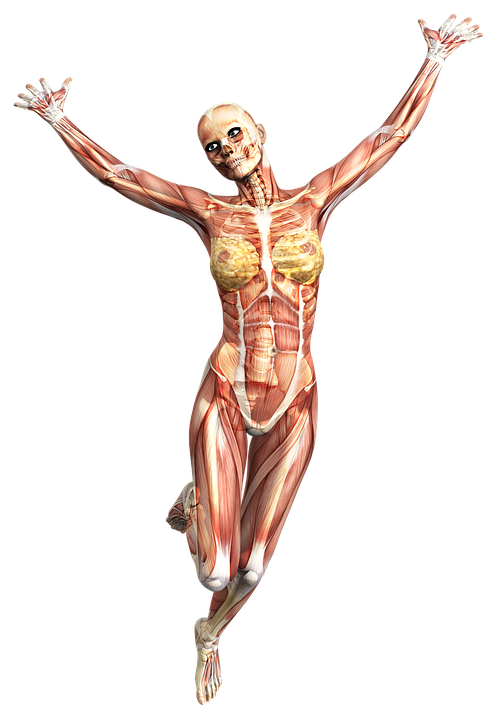
This picture demonstrates interpretive dance patterns of movement. The interpretation hints at sensing movement, yet the focus of the patterns these models are making could suggest they are focused outside themselves, versus from inside connections, as in contact dance. Functional Integration, and Awareness through Movement, the Feldenkrais Way focuses on the skeletal movements in connection to the contact with gravity and its responses through the joints that are unlocked and in a posture to invite gravity to travel through the whole skeleton. In the picture above, the models are not making solid contact with the floor to connect to the force of gravity moving up through their bones. It appears to me, as a Feldenkrais Practitioner specializing in this movement pattern, that they are using their soft tissue to support their weight.

When the skeleton is making full contact with gravity through the feet in standing, the sit bones in sitting, the hands in a posture of pushing off, or crawling on hands and knees, or in a prone position on the full skeleton on the front, back or side body on a hard surface the pressure thorugh the bones creates a weightlessness in the soft tissues in the body. The more one makes contact with gravity through skeletal movements, the more ease and freedom one has in their joints, vertebrae and ribs. This increases counter-balance and functional movement abilities.

The guidance patterns in the Feldenkrais Method use felt sensory words on the actual movement of the anatomy, with a focus on the potential for using the force of gravity. It is a powerful shift from analytical thinking that takes one out of a closed mindset function into the exploration of the experience itself, through the movements in connection with the force of gravity. The focus is on the felt sense of the bones and the discoveries through them to reconnect the body’s own elusive responsive connections to the intricacies of movement that are beyond the current comprehension of social conditioning. In essence, the movement is retraining the brain to expand and use more of the available functions in movement.

Why do I write reconnect?

When babies are born, they have the capabilities to use their full range of available learning potentials to guide them to come upright and participate in society. They do so without the educational encouragement of those surrounding them. Those surrounding do encourage them, yet they lack the understanding of how the function of the brain, body, felt senses, and mental is coming online to work in harmony that enables a baby to roll over, sit up, crawl, stand, walk and run while learning to speak and think. It is beyond the comprehension of the family members, as their own process was just that, a process. It wasn’t memorized, itemized or catalogued. It was learning through the experience.

With the focus of attention in society that seems to be focused on evaluative concepts and analytical statements, there has been a separation from the somatic patterns of functional learning that each of us was born with. When an adult speaks, it is through the evaluative expression of analytical thought patterns and statements that are far removed from the actual experience of functioning through the somatic experience. When speaking from an analytical perspective, it is a small interpretation of functional learning. It is like the difference between ballet and contact dance. One dance disconnects the artist from the ground and lacks the connection to the force of gravity, and the other pushes off the ground using the force of gravity. If you observe the two styles of dance separately, one stretches their muscles and holds their joints in a way that is different than the other. The contact dance method uses organic functional movement patterns. One dance appears to have effort with an intention to be interpreted as effortless, while the other one is effortless. This would describe the difference between mentally organized movement from strategies of thinking and spontaneous movement that includes all functioning components through the somatic felt sense as the origin. Basically, one is from the outside trying to define what can happen organically from the inside out.

The early learning patterns for movement are inherent within us as we are born. They evolve around the somatic senses of the fantastic five: sight, sound, touch, taste and smell. Each of the senses stimulate the others, and they are the inspiration to get up off the floor and walk, talk and become members of society. Each child will have one or two senses that will have the strongest response and will become the filter to the environmental stimuli surrounding them. I have begun to call these senses Somatic Archetypes.

I offer movement through group classes and individuals that support these dominant Somatic Archetypes in response to the guided patterns. These are called Awareness through Movement lessons that are group classes, and the other is a personal session or consultation called a Functional Integration.

Please investigate the classes and a personal session or consult:

Read more about the Fantastic Five Stomatic Archetypes:

Please like and subscribe

Follow on FacebookLinkedInInstagram, TikTok,  X Pinterest, Tumblr


FeldenkraisĀ® Practitioner since 2007, Communication & Empathy Coach since 2004, Art of Placement since 2001

Another bonus of rebounding – tighter pelvic floor muscles

by Renee Lindstrom, GCFP

After a long chest ailment when my heart rate was increased my lungs would tighten up and scream with pain. If out walking I would have to put on a mask to regulate my breath and warm the air before passing through to my lungs. I was curious if rebounding would work. Out it came and each day began with jumping. My threshold was low to begin with and slowly it began increasing with the daily workouts. An unexpected bonus was the reduction in the number of times I needed to urinate during the day and the ability to hold my bladder muscles to wait for available washroom facilities. A valued outcome for this author who also starts the day with juicing. This has meant continuous trips to the facilities in the past.

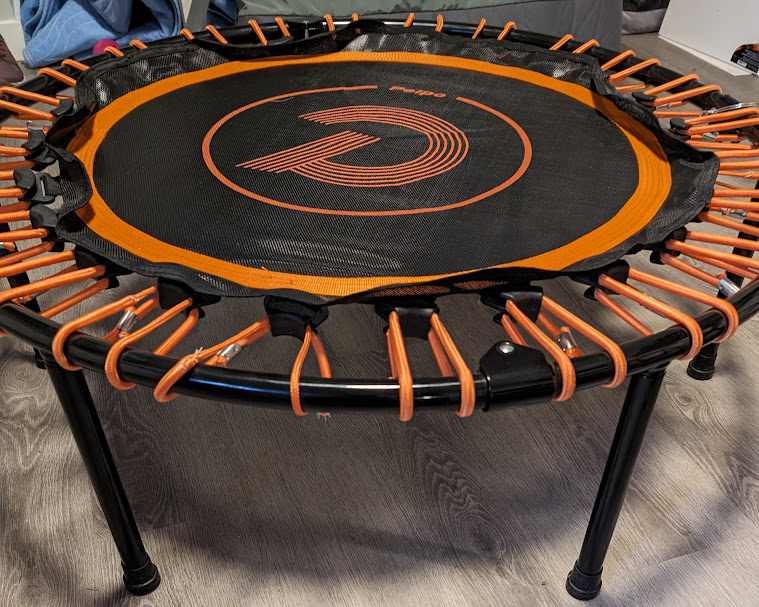
The rebounder surface bounces like a trampoline and requires core balance. Core muscles from the torso down through the pelvis are tightened slightly while at the same time muscles that extend into the thighs are lengthening and contracting. These are the muscles that control the bladder.

As each benefit becomes apparent it’s getting easier to commit to this daily workout. Some of the benefits in my experience have been:

  • increased sense of wellbeing
  • stronger felt sense of lower body; hips, thighs, knees, legs, ankles & feet
  • higher energy, get up and go (feeling aliveness versus drained)
  • sounder sleep
  • improved stamina & lung health
  • decreased inflammation
  • tightening flabby areas and creating shape in legs, thighs & belly

I have used the rebounder in the past to support lymph drainage and improve adrenal function. As I continue to improve my threshold and sense of wellbeing I wonder to myself why I ever stopped using it.

I have experienced movement students who have lost mobility due to their lack of active function by unconscious choice, pain or in some cases, illness. Students who begin focusing their attention on their micro-movements find that discomfort decreases, balance and flexibility improve and their quality of life increases. Others believe they don’t have time to take the daily effort that is needed to improve movement function and range of motion. These are the ones I refer to as making a choice for losing range of motion, although unconsciously.

If you don’t use it, you lose it

It isn’t like riding a bike. If days are spent without alternative choices in movement the brain actually does loose the movement patterning. Movement is dumbed down to reflect the dominant activity of the day. This is usually sitting in a chair or sofa looking at a screen. Sitting does not support any functional movement the body is capable of. There is a new analogy circulating that states, “sitting is the new smoking.”

What are some of the other activities that would improve with less sitting?

  • balance
  • walking
  • standing
  • running
  • bending
  • thrusting (improve sexual activity)
  • squatting
  • rolling
  • climbing
  • sleeping
  • reaching
  • breathing
  • sitting cross legged
  • cutting toenails
  • going up and down stairs

As a Feldenkrais Movement Specialist what I am being mindful of in my personal story is how in the past when working out I would over build my muscles to the point of losing connection to my skeleton and sensing its micro-movements and direct force of gravity. I am motivated to find the balance as my capacity to sense and differentiate inner movement is expanding beyond the skeletal movements. This is a slight shift in lifestyle I wasn’t aware of was coming. It’s an exciting new chapter.

READ MORE:

Article – Falling over is sitting and standing

Article –

LEARN MORE ABOUT:

Awareness through Movement

Upcoming Movement Classes

Renee’s rebounder

Here is an affiliate link to rebounders on Amazon:


The only way to change is action

Conversation is an equal opportunity and  shared experience

by Renee Lindstrom
 1st Phase of Integration ā€“ Getting Started (Introduction & Pattern)
 2nd Phase of Integration ā€“ Getting Intouch (Experiencing & Connection)
 3rd Phase of Integration ā€“ Integration (Embodiment)

Follow the journey on TwitterInstagram or Facebook

by Renee Lindstrom, GCFP @ Inside Awareness

…

Copyright 2014 – 2024 Renee Lindstrom, GCFP
FeldenkraisĀ®, Feldenkrais MethodĀ®, Awareness Through MovementĀ®, Functional IntegrationĀ®, are registered service marks of the Feldenkrais GuildĀ® of North America. Feldenkrais MethodĀ®

Acupressure Mat

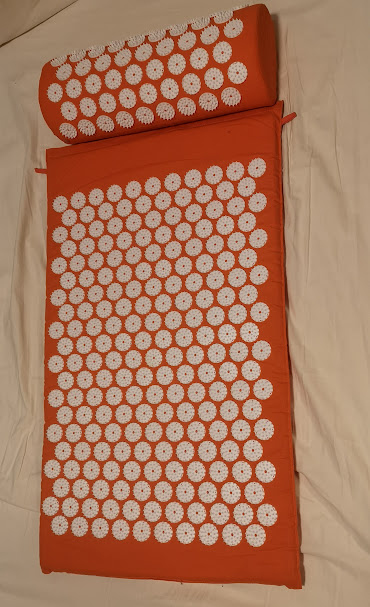
I began lying on an acupressure mat and 1/2 bolster in late Dec ’23, for 20 minutes a day. Not for the faint hearted! When first laying down the sharp points are surprising and can be temporarily painful. However within minutes my back softened and the points no longer caused discomfort. The only time the points caused any temporary uncomfortable moments when lying on them was when shifting my weight. For example, bending my knees and standing my feet to put more pressure into the small of my back. I also raised my lower back and began putting bolster under neath for more pressure into shoulder blades and lower back. This mat is long enough to target the length of my spine beginning at the top of my shoulder blades and down to the bottom of my sacrum. With the 1/2 bolster I can apply the points to my neck. 

I began to use this acupressure mat to test it for softening the muscles along my vertebrae from my neck down through my sacrum. As a FeldenkraisĀ® Practitioner (since 2007) I am all too well aware of the common restrictions causing limited mobility through contraction of the muscles and soft tissue along the spine, ribs and into the pelvis. This restricts flexibility and limberness. that ultimately can cause injury and pain. What I wasn’t expecting was the increase in blood circulation when lying down on these points. It was immediate and the whole area warmed up. I quickly recognized the value in warming the organs up as well in these areas. Read more below on the benefits I have noticed in just a few days.

Here is an affiliate link to the same acupressure mat on Amazon:

Acupressure Mat

Noticeable benefits of lying on acupressure mat in a few short days

  • Release of TMJ joints inn lower jaw with angling the 1/2 roller. This was unexpected and increased the benefits for me. I hold tension in my TMJ joints naturally and I could feel them let go and my jaw drop. Due to TMJ stress myself I have taught a workshop since 2007 on how to shift habitual patterns through the facial muscles, neck and shoulder muscles to lengthen and tonify them to increase the flexibility of the jaw. Feeling this deeper release was tremendously rewarding to experience. If for only this benefit I would recommend lying on an acupressure mat! Upcoming TMJ workshop in March ’24
  • Increase in vitality the first day after lying on the mat for 20 minutes. There was an inner vitality that emerged motivating more activity throughout the day. Luckily I have chosen the morning to test it out.
  • I have noticed a deeper quality in my sleep even through I have chosen to lay on the mat in the morning. The articles I have read mention an increase in sleep when lying on it at night. I am too active right to bed time to lay on it at this time, yet still seem to have the same benefits. 
  • Each additional day I lay on the mat for twenty minutes I am noticing more benefits not immediately experienced. After a few days I began to notice a softening in my arm and leg muscles even though they are not on the mat. It seems to be coming from the ribs and vertebrae release. My fingers are more flexible and soft. The tightness around the bone has dissolved even through I haven’t actively focused upon functional movement patterns with them during this time. 
  • Today I experienced increased points of energy release along my lower back, beginning in my sacrum. At the base of my sacram I sensed a release, a pulsation and warmth that immediately increased sensation in my lower extremities. I likened it to a release of a tight muscles or constriction blocking the energy in this region of the spine. 
  • Generally overall I am experiencing a softening of tension through my whole body with increased sense of relaxation and wellbeing. 

For all these benefits I am experiencing I would recommend trying an accupressure mat. Yes it may be uncomfortable for the first few days, however, that quickly disappears and the benefits outweigh the initial discomfort. 

Here is an affiliate link to the same acupressure mat on Amazon:

Acupressure Mat

Cultivating Success with Awareness through Goals Programs

 1st Level – Getting Started (Introduction & Pattern)
 2nd Level – Getting Intouch (Experiencing & Connection)
 3rd Level – Integration (Embodiment)

Follow the journey on TwitterInstagram or Facebook


by Renee Lindstrom, GCFP @ Inside Awareness,  
Copyright 2014 – 2024 Renee Lindstrom, GCFP

Finding my breath and motivation after COVID (?) has been like creating lemonade from a lemon

by Renee Lindstrom, GCFP

This spring I think I caught COVID for possibly the second time (tested negative).  It scared the hell out of me afterwards when trying to do what I love, walking.  My breathing was compromised, big time.  My lungs screamed after a few steps and I would have to wear a mask to regulate my breathing for it to stop.

I wondered what to do? 

I took out an old rebounder and got to  jumping.  I didn’t know if it would work but knew it would drain my lymph nodes at the very least.  At first I could only continue for 2 & 1/2 minutes.  Dang.  Slowly the time crept up, as breathing came easier and I was able to push through my resistance to exercising.   Each new time challenge became easier.  Ambition led to trying some other exercises which led to pulling all the muscles around the circumference my ribs.  Intercostal muscle strain meant moving carefully with no jumping or ambitious exercise for six weeks.  

I was able to transition to running on the rebounder though. I knew I didn’t want to lay down as experience has taught me if one does, one may never get up! As the minutes creeped up I asked myself, who is this? This isn’t me. Apparently it was! At some point I felt a new connection to a core energy sensation that easily disappeared as soon as I became distracted by thinking. Any inclination to think at all and the connection of sensing this core strength was gone. Thank goodness for mindfulness training. When awareness of this physical felt sensation connection started to grow I got that I was running towards my future.  I wasn’t sure what this meant only that is was exciting. When my rib muscles finally stopped hurting I started with resistance bands for upper body strength training and that’s when I began to get some understanding of what running into my future meant. I recognized this as an aspect of who I always wanted to be in my dream relationship yet never bothered to make it a priority. This COVID scare could have been a downer yet it turns out has actually turned into a great awakening of personal awareness.

Work out time has crept past 45 minutes a day and now is going towards my goal of 60 minutes. My original fear I felt about my breath has turned into an experience of running into who I choose to be and want to be when my wish fulfilled (my person) and I discover (accept) each other. I emphasize I want to be this person for myself, not them. I hope this is who they experience in me. Running into my future has become an action of manifesting and integrating my dreams as though I am that person I crave to be in a relationship. I have a new long term cycle beginning and it’s like my inner self is aligning for a deeper and more active relationship this coming year.

This COVID type experience has returned focus to my physicality and inner strength. This could be fun!

I am reminded that this is what I mentor to others. Now connecting to this dimension for manifesting dreams myself I look forward to being able to support their deeper connections to actively becoming their own intentions.

The only way to change is action

Renee’s rebounder

Here is an affiliate link to rebounders on Amazon:


by Renee Lindstrom

Mentoring Programs Available

 Follow the journey on TwitterInstagram or Facebook
by Renee Lindstrom, GCFP @ Inside Awareness,  Living in Natures Love Blog
Renee Lindstrom Live
Copyright 2014 – 2024 Renee Lindstrom, GCFP