Category Archives: Uncategorized

CULTIVATING A LIFESTYLE OF HARMONY & BALANCE IN RHYTHM WITH NATURE 

*NEW

Nature in Harmony

  • Wed,  June 3, 10, 17, 24

Location:  111 Superior Street, James Bay

Renee Lindstrom of  Inside Guest Presenting

Topics & Activities
June 3rd    –  Embracing Elements of Nature
June 10th  –  Personal Landscape in Harmony or Disharmony
June 17th  –   Harmonizing with Nature’s Landscape –  Solstice
                        Labyrinth Walk with special guest ‘Ocian Flo’
2015-05-02 12.23.22
 Ocian Flo @ Salsbury Farm Labyrinth – May 2nd #yyj Labyrinth Stroll

.

June 24th  –  Balance & Harmony Living Map

.

By Donation to Oneness Wednesday Program – Church of Truth

Renee Lindstrom GCFP – Feldenkrais Practitioner – Somatic Movement Education & InTouch Life & Relationship Mentor

  • Certified in Subtle Engergy Dynamics (’00) ,  Founder of Labyrinth’s of Greater Victoria & Events (’13), Founder of #yyj Peace Week Project (’14), Co-Founder of Greater #yyj World Labyrinth Day Peace Stroll (’15)

4th Annual Creatively United for the Planet Festival – English Inn

April 25 & 26, ’15

Sharing booth with Canadian Peace Initiative 


Hosting display of  International children’s art exhibit for #yyjpeace:

Peace Pal International Ambassador  2015 Exhibit

Labyrinth Poster 3

Sharing  Labyrinths of Greater Victoria event:

World Labyrinth Day, Greater Victoria Labyrinth Stroll – May 2nd, ‘ 15

What is blocking citizens from taking action to save the planet and it’s people? Revising 3 Step model to reflect today’s citizen action!

One of the biggest contributors to a lack of useful action is fear, anxiety and pain.  Fear, anxiety and pain create a need in citizen to survive and their reactions become a source of disconnection and distraction.  In recent years activism has coined a  phrase, “Waking up the masses.”  Could it be the masses are asleep as they are in survival mode?  

To be successful in a change campaign more understanding into the roots of behavior could be important to understand and consider in creating the campaign. Awareness campaigns have been popular over the years.  They focus on the arts, festivals, parades, taking a stand activism and ecology education.

Lifestyle awareness, education and culture is a growing influence.  To grow and integrate meaningful action in the lifestyles of the citizens that effect change, perhaps, serious consideration could be given to shifting their fear.  This might begin with deeper understanding of fear and that it isn’t necessarily caused by anything that is real and happening in the moment.  It can be triggered by a suggestion, reaction or expectation.  It can be a permanent chronic state that becomes the filter for incoming information to make a decision upon that result in poor choices. Fear reactions are not only mental and emotional,  it is a physical.  

Rapid changes are happening on the planet that seem uncontrolled and unsettling and each day brings news of disturbing recent events.  To counter balance the disturbing news feel good videos and dream time pictures are being plastered all over social media.  The reality that is being feed to citizens is fear based that creates panic and the feel good is a distraction that can go viral.

These changes will shift when culture shifts and awareness campaigns bring education and opportunities to initiate change.  However what experiences can deepen the integration of individuals into taking right action.   Here are three steps in a traditional model we are all familiar with:

1.  Feed the people

2.  Educate the people

3.  Train the people

Here in the Greater Victoria communities the above steps are being re-vamped into doable concrete actions that may be a new cultural model in the making.  Here are some examples:

1.  Feed the people – a community plan is being implemented that is called Food Forests.  It is land that is being turned into fruit bearing trees, berries, herbs and vegetables.  This may be a program that has evolved beyond feeding the homeless into feeding each other.  Huge mind shift!

2.  Educating the people – roadways are being reworked to include bike lanes to improve safety and public education.  As they appear drivers adjust while at the same time they are being imprinted with an idea.

3.  Training the people – in the above steps training is include through the integration of the two programs mentioned.  It is a cultural shift through experience.  Therefore, I would like to suggest that training the people begins with right action leadership.

In Greater Victoria we are experiencing higher qualities in the leadership that is being modeled in our local communities.   Perhaps taking right action for the planet and it’s citizens at this time begins closer to the individuals experience – at home with their own Civic Leaders.  So the question is, how could we define these three steps in our own individual experience.  Try to stay with ideas for your own personal change.  How would you fill out each step?

1.  Feed the people –  ?

I am wondering how sustainability could be translated into individual actions. Could it still be generosity, being charitable and now include;  acceptance to replace judgments of right and wrong thinking, sustainability of ones own food to replace personal waste,  and getting to know your relationship connection to food.

2.  Educate the people – ? 

I am wondering what personal actions could be taken to integrate knowledge and model it for others?  Could it be becoming more adventuresome yourself and less critical to make space for exploring new ways of doing things?  If you ride a bike already this wouldn’t be teaching others why they should ride a bike, but rather, adding something new to your way of experiencing sustainability.  For someone who doesn’t ride a bike it may be they begin riding a bike.  It is about developing a pattern that can be a model for others.  A model that is not being used a weapon of condemnation but rather one that is inviting.  If you do have to teach, create an awareness campaign try creating one with no attachment.  

3.  Train the people – ?

The above two steps touched upon the possibility of becoming a model that you would enjoy yourself.  A model of new patterns of sustainable behavior.  This requires a set of leadership skills and qualities.  What type of leadership qualities would you like to integrate and model?  

_______________________________________________________

Renee Lindstrom, GCFP,
Feldenkrais® Practitioner since 2007, Communication,  Empathy,  Values Coach since 2004, Art of Placement  since 2000, Labyrinths of Victoria since 2012, #yyj Peace Week Grassroots Calendar Founder

_______________________________________________________

Follow Inside on:
Facebook             Google Plus          Twitter          Pinteret

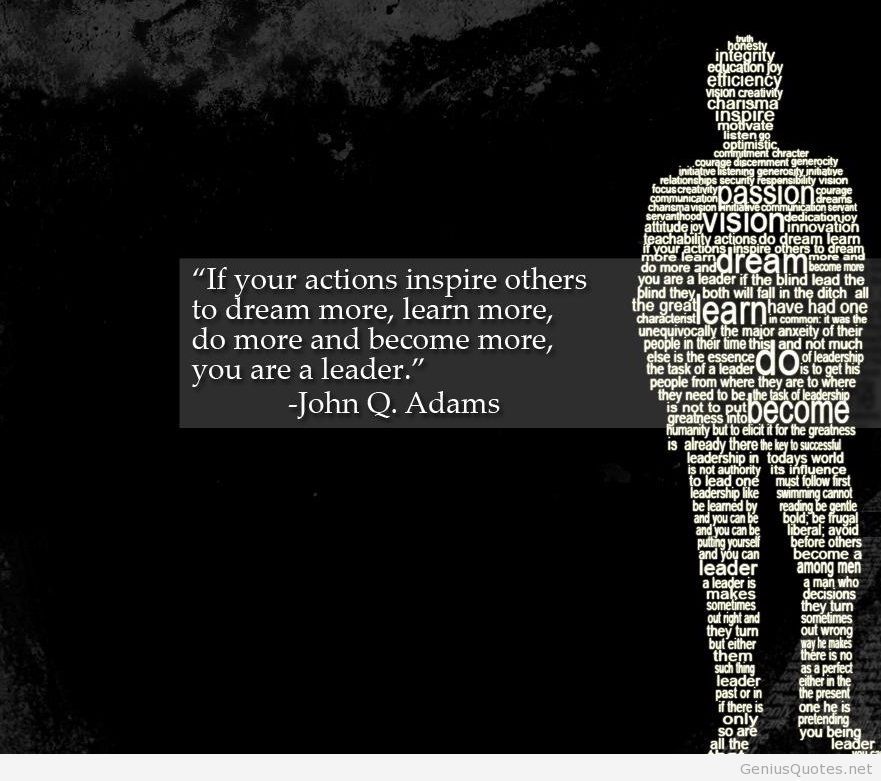
Qualities of Leadership

How would you define the leaders in your life?  Have you stopped to consider the type of leadership you would like to experience?  If so, what qualities would you these mentors have?  Any of the following?

leadership_quote

Once you create your dream list of leadership qualities stop to consider if you demonstrate these qualities yourself.  Do you walk your talk?

images (2)

_______________________________________________________

Renee Lindstrom, GCFP,
Feldenkrais® Practitioner since 2007, Communication,  Empathy,  Values Coach since 2004, Art of Placement  since 2000, Labyrinths of Victoria since 2012, #yyj Peace Week Grassroots Calendar Founder

_______________________________________________________
Follow Inside on:
Facebook             Google Plus          Twitter          Pinteret

Physical Attributes of Chronic Fear & Anxiety

There have been opportunities to explore the long-term physical, mental and emotional effects of long-term fear and anxiety as a Feldenkrais® Practitioner and Life Coach .  Here are some examples of the results that have been presented.  Keep in mind that these results are based upon cases where these conditions have evolved slowly over time without any awareness.  The slow development of physical change results from lack of attention on body awareness, therefore,  the shift in movement behaviors generally they are not noticed.   

Flight

Dominate flight reactions tend to be the loss of strength physically, mentally or emotionally.    Two physical responses to panic; collapsing,  going limp or running away.  Chronic fear and anxiety can be noticeable in  general appearance and in social behaviors.   A common quality is over achievement, overdoing it whether hold strong, being strong or double jointed and limber. There is a disconnection from body awareness. Generally the body is not highly regarded, taken care of or appreciated.    

These following three reactions have shown up in cases of without a balanced approach to developing all aspects of well-being.  

1.  A  dominant focus of attention on a spiritual movement practice.  The physical movement of the body structure has presented with lack of strength and limited inner body awareness.  The core force of inner physical strength has been replaced with a limp disconnected reaction.

2.  A dominant focus of attention on a goal or achievement.  The body is strong with a lack of connection to the finer qualities in mobility.  The body is used to excel  the focus is on strategies to get results versus developing whole and spontaneous movement.

3.  A dominant focus on fear and creating safety.  This has shown up as permanent state without  connection to ones senses in the present moment.  The only connection to a felt body sense is a source of discomfort and pain.  It is regarded as the enemy and when explored the pain is a memory and not necessarily current.  

In relationships dominant flight fear/anxiety reactors will generally lack the qualities of self-empathy and empathy for others.  They are self-focused and intent on creating safety by whatever strategies that have been learned.  The need is for survival and it is primal.  This Read more….

Freeze

1.  Freezing presents itself by the lack of spontaneous moving parts in breathing and posture.  There is a habit of moving the body in a locked posture with the  inability to move different body parts separately.  An example of this locking of the head in a forward posture.  Turning to the left and right and become a full body movement as the pain of locking ones head creates a habit.

2.  Tremors start with long-term freezing.  The muscles are in a state of permanent contraction or extension.  Over time with the loss of the ability to extend, contract and relax in a flow of movement it has resulted in slowing movement and  shaking.

3. Slowing down will eventual result in  rigidity setting in as the posture of freezing locks in and becomes a habit.  It presents as a complete frozen state that includes facial expression.  This may eventually extend to drooping eyes, drooling and lack of mental/cognitive clarity as the physical effort to function becomes too exhausting.

In relationships most dominant freeze fear/anxiety reactors will be considerate of others and not want to hurt anyone’s feelings.  Their first reaction may be surprise, shock and horror at what they are witnessing, hearing, or experiencing. In relationships things will generally be taken personally and turned inward without attempts to stand up for themselves immediately.  Time is needed to process and the moment for responding has past leaving unresolved interactions and experienced as passive.  Read more…….

Fight

1.  A dominant focus on control.  Resistant to experiencing support that is not calculated and controlled.  Fear is subtle and deeply rooted therefore, movement is isolated and not a spontaneous flow.  Somatic learning is blocked by the filter of control.  Results in increased physical pain further reducing movement.

2. A dominant focus on seeking answers yet unable to integrate movement experience to form new habits.  The need to know has replaced sensual awareness therefore unable to recognize and value change.  When there is a response of  less tension and increased relaxation it cannot be fully absorbed and appreciated due to distractions of trying to understand it.    Will objectify versus notice their experience.   Therefore will adjust posture according to thinking versus somatic experiencing.

3.  A dominant focus on working hard and using brute strength.  Strength will be a reactive posture that will lead to lack of using fine motor skills resulting in being clumsy, tense and awkward.

In relationships the dominant fight responded will react with right and wrong thinking.  Therefore others are the enemies and the roots of disconnect.  This habitual response will lack the skill to include others perspectives and beliefs as they believe they have the answer.  Read more………

The intent of this article is in the context of how  communication and movement can support the decrease of anxiety, stress & fear. Values & Empathy integration in communication for transforming disconnection into connection and movement for calming one’s nervous system.

Read more on:

Feldenkrias Movement Benefits 

Read more on right & left side of brain reactions to stress

       Private Integration Sessions


Book a personalized  session for self, work or group
250-361-7508

by Renee Lindstrom

Follow the journey on TwitterInstagram or Facebook

by Renee Lindstrom, GCFP @ Inside Awareness,  Living in Natures Love Blog
Renee Lindstrom Live

Mental and Emotional Responses to Fear & Anxiety

As a Life Transitions/Relationship Coach and Feldenkrais Practitioner opportunities have been available to explore the long-term physical, mental and emotional effects of long-term fear and anxiety. Here are some of the mental & emotional  characteristics that have presented themselves in cases:

Flight & Fight

  • analytical
  • solution orientated versus integrative
  • self absorbed on self image
  • self judging of own self-image
  • judgement of others self-image
  • resistant to change
  • highly reactive to external stimulus
  • reactive
  • quick to justify thoughts, opinions before hearing and reflecting to consider new information
  • confidence based upon comparisons to others (short lasting)
  • cannot compliment self or others
  • prone to jealousy
  • lack of self-empathy
  • lack of empathy for others
  • takes incoming perspectives, opinions and beliefs personally
  • doesn’t include others perspectives, opinions, dreams in making personal decisions and choices
  • cannot understand why others aren’t in agreement with their hopes and dreams
  • quick to blame

Read more  …… Physical Attributes of Chronic Fear & Anxiety – What is your habitual body reaction?

FREEZE

  • sensitive
  • slow to act
  • quiet
  • works hard
  • withdrawn
  • quiet
  • alone
  • take time before making decisions
  • empathy for others, less for self
  • put others first
  • takes things personally
  • sad, hurt, resentful
  • depressed
  • lack of self value

Read more  …… Physical Attributes of Chronic Fear & Anxiety – What is your habitual body reaction?

The intent of this article is in the context of how  communication and movement can support the decrease of anxiety, stress & fear. Values & Empathy integration in communication for transforming disconnection into connection and movement for calming one’s nervous system.

Read more on:

.

Feldenkrias Movement Benefits 

Read more on right & left side of brain reactions to stress

#yyj Classes                     Private Integration Sessions

_____________________________________________________

Renee Lindstrom, GCFP,
Feldenkrais® Practitioner since 2007, Communication,  Empathy,  Values Coach since 2004, Art of Placement  since 2000, Labyrinths of Victoria since 2012, #yyj Peace Week Grassroots Calendar Founder

_______________________________________________________
Follow Inside on:
Facebook                Twitter          t

Qualities of Peace in Feminine Leadership

Qualities of Feminine LeadershipInside Awareness is hosting Qualities of Peace in Feminine Leadership Dialogues on behalf of Greater Victoria Peace & Intercultural Celebrations.  (#yyjpeace.com)  Our first one was held on March 8th, International Women’s Day.  In our first gathering the *qualities that emerged where;  inner leadership and belonging,  and the *values where;  belonging and acceptance.

Seven qualities of Feminine Leadership that came up in yesterday’s discussion are:

  • ‘Leaders are talking about peace but mostly not behaving or speaking peacefully.’  
  • Accepting our gender, acknowledging our differences and naming the leadership qualities particular to us.  Some examples; capacity for empathy, caring, nurturing and understanding emotions.
  • Recognize each of us has something to offer even when you are locked into a specific cultural belief system and start by being friends first and explore our differences.
  • Be present to the immediate need and take responsibility for changing it.  Stop talking about it  and do something! 
  • Change starts at home first to build a foundation of leadership that secures our future evolution.
  • Stop giving in just because it is  expected of you, but rather, begin to express your needs in a way that others would want to hear them and contribute to meeting them.
  • Listen to each member in the community before making decisions so the decision includes everyone’s voice.

These dialogues are challenging and they are nurturing growth and planting seeds!  They will be continued if your are interested in joining us.  If you are interested in creating a talking circle focused upon leadership in your school, business or organization contact us here at Inside to get started.   

*qualities – for this purpose the meaning of qualities is a behavior or characteristic
*value – for this purpose the meaning of value is the point of need that can be our point of connection and understanding