Category Archives: Brain

Intouch with Empathy and the Brain: Amygdale, Hippocampus, Prefrontal Cortex

Amygdalus – Implicit Memory:

  • present at birth
  • includes emotional, behavioral, perceptual and possibly body memory
  • no sense of recollection (time) present when memories recalled
  • conscious attention is not required for encoding
  • does not involve the hippo-campus

Hippo-campus – Explicit Memory:

  • requires conscious attention
  • includes semantic(factual) and episodic(autobiographical) memory
  • develops during the second year of life and beyond
  • sense of recollection present when recalled
  • if autobiographical, a sense of self and time and present
  • if autobiographical, also involves the prefrontal cortex

Prefrontal Cortex

  • regulation of body systems
  • attuning to others
  • balancing emotions
  • modulating fear
  • responding flexibly
  • exhibiting insight and empathy
  • paying attention to the body’s wisdom
  • morality

When we are triggered beyond our window of tolerance our pre-frontal cortex function stops and we are left in responses of fight or flight.ย  If our reactions shifts into freeze, our brain response has moved from the area of the amygdala and into the hippo-campus with no sense of time and into helplessness.

I have come to understand empathyย is an effective tool to balance out the responses of hippo-campus and amygdala.ย  Empathy allows one to recover andย  calms ones prefrontal cortex.ย  As empathy develops it increases connections back and forth between our right and left brains therefore increasing ones windows of tolerance. ย I have also heard that empathy may have a direct link in the amygdala’s ability to accelerate the vagusย nerve.

This goes beyond simply a reaction and includes the activation of ourย  parasympathetic system through the vagus nerve.ย  See diagram below to get an idea of the areas that become aroused as when we are stimulated.

These reactions includes our motor control. ย As we surpass our window of tolerance we begin to lose our fine motor control.ย  We begin to lose our ability for tracking,ย  to focus and mind-fully integrate. This involves our ability for self connection, to feel safe, grounded and to be present in the now.

There are ย theories to suggest the Amygdala is the accelerator through the 3 channels of the vagus nerve that controls our fight, flight and freeze experience and the quickest tool to connect to the Amygdala is through empathy.


Find out more on how integrating the arts of movement, communication and space compliment your experience and encompasses a holistic approach to wellness.
Read more on:.

Book a personalized Coaching session for self, work, group or create a retreat โ€“ 250-361-7508

by Renee Lindstrom

Follow the journey onย Twitter,ย Instagramย orย Facebook

by Renee Lindstrom, GCFP @ Inside Awareness
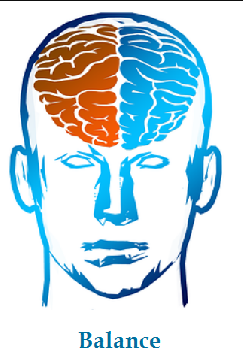
InTouch on the Brain – ‘Reactions to Stress’

Pixabay

Left Hemisphere Reactions

  • distancing, moral superiority, logic, sarcasm, denying, educating, judgments, blame, comparison, addictions, compulsions, mild derogatory self-talk, withholding privileges or resources, letting go of agreements, fantasizing about other partners, other lives, rigidity


Right Hemisphere Reactions

fight or flight

  • gossip, criticism of others behind their back, clinging, retelling our story, mild confusion, medium levels of derogatory self-talk, verbal attacks, asking for reassurance, chaos

freeze

  • shock, paralyzed

Find out more on how integrating the arts of movement, communication and space compliment your experience and encompasses a holistic approach to wellness.
Read more on:

Book a personalized Coaching session for self, work, group or create a retreat โ€“ 250-361-7508

by Renee Lindstrom

Follow the journey onย Twitter,ย Instagramย orย Facebook

by Renee Lindstrom, GCFP @ Inside Awareness,ย ย Living in Natures Love Blog
ย &ย Renee Lindstrom Live


InTouch with the Brain – Right and Left Hemispheres

by Renee LIndstrom, Founder of Inside Awareness Center of Integrative Somatic Learning

Qualities of Left and Right Hemispheres

Universally accepted qualities of the right and left Brain Hemispheres

The theory of the mind’s function suggests that the two different sides of the brain control two different “modes” of thinking.  It also suggests that each of us prefers one mode over the other.

Left Hemisphere Right Hemisphere
Awareness through Communication@insideawareness.com
LogicalVisual
LinearAttunement
LiteralVoice quality
Practical languageEye gaze
Making senseTouch and gesture
Social selfCircuits of attachment
Spoken/lived narrativeIntegrated map of body
Detail monitoringEffective experience
Analytic problem-solvingExperience of self
Fact accumulationBeginning of regulation
Chalkboard of the mindEmpathetic resonance
Working memoryImplicit memory
Adding to regulationI felt autobiographical narrative
Handling familiarIntuition
moderate levels of stressMorality
More defined neocortical columnsMetaphorical language
Rapid processing of novelty
Severe levels of stress
Integrated neocortical columns

Have you read The  Brains Way of Healing by Dr. Norman Doidge?

Listen to Dr. Doidge’s short introduction to the Brain’s plasticity. He shares the value of the Feldenkrais Method of Somatic Education in supporting shifting the brain’s behaviour for enhancing functional abilities, physically, mentally and emotionally.


Find out more on how integrating the arts of movement, communication and space compliment your experience and encompasses a holistic approach to wellness.

Book a personalized Coaching session for self, work, group or create a retreat โ€“ 250-361-7508

Follow socials:

Copyright 2014 โ€“ 2026 Renee Lindstrom, GCFP

Feldenkraisยฎ, Feldenkrais Methodยฎ, Awareness Through Movementยฎ, and Functional Integrationยฎ, are registered service marks of the Feldenkrais Guildยฎ of North